Excursions in Almaty: What This Section Offers
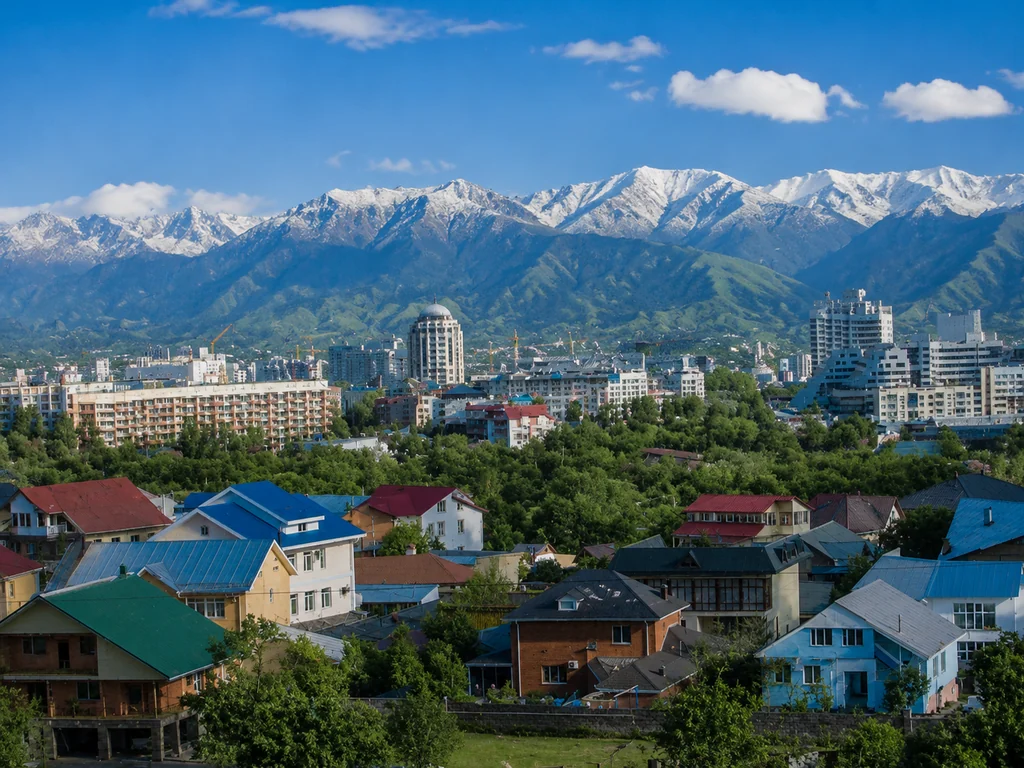
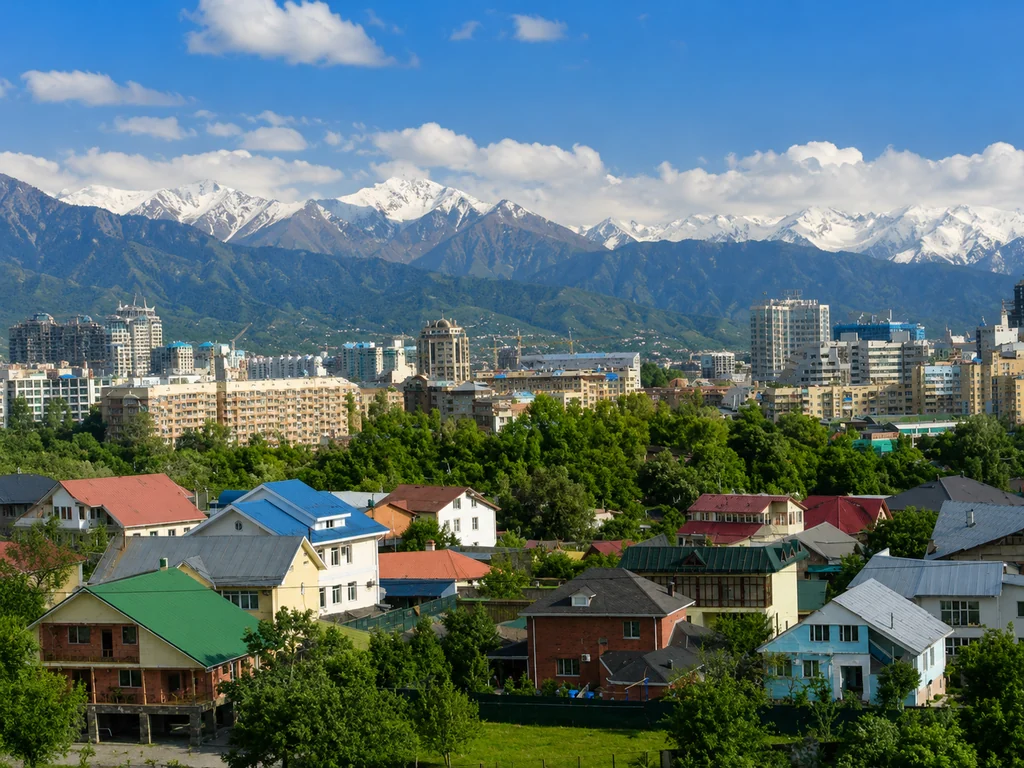
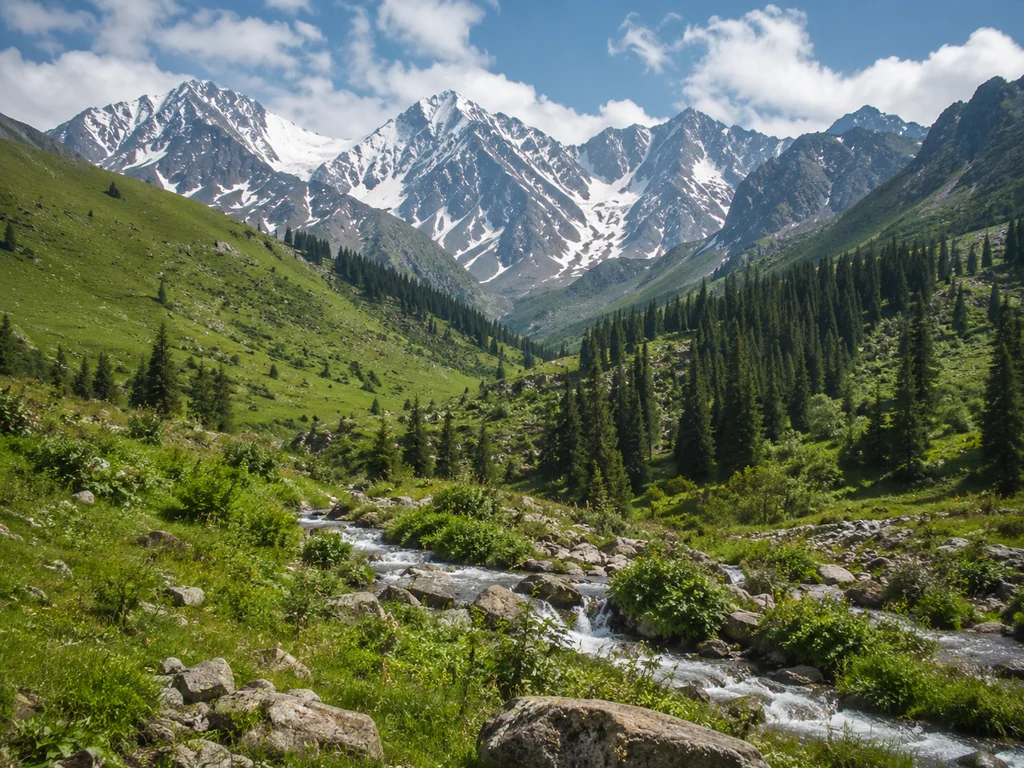
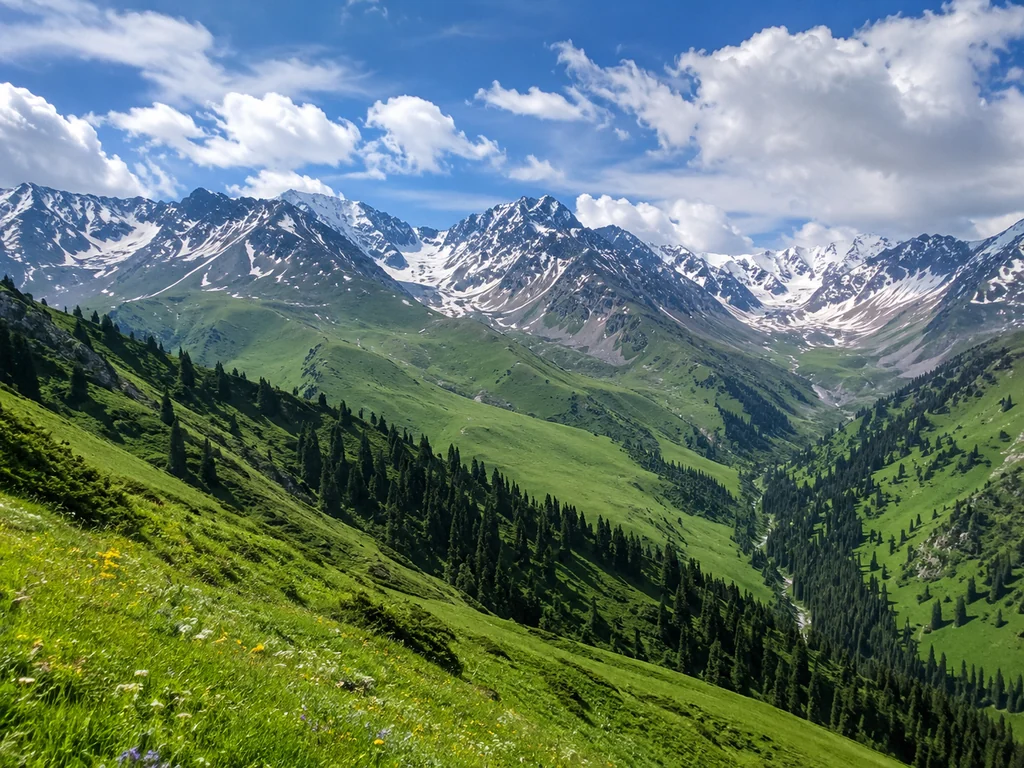
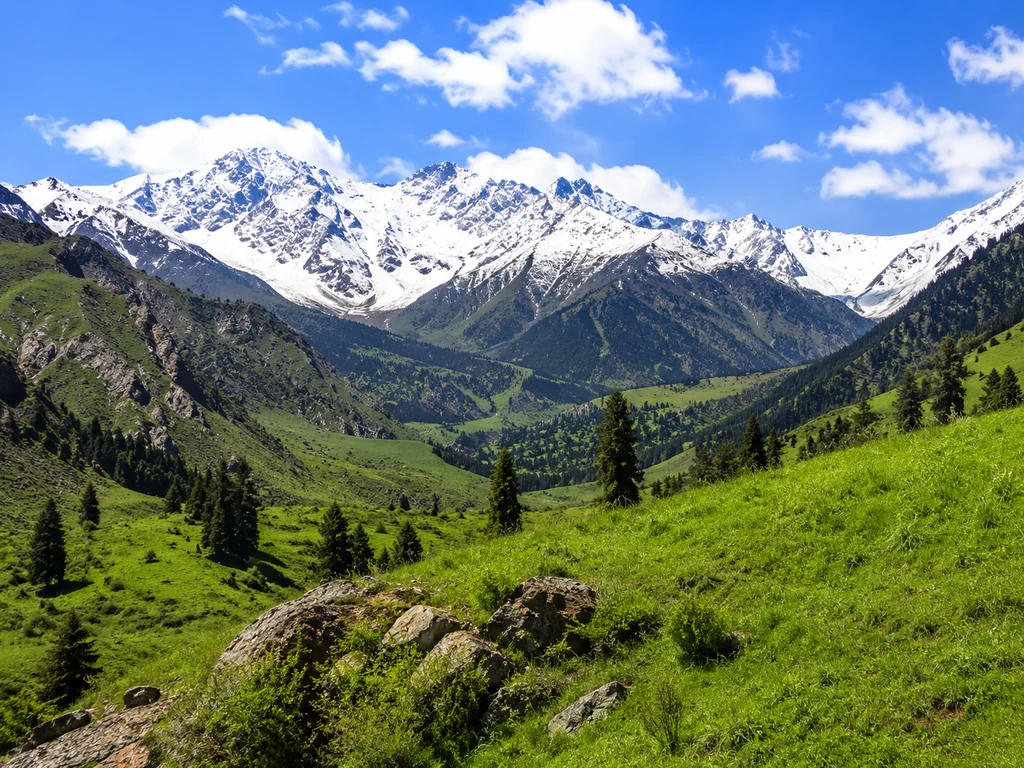
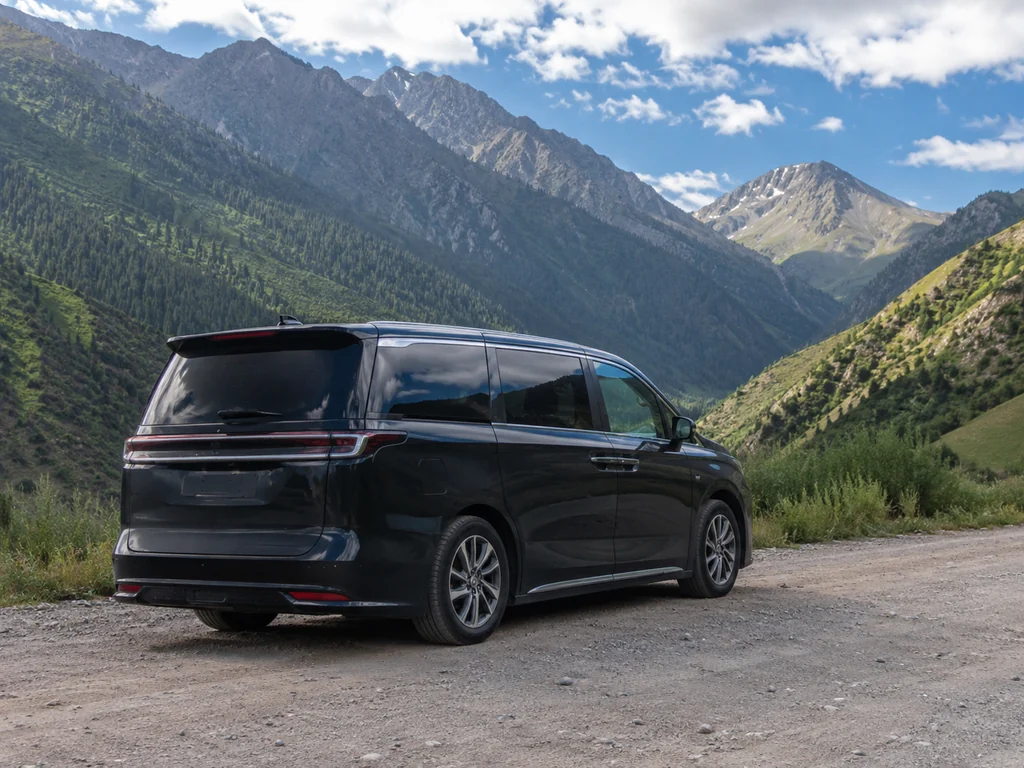
Almaty sits in the foothills of the Zailiysky Alatau at an altitude of 700–900 metres above sea level, and the city spreads northward onto the plain of the Ili river basin. This geography means that almost any city tour here combines two things: flat, shaded, walkable streets in the centre, and quick access to mountain panoramas that rise more than 4,000 metres above sea level within a 30-kilometre radius. The excursions in this section cover both — from two-hour audio walks through the old centre to a five-day route that reaches Charyn Canyon and the Kolsai lakes.
Prices across the section start at $7 per person for the audio excursion and reach $376 per person for the five-day tour of Almaty and the Almaty region. In between there is a wide range: short individual walks, group bus sightseeing, gastronomic routes, and full-day mountain trips. The format field on each tour card tells you whether you join a group or go individually, and whether you move on foot, by bus, or by car. Everything else — meeting points, exact timings, and any extras — is confirmed at the moment of booking.
Most excursions run daily, some with fixed start times such as 10:00 and 15:00, and a few are marked as "check dates" because they depend on weather or seasonal road access. The city itself is walkable year-round, but mountain routes and long day trips are sensitive to snow cover, rainfall, and the condition of high-altitude roads. Reading the "when" and "duration" fields carefully before booking saves a lot of misunderstanding later.
Walking Excursions in Almaty: The Historic Core on Foot
What the Old Centre Actually Looks Like
The historic core of Almaty is compact. From Park 28 Panfilov Guardsmen to the Green Bazaar is roughly two kilometres on foot, and the route passes through the area that was once the merchant town of Verny, founded in 1854 as a Russian fortification. The grid of streets here still follows the nineteenth-century plan, and the names change from block to block: you walk past pre-revolutionary merchant houses, 1920s constructivist buildings, and heavy Stalinist empire-style facades within a single kilometre.
The audio excursion in this section follows exactly that corridor, from Park 28 Panfilov Guardsmen to the Green Bazaar, with music — jazz, classical, and ethnic sound — layered over the narration. Because it is an individual format on foot, you control the pace and can pause wherever a courtyard or a facade catches your attention. The route is flat, with only gentle slopes, and takes about two hours at an unhurried pace.
For a deeper look at the same district, the excursion "Alma-Ata: from Pre-Revolutionary to Soviet" covers three hours and focuses on how the town of Verny turned into the Soviet Alma-Ata. You see wooden lace-carved houses, constructivist clubs and schools, and the monumental post-war architecture that gave the city its distinctive low-rise, green, mountain-backed silhouette. This is an individual walk, so the guide can adjust the emphasis depending on whether you care more about architecture, social history, or daily life.
Wooden Architecture and Soviet Modernism
Almaty is one of the few cities in Central Asia where you can trace an almost unbroken architectural line from nineteenth-century wooden building to late Soviet modernism. The excursion "From Wooden Architecture to Soviet Modernism" takes three hours and does exactly this. The early layer is wooden: houses built without a single nail, with carved window frames and deep verandas, designed to cope with both summer heat and winter cold. The later layer is concrete and glass — wide, shaded public buildings from the 1960s to the 1980s that respond to the same climate with different tools.
Walking between these layers, you notice how the street width changes, how the greenery shifts from private gardens to planned boulevards, and how the mountains remain visible at the end of almost every north–south street. The route is on foot and individual, so it suits travellers who want to stop, look up, and photograph details rather than move in a tight group.
Because the city sits in a seismic zone, many older buildings were designed with light materials and flexible structures, and some were later reinforced or rebuilt after earthquakes. Guides usually point out these details, but the exact content of any tour is best confirmed when you book, as routes can be adapted to your interests.
Hidden Courtyards and Local Knowledge
The excursion "Old Centre of Almaty: A Secret Location" runs three hours, starts at 10:00 and 15:00 daily, and is built around courtyards and passages that most visitors never find. It is a small-format walk through the old centre, with nineteenth-century architecture, merchant stories, and a final viewpoint that opens onto a panorama of the city and the mountains behind it. Because the route uses private courtyards and narrow lanes, it is not a route you can simply reproduce from a map.
This kind of walk works best in spring and autumn, when temperatures are mild and the trees along the old streets are either in blossom or turning gold. In summer the shade of the courtyards becomes an advantage, while in winter the same lanes can be icy and require proper footwear. The guide knows which passages are accessible on a given day, and the exact path may shift slightly depending on conditions.
If you prefer a broader overview rather than hidden corners, the "Walking Tour of Almaty's Highlights" covers three hours and links Abai Square with the green alleys of Park 28 Panfilov Guardsmen, mixing city legends, architectural contrasts, and the general atmosphere of the southern capital. It is an individual walk, which means the guide can slow down or speed up depending on your questions.
Bus and Car Excursions in Almaty: Overview Routes
The Classic Four-Hour City Tour
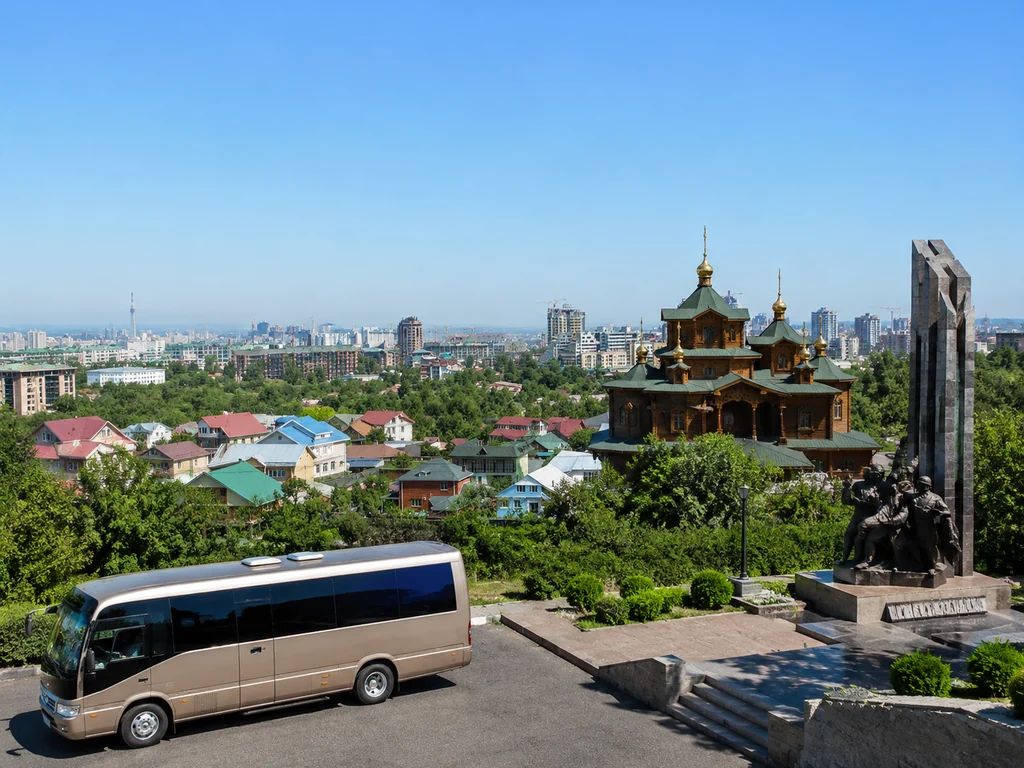
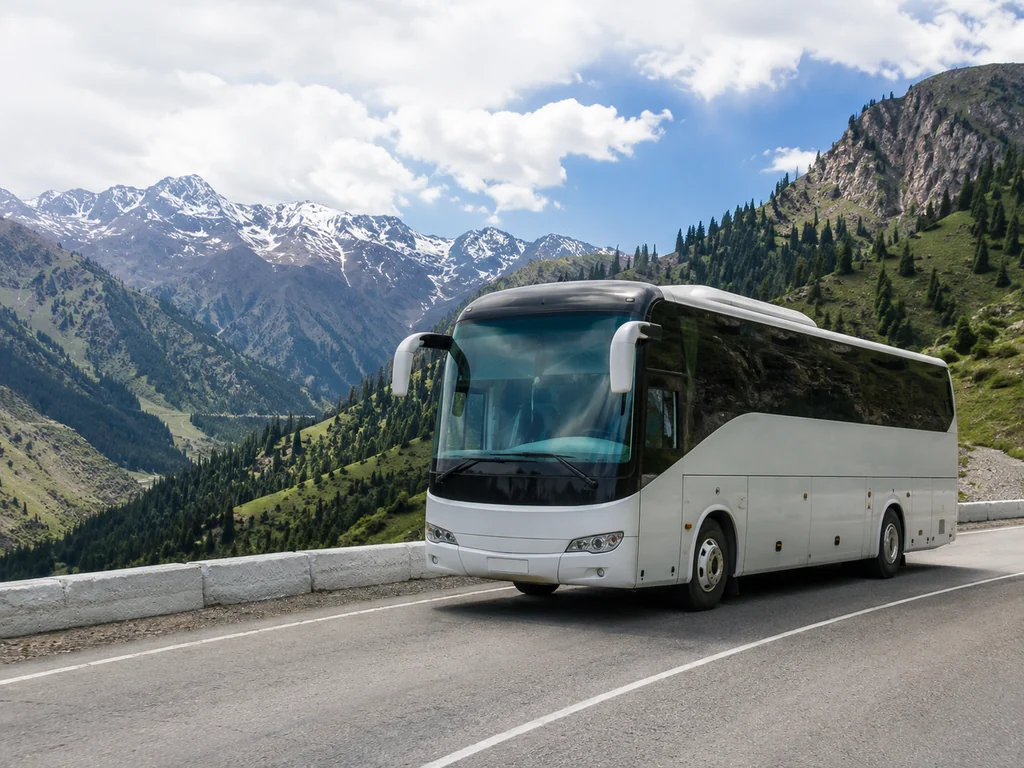
The "Almaty City Tour" is a four-hour group excursion by bus, and it is designed as a first introduction to the city. It moves through the central squares, parks, and viewpoints, combining short walks with drives between districts. In four hours you get a sense of how Almaty is laid out: the old centre to the north, the newer administrative and residential districts to the south and west, and the mountains always closing the southern horizon.
Because it is a group format, the pace is set by the schedule rather than by individual preferences, but the route is chosen to include the main symbolic places. The bus allows you to cover ground quickly and to reach viewpoints that would be a long walk from the centre. This tour runs daily, and the exact start time is confirmed at booking.
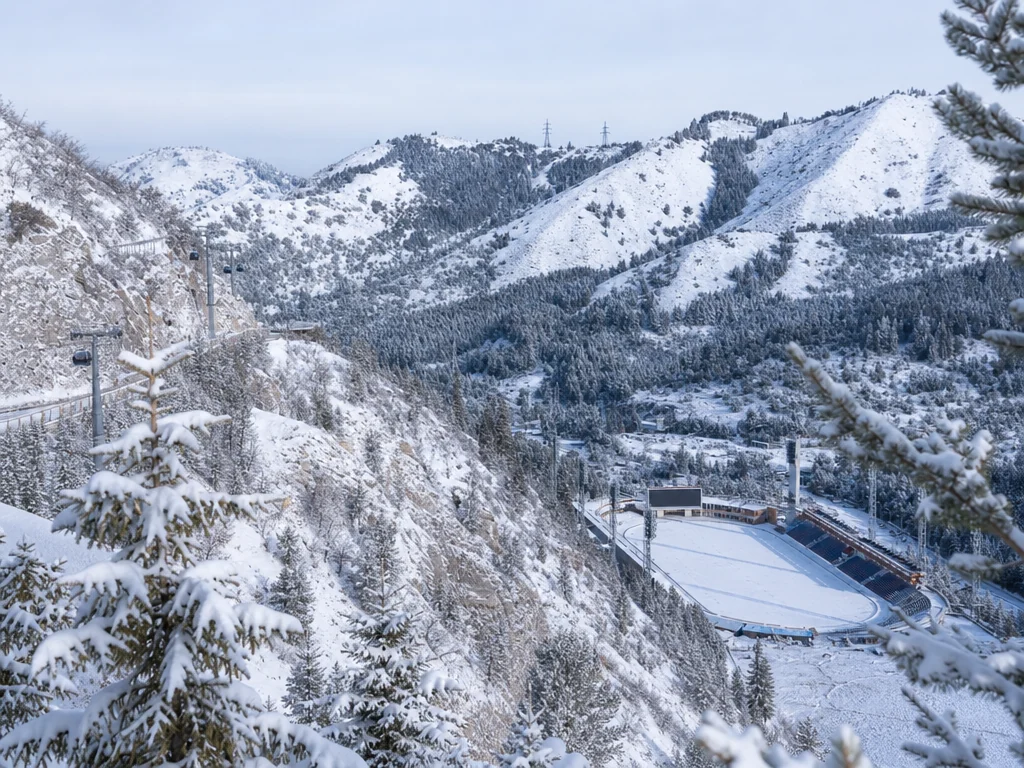
For travellers who want more than the classic loop, the five-hour "Almaty City Tour with Medeu and Kok-Tobe" adds two of the city's signature high points. Medeu is a high-altitude skating rink at about 1,690 metres above sea level, set in a gorge of the Malaya Almatinka river, and Kok-Tobe is a hill on the south-eastern edge of the city, around 1,100 metres above sea level, reached by road or cable car. This is an individual tour by car, so the timing at each stop is flexible.
Medeu, Kok-Tobe and the Mountain Frame
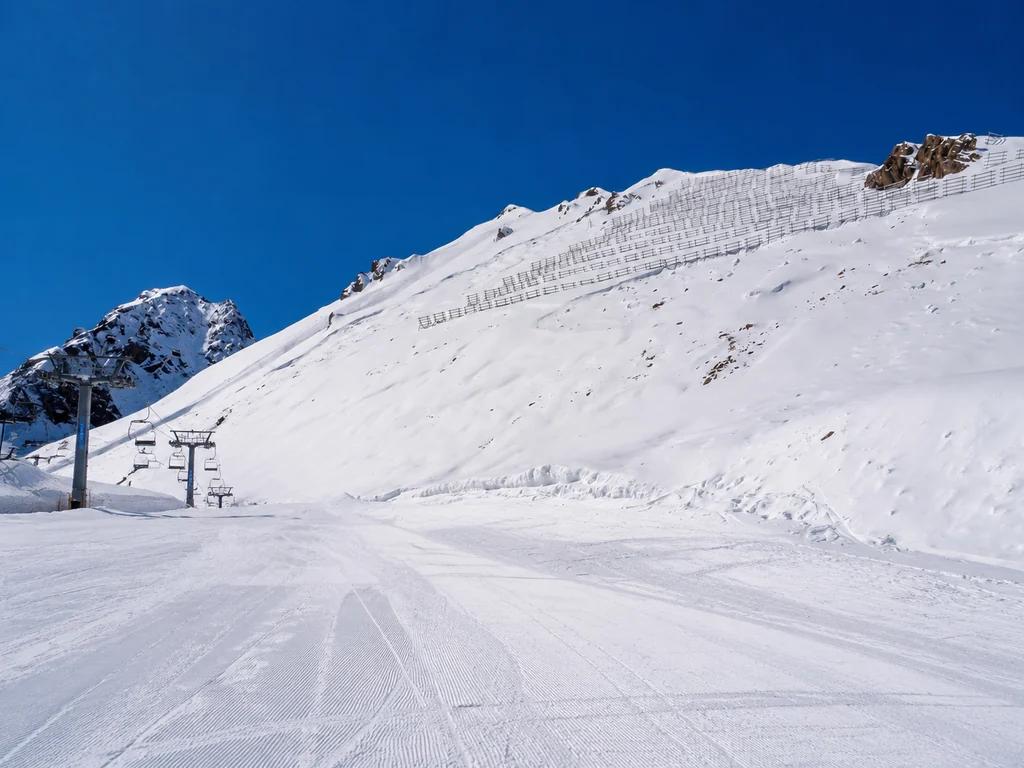
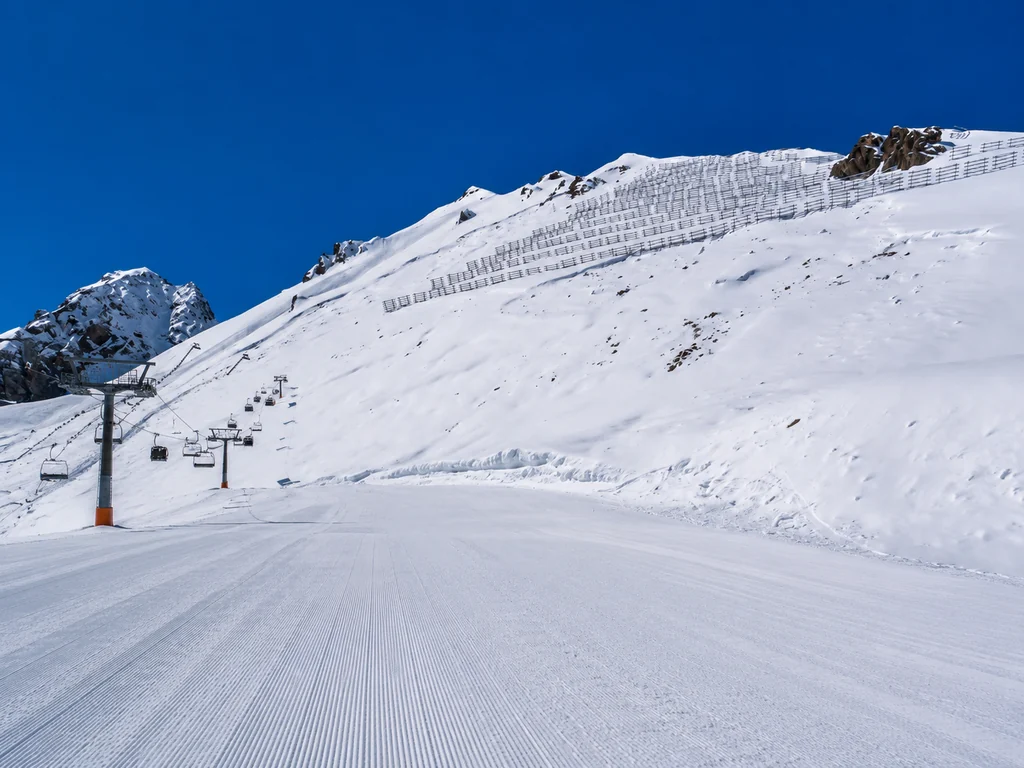
Medeu is not just a rink. The dam above it, built in the 1960s and 1970s, holds back a mudflow lake and is itself an engineering landmark; the valley behind it leads up towards Shymbulak and the high passes of the Zailiysky Alatau. Even in summer, when the ice is gone, the gorge is cool and shaded, and the road up from the city gives you a clear sense of how quickly Almaty rises into the mountains.
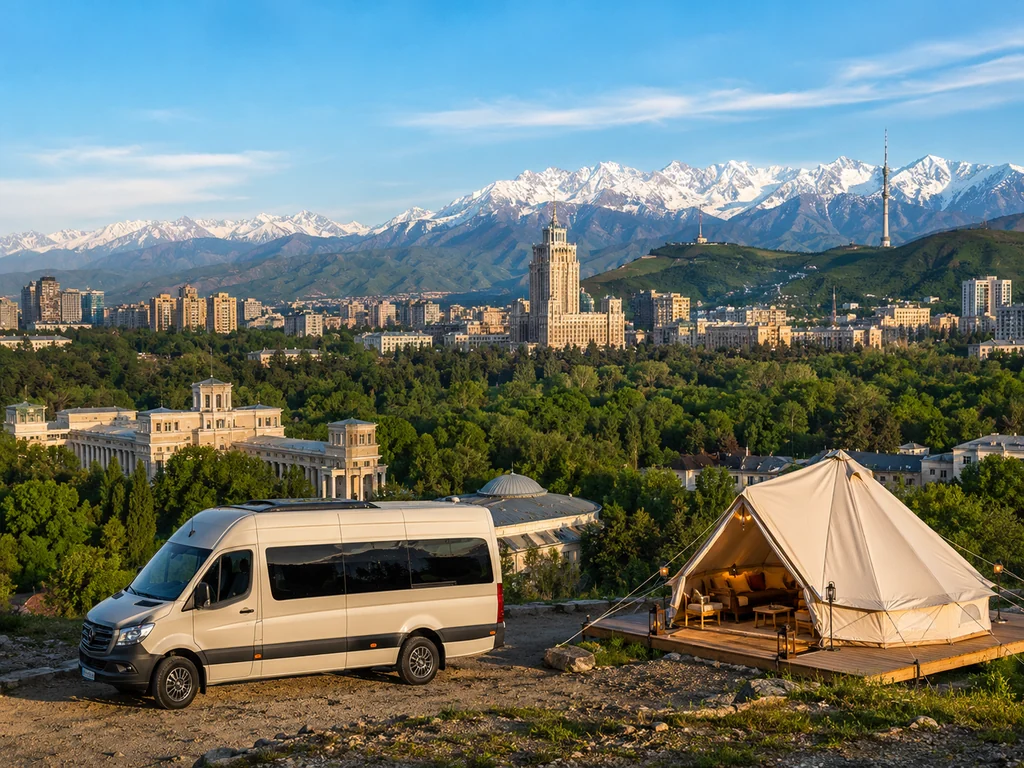
Kok-Tobe offers a different perspective: a wide panorama over the city grid, the green belt, and the wall of the Zailiysky Alatau to the south. On clear days you can see the snow-capped peaks of the Zailiysky Alatau, though they are often in cloud. The hill is a popular spot at sunset, and the five-hour tour is timed to allow for that if you start in the afternoon.
Both Medeu and Kok-Tobe are accessible by road, and the individual car format means you can spend more time at whichever viewpoint suits you. Weather matters here: after rain or snow, roads in the gorge can be slippery, and the panorama from Kok-Tobe is best on clear, dry days. The tour runs daily, with the start time agreed at booking.
Local Guide, Local Interests
The two-hour "Almaty City Tour with a Local Guide" is an individual walk that adapts to your interests — architecture, history, or food. It covers the main sights, from green parks to Soviet mosaics, but the route is shaped around what you want to see. Because it is short, it works well as an orientation on your first morning in the city, or as a focused deep dive if you already know the basics.
Two hours on foot in the centre is comfortable in almost any season, though summer afternoons can be hot and winter mornings icy. The guide can adjust the route to include more shade in summer or more indoor stops in winter. The exact meeting point and the final route are confirmed when you book.
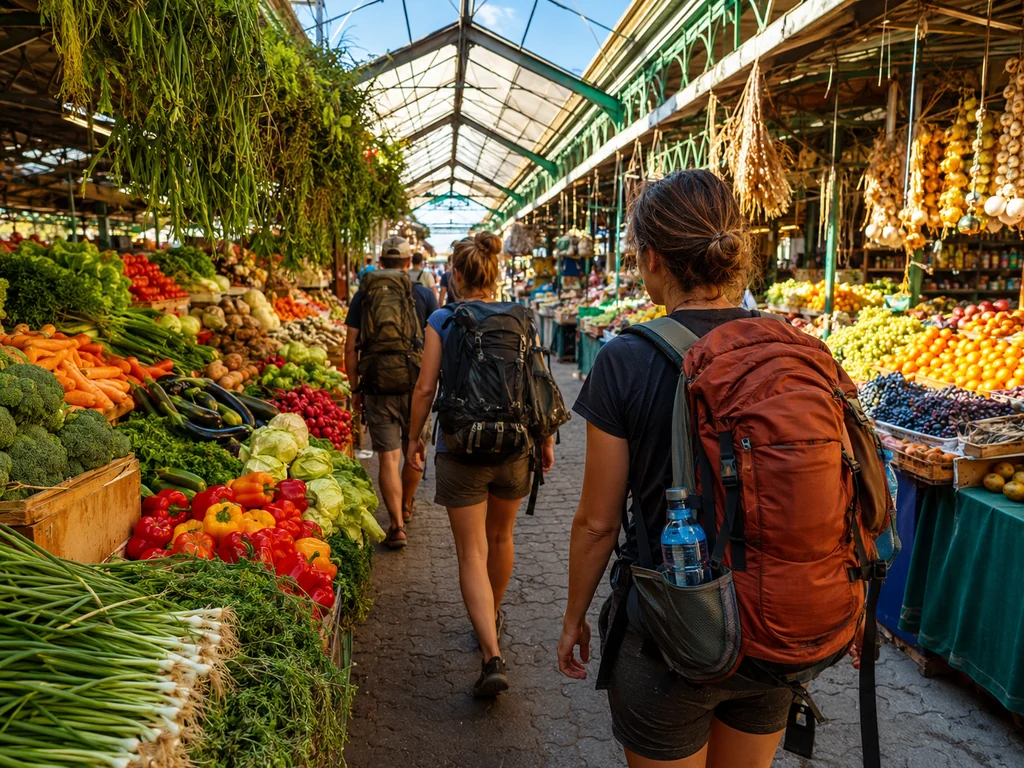
If your interest is food rather than architecture, the five-hour "Gastrotour of Almaty" is a group walk that goes through the Green Bazaar, with tastings of baursak and kumys, and a meal in an authentic cafe. It is a different way of reading the city: through markets, dairy products, and the daily rhythm of a southern capital. The tour runs daily, and the format is group, on foot.
Excursions in Almaty for Food, Culture and Daily Life
The Green Bazaar and What to Taste
The Green Bazaar is one of the oldest market sites in Almaty, and it is still the best single place to understand what the region produces. Dried fruit from the Fergana Valley, fresh and dried meat, horse-milk products, honey, nuts, and spices are all here. A gastrotour typically starts with a walk through the rows, then moves to tastings: baursak (fried dough), kumys (fermented mare's milk), and often shubat (fermented camel's milk) as well.
The five-hour gastrotour is a group walk, so you move at a shared pace and the guide handles the ordering and explanations. It is a good format for travellers who want to try many things without committing to a full meal at each stop. The tour runs daily, and the exact start time is confirmed at booking.
If you have dietary restrictions, it is worth mentioning them when you book, as some tastings involve dairy or meat. The guide can usually adapt, but the earlier you say, the easier it is. The bazaar itself is busiest in the morning, and the atmosphere is different on weekends compared to weekdays.
City Life, Parks and Mosaics
Almaty is a green city by Central Asian standards, with wide boulevards, irrigation channels, and parks that were planned in the Soviet period and are still maintained. The two-hour local-guide walk can focus on this layer: the mosaics on Soviet-era buildings, the tree species along the boulevards, and the way the city uses water to keep the streets cool in summer. It is a different kind of sightseeing, closer to everyday life than to monuments.
This walk is individual and on foot, so it can be shaped around your pace and interests. If you are interested in architecture, the guide can point out constructivist and modernist details; if you are interested in history, the same buildings become markers of the city's twentieth-century changes. The tour runs daily, with the start time agreed when you book.
For a broader cultural overview, the three-hour "Walking Tour of Almaty's Highlights" links Abai Square, the old centre, and Park 28 Panfilov Guardsmen. It mixes legends, architecture, and the general feel of the southern capital, and it is an individual walk, so it can be adjusted to your interests. It runs daily, with the start time confirmed at booking.
Architecture as a Timeline
The three-hour "From Wooden Architecture to Soviet Modernism" is essentially a timeline you walk through. The wooden houses of the nineteenth century were built for a town of merchants and officials, with deep foundations and light walls to handle earthquakes. The constructivist buildings of the 1920s and 1930s introduced new public functions — clubs, schools, baths — with simple geometric forms. The Stalinist and post-Stalinist layers added scale and monumentality, and the late Soviet period brought wide, shaded public buildings and large housing districts.
Walking this route, you notice how each period solved the same problems — heat, cold, earthquakes, dust — with different materials and different ideas about public space. The tour is individual and on foot, which makes it easy to stop and look at details. It runs daily, with the start time agreed at booking.
If you want a shorter version of the same idea, the two-hour audio excursion touches on similar themes in the old centre, but through music and narration rather than a guide. It is a good option if you prefer to move alone and listen at your own pace.
Excursions in Almaty: Seasonality and Preparation
What Each Season Feels Like
Almaty has a continental climate with four distinct seasons. Spring (March–May) brings blossom, mild temperatures, and occasional rain; the mountains still hold snow, and high routes may be closed. Summer (June–August) is hot in the city, often above 30 °C, but cooler in the gorges and at altitude; this is the best season for mountain day trips and for long walks in the early morning or evening. Autumn (September–November) is mild and dry, with golden trees in the city and clear views of the mountains; it is arguably the best season for both city and mountain excursions. Winter (December–February) is cold, with snow in the city and heavy snow in the mountains; city walks are still possible with proper clothing, but high-altitude routes depend on road conditions.
For city tours on foot, the main practical issue is ice in winter and heat in summer. For bus and car tours, the main issue is traffic, which is heaviest on weekday mornings and evenings. For mountain routes, snow cover and road access determine what is possible, which is why some tours are marked "check dates" rather than daily.
The table below summarises the general seasonal picture for different types of excursions in this section. It is a guide to what to expect, not a guarantee of conditions on a specific date.
What to Bring and How to Prepare
For any walking excursion in Almaty, comfortable shoes are the single most important item. The city centre is mostly flat, but pavements can be uneven, and in winter ice is common. Layered clothing works best: mornings and evenings are cooler than midday, and mountain areas are cooler than the city at the same hour. A light rain jacket is useful in spring and autumn, and sun protection — hat, sunscreen, sunglasses — is useful from May to September.
For bus and car tours, the main preparation is timing: start early if you want to avoid traffic, and carry water, especially in summer. For mountain day trips, add a warm layer even in summer, because temperatures at altitude can be 10–15 °C lower than in the city, and weather can change quickly. If a route involves walking on rough ground, shoes with good grip are better than smooth-soled trainers.
- Comfortable shoes with good grip for uneven pavements and mountain paths
- Layered clothing: light base layer, warm mid-layer, windproof outer layer
- Water bottle, especially for summer walks and long bus days
- Sun protection: hat, sunscreen, sunglasses from May to September
- Rain jacket or compact umbrella for spring and autumn
- Small backpack for personal items on longer excursions
If you have any health conditions that might affect walking at altitude or in heat, mention them when you book so that the route can be discussed. Age and weight restrictions, where they exist, are confirmed at booking rather than published in advance.
How to Choose Between Tours
The first question is how much time you have and how much you want to walk. Two-hour audio and local-guide walks are ideal if you have a half-day and want an introduction. Three-hour walks go deeper into architecture, history, or hidden courtyards. Four- and five-hour bus and car tours cover more ground and include viewpoints such as Medeu and Kok-Tobe. The five-day tour is for travellers who want to combine the city with the wider region, including Charyn Canyon and the Kolsai lakes.
The second question is format. Group tours are fixed in pace and schedule but often cheaper per person; individual tours are flexible but priced accordingly. The third question is season: mountain routes are best in summer and early autumn, while city walks work year-round. The table below compares the tours mentioned in this article by duration, format, and transport, so you can see the differences at a glance.
None of these tours is strictly better than another; they answer different questions. A short walk is not a lesser version of a five-day tour, and a bus tour is not a substitute for a walk. The right choice depends on your time, your interests, and how much you want to move on foot.
Longer Excursions in Almaty: Day Trips and Multi-Day Routes
Borove and the Maral Farm in One Day
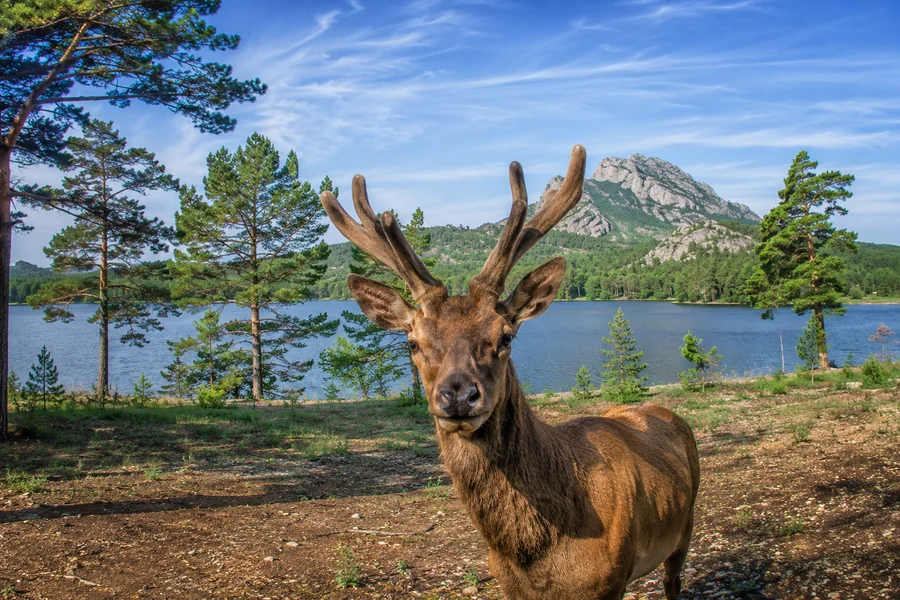
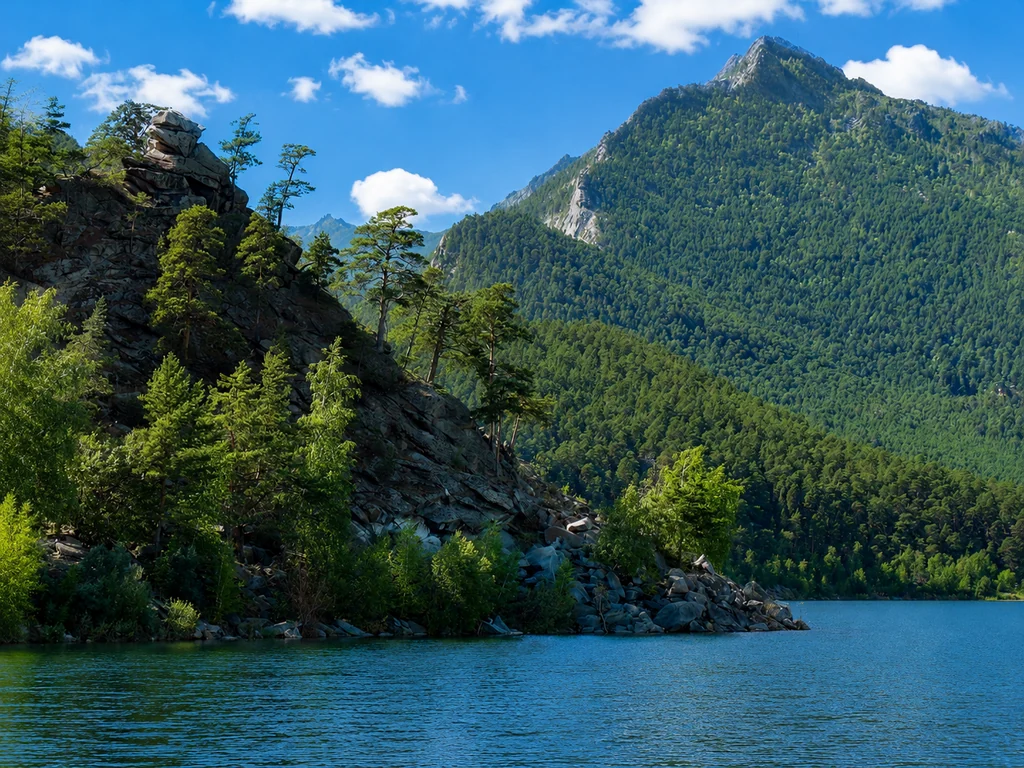
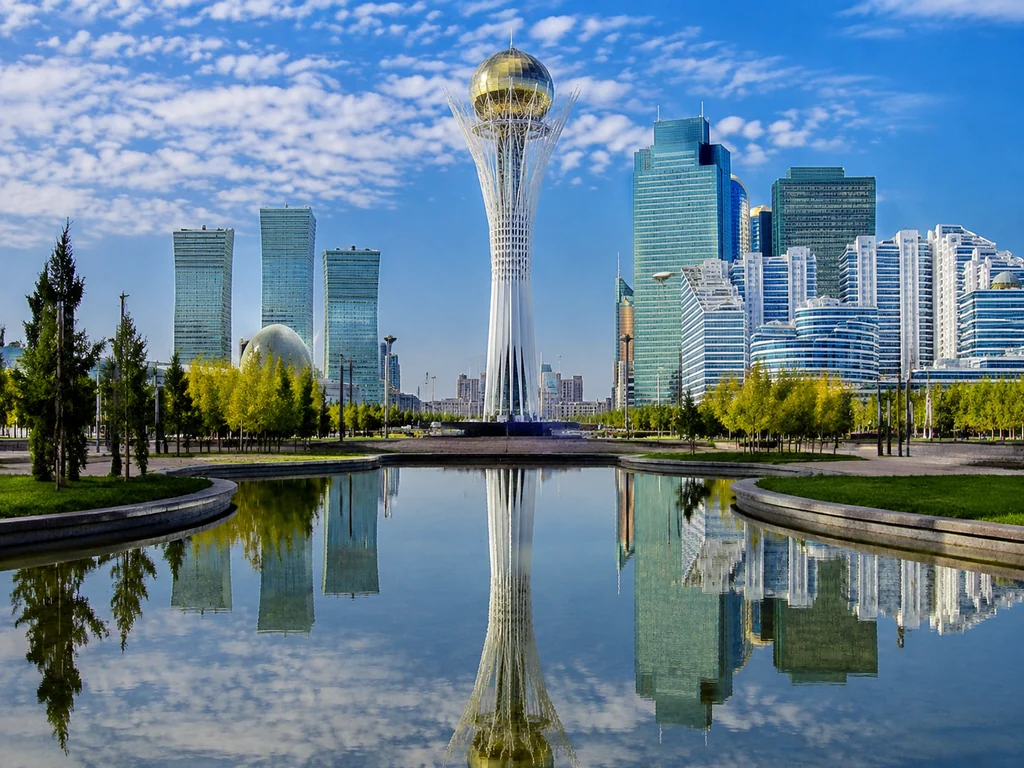
The 14-hour group bus tour to Borove and a maral farm starts in Astana: you travel from Almaty to Astana on your own the day before (by train or plane), and the bus leaves Astana at 06:00 and is back at about 20:00. Borove (Burabay) is a lake district with pine forest, granite hills, and clear water, often described as a pearl of Kazakhstan. The day includes time at the maral farm, where you can see the animals and learn about antler products, and time at a lake beach and viewpoints.
Because it is a long day, preparation matters: comfortable shoes, a warm layer for the evening, water, and snacks are useful. The bus format means you move as a group, with fixed stops. The tour is marked "check dates" rather than daily, because it depends on seasonal conditions and scheduling. The exact itinerary and any extras are confirmed at booking.
This is a good option if you want to see a different landscape from the mountains — forest, lake, and steppe — on a day trip from Astana. It is a long day, but the driving is broken up by stops, and the return is in the evening.
The Five-Day Tour of Almaty and the Region
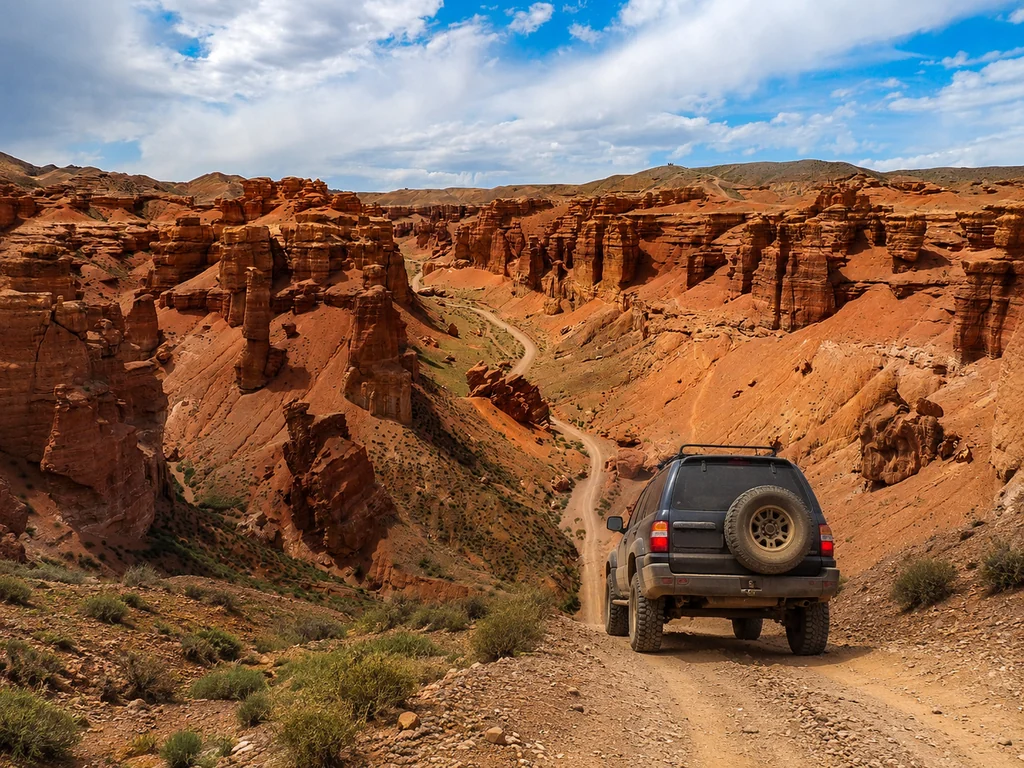
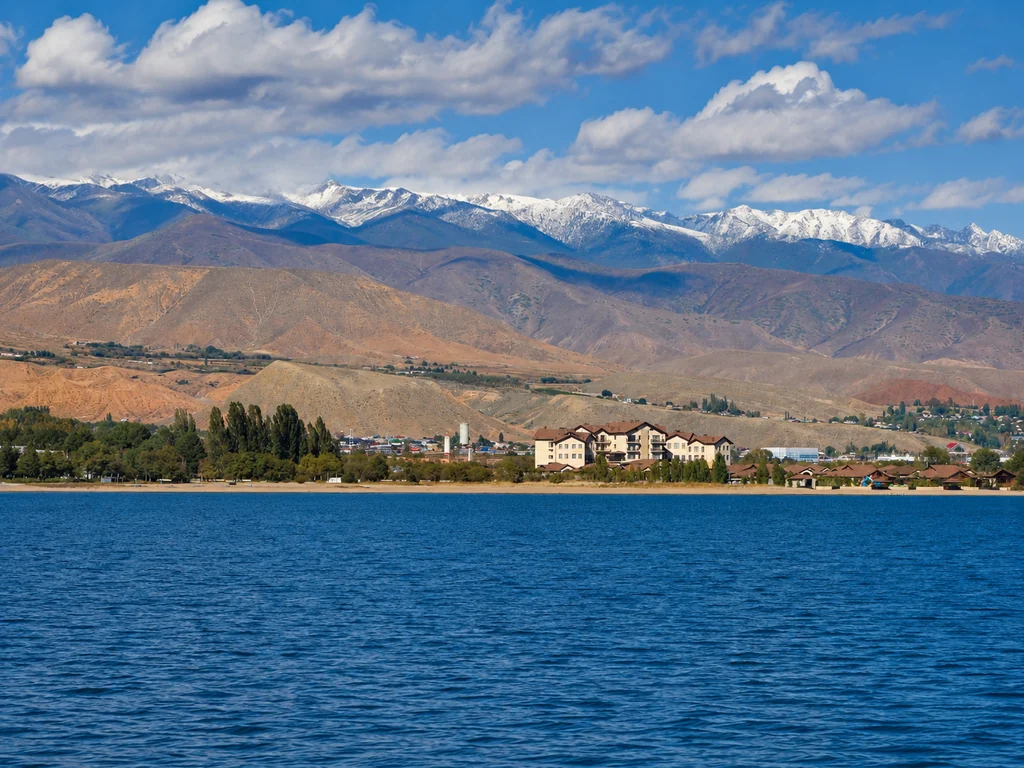
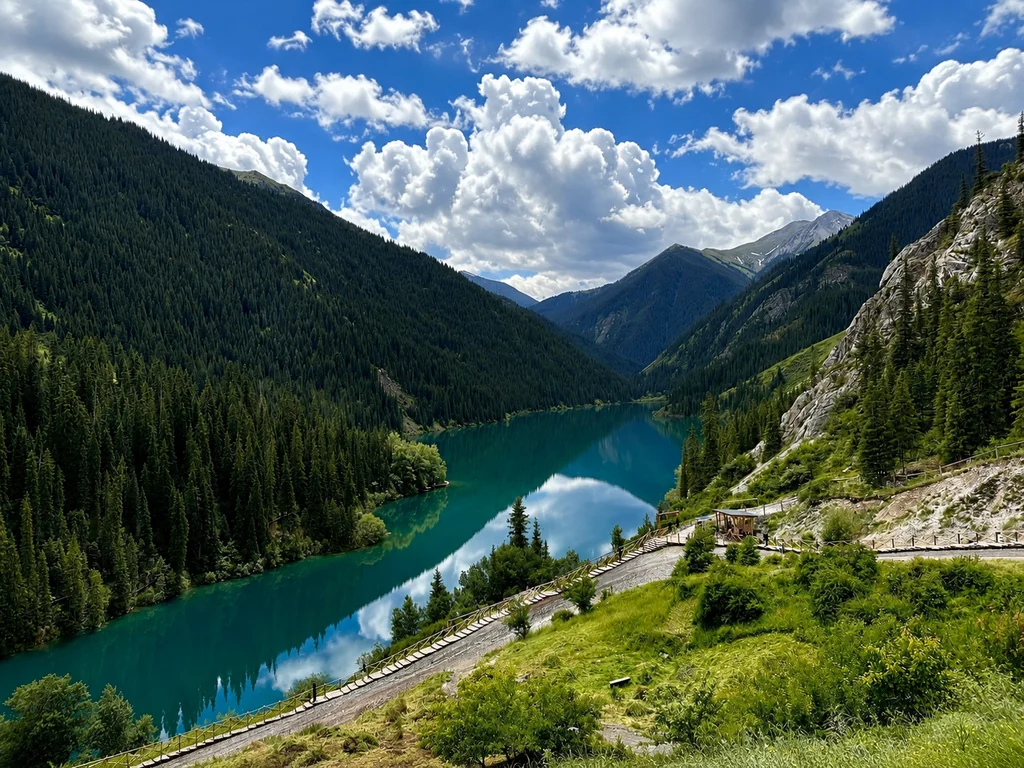
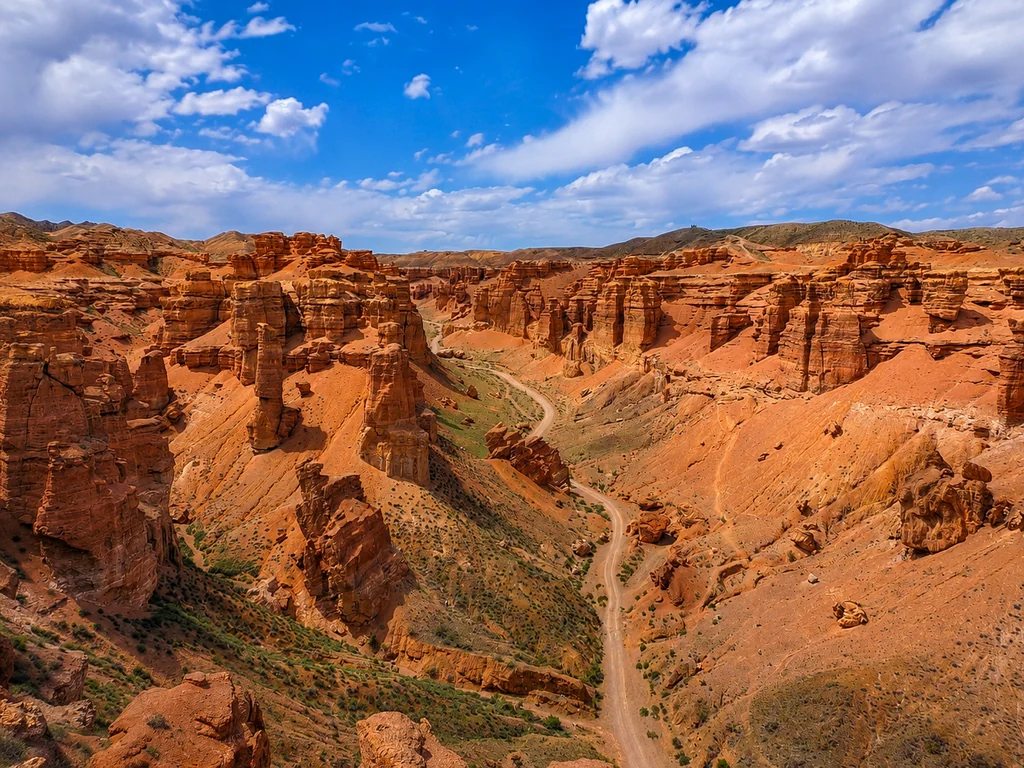
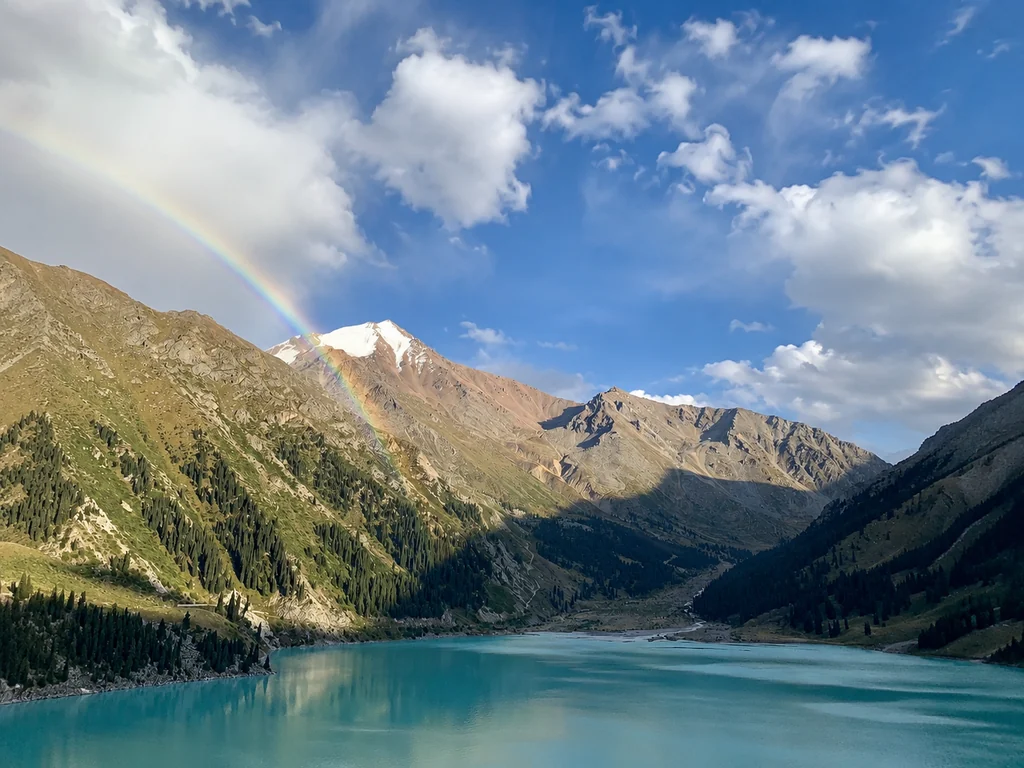
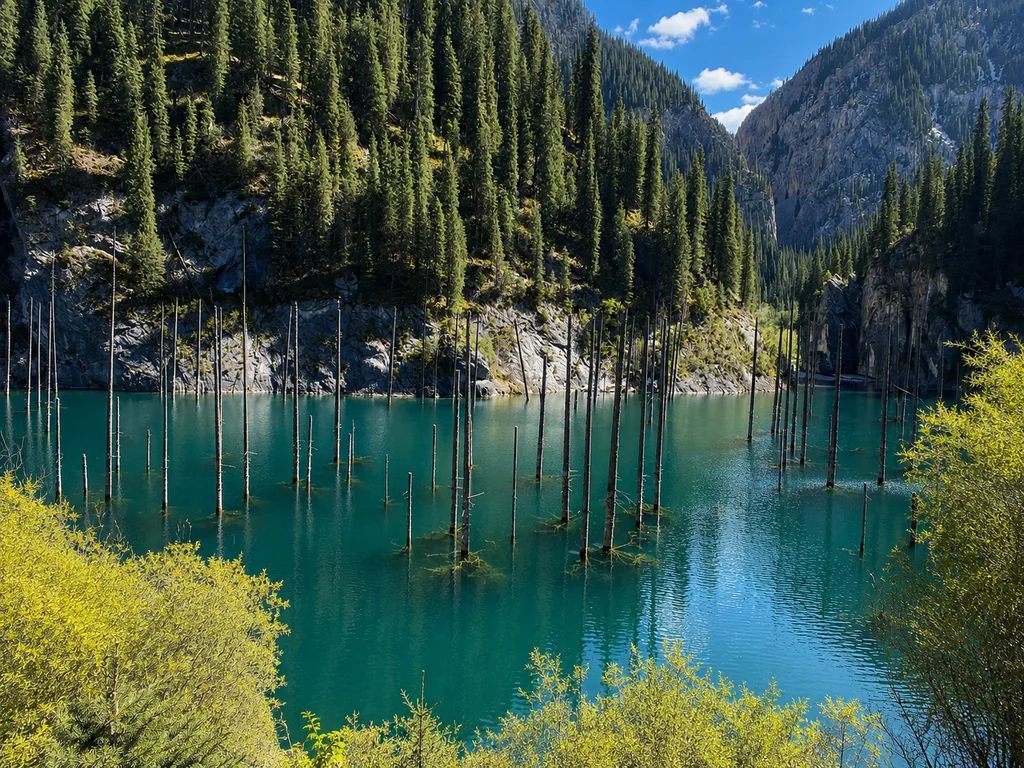
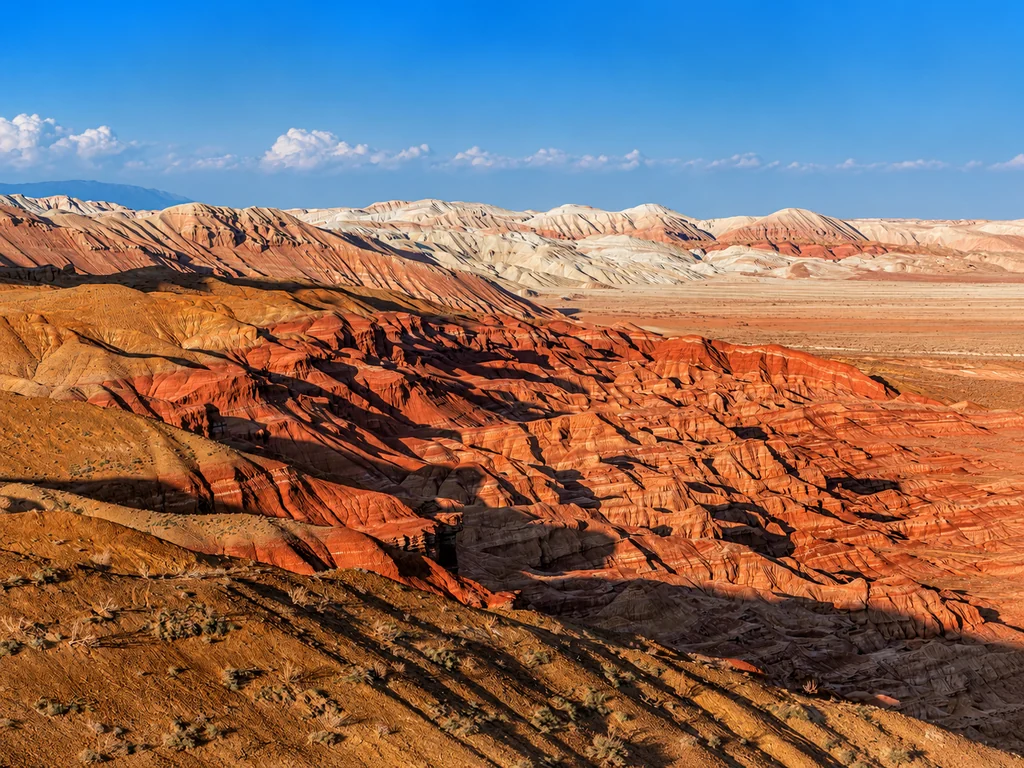
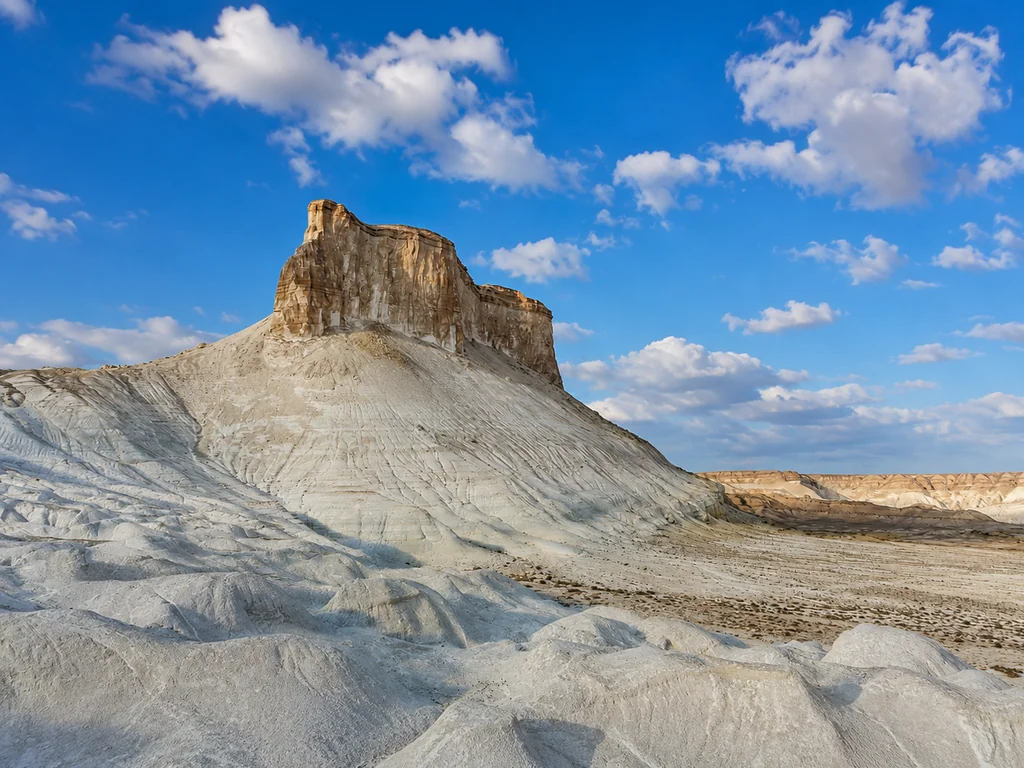
The five-day, four-night small-format bus tour is the longest excursion in this section, and it combines the city with the wider Almaty region. The route includes Charyn Canyon, with its red sedimentary walls and the Valley of Castles section; the Kolsai lakes, a chain of mountain lakes in the Kungey Alatau; and Big Almaty Lake, a high-altitude reservoir in the Zailiysky Alatau. The tour starts on Monday, Wednesday, and Friday at 09:00, and nights are spent in hotels along the route.
Distances in the region are significant: Charyn Canyon is roughly 200 kilometres east of Almaty, and the Kolsai lakes are further east and higher, at around 1,800–2,800 metres above sea level. The route is designed with comfortable transfers and overnight stops, but days are still full. This is not a tour for travellers who want to stay in one place; it is for those who want to see several very different landscapes in a short time.
Preparation for this tour includes layered clothing, comfortable walking shoes, sun protection, and a willingness to spend several hours a day on the road. Mountain weather can change quickly, and some sections may be adjusted depending on conditions. The exact itinerary, meeting point, and any extras are confirmed at booking.
Mountain Landscapes Around Almaty
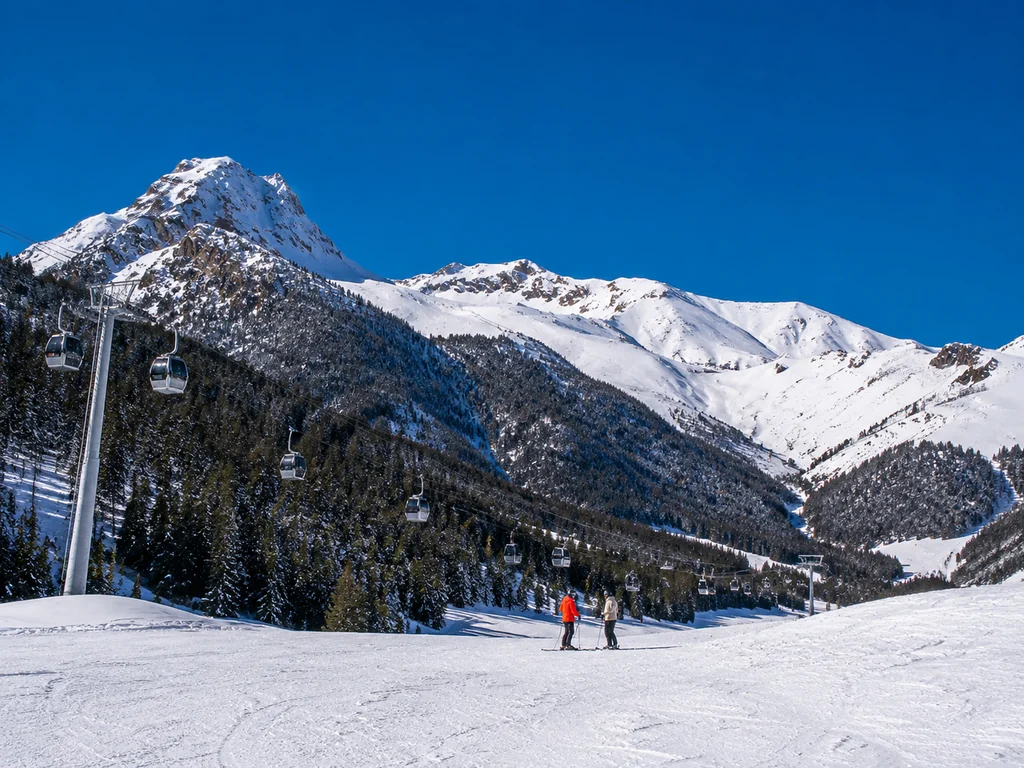
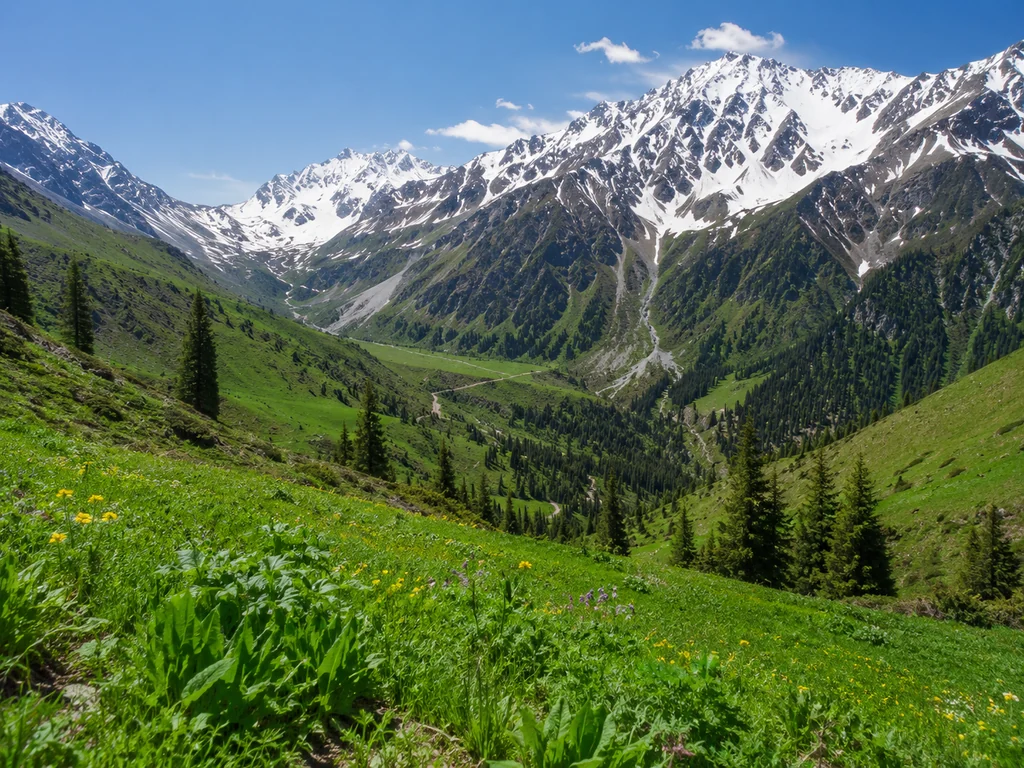
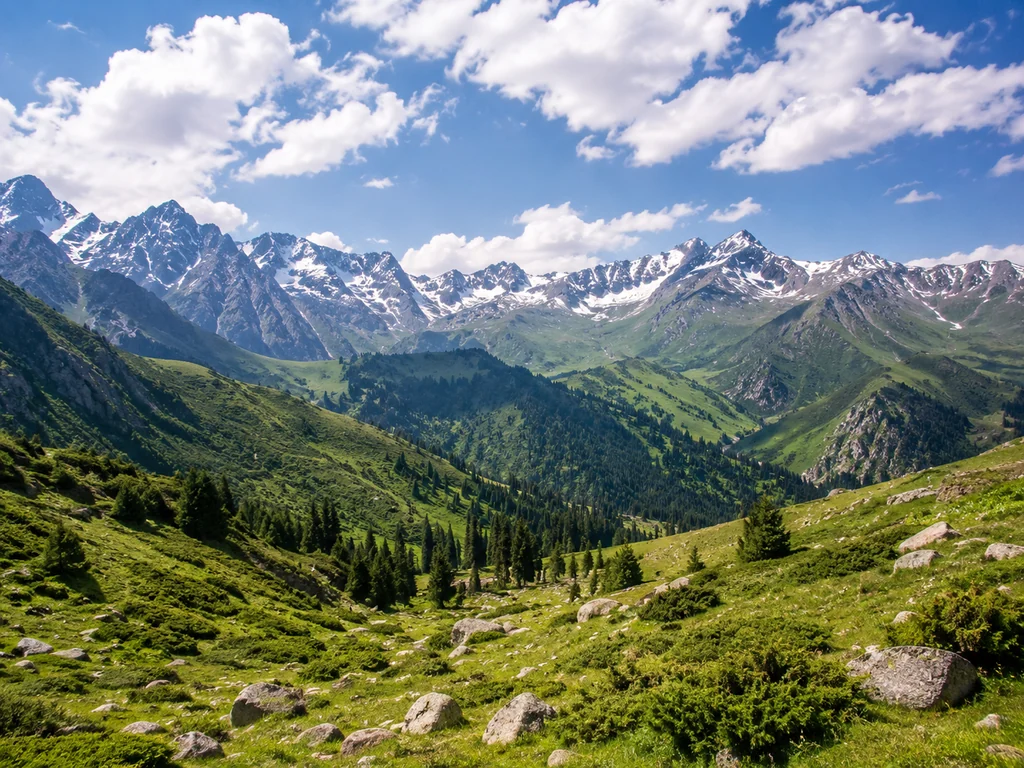
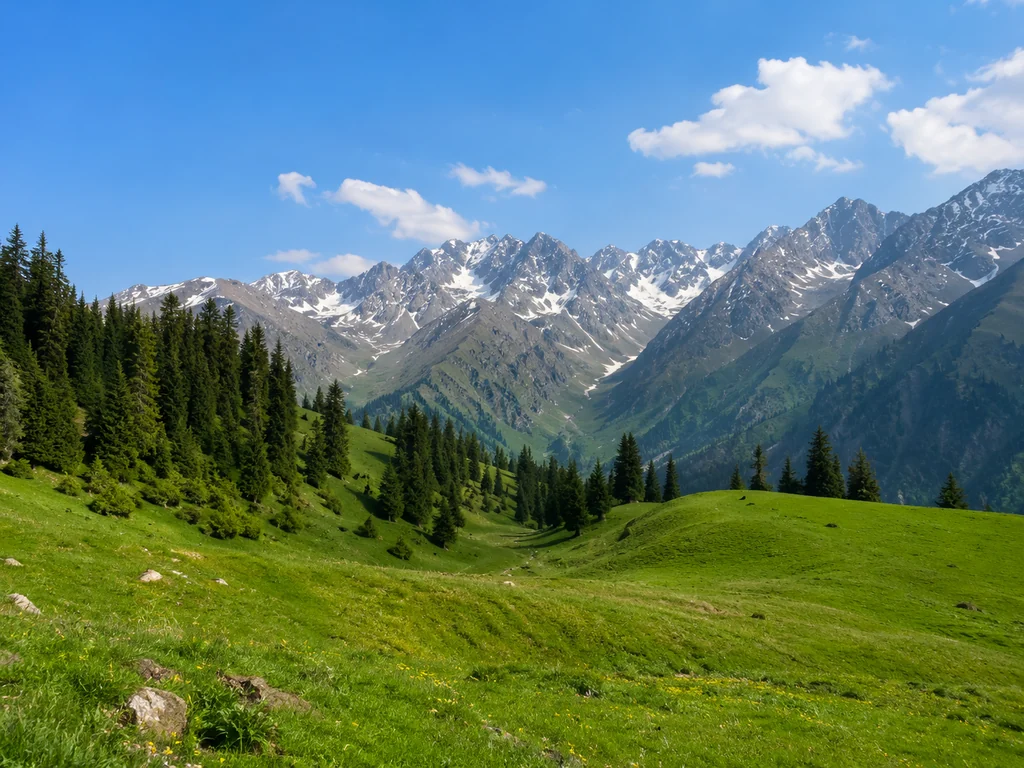
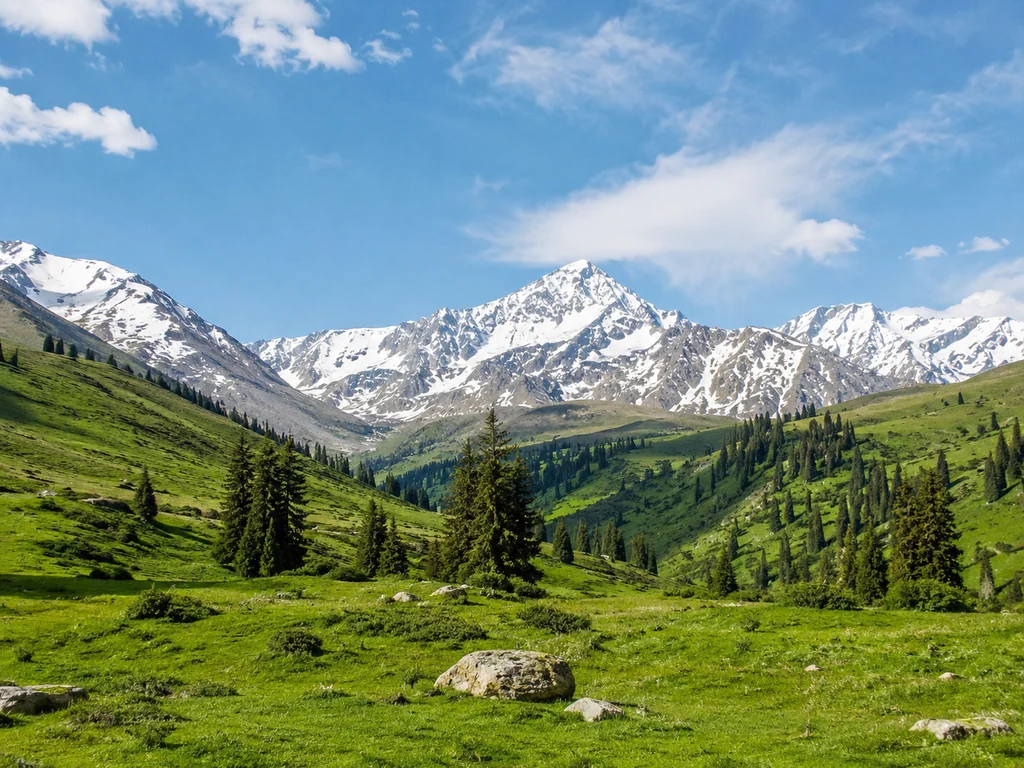
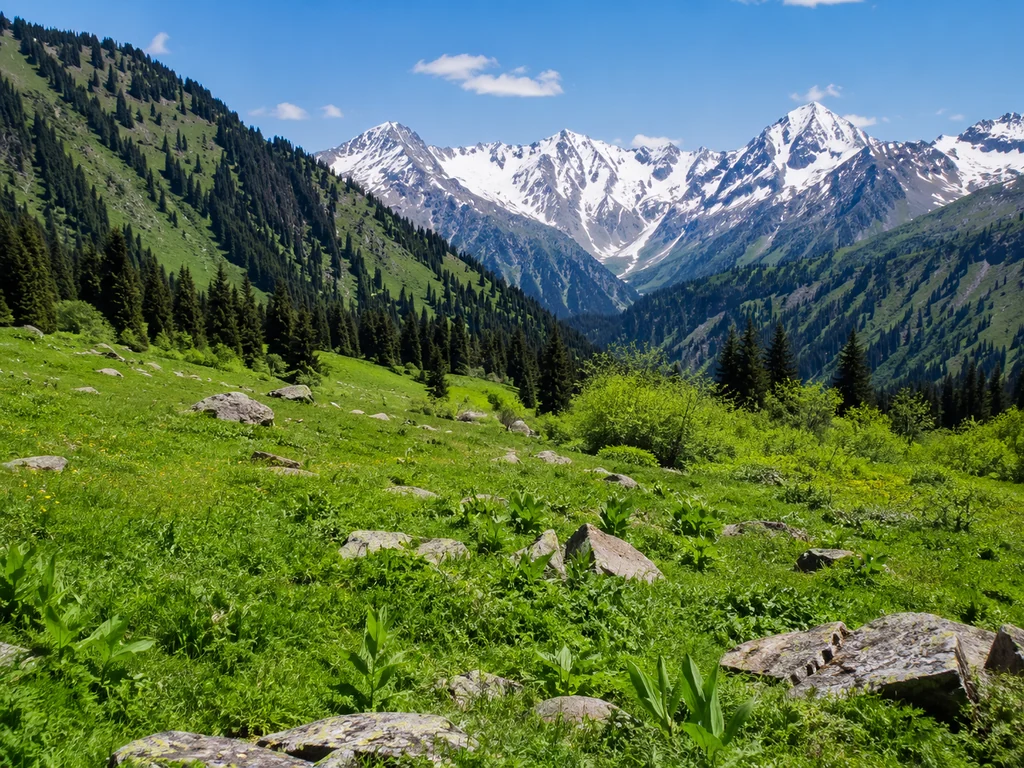
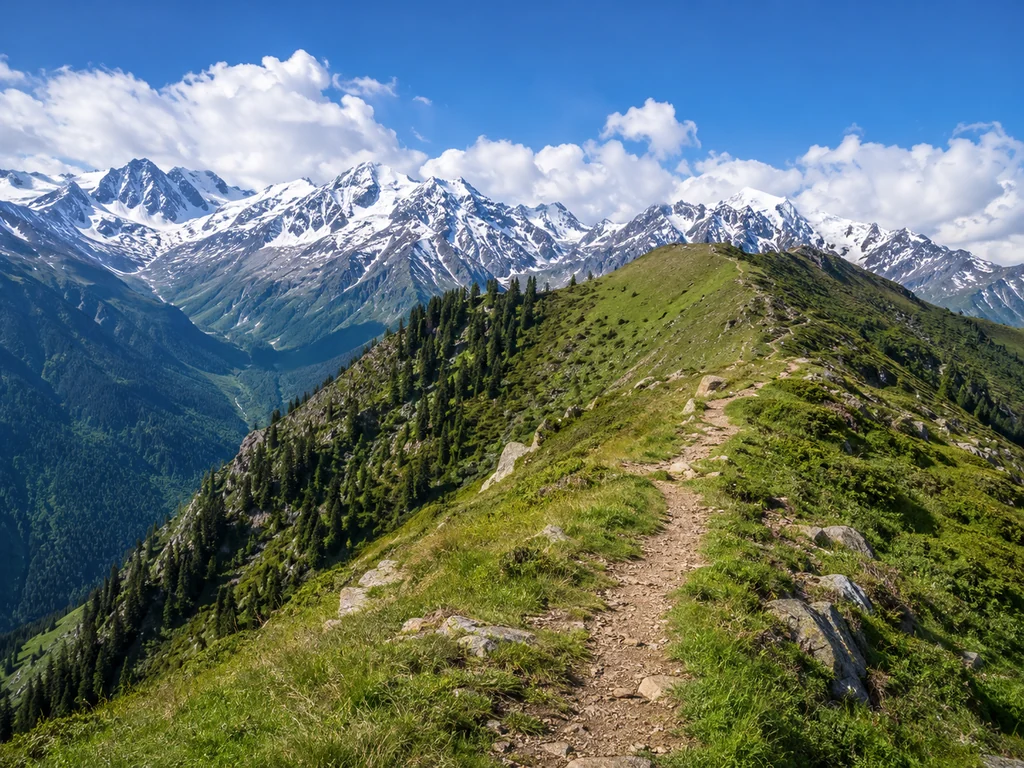
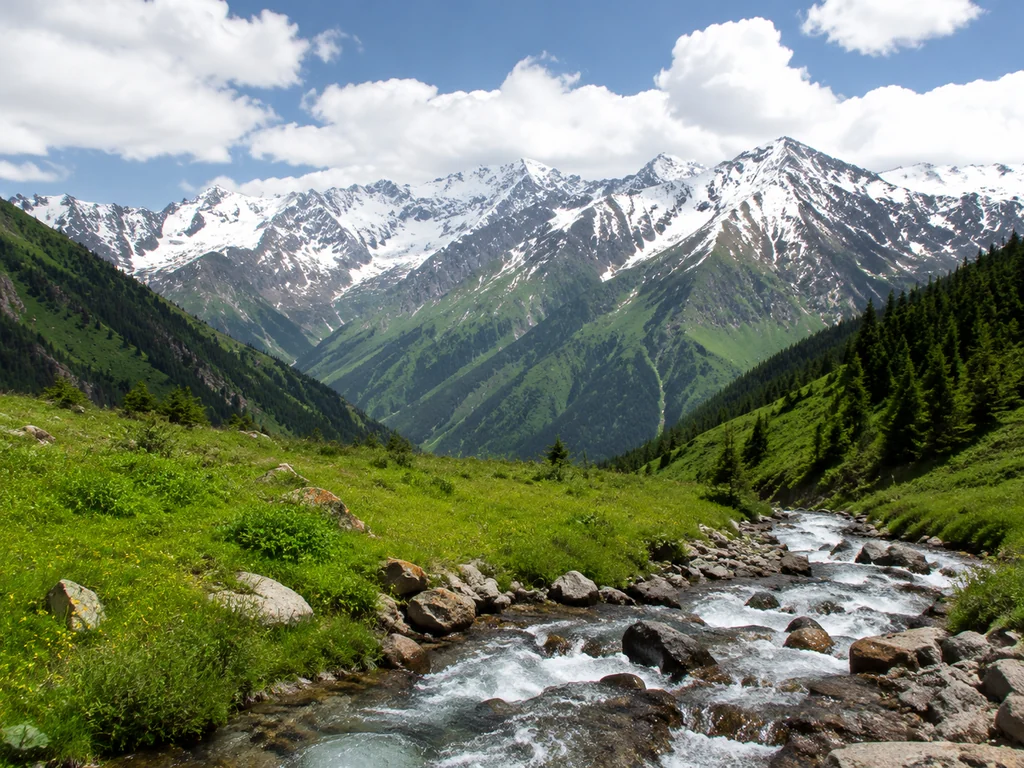
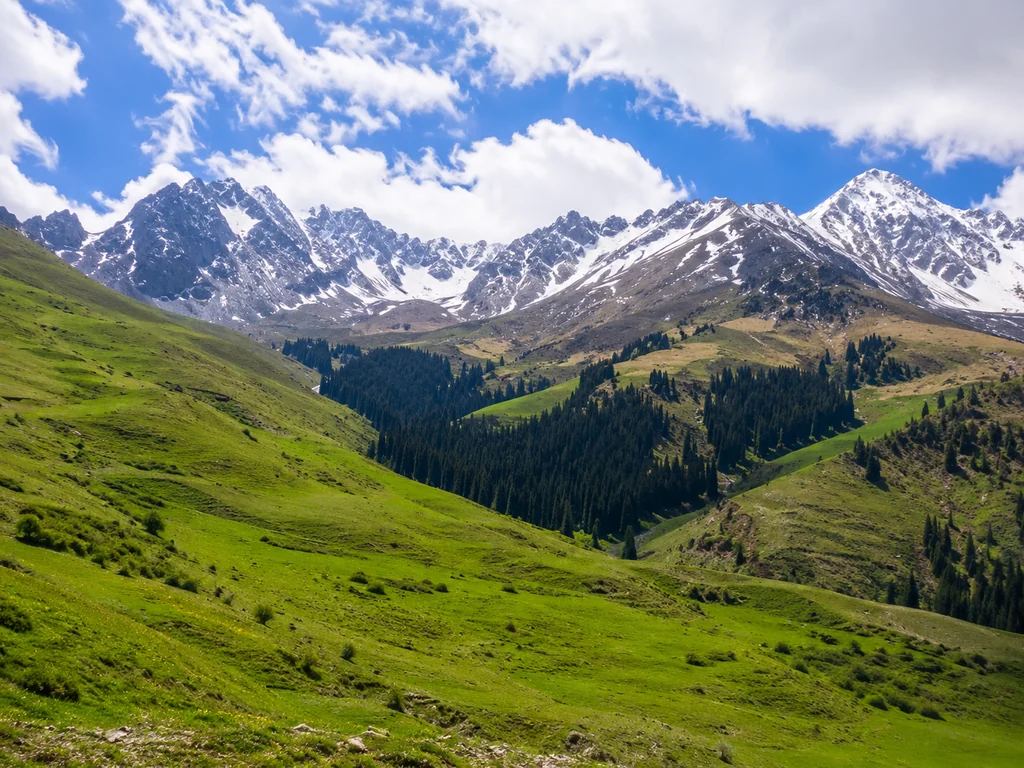
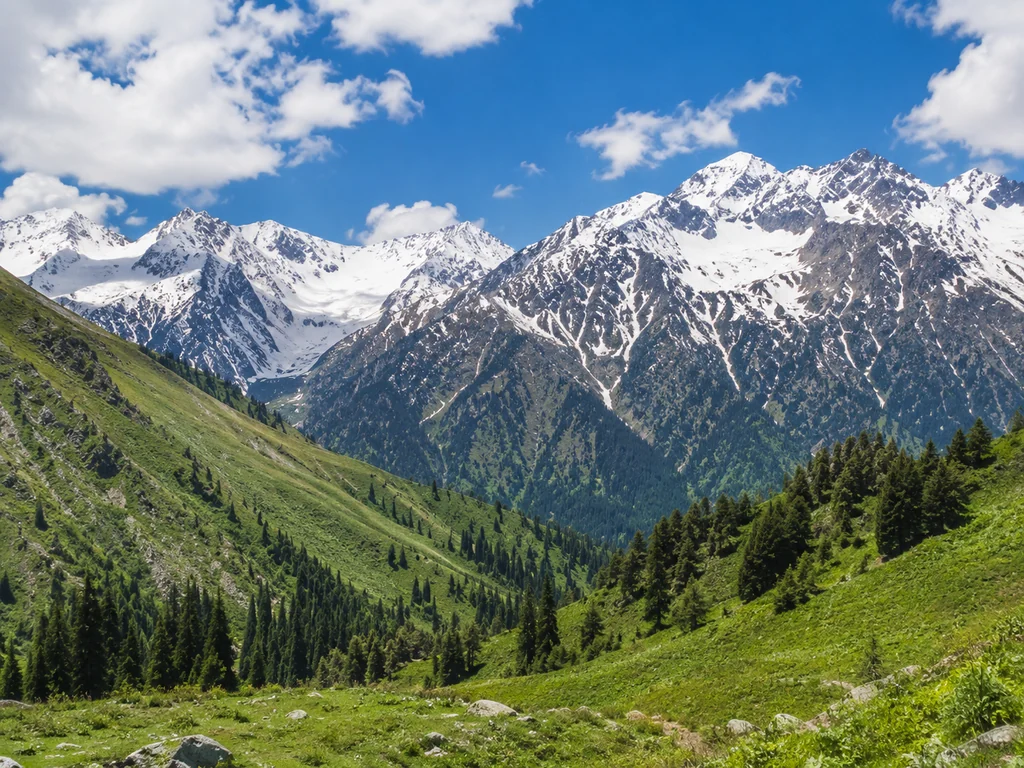
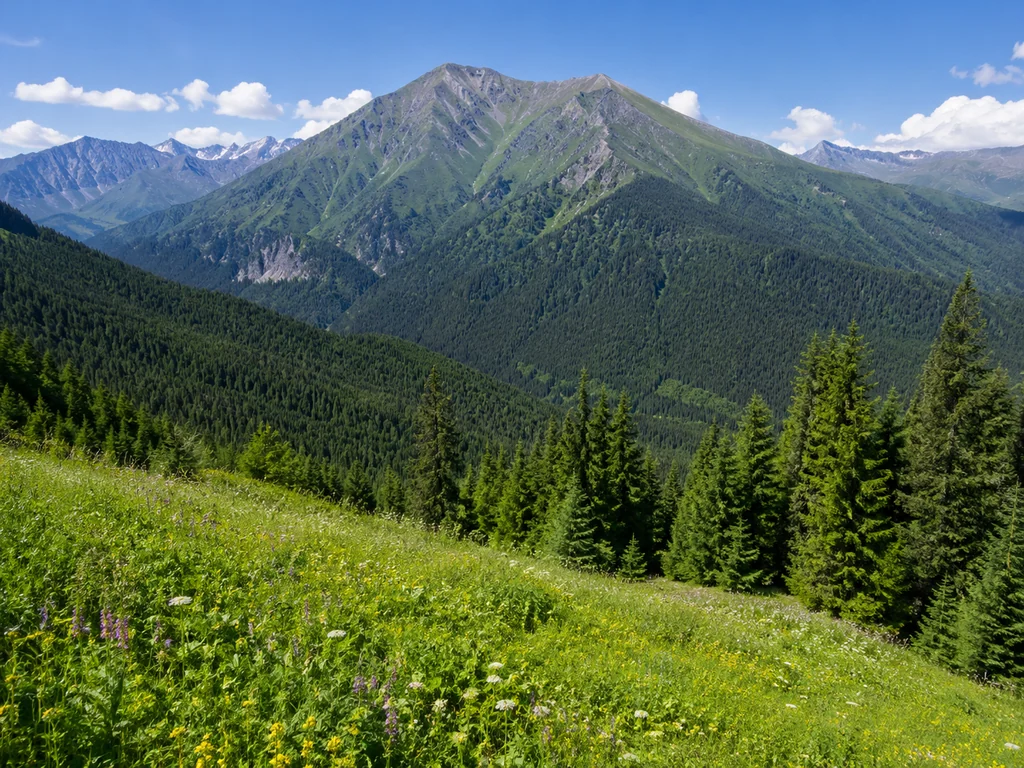
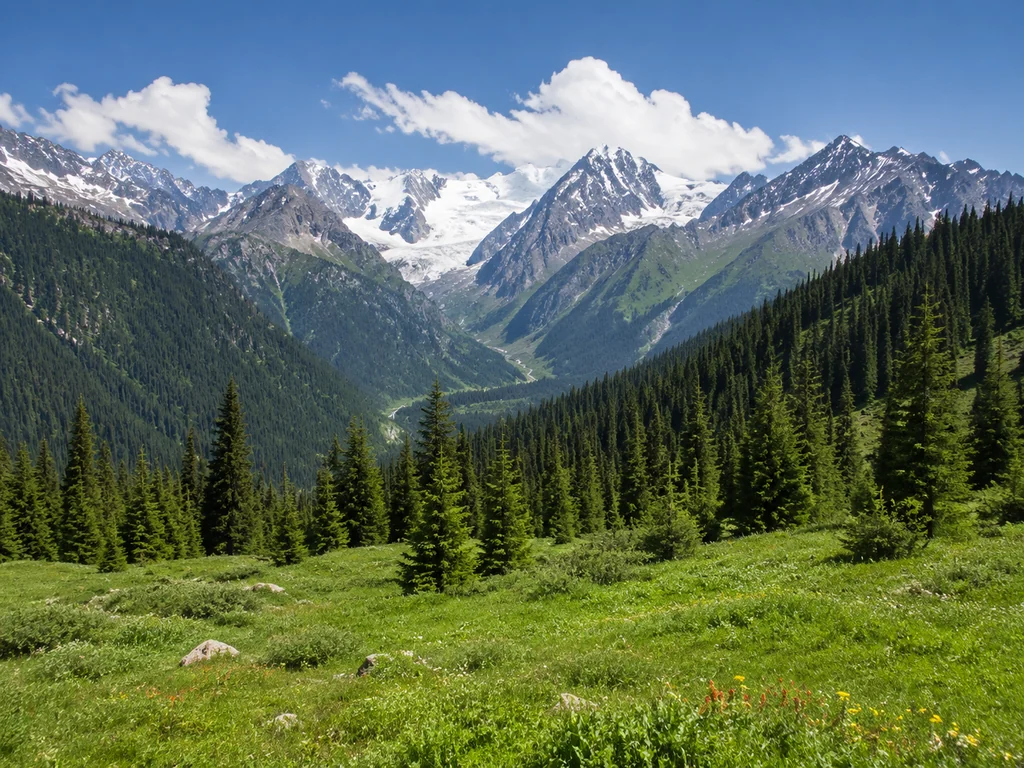
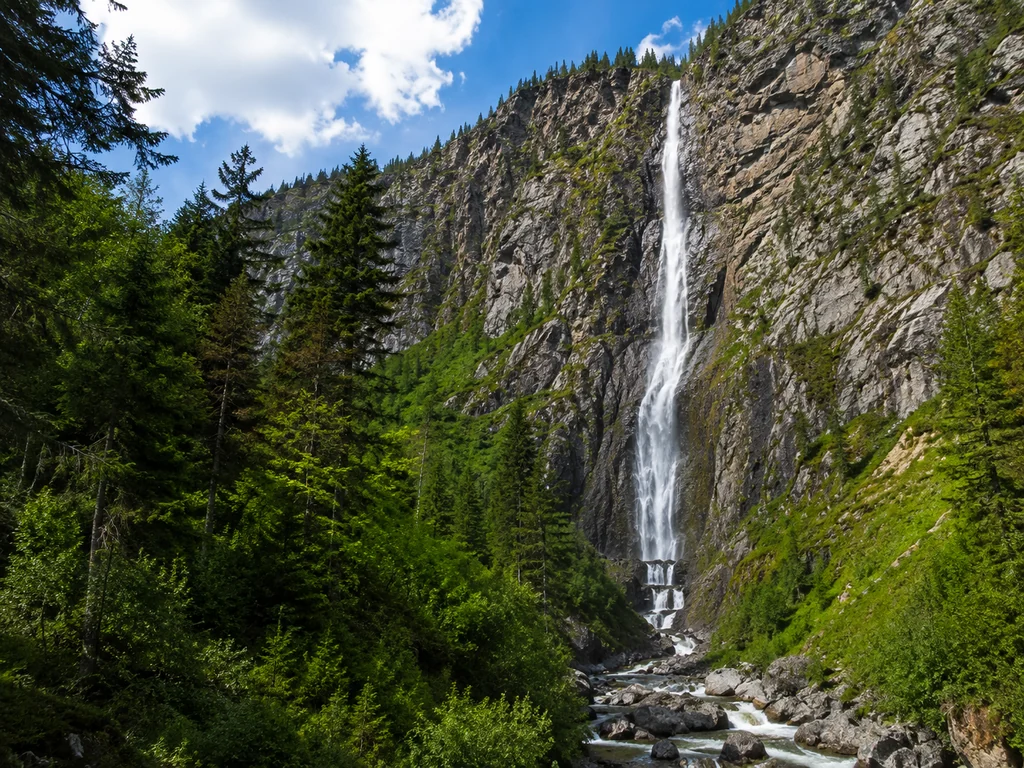
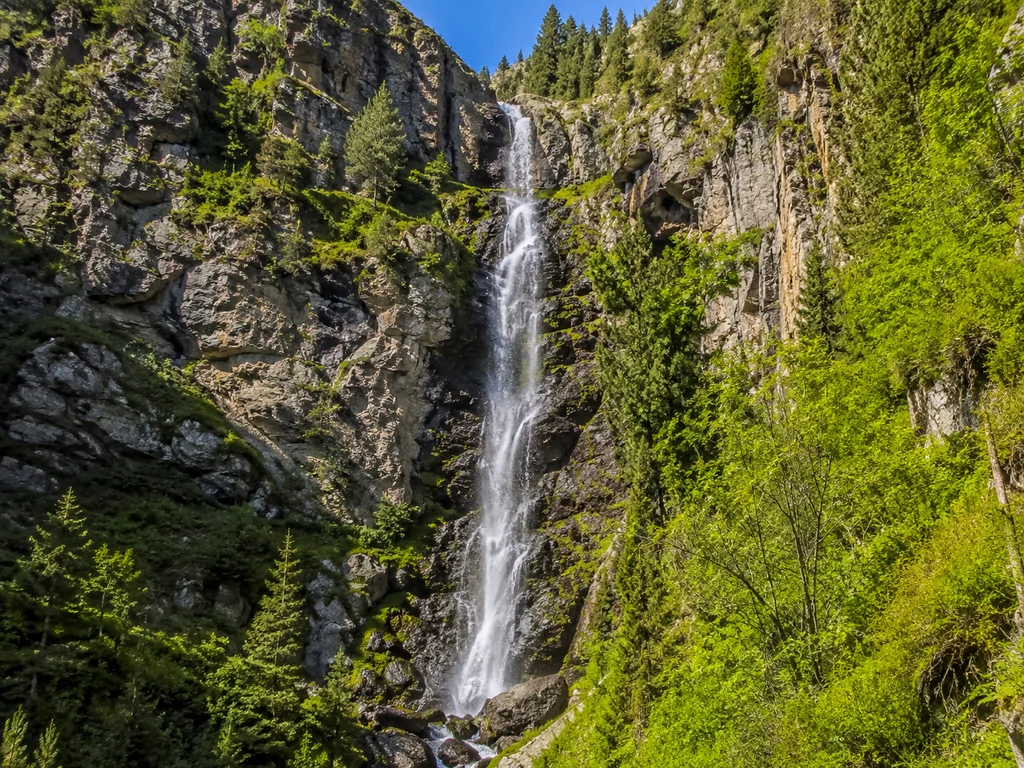
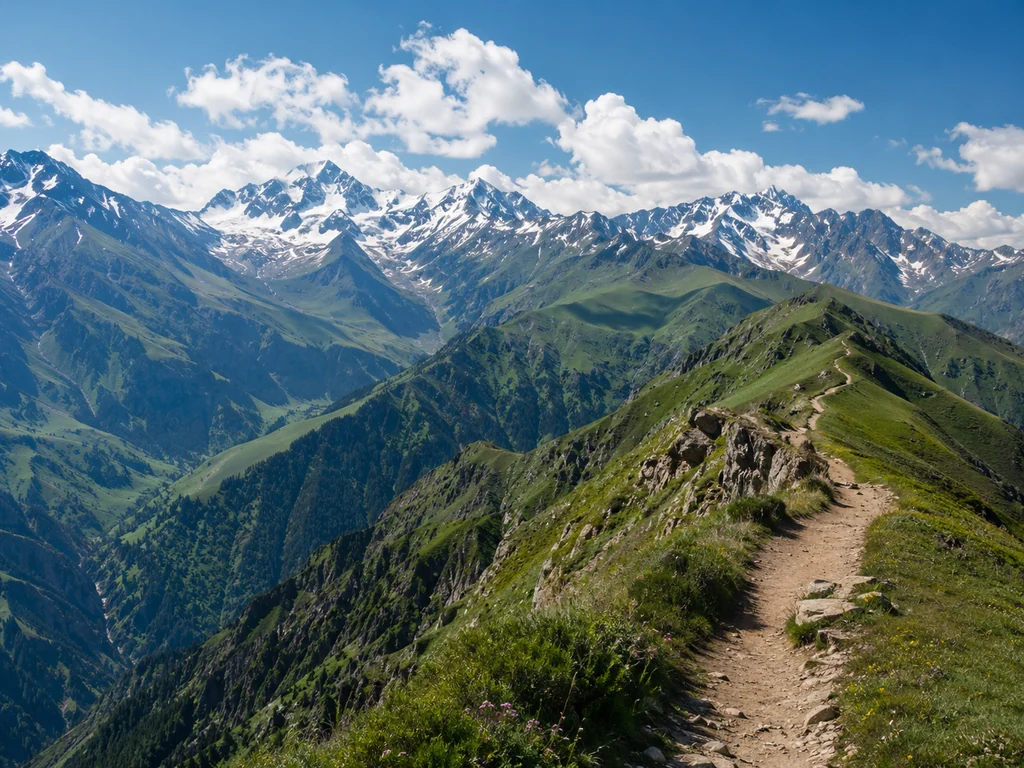
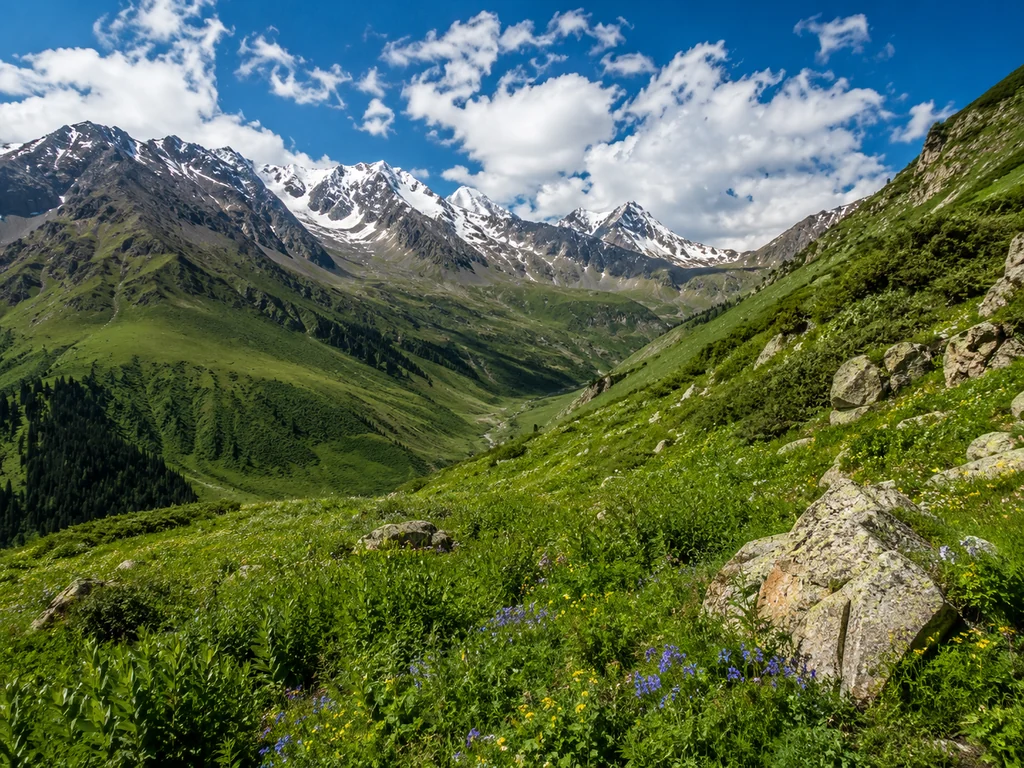
The Zailiysky Alatau rises immediately south of the city, with peaks such as Pobeda Peak (7,439 m) and Khan Tengri (7,010 m) further east in the Tian Shan. Closer to Almaty, the Turgen gorge, the Big Almaty Lake, and the area around Shymbulak offer accessible high-mountain scenery. The region also includes the Dzungarian Alatau to the north-east, the Ili river and Kapchagay reservoir to the north, and the high border zones towards Kyrgyzstan and China.
Wildlife in the mountains includes ibex and roe deer, and some areas are used for hunting and fishing under licence. These activities are regulated, and access to border zones requires permits. If a route passes near a border area, the operator will explain the permit requirements at booking; this is a legal requirement, not a company rule.
For day trips, the main constraint is road access. Some gorges and passes are open only in summer, and snow can close them from October or November until May. This is why mountain tours are often marked "check dates" rather than daily. The city itself, by contrast, is accessible year-round, and its parks, bazaars, and architecture can be explored in any season.
Practical Notes for Excursions in Almaty
Meeting Points, Timing and Language
Meeting points for city walks are usually in the centre, near the start of the route, and are confirmed when you book. For bus and car tours, the meeting point may be a central location or your hotel, depending on the tour and the arrangement. Start times vary: some tours are daily with a flexible time, some have fixed starts such as 10:00 and 15:00, and some are marked "check dates" because they depend on weather or scheduling.
Language of guiding is not listed in the tour cards in this section, so it is best to confirm at booking which languages are available for your chosen date. The audio excursion uses recorded narration, so the language of the recording is fixed; the exact language should be confirmed when you book.
For long day trips and the five-day tour, punctuality matters because the schedule includes several stops and long drives. If you are late, the group or the driver may not be able to wait, so it is worth planning your morning accordingly.
Accessibility and Suitability
City walks in the centre are mostly on flat ground, but some routes include uneven pavements, stairs, or courtyards. The audio excursion from Park 28 Panfilov Guardsmen to the Green Bazaar is relatively straightforward, but it is still a two-hour walk. The three-hour walks cover more ground and may include slopes. If you have limited mobility, it is worth discussing the route at booking so that a suitable option can be suggested.
Mountain day trips and the five-day tour involve higher altitudes and rougher terrain. Big Almaty Lake is around 2,500 metres above sea level, and the Kolsai lakes are at similar or higher altitudes. Altitude effects are usually mild at these heights for healthy travellers, but it is still worth taking it easy on the first day and drinking enough water.
Age and weight restrictions, where they apply, are confirmed at booking rather than published in advance. If you are travelling with children or have specific health concerns, mention them when you book so that the operator can advise on the most suitable tour.
What Is Confirmed at Booking
The tour cards in this section give the price per person, the duration, the format, and the transport. Everything else — exact meeting point, start time, language, and any extras — is confirmed at the moment of booking. Extras, where they apply, are paid separately, and the cost is named at booking.
For tours marked "check dates", the available dates depend on season and conditions, so it is best to ask early if you have a fixed travel window. For daily tours, the start time may still be flexible, especially for individual formats.
The most reliable approach is to decide which type of excursion you want — short walk, city overview, food tour, or multi-day route — and then confirm the details for your specific dates. The city and the mountains around it are varied enough that any of these choices will show you a different side of Almaty.
- Confirm the meeting point and start time when you book
- Ask about the guiding language for your chosen date
- Mention any mobility, health, or dietary needs in advance
- Check dates early for tours marked "check dates"
- Plan for traffic on weekday mornings and evenings