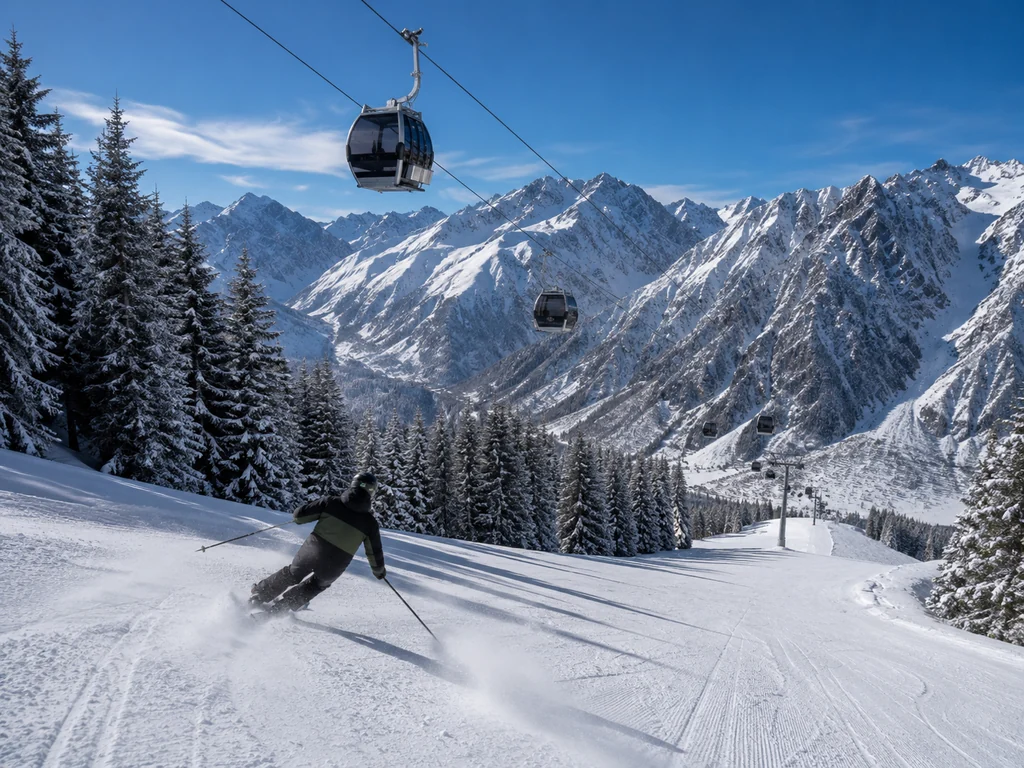
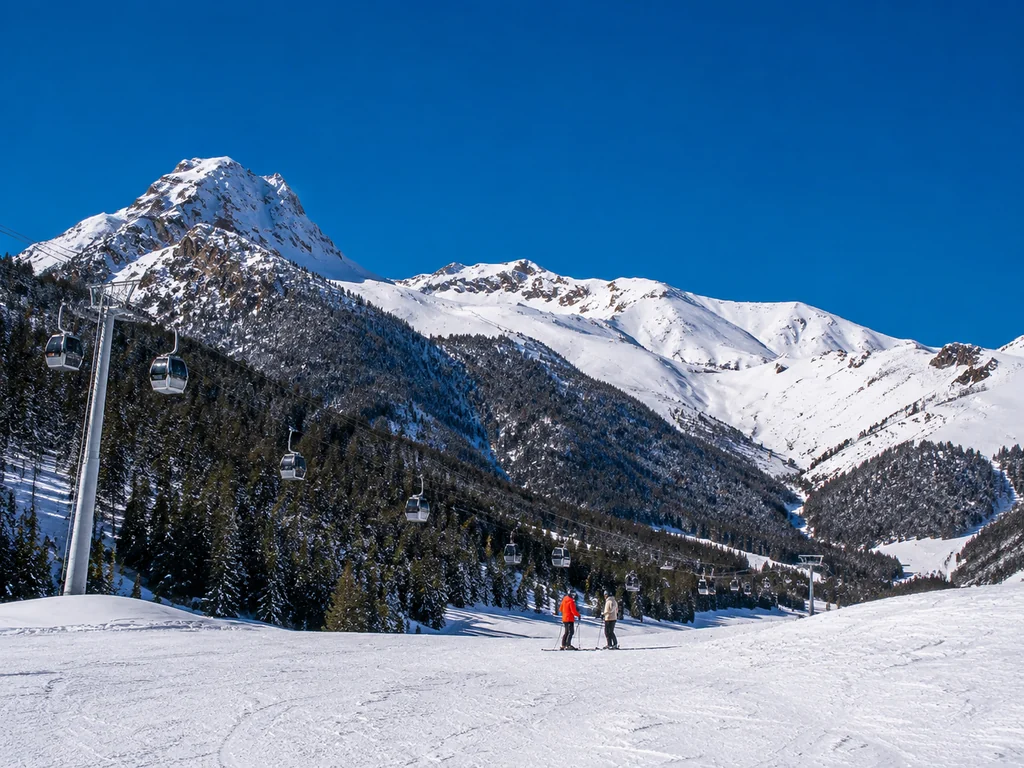
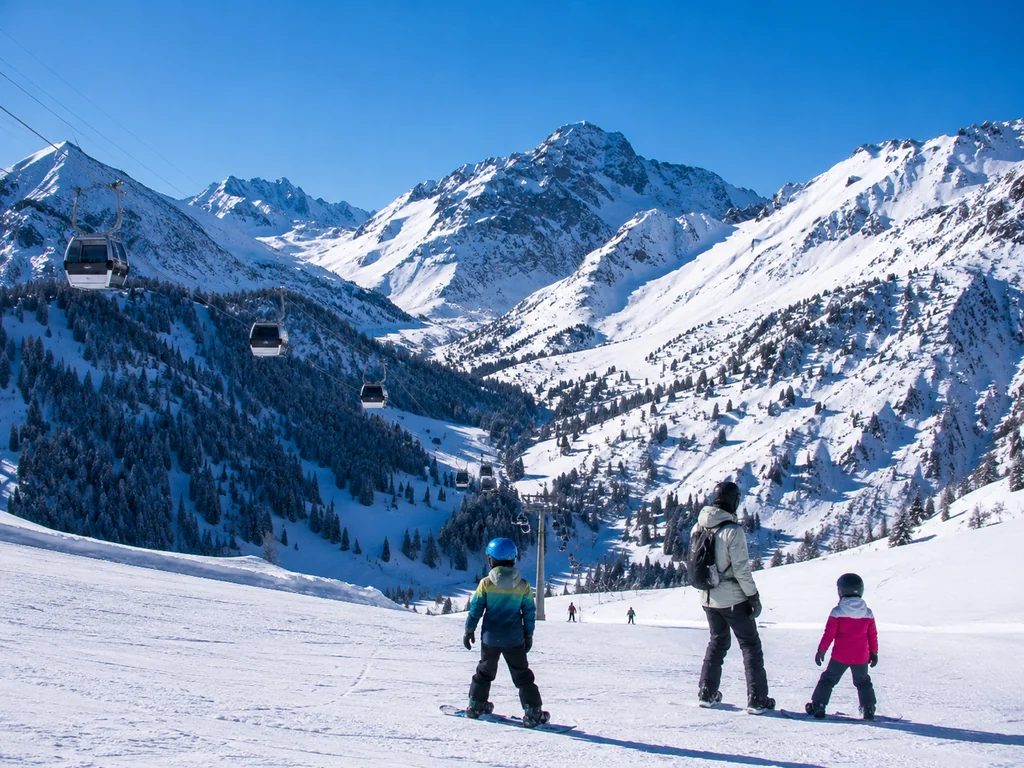
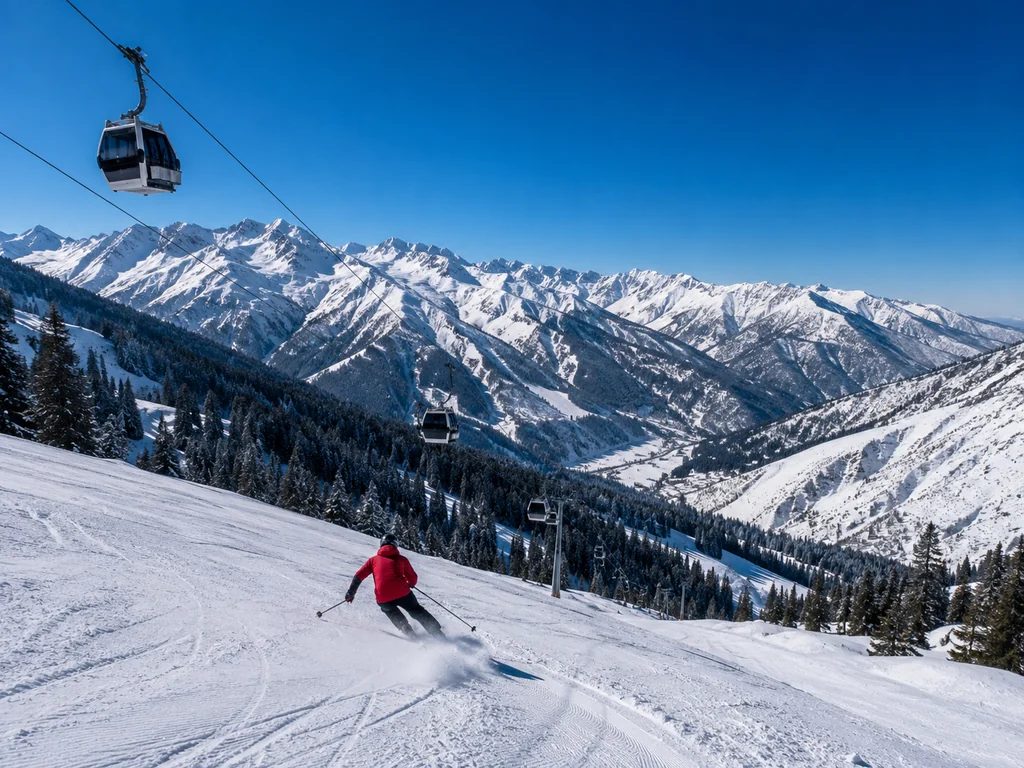
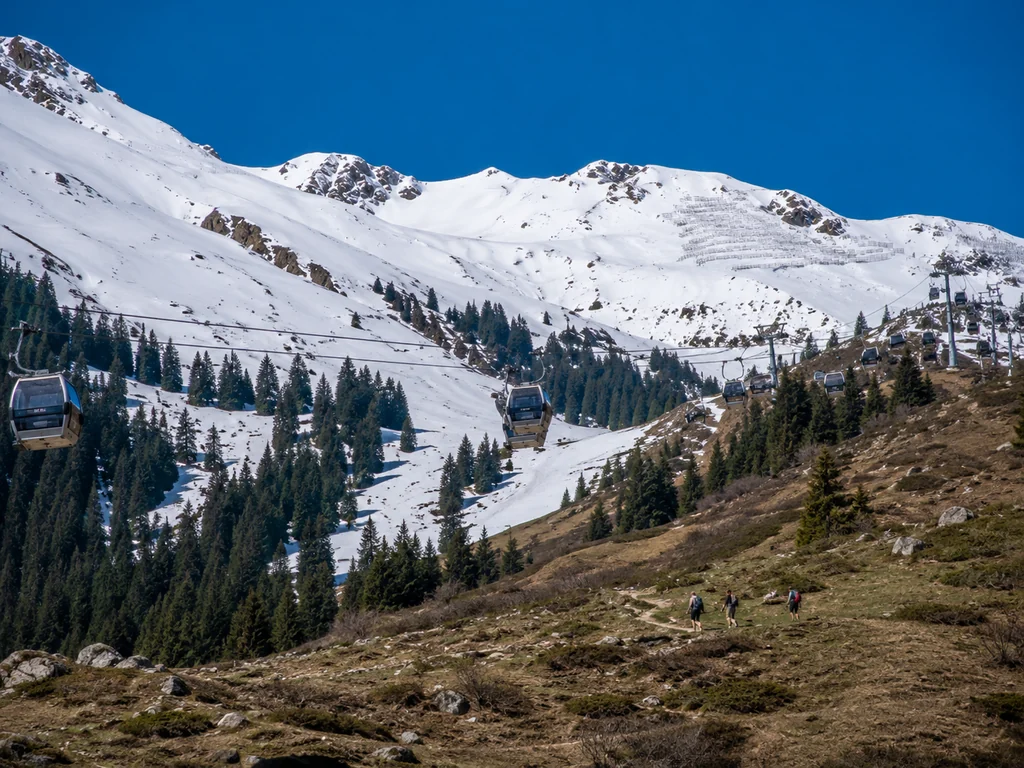
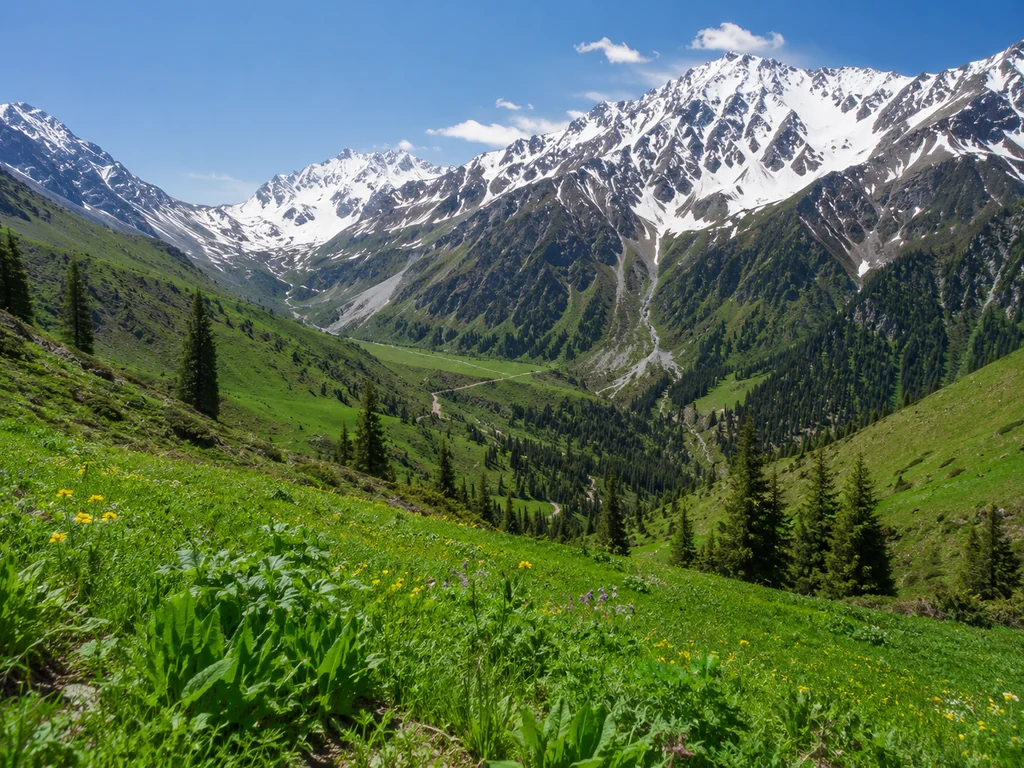
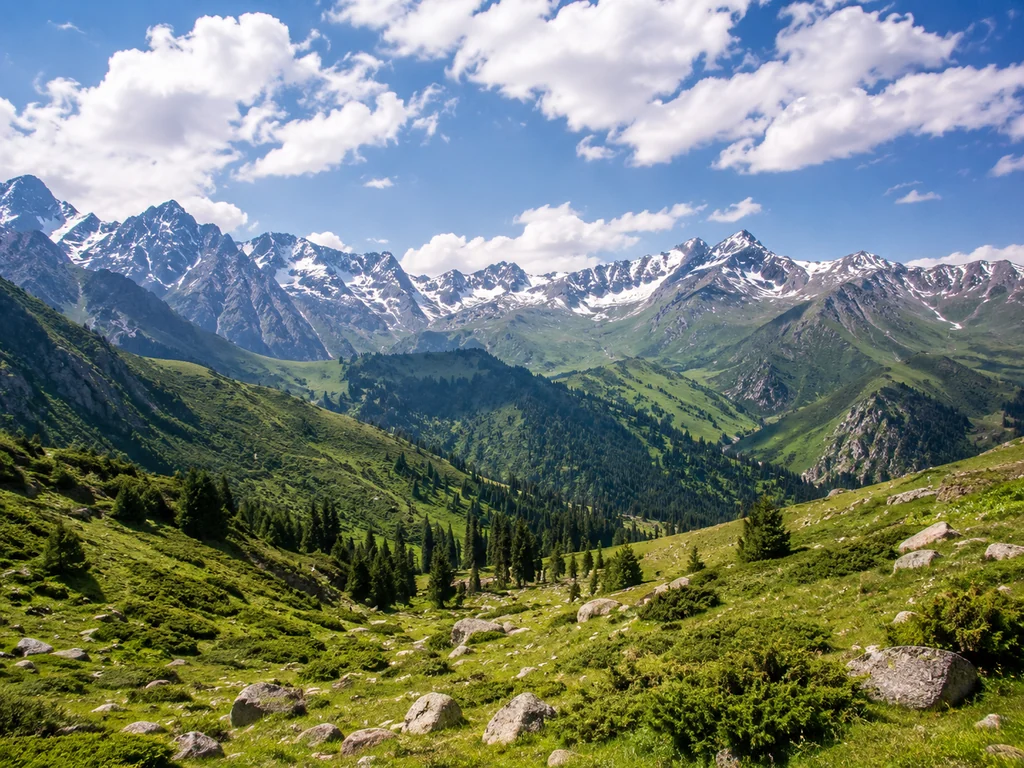
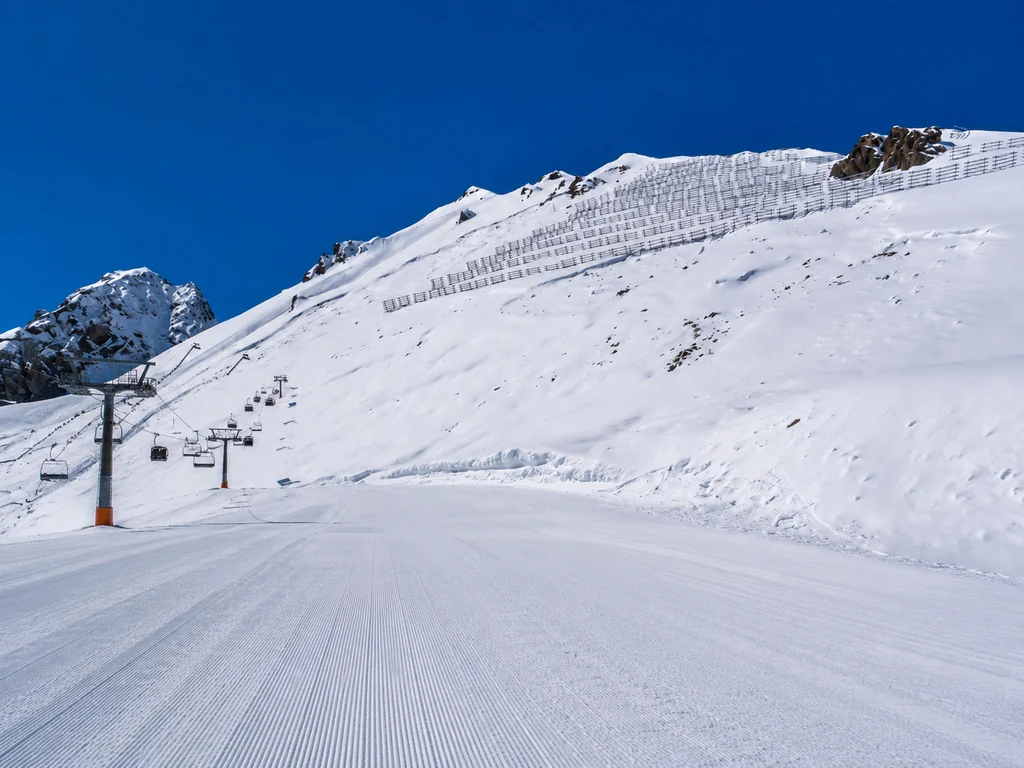
At toor, we organize ski tours to Shymbulak from Almaty with transfer, ski pass, and a certified guide. Price per person starts from 25,000 KZT for a one-day tour. Everything included: equipment, insurance, support. No hidden fees — just a fair price.
Independent or with a tour: what is more profitable and safer
Let's break down what's more profitable — going to Shymbulak on your own or taking a ready-made tour. Compare by money, time, and safety.
Cost comparison: independent trip vs toor tour
A one-day tour to Shymbulak costs from 25,000 KZT per person and includes transfer, daily ski pass, rental of a set (skis or snowboard, boots, poles), services of a certified guide-instructor, and medical insurance. An independent trip by taxi from Almaty to the lower gondola station costs 3,000–5,000 KZT one way, a daily ski pass — 8,000–12,000 KZT (depending on the season), equipment rental — another 5,000–8,000 KZT. These three expense items give 16,000–25,000 KZT per person — without a guide, insurance, and helmet with mask (1,000–1,500 KZT and 500–1,000 KZT for rental) which are included in the tour. On an independent trip, the morning queue for a ski pass at the ticket office takes 20–30 minutes, and in the evening you need to catch a taxi back — during peak season (January-February) waiting time reaches 40 minutes. On a tour, the guide has everything ready, and the group goes to the slope without downtime, saving at least an hour of skiing per day.
What a guide-instructor provides in the tour: safety and results
In our tours, the group is led by a certified guide-instructor — he selects runs according to the skiing level, monitors safety on descents, and corrects technique in real time. At Shymbulak, there are three green runs (beginners), five blue, and three red — the instructor knows where the best snow is today, which slope is less crowded, and where ice patches may form after a thaw. He assesses readiness before moving to a more difficult slope: he won't let a beginner on the red «Talgar» (gradient up to 40%) without confident turns on a blue run. A beginner without a guide spends the first day studying the trail map and lifts, but with an instructor, they immediately go to a suitable slope and get feedback on every mistake, reducing the time to get into skiing mode by 3–4 hours on the first day.
When an independent trip is justified
An independent trip to Shymbulak makes sense if you have your own car, your own equipment, and you confidently ski on blue and red runs. In this case, costs are reduced to the price of a ski pass (8,000–12,000 KZT) and fuel — about 1,500–2,000 KZT per car, i.e., 500–1,000 KZT per passenger with a company of 2–4 people. You choose the departure time and are not tied to the group schedule. However, even an experienced skier should consider that without a guide, you won't get into the freeride zones of the Tuyuksu and Gorelnik gorges — they only allow entry with an instructor, and going into these zones on your own risks a fine of 50 MCI or avalanche danger on slopes with a steepness of 30–40°.
Cost of a tour to Shymbulak: what the price consists of
Let's break down the cost of a tour to Shymbulak by components: what is included in the basic package, what is paid separately, and how to save.
What is included in a one-day toor tour
The one-day tour includes transfer from Almaty to Shymbulak and back, a day ski pass, equipment rental (skis/snowboard + boots + poles), guide-instructor services, and insurance. We pick up the group from the «Kazakhstan» hotel on Dostyk Avenue at 7:30 AM — by 8:30 you are already at an altitude of 2260 m with a ready set of equipment and a loaded ski pass. The guide-instructor is a local certified specialist who knows every trail: he will show the green slopes of «Nura» for warm-up, the blue «Talgar» for confident skiers, and take you on the red «Combi-2» without queues on the gondola lift. The Shymbulak ski pass includes daily access to all trails and lifts of the resort. Unlike many offers, we have no hidden fees — the price per person is fixed, you don't pay for «helmet rental» or «lift accompaniment» separately. Shymbulak ski price in the toor tour is already included in the cost — no need to pay extra for rental.
Cost of a multi-day tour: accommodation and meals
A three-day tour with accommodation at the «Shymbulak» hotel (4*) and three meals a day costs from 85,000 KZT per person — the price includes all skiing days, transfer, and guide services. At the «Shymbulak» hotel, rooms have panoramic windows overlooking Talgar peak and its own restaurant «Edelweiss» at an altitude of 2500 m, where hot lunches are served — beshbarmak, lagman, and manti, which is critical after three hours in the cold. If you choose the «Tien Shan» hotel (3*) or the «Alplager» hostel, the tour price decreases by 15–20% — while the skiing program and guide support remain the same, the difference is only in the star rating of the room and breakfast option.
Comparison of toor tour packages
| Parameter | One-day tour | Two-day tour | Three-day tour |
|---|
| Price per person | from 25,000 KZT | from 55,000 KZT | from 85,000 KZT |
| Transfer from Almaty | ✅ | ✅ | ✅ |
| Ski pass | 1 day | 2 days | 3 days |
| Equipment rental | ✅ | ✅ | ✅ |
| Guide-instructor | ✅ | ✅ | ✅ |
| Accommodation | ❌ | Hotel 3* / 4* | Hotel 3* / 4* |
| Meals | ❌ | Breakfast + lunch | Breakfast + lunch + dinner |
| Insurance | ✅ | ✅ | ✅ |
| Discount for children under 12 | 20% | 20% | 20% |
The two-day tour is the most popular option: over the weekend you have time to ski, relax, and not overpay for an extra day of accommodation.
How to save on the tour: discounts and special offers
We give a 20% discount for children under 12 on any tour, and when booking a group tour of 4 or more people, an additional 10% discount per participant. For example, a company of four adults on a three-day tour instead of 340,000 KZT will pay 306,000 KZT — a saving of 34,000 KZT, enough to rent Atomic Redster skis for all days. The most budget-friendly option for a beginner is a one-day tour on a weekday: on weekdays, the ski pass is cheaper, and the slopes are less crowded, which is convenient for learning.
Shymbulak trails: description, difficulty, elevation drop
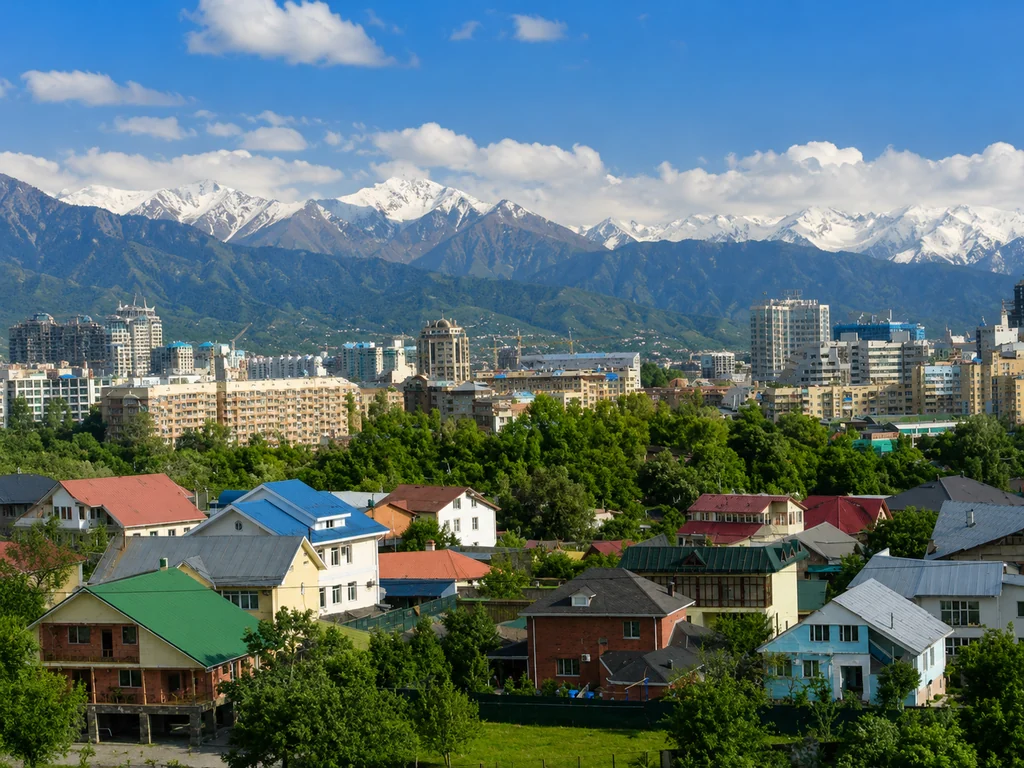
The resort has 13 trails with a total length of 20 km — from green (beginner) to black (expert). Let's break down each group. The Shymbulak ski resort from Almaty is only 25 km away — the taxi ride takes 30–40 minutes.
Green and blue trails: for beginners and confident skiers
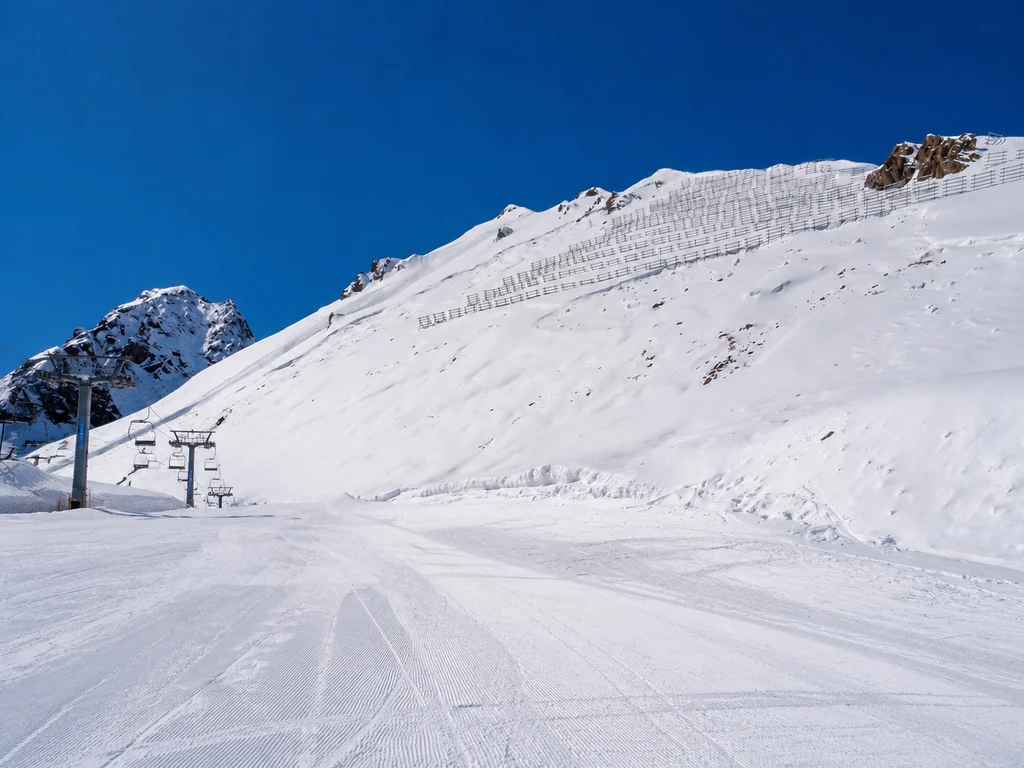
Shymbulak has three green trails (beginner) and five blue (intermediate) — all equipped with lifts and have gentle terrain without sharp changes. The green routes are laid at an altitude of 2260–2500 m, their width of 30–50 meters allows free maneuvering without fear of obstacles. Blue trails are longer — up to 2.5 km each, with smooth turns and a gradient of 15–25 degrees, comfortable for confident skiing at medium speeds. The training slope with a «magic carpet» is located separately from the main trails — there are no oncoming skiers, only beginners under the supervision of an instructor. We start teaching beginners exactly on this slope — it's a safe zone where you can master the basic stance and braking without the risk of colliding with other skiers.
Red and black trails: for advanced skiers
Three red and two black trails at Shymbulak have an elevation drop of up to 900 meters and a steepness of up to 45 degrees — they require confident technique and good physical fitness. Red routes (gradient 25–35 degrees) follow the natural terrain with width variations — from 15 to 40 meters, on some sections bumps and ruts appear after lunch. The black «Olympic» trail is the most difficult at the resort: its length is 3.2 km, elevation drop 700 m, there are sections with bumps and icy patches where even experienced skiers slow down. The second black trail is shorter (1.8 km) but steeper — on the upper section the gradient reaches 45 degrees, and without a pre-learned trajectory it's easy to go into the freeride zone. Before descending on the «Olympic», check your edges — on icy patches after 14:00 grip drops by 30–40%, and poorly sharpened skis won't hold a turn.
How a toor guide selects trails for the group's level
Our guide, before starting skiing, assesses the level of each group participant and creates a route for the day — from a warm-up on a blue trail to a descent on a red one if the group is ready. The assessment takes place on the first descent: the guide looks at stance, speed, reaction to the terrain, and immediately adjusts the plan — keeps beginners on green, takes intermediates to blue with increasing difficulty, offers experienced skiers red with freeride exits to Tuyuksu. If the group has skiers of different levels, the route is built on the principle of «everyone descends on the same trail but at different speeds» — the guide sets the pace and meeting points at each intersection. We don't lead the group on the same route — if someone wants more difficulty, the guide adjusts the trail right on the slope without separating from the rest.
Ski instruction: individual and group lessons
In our tours, ski instruction is included in the program — the guide-instructor works with the group, and for individual lessons you can order extra hours from 10,000 KZT/hour. The group format is designed for 4–6 people: the instructor shows basic elements on the training slope, then gradually moves the group to green trails, monitoring each participant. An individual lesson is more expensive (from 15,000 KZT/hour) but provides concentrated error correction — in one hour you can master the correct wedge turn or carving arc, which in a group takes 2–3 sessions. We put children from 8 years old on skis in one day — on the training slope with a «magic carpet» and gentle gradient, a child learns basic movements faster than on adult trails.
Best time for skiing at Shymbulak: seasonality and weather
The ski season at Shymbulak lasts from December to April, but the weather and snow quality vary greatly by month. Let's break down when to go. Skiing at Shymbulak from Almaty is best planned for January-February when the snow cover is most stable.
Ski season by month: December – April
The peak season at Shymbulak is January and February: during these months the snow cover is stable, all trails are open, and sunny days account for more than 60% of the entire period. A winter excursion to Shymbulak includes not only skiing but also panoramic views of the Zailiysky Alatau from an altitude of 3200 meters. In December, snow is just settling, by mid-month 7–8 of the 13 trails are open — the gondola lift operates from 09:00 to 17:00, for evening freeride in the Tuyuksu gorge you will need a headlamp, as it's already dusk at 16:30. March is a transitional month: daytime temperatures rise to -2°C, snow on southern slopes (green trails) thaws by lunchtime and turns into crust by evening, but on northern slopes (blue and black trails) the cover remains firm until closing at 18:00, and in April only the lower trails up to 2700 m operate (ski pass — 6,000 KZT, 25% cheaper than in January). In December and March, there are fewer tourists, slopes are less crowded, and prices for ski passes and accommodation are 15–20% lower compared to the peak — if your budget is limited, plan your trip for the end of March, when snow on northern slopes still holds.
Weather at altitude: what to consider when planning
The average temperature at Shymbulak in winter is from -5 to -15°C, but at an altitude of 3200 meters, wind can increase the feeling of cold to -25°C, especially in January. At the lower station (2260 m) in calm weather in February, the thermometer shows -3..-5°C, and at the upper station — -12°C with gusts up to 10 m/s, a difference of 7–9°C over 15 minutes of ascent on the chairlift. Solar radiation is higher at altitude: even on a cloudy day, the UV index reaches 3–4, so ski goggles with UV filter are mandatory, otherwise by evening you may experience tearing and «snow blindness» for 2–3 days. Visibility on trails worsens when cloud cover is below 2500 m — on such days it's better to ski on the training slope near the lower station, where fog dissipates faster. We warn: dress with a margin, even if it's +5°C in Almaty, because at the lower station the temperature is 5–7°C lower.
When to go with children: best months
For a trip with children, February and March are the best — during these months the snow is stable, but it's not as cold as in January, and there are more sunny days. In February, daytime temperatures stay within -5..-8°C, and the training slope with a «magic carpet» operates from 10:00 to 16:00 without breaks — a child can make 8–10 descents per hour without getting cold in line. In March, there are fewer queues for lifts at Shymbulak, and accommodation prices at the «Shymbulak» (4*) and «Tien Shan» (3*) hotels drop by 20–30% compared to February — we can book a tour with a children's discount for those under 12.
What to bring to Shymbulak: clothing, equipment, first aid kit
Proper equipment is the key to comfortable and safe skiing. Let's divide items into those you must bring with you and those you can rent.
What you must bring: clothing and protection
- Thermal underwear: must be synthetic or wool — wicks moisture and retains heat. Cotton under a jacket gets wet from sweat within 30-40 minutes of skiing.
- Fleece jacket: second layer for insulation. Optimal density — 200-250 g/m² for temperatures -5..-15°C at Shymbulak.
- Windproof jacket and pants: the outer layer should be membrane (with a rating of 5000-10000 mm water column) — at an altitude of 3200 meters the wind is stronger than in the city.
- Ski goggles or mask: mandatory for UV protection — snow reflects up to 80% of solar radiation, and at an altitude of 3200 m the UV index is 30% higher.
- Gloves and hat under helmet: gloves must be waterproof (with Gore-Tex or similar membrane), hat — thin fleece so the helmet fits snugly.
- Helmet: mandatory for all trails, including green — 60% of injuries at Shymbulak occur on easy slopes due to loss of control on icy sections in the afternoon.
What you can rent on site: equipment and extras
In our tours, equipment rental is already included in the price — skis or snowboard, boots, and poles are provided at the resort without extra charges or queues. The set is issued for the whole day, from 9:00 to 17:00, with the possibility of changing bindings or boot stiffness during the day — the rental point has stands with different brands (Rossignol, Salomon, Head for skis; Burton, K2, Rome for snowboards). Helmets and goggles are not included in the rental but can be taken at the issue counter for an additional fee — 1500-2000 KZT per item per day. If you have your own boots but no skis, we can adjust the package and remove boot rental from the cost so you don't overpay for what you don't need.
First aid kit and additional items: what will come in handy
- Blister plasters (compeed): the heel and little toe are most often rubbed — apply them preventatively before starting skiing, not after a blister appears.
- Painkiller (ibuprofen or ketorol): at an altitude of 3200 m, headaches from oxygen deficiency are not uncommon, especially on the first day.
- Motion sickness medication (dramina or bonine): the serpentine from Medeu to Shymbulak — 5 km with 12 sharp turns, makes even experienced passengers carsick.
- Sunscreen SPF 50+: at an altitude of 3200 meters, ultraviolet is 30% more aggressive than in the city — even on a cloudy day you can get sunburned on the slope, so sunscreen is mandatory.
- Lip balm with SPF: lips become chapped and cracked within 2-3 hours in the wind — apply every 1.5 hours.
Safety on the slopes: rules, insurance, avalanche conditions
Shymbulak is an equipped resort with a medical center and patrols, but skiing safety depends on preparation: FIS rules, insurance, and avalanche control off-piste are three main points we'll cover below.
Rules of conduct on the slope: what you need to know
Shymbulak follows standard FIS rules: give way to those below you on the slope, do not stop in narrow places, control speed and distance. The resort patrol checks trails daily, and doctors are on duty at stations 2260 and 2500 m — in case of injury, help arrives within 5–10 minutes. Green and blue trails are considered safe for beginners, but on red and black trails skiers reach speeds of 60–80 km/h, and a collision at such speed can lead to fractures. We conduct a mandatory briefing before starting — we cover not only the rules but also typical emergency situations: what to do if you lose the group or break a binding.
Insurance: mandatory or not
In our tours, participant insurance is included by default — it covers medical assistance on the slope, transportation to the hospital, and treatment in Almaty. Independent skiers should take out a policy with «Eurasia», «Kazakhmys», or via Kaspi: price from 1,500 KZT per skiing day, but the basic package does not include evacuation from the upper station (3200 m) by helicopter or snowmobile — that is an option for 3,000–5,000 KZT. Without insurance, calling an ambulance from Shymbulak costs from 15,000 KZT, and transportation from the upper station — from 30,000 KZT, and these expenses are covered in our tour.
Avalanche conditions: how to assess risks
At Shymbulak, avalanche danger is monitored by the resort service: they check slopes and close hazardous areas, but beyond the trails the risk remains. The Tuyuksu and Gorelnik gorges are popular among freeriders, but avalanches are recorded there every winter — in January-February, after heavy snowfall, the danger level reaches 3–4 points on a 5-point scale. The forecast is published by KAZSELEZASHCHITA on the website and Telegram channel — before going off-piste, it's worth checking the report for the last 24 hours. For freeride tours, we use avalanche equipment (beacon, shovel, probe) and never go into zones with a danger level above 3 out of 5.
Freeride at Shymbulak: zones, risks, need for a guide
For experienced skiers and snowboarders, the resort offers freeride zones beyond the trails. Let's break down where to go and why it's risky without a guide. Shymbulak with a guide is safer and more efficient — the instructor knows the terrain and avalanche conditions in each zone.
Freeride zones of Shymbulak: Tuyuksu and Gorelnik
The main off-piste skiing areas are the Tuyuksu and Gorelnik gorges, with an elevation drop of up to 800 meters and untouched snow on northern slopes. Tuyuksu is a wide bowl with gentle runouts, suitable for intermediate level, while Gorelnik has steep couloirs with a drop of up to 500 meters per descent, requiring confident technique in powder. Both zones are accessible via the upper gondola station (3200 m), but without marked trails — you have to navigate by terrain and GPS track. Avalanche danger in Gorelnik is higher due to the steepness of slopes 35-45 degrees, where snow slides can occur even with little precipitation. In the Tuyuksu gorge, snow lasts until mid-April — it's one of the few zones near Almaty where you can ski powder at the end of the season.
Why freeride requires a guide and avalanche equipment
Going into off-piste zones at Shymbulak is only allowed with a certified guide — this is a resort requirement, not a recommendation. Without one, the patrol has the right to cancel the ski pass, and in the event of a snow slide, rescuers won't even go out until the group's route is confirmed. The mandatory minimum equipment is a beacon (avalanche transceiver), shovel, and probe: a standard test takes 30 seconds, but without practice in real search, most beginners bury the device in 5 minutes instead of one. Our guide doesn't just show the route — he assesses avalanche conditions, chooses a safe descent, and controls the group: in the snow beyond the trails, it's easy to lose orientation within 50 meters.
Freeride tour toor: what's included and how much it costs
The freeride tour includes transfer, ski pass, guide services with avalanche equipment, insurance, and a hot lunch at altitude — price from 35,000 KZT per person. The package includes rental of a beacon, shovel, and probe, you don't need to bring them separately, and before the descent the guide conducts a 15-minute avalanche safety briefing with search practice. Unlike a regular tour, the group does not exceed 4 people — so the guide can monitor each participant and quickly respond to changing conditions.
Common mistakes when planning a ski tour
Even experienced skiers lose time and money due to three typical miscalculations — from choosing the trip format to assessing their own strength at altitude.
Independent trip vs tour: what is more profitable and convenient
A tour to Shymbulak costs from 25,000 KZT and includes transfer, ski pass, lunch, and insurance, while an independent trip costs 18,000–22,000 KZT only for the ski pass and travel, without food and insurance. It seems like a saving of 3,000–7,000 KZT, but during peak season hidden costs add up: a taxi from the Alatau microdistrict to Medeu costs 4,000–5,000 KZT one way, parking is already full by 9 AM, and in line at the ticket office you lose 30–40 minutes — while online sales on the resort's website close an hour before the lifts start. Lunch at a cafe at an altitude of 2,260 m will cost 3,500–5,000 KZT per person, locker rental — another 1,500 KZT, the total cost of an independent day without equipment rental reaches 27,000–33,000 KZT. The difference of 3,000–7,000 KZT is offset by time: on a tour, the guide leads the group along a ready-made route, eliminating downtime in queues and parking search.
Three main mistakes when planning a trip to Shymbulak
- Without pre-booking a ski pass: on a weekend day of the season, ticket offices have queues of 30–40 minutes, and online sales on the resort's website close an hour before the lifts start — arrive by 8:30 to catch the gondola before the rush.
- Underestimating the elevation change: ascending from 2,260 m to 3,200 m in 20 minutes causes altitude sickness in 30% of beginners — dizziness and nausea begin already on the «Talgar Pass», so make your first descent on green trail No. 1A, not immediately on blue No. 5.
- Ignoring the weather window: in January-February after 14:00 on northern slopes (trails No. 4, No. 6) crust forms, and visibility drops to 50 m due to clouds — it's effective to ski only before lunch, and after lunch go to a cafe at an altitude of 2,500 m.
How to choose a tour operator for a trip to Shymbulak
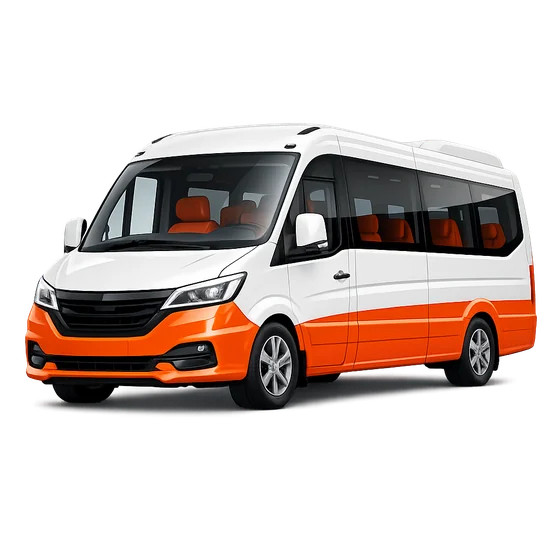
When choosing a tour operator, look at three parameters: whether the ski pass is included in the price, whether there is insurance, and what format the transfer is — group bus or individual car. Aggregators often sell packages without a ski pass, lowering the price by 8,000–12,000 KZT, and offer accident insurance on the slope as an option for 2,000–3,000 KZT separately. A group transfer on a 15-20-seat bus waits for filling for 20–30 minutes at each pickup point from three Almaty districts, stretching the journey to an hour and a half. We use minibuses for up to 8 people — this is 30–40 minutes faster than group transfer, as you don't have to wait for the bus to fill up.
Conclusion
We've gathered the main recommendations to help you plan a trip to Shymbulak without unnecessary expenses and surprises — from choosing trails to logistics on weekends.
Key takeaways
- Plan ahead: book your ski pass and transfer 2–3 days before the trip, especially on weekends and holidays — this saves up to an hour of time on the lift.
- Consider your skiing level: beginners are suited for green trails on the Talgar Pass, experienced skiers for red and black at altitudes of 3,000+ m with drops of up to 800 m.
- Don't skimp on safety: insurance and avalanche equipment are mandatory for freeride, and a guide is not a luxury but a resort requirement.
- Compare the total cost: an independent trip is cheaper by 3,000–7,000 KZT, but the tour includes transfer, lunch, and insurance — the difference is offset by comfort and time.
- Check the weather: at Shymbulak, wind up to 15 m/s closes the upper trails — monitor the forecast a day before departure.









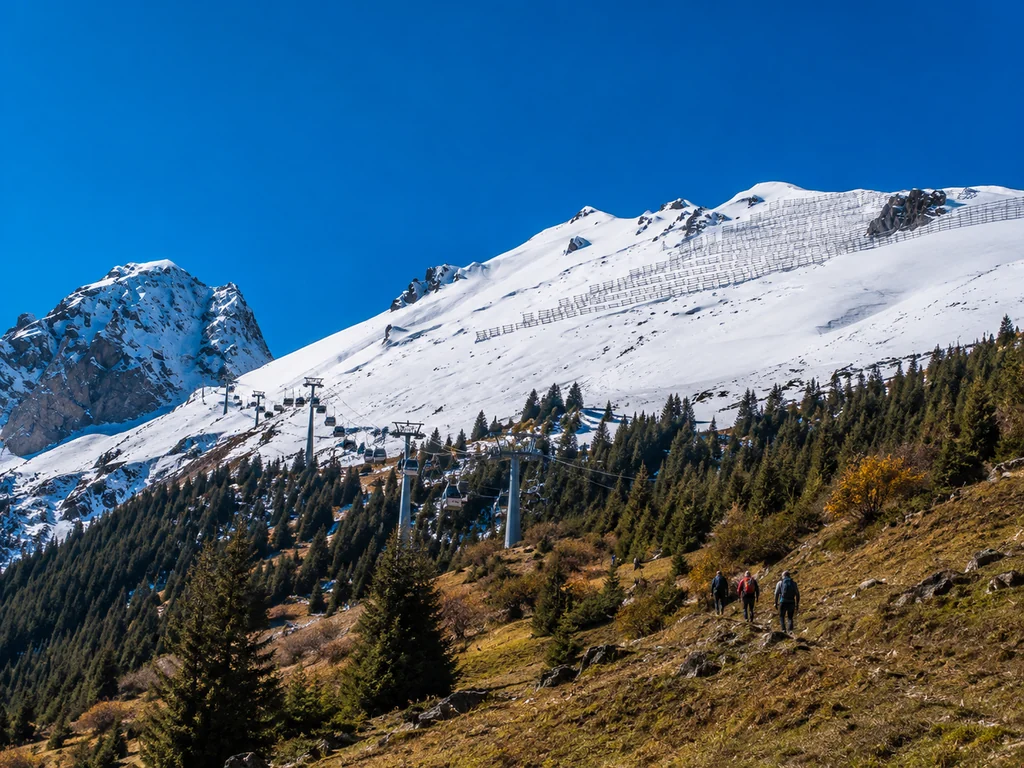
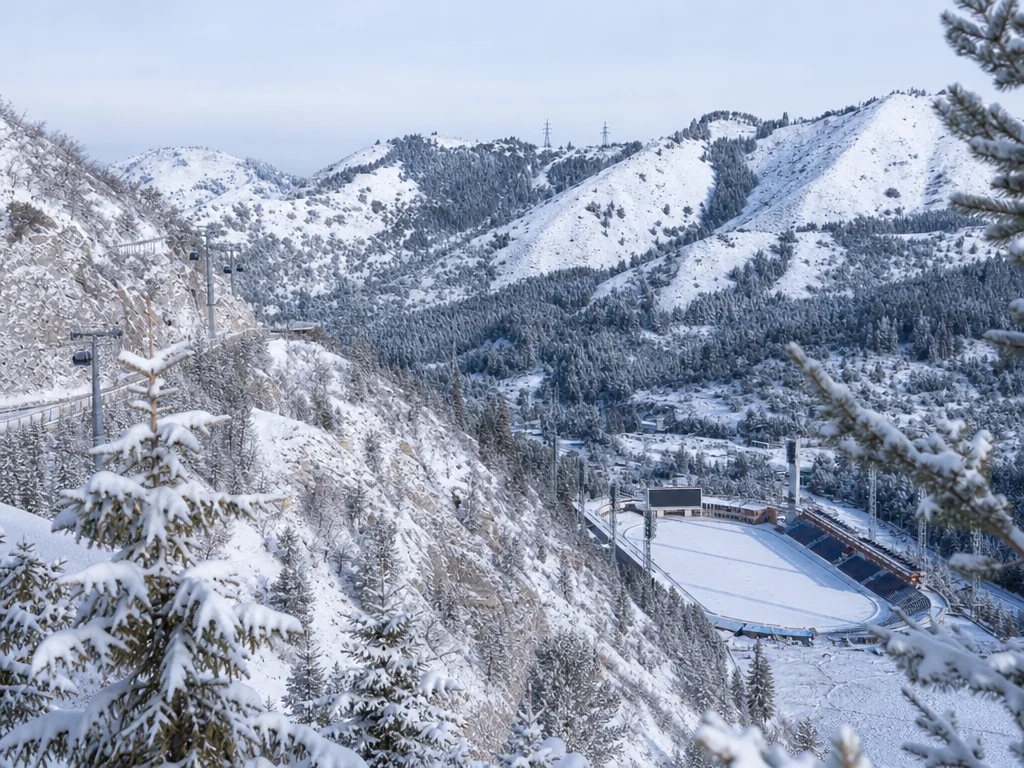 Winter and summer