Big Almaty Lake Tours from Almaty: What This Section Offers
Eight Ways to Reach the Big Almaty Lake
The Big Almaty Lake, known locally as BAO, sits at 2,511 metres above sea level in the Zailiysky Alatau range, roughly 28 kilometres south of Almaty as the crow flies and about 35 kilometres by road up the Big Almaty Gorge. This section of the catalogue gathers eight separate products that all lead to that turquoise bowl of water, but they differ sharply in pace, transport and duration. Prices start at $24 per person for the weekend light trek and reach $376 per person for a five-day regional tour. Some routes are done on foot, some by car, one by jeep and one by bus, and the longest stretches over five days and four nights.
Because the lake is high and the road climbs fast, the experience changes completely depending on how you get there. A four-hour car dash gives you the panorama and a short walk along the shore. A full-day hike adds altitude gain, river crossings and a real sense of effort. A jeep trip extends beyond the lake itself. The five-day tour stitches the lake into a wider loop that includes Charyn and Kolsai. Choosing between them is mostly a question of time, fitness and how much you want to earn the view.
Below you will find the practical geography of the gorge, the seasons, what to pack, how to prepare physically, and an honest comparison of the eight routes we actually run. Nothing here invents services we do not sell: every tour named is one of the eight listed in this section.
The Road, the Gorge and the Height Gain
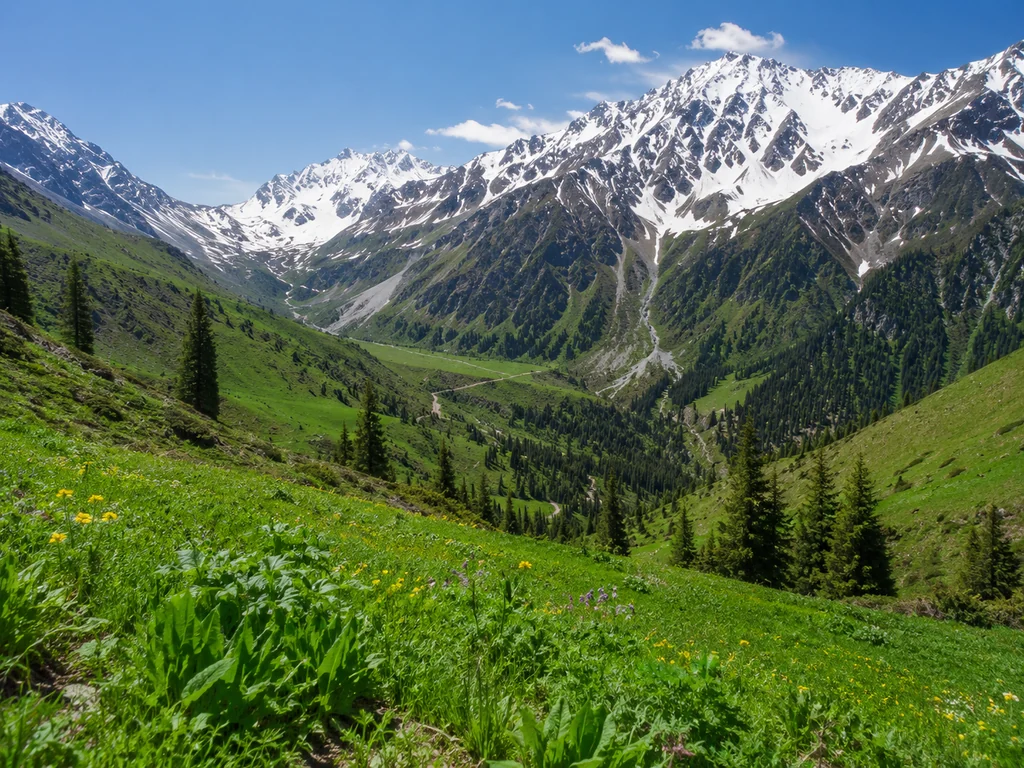
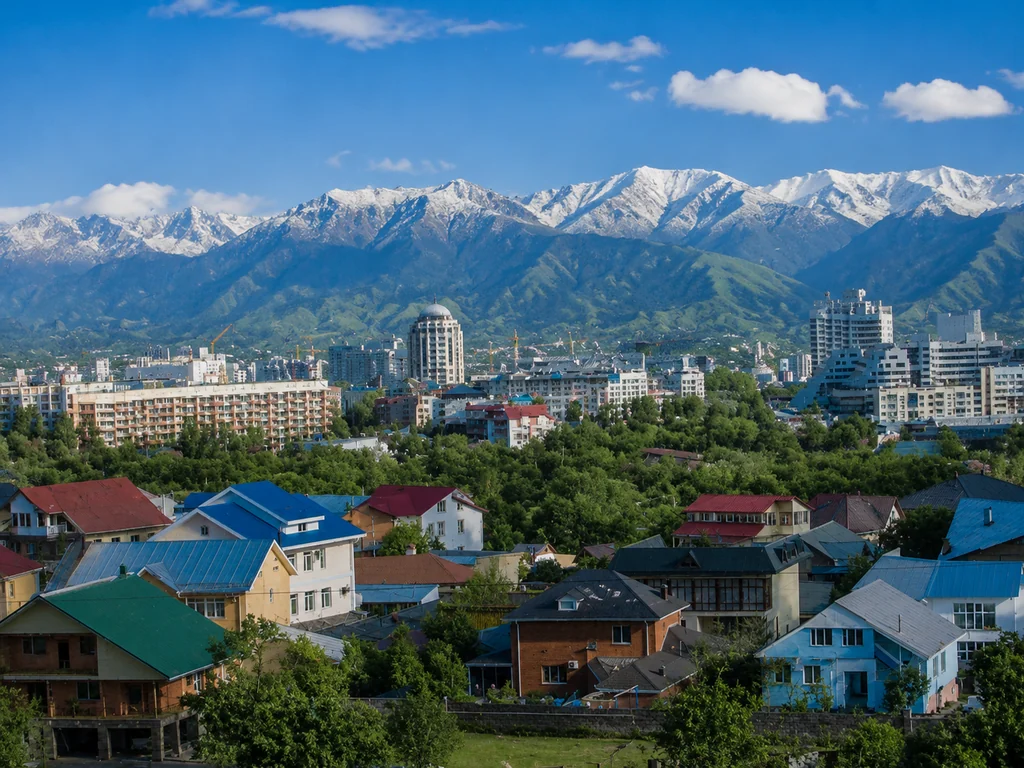
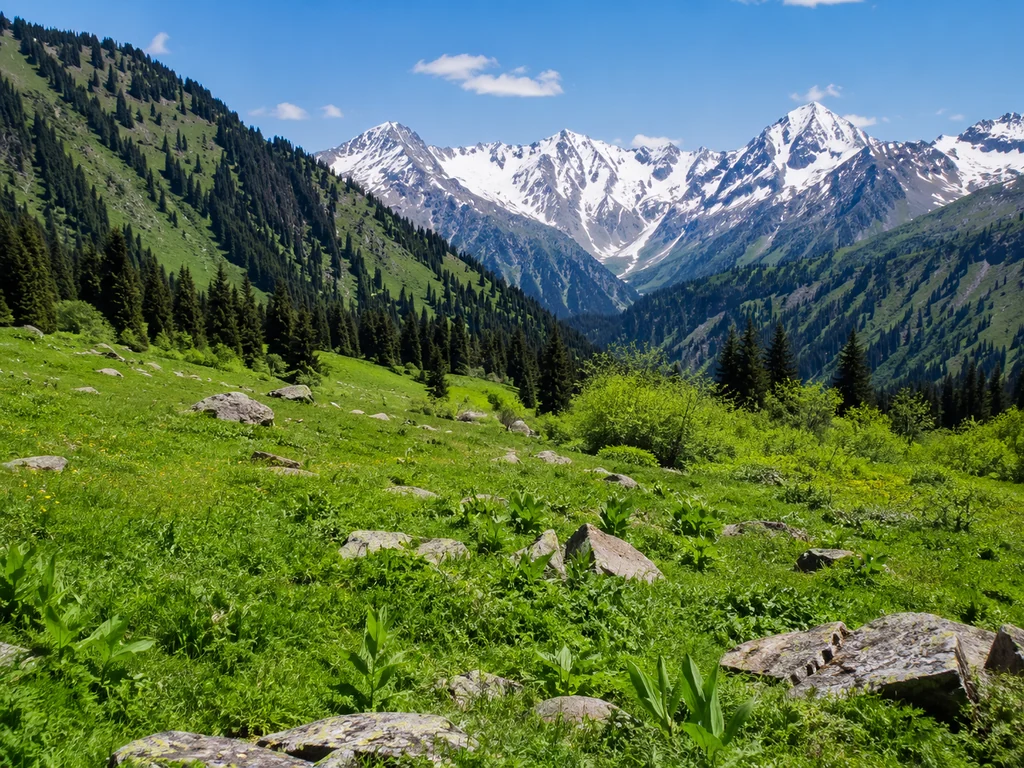
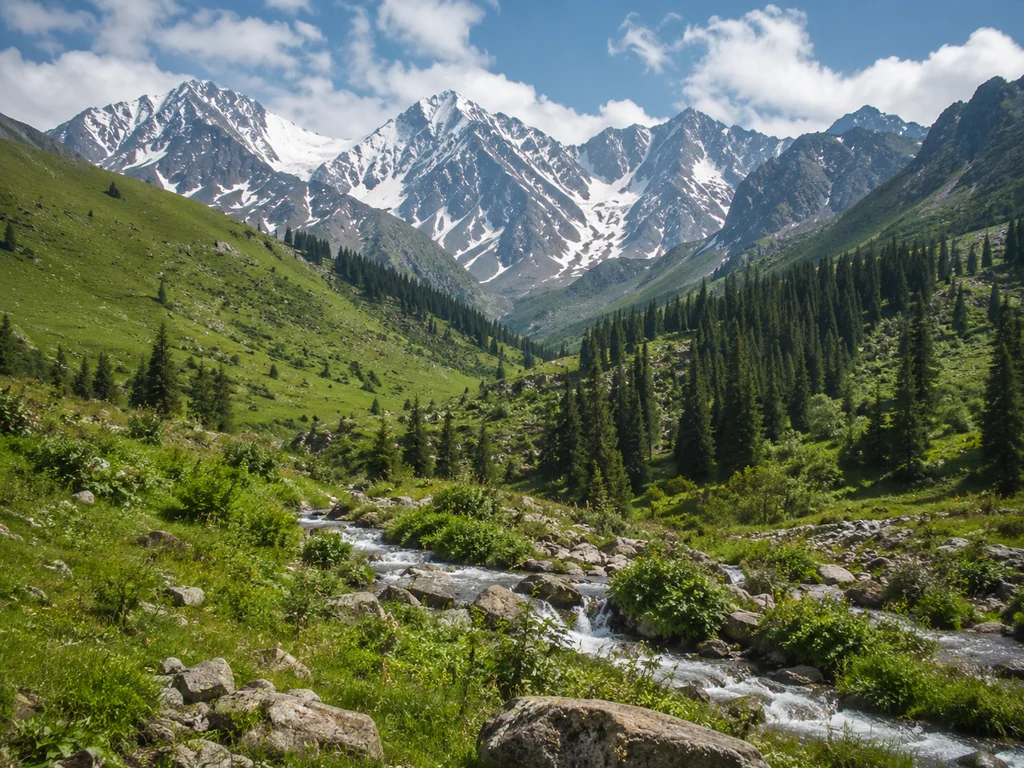
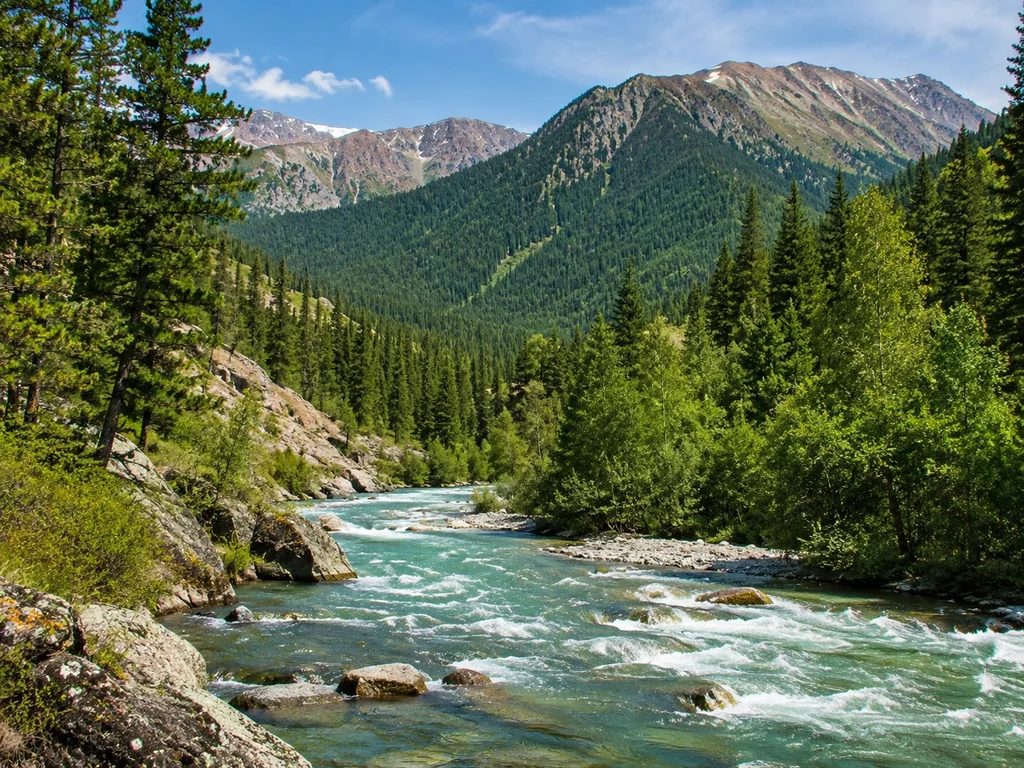
The asphalt leaves Almaty at the upper end of the city and immediately begins to twist. Over roughly 25 kilometres of driving you climb about 1,700 vertical metres, through a series of switchbacks where the gradient often exceeds ten percent. The Big Almaty river, fed by glaciers above the lake, runs beside the road for most of the way. On the right side you look down into the gorge; on the left, walls of Tian Shan granite rise several hundred metres.
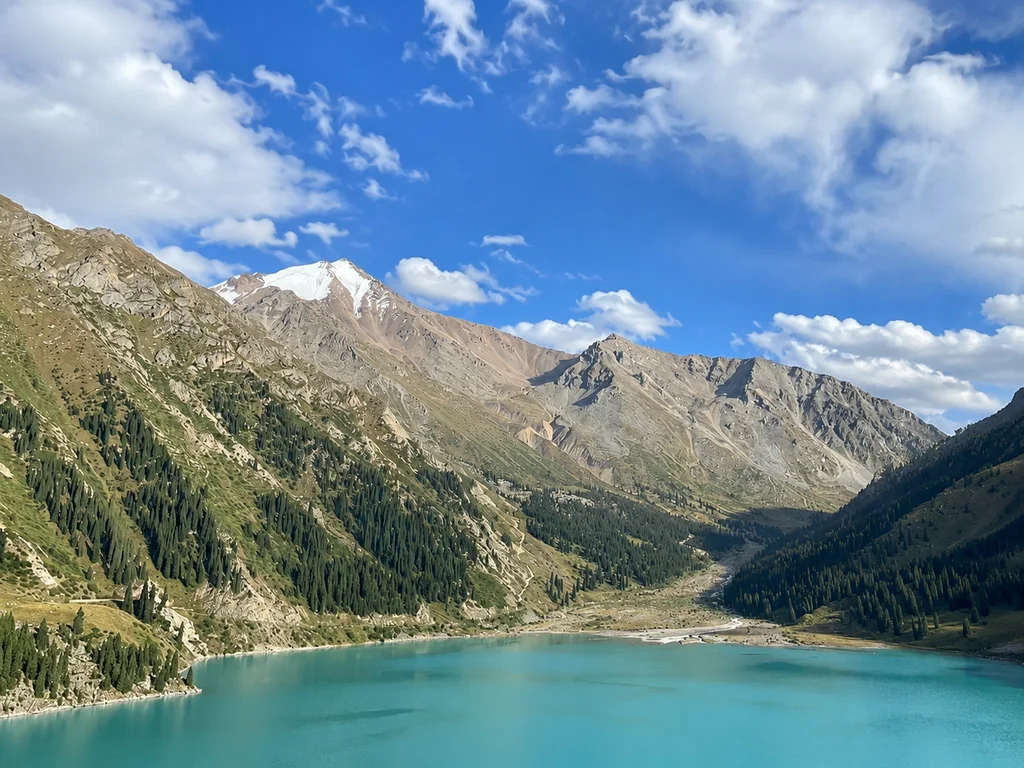
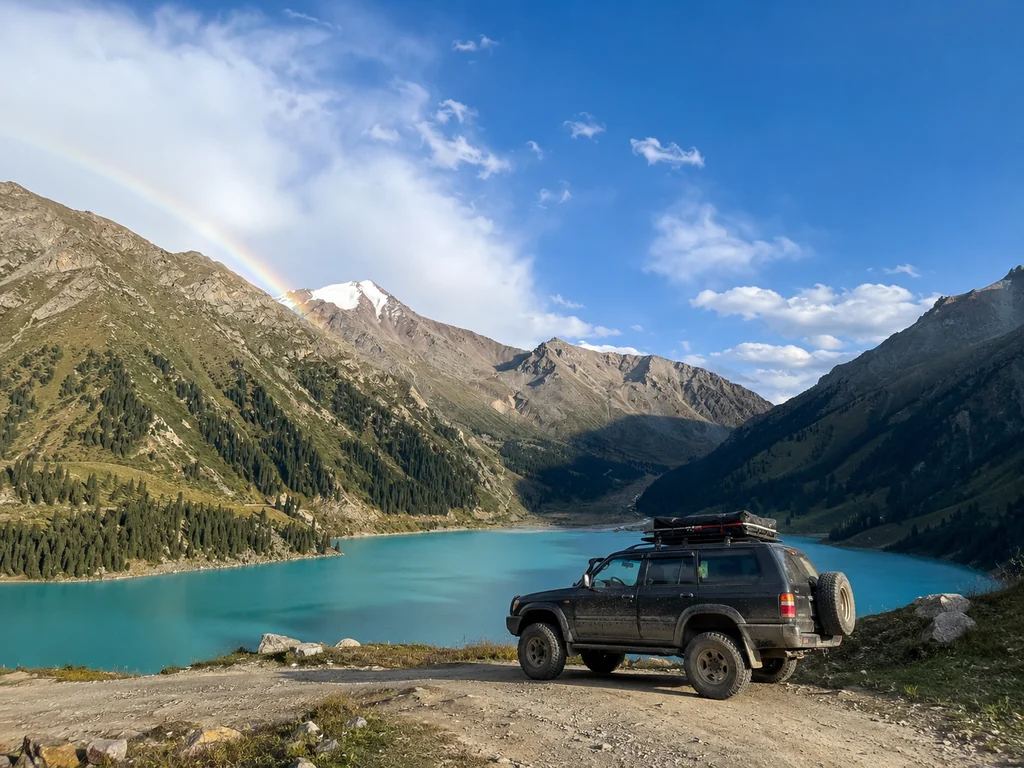
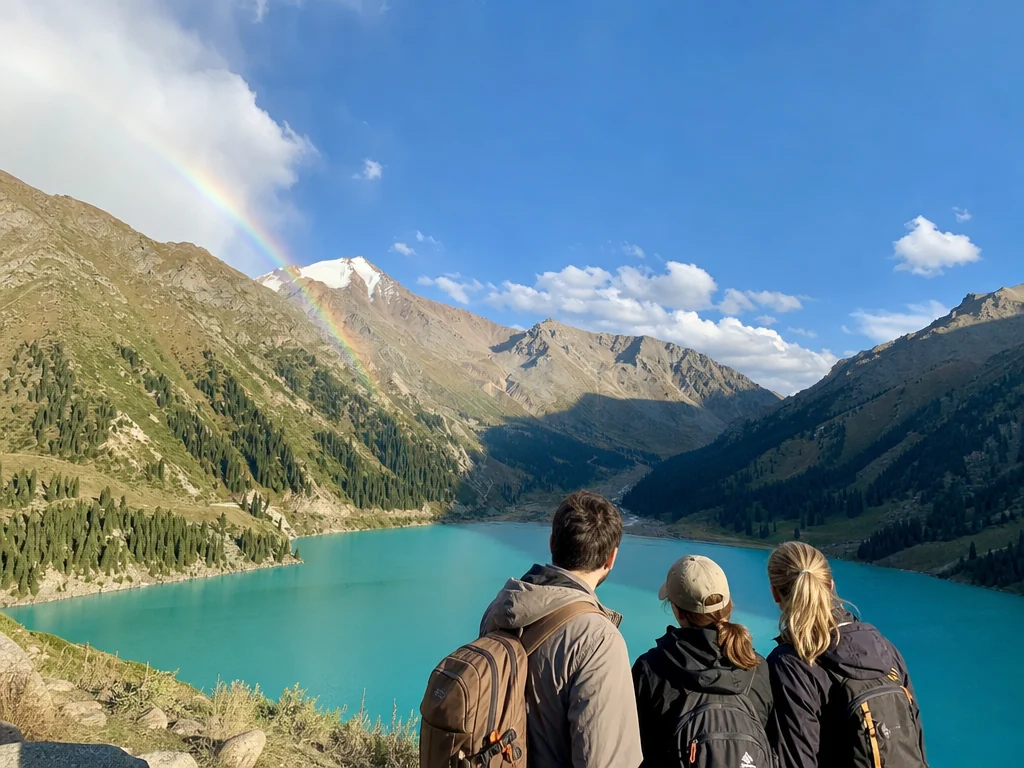
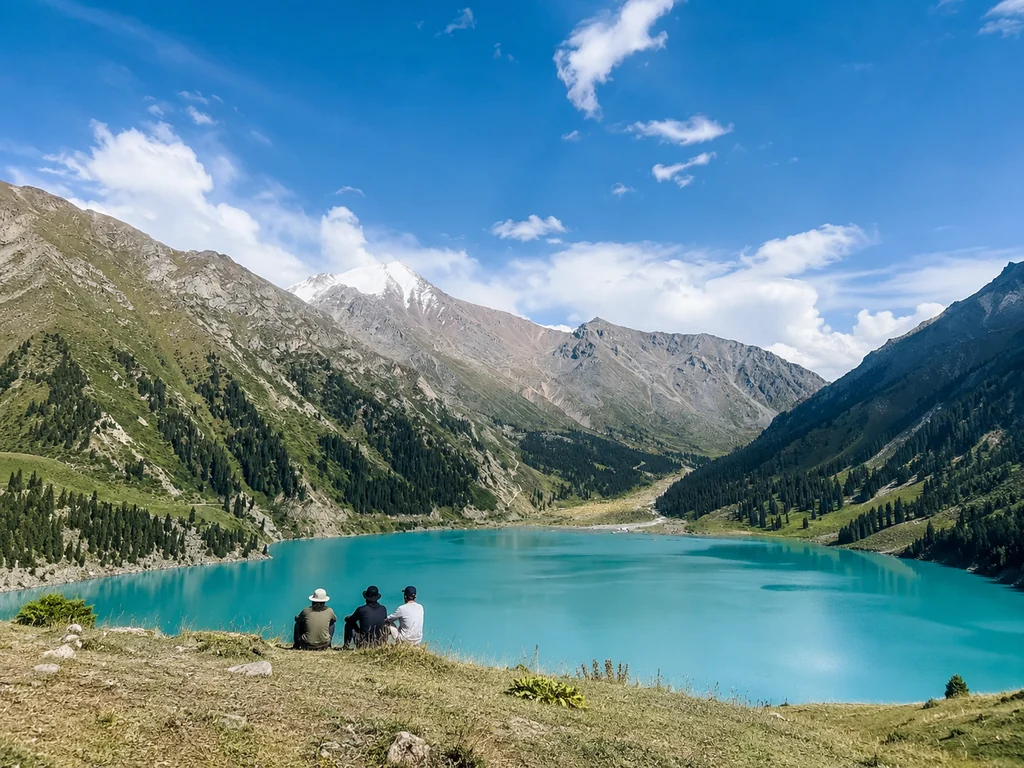
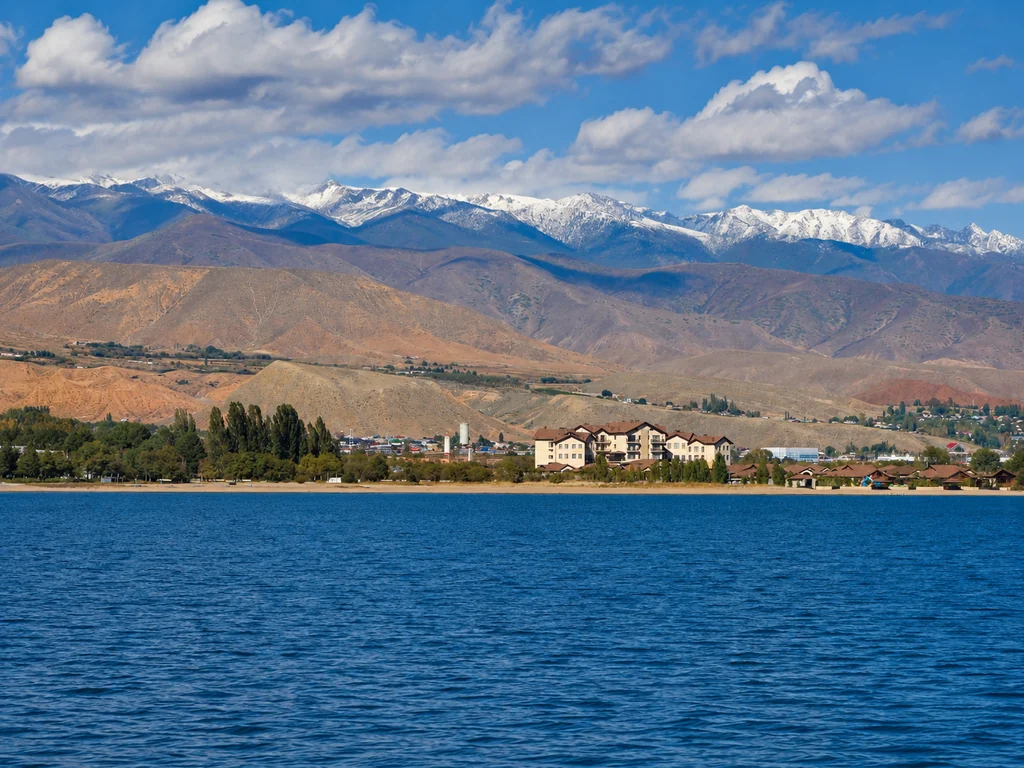
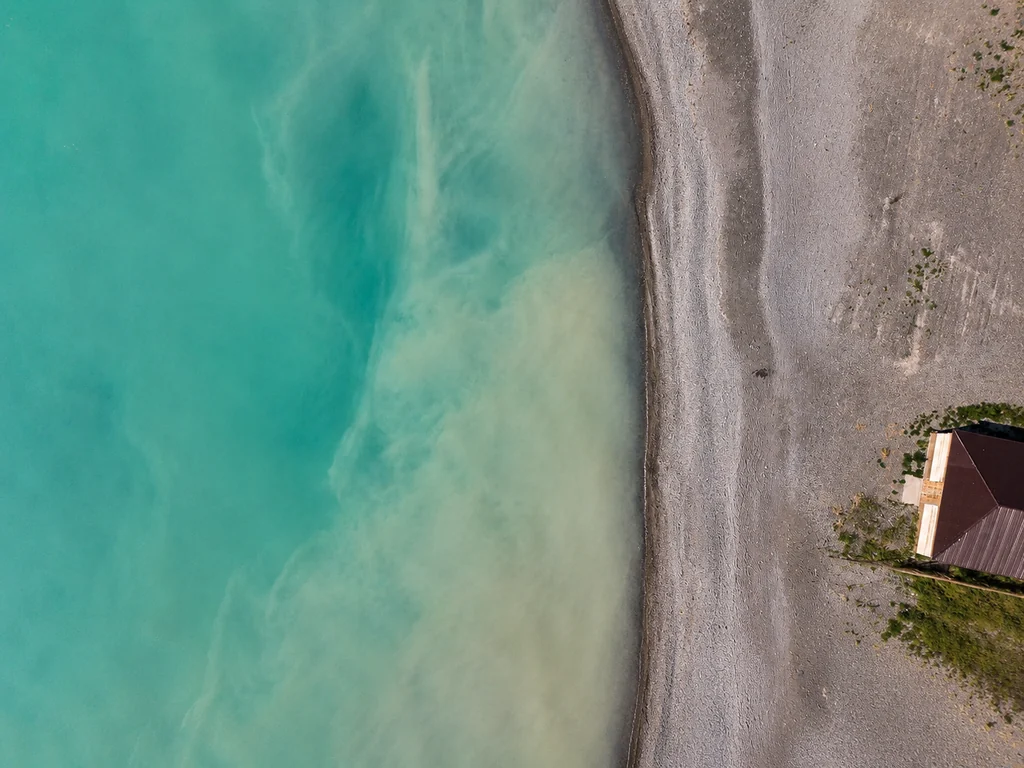
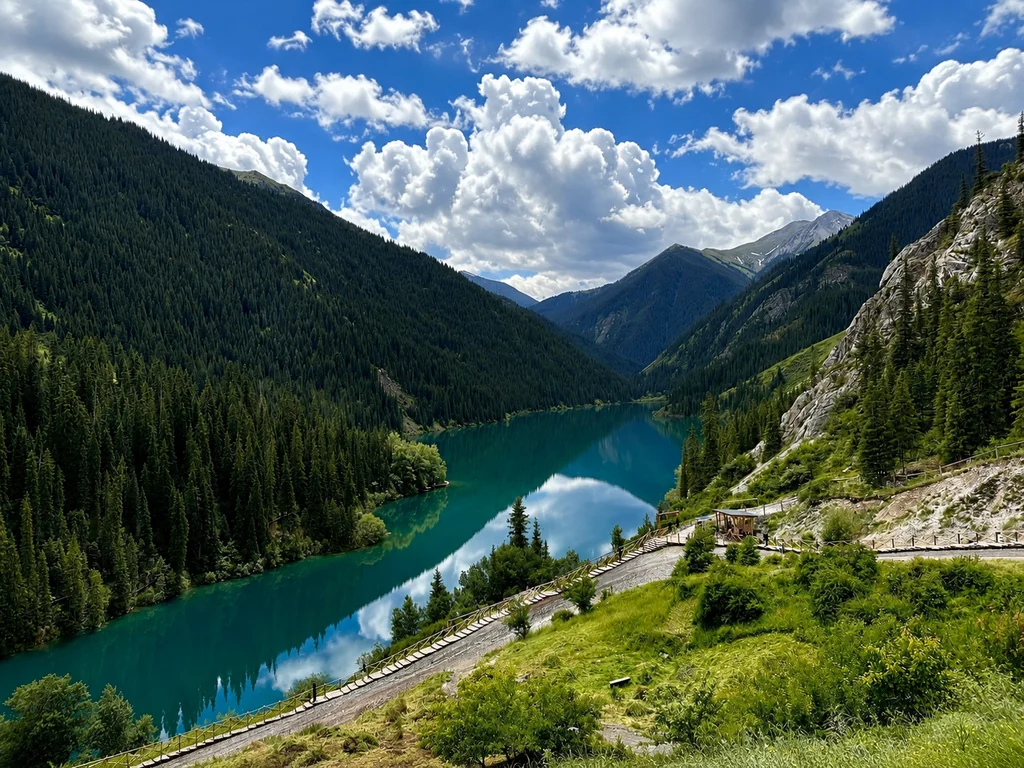
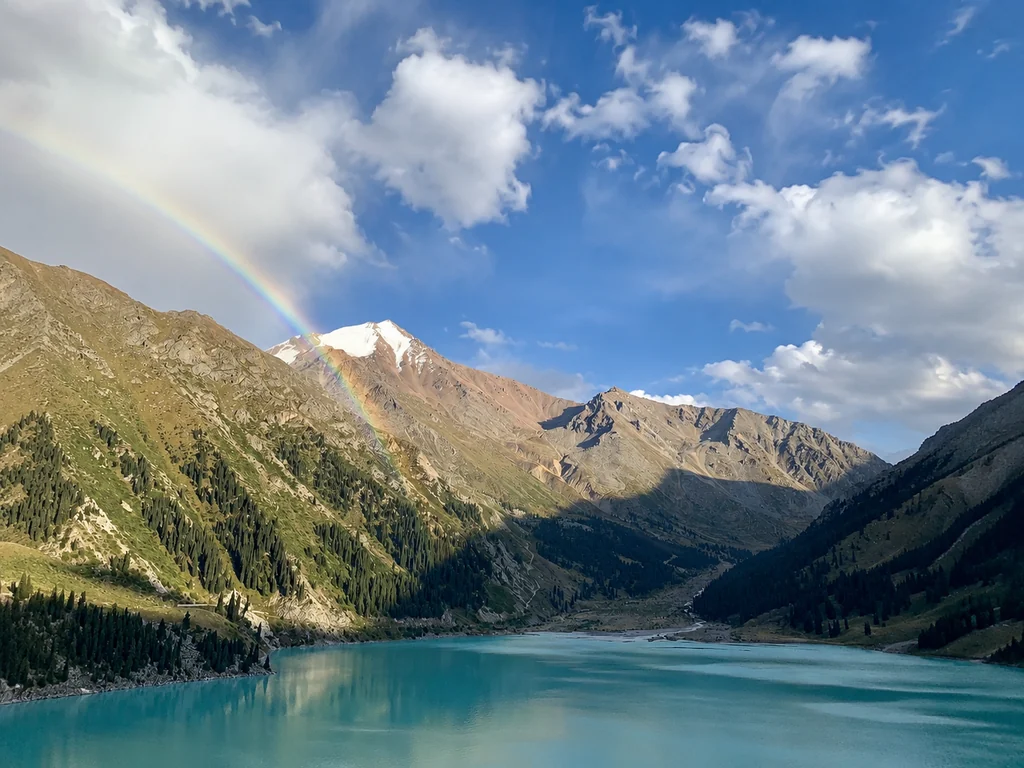
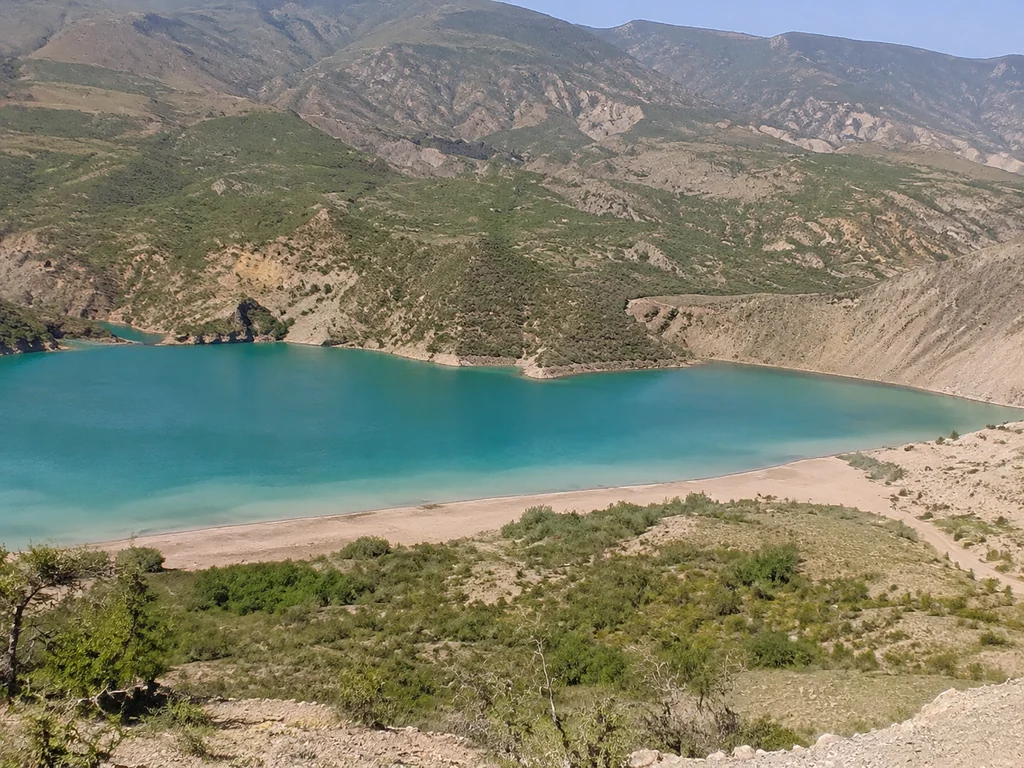
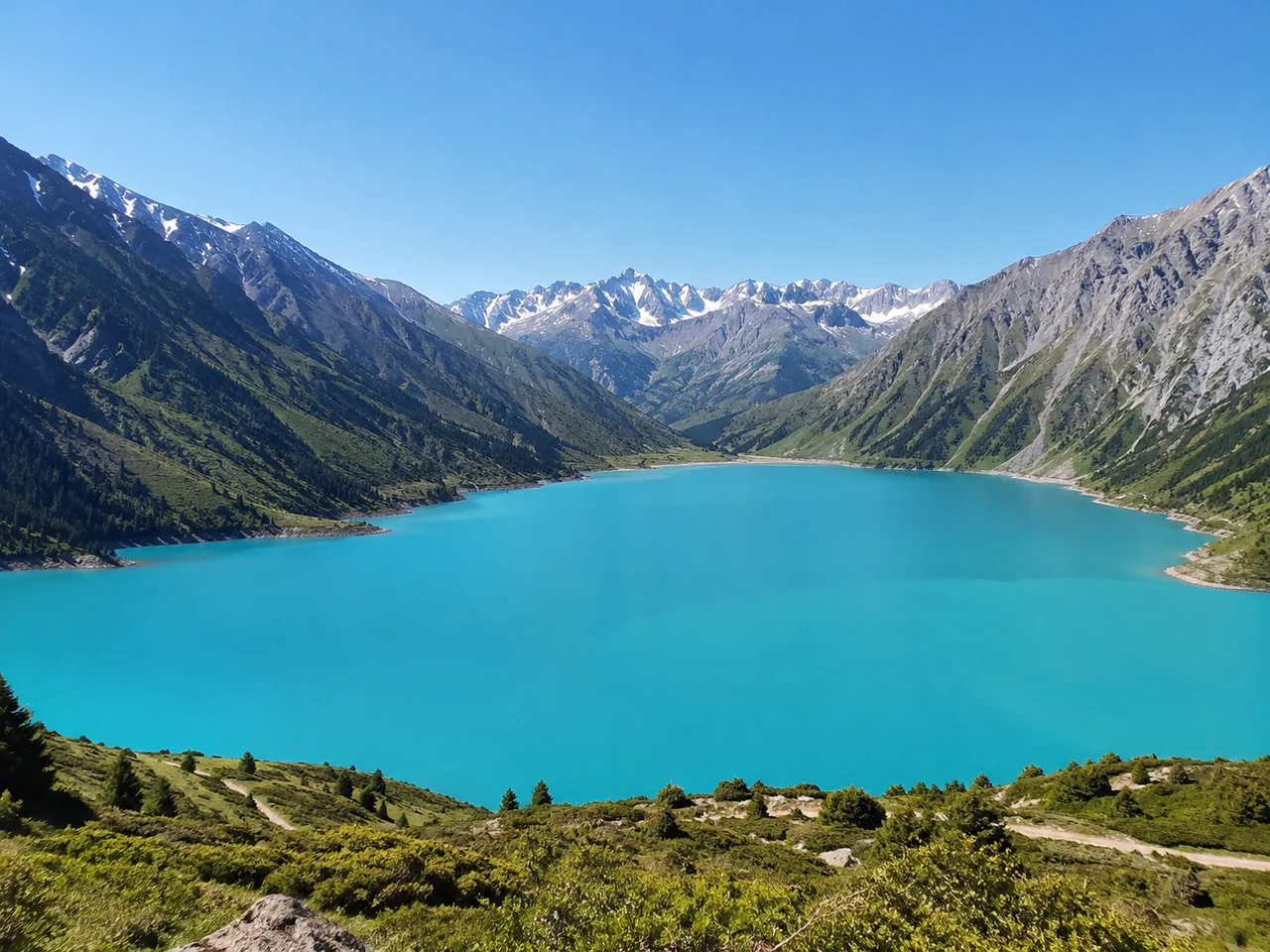
Near the top the road crosses a dam that holds back the lake. This dam is a serious engineering structure, not a decorative wall, and it is the reason the water level stays relatively stable through the summer. Above the dam the lake itself appears suddenly: a wide, cold body of water coloured milky turquoise by suspended glacial minerals. The shoreline is rocky and steep, with no sandy beach, and the water temperature rarely climbs far above a few degrees even in August.
The altitude matters. At 2,511 metres the air holds roughly three-quarters of the oxygen available at sea level, and visitors arriving straight from Almaty, which sits at about 800 metres, often feel light-headed for the first half hour. Walking slowly, drinking water and avoiding sudden sprints solve most of it. The road is open year-round in principle, but snow and ice on the upper switchbacks can slow traffic considerably between December and March.
Who Each Format Suits
If you have half a day and want comfort, the four-hour individual car trips are the obvious pick: they run daily at a time you agree when booking, and they cover the drive, the viewpoints and a stretch of time at the water. If you want the lake plus something unusual, the jeep route to the abandoned high-altitude structures adds a second destination. If you want to feel the mountain under your boots, the walking options range from a light weekend trek to a full ten-hour individual hike.
Groups and families tend to prefer the daily group car tour, which is the cheapest way to see the lake and runs every day. Hikers who want company should look at the mini-group walking departures on Wednesday, Saturday and Sunday. Travelers with a week to spare can fold the lake into the five-day bus tour that also visits Charyn and Kolsai. Age and weight restrictions, where they exist, we confirm when you book.
Big Almaty Lake Seasons: Month by Month in the Gorge
Spring Thaw and Early Summer
April and May bring unstable weather to the gorge. The lower slopes green up first, and by late April the road is usually clear to the dam, but fresh snow can still fall above 2,000 metres. Daytime temperatures at the lake hover between minus 5 and plus 8 degrees Celsius, and the wind off the water makes it feel colder. The river runs high with meltwater, and some walking trails beside it are muddy or partly flooded.
June is the transition month. The snow line retreats upward, wildflowers appear on the south-facing slopes, and the first genuinely warm days arrive. Expect plus 5 to plus 15 degrees Celsius at the lake, with afternoon cloud building over the ridges. This is a good month for photography because the air is often clear after rain, and the turquoise colour of the water is at its most intense as glacial melt feeds the lake.
Wildlife becomes active in this window. Ibex move along the rocky faces above the treeline, and roe deer can be seen in the lower forest belt on quiet mornings. Birds of prey circle the thermals above the gorge. None of this is guaranteed, but early summer gives you the best odds of spotting something without much effort.
High Summer at 2,511 Metres
July and August are the warmest and busiest months. At the lake itself, daytime temperatures typically range from plus 10 to plus 20 degrees Celsius, though the water remains near freezing and the lake is not for swimming. The sun is strong at this altitude, and ultraviolet radiation is noticeably more intense than in Almaty, so sunscreen and a hat are not optional. Afternoon thunderstorms are common, usually building after 2 p.m. and clearing by evening.
The road can be crowded on weekends, with cars parked along the final stretch before the dam. Starting early, ideally before 8 a.m., gives you quieter conditions and calmer water for photographs. The gorge above the lake still holds snow patches in shaded gullies, and the upper trails toward the Kosmostantsiya area are usually passable but can be wet.
Hiking in high summer means dealing with heat at low altitude and cool wind at the top. Layering works better than a single heavy jacket. The trails are at their driest, river crossings are manageable, and the long daylight hours, with sunset after 8 p.m. in early July, allow generous schedules for the ten-hour walking routes.
Autumn Colours and Winter Access
September and October are arguably the most beautiful months in the Big Almaty Gorge. The forest belt below the lake turns gold and orange, the air is crisp and clear, and the crowds thin out after the first week of September. Temperatures at the lake drop to between zero and plus 10 degrees Celsius, and the first snow of the new season often falls in mid-October. The water keeps its turquoise tint until the surface begins to freeze.
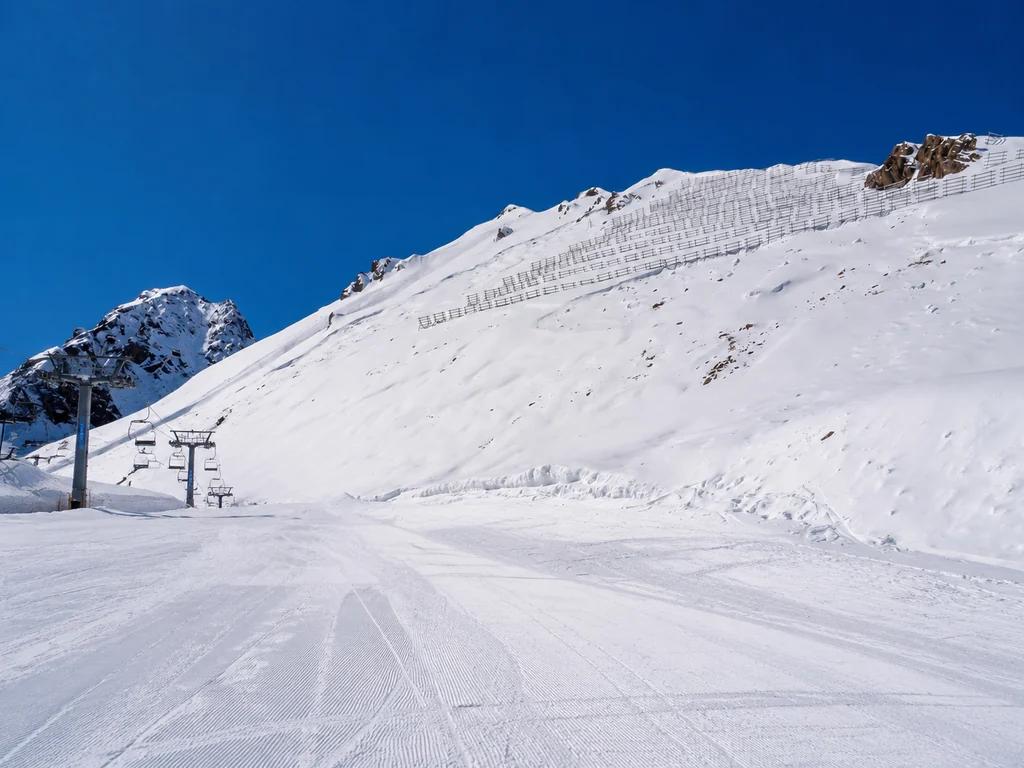
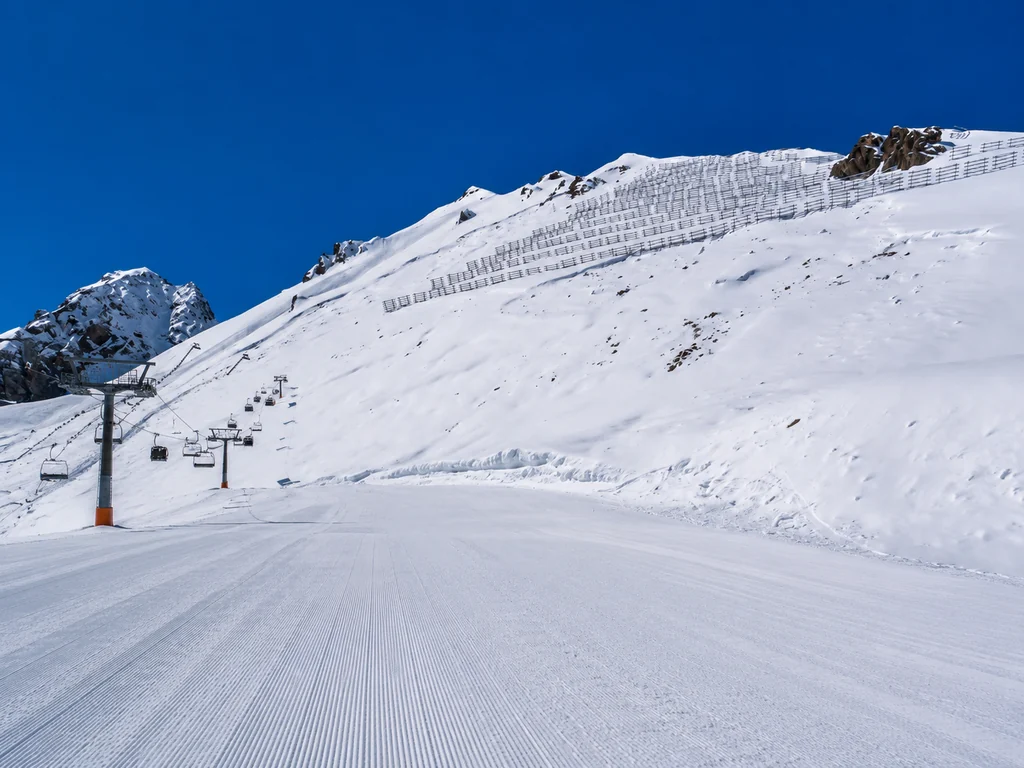
From November to March the gorge is a winter world. The lake freezes over, usually by late December, and the surrounding slopes hold deep snow. Daytime temperatures at 2,511 metres can sit between minus 5 and minus 20 degrees Celsius, with wind chill making it harsher. The road is maintained but can be slippery, and the upper switchbacks may require care. Winter visits are about the frozen lake, snow-covered peaks and the silence of the gorge rather than hiking.
Our daily departures continue through the year according to each tour's schedule, but the character of the trip changes with the season. Winter clothing, warm boots and traction aids for icy paths make the difference between a pleasant outing and a miserable one. Whatever the month, the weather at the lake can differ sharply from Almaty, so check conditions before you leave the city.
Big Almaty Lake Hiking Tours: Walking Routes Explained
Light Trekking on Weekends
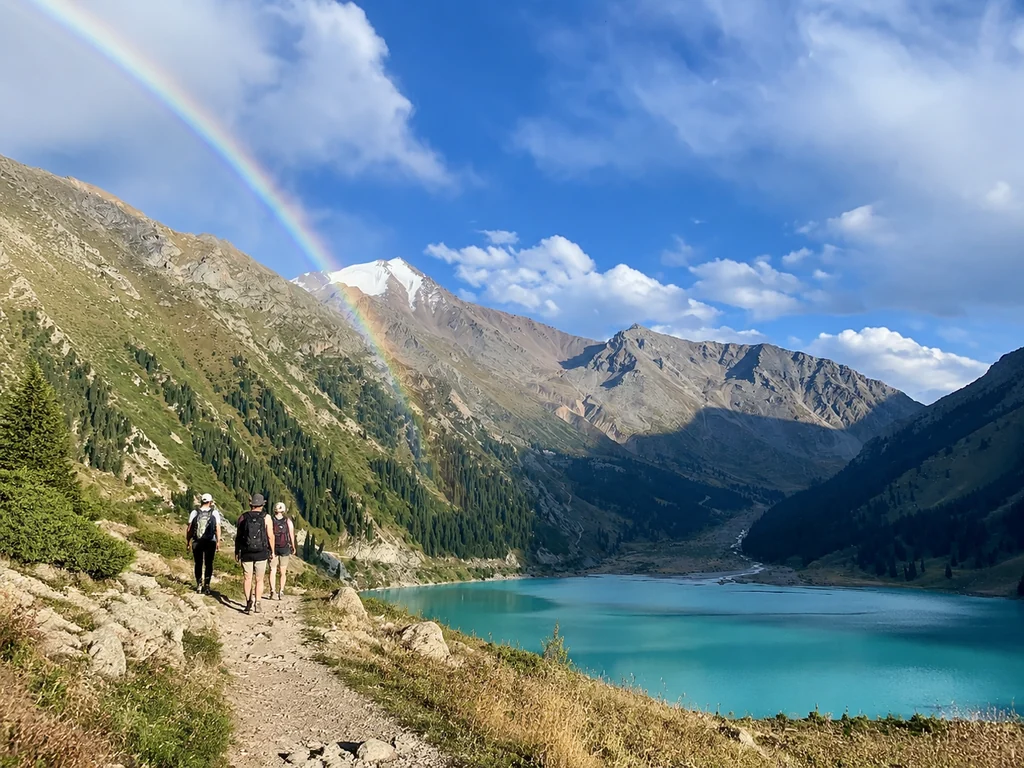
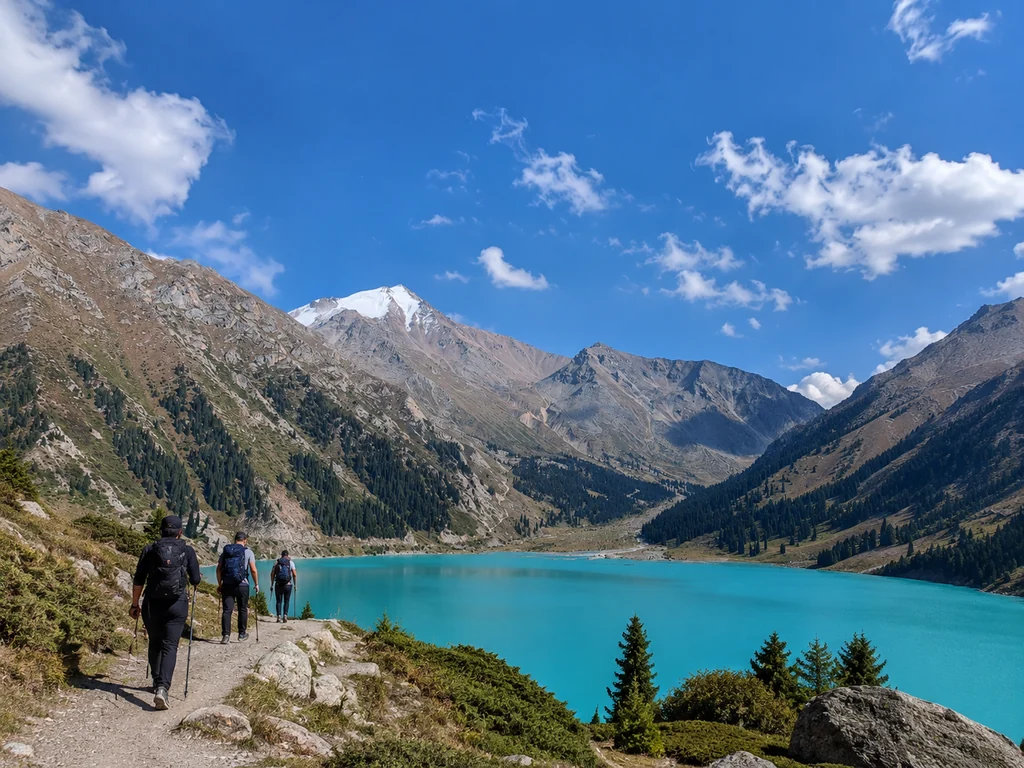
The light trekking option runs on Saturdays and Sundays and lasts about eight hours. It follows the Big Almaty gorge on foot from the lower reaches up to the dam and the lake, a route that gains roughly 900 to 1,000 metres of altitude over 10 to 12 kilometres depending on the exact line. The path is mostly a wide track and then a trail, with no technical sections, which is why it is described as suitable for beginners. You walk at a steady pace with stops for photos and rest.
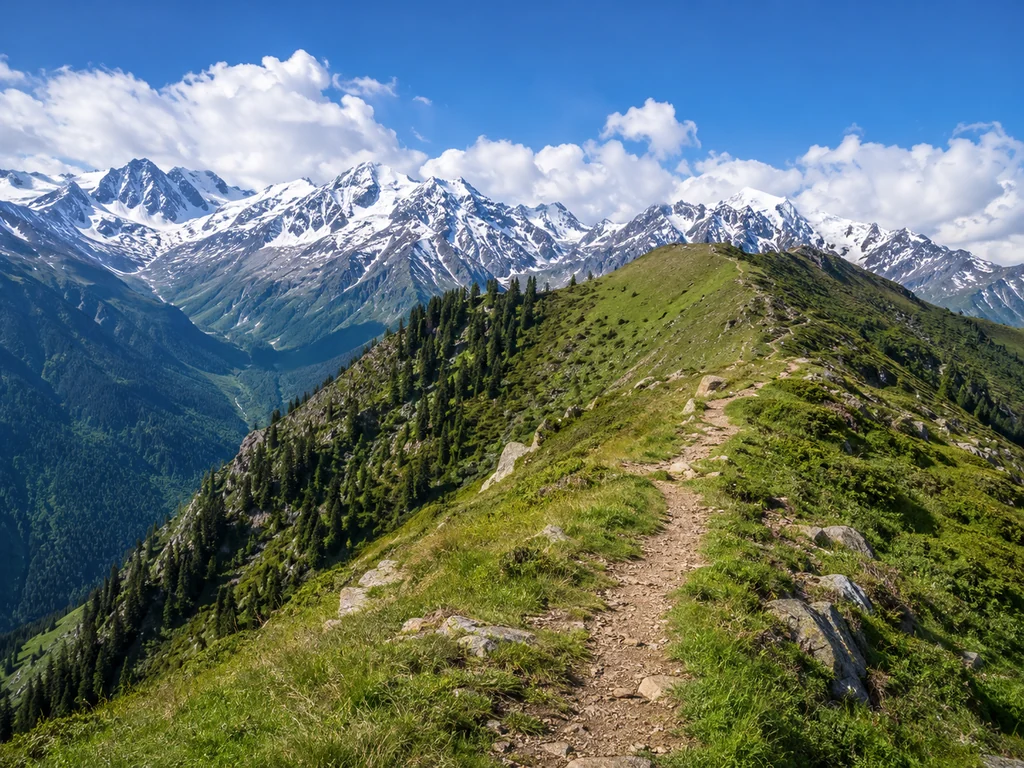
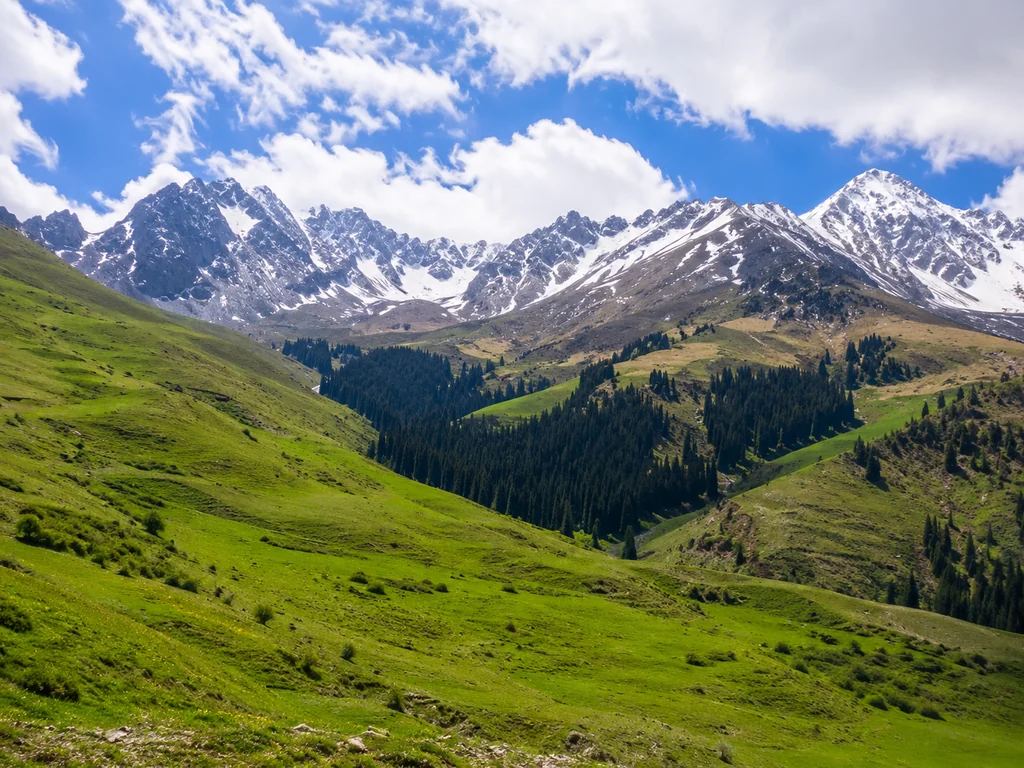
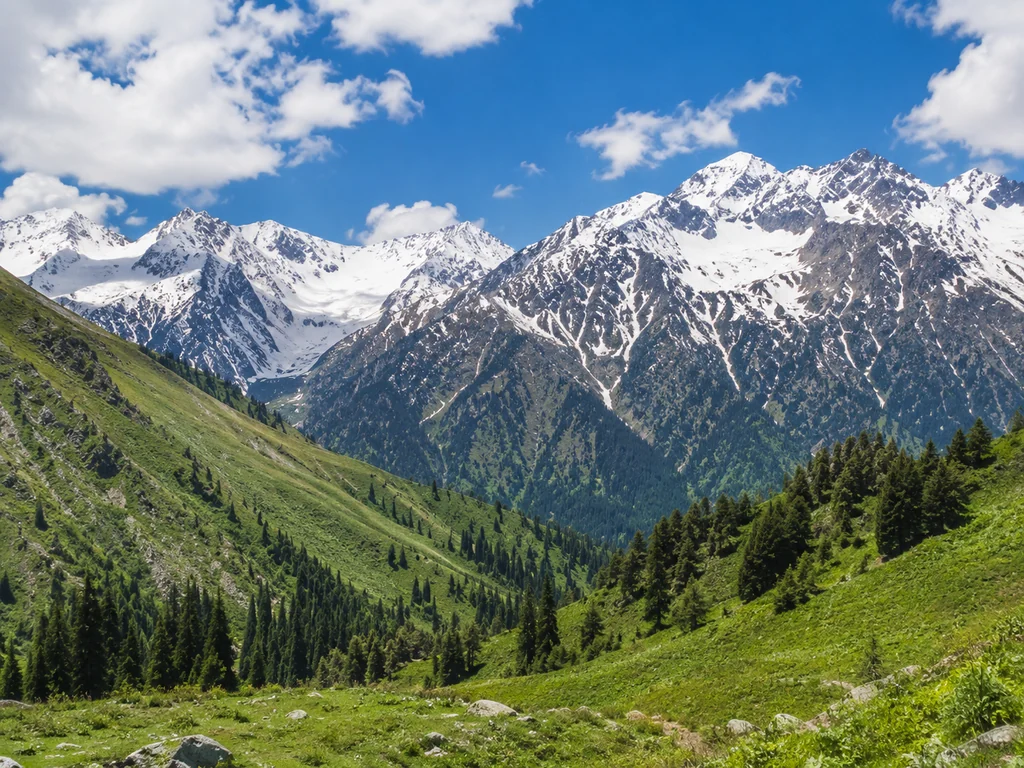
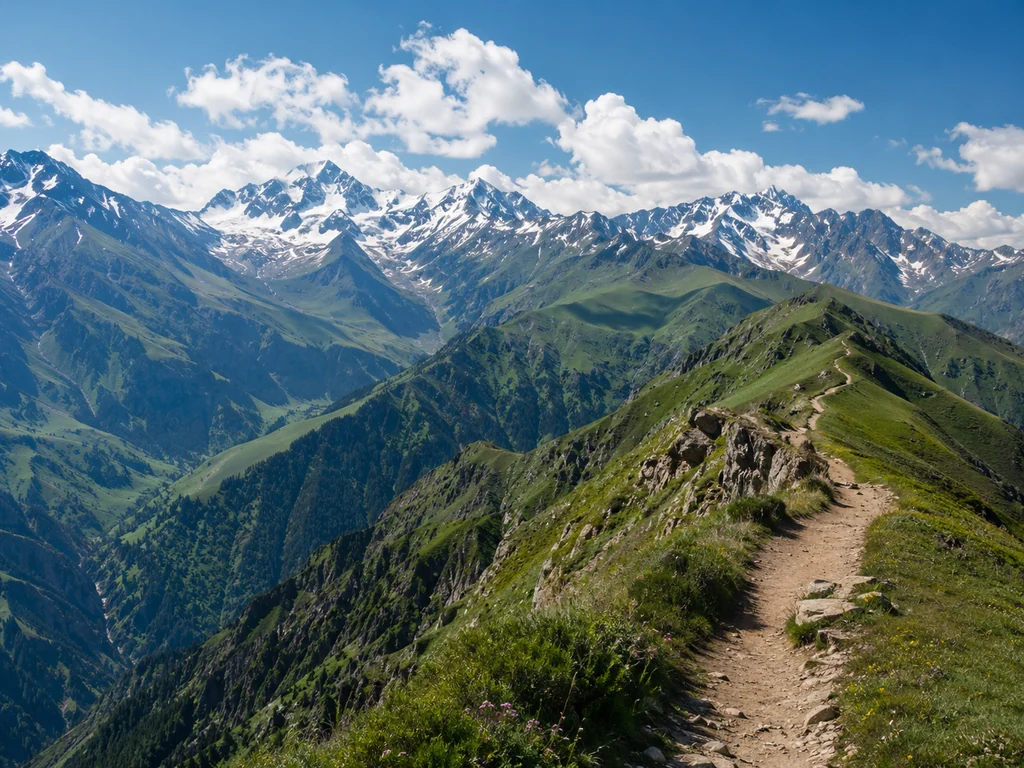
Because the route is a there-and-back on foot, the day is structured around a morning start, a long climb, a break at the lake and a descent. The surface varies from packed dirt to loose stone, and after rain some stretches become slippery. Good shoes with grip matter more than expensive gear. The reward is the changing view: first the city shrinking behind you, then the forest belt, then the bare rock and finally the turquoise water framed by snow-streaked peaks.
This is the cheapest walking option in the section at $24 per person, and it is a genuine hike rather than a stroll. If you have not walked uphill for months, expect to feel it in your calves the next day. Poles help on the descent, and a light backpack with water and a windproof layer is enough for most people.
Mini-Group Walking Departures
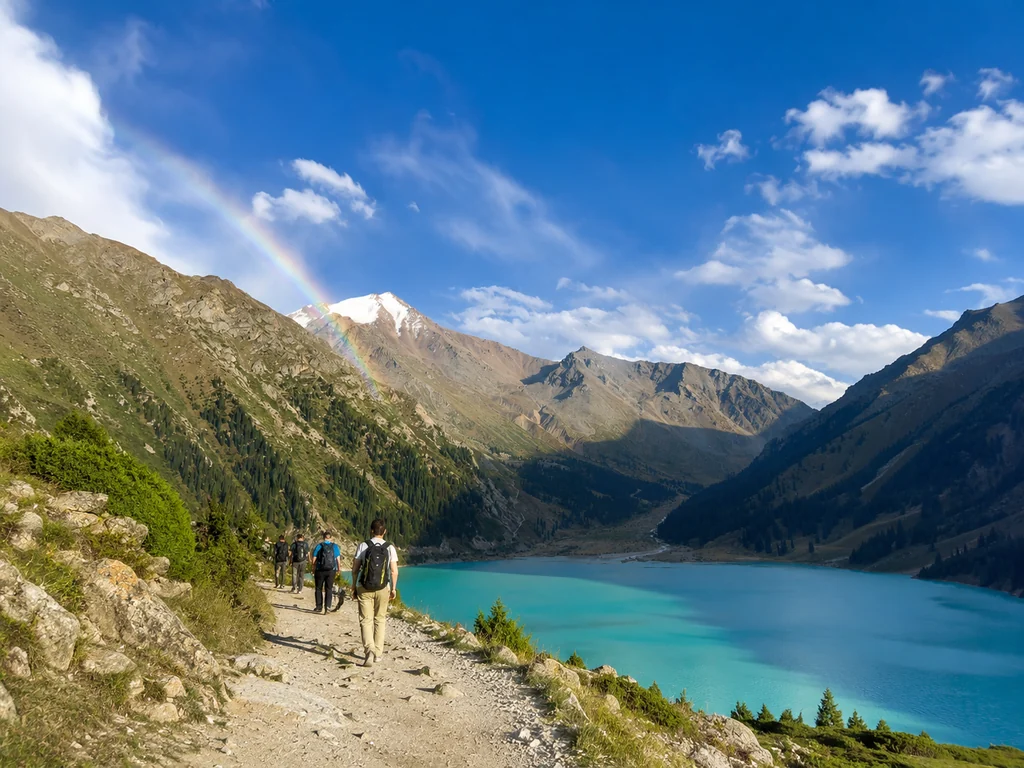
The mini-group hike runs on Wednesday, Saturday and Sunday with a 7 a.m. departure and takes about seven hours. It is a one-day walk to the lake along a scenic trail beside the mountain river, climbing to the 2,511-metre shoreline and returning the same way. The group format keeps the pace moderate and gives you company on the trail. The route is suitable for both first-time hikers and more experienced walkers, since the difficulty lies in the steady ascent rather than in any technical obstacle.
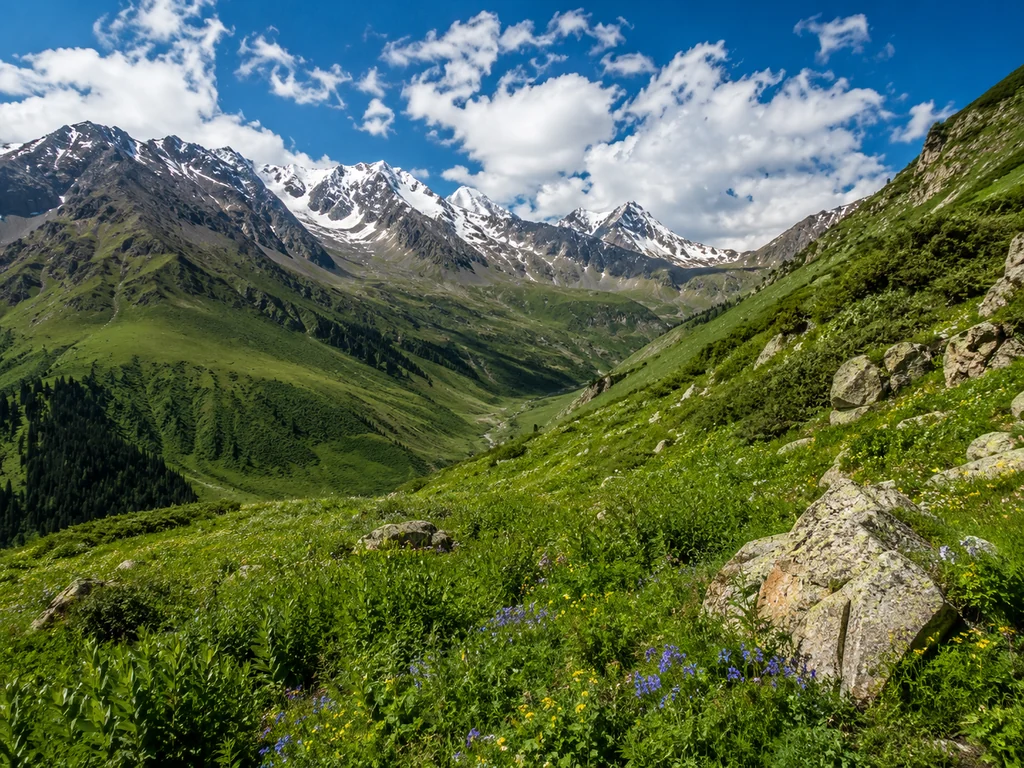
Starting at 7 a.m. means you are on the trail before the heat of the day and back in Almaty in the late afternoon. The early start also improves your chances of seeing the lake before afternoon cloud builds. The trail crosses a few small streams and passes through juniper and Tian Shan spruce before emerging above the treeline. Wildflowers in June and July, autumn colours in September and October, and snow patches in the shaded gullies are the seasonal markers.
At $102 per person this is the most expensive of the walking day trips, reflecting the small group size and the guided format. It is a good middle ground for travelers who want a proper hike but prefer not to organize transport and route-finding themselves. Fitness requirements are moderate: if you can walk uphill for three to four hours with breaks, you will manage.
The Ten-Hour Individual Hike
The individual walking tour is the longest single-day option at around ten hours, with a start time agreed when you book. It is a private hike, so the pace is set by you and your guide, and the route can be adjusted to your fitness and interests within the standard line to the lake. Ten hours allows a slower ascent, longer time at the water and a more relaxed descent, plus detours to viewpoints that group schedules often skip.
This format suits people who want solitude, photographers who need to wait for light, and hikers who prefer not to be rushed. The altitude gain is the same as on the group routes, roughly 900 to 1,000 metres, but spread over a longer day. You should still be comfortable walking for five to six hours in total. The price is $56 per person, and any extras along the way are paid separately, with the cost confirmed when you book.
Because it is a private departure, the date and time are flexible within the daily availability. Early starts are best in summer to avoid the afternoon build-up of cloud and the stronger sun. In winter the same route becomes a snow walk, and the day may be shorter because of daylight, so discuss the plan when booking.
Big Almaty Lake Jeep and Car Tours: Motorized Options
The Jeep Route to the Old High-Altitude Station
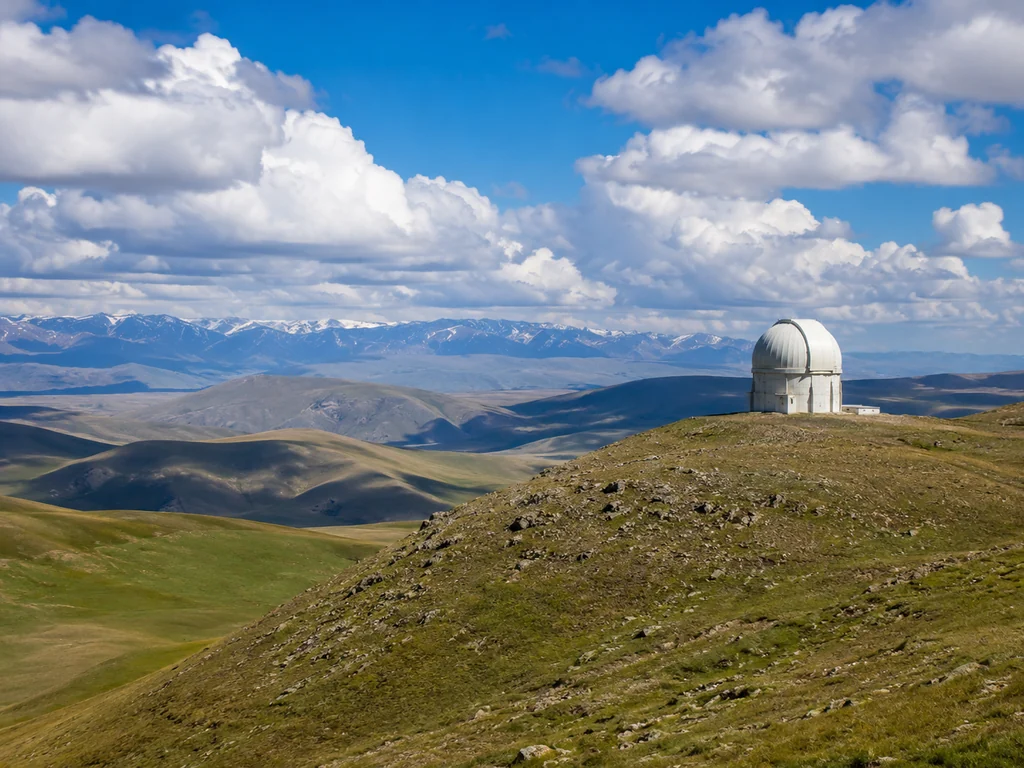
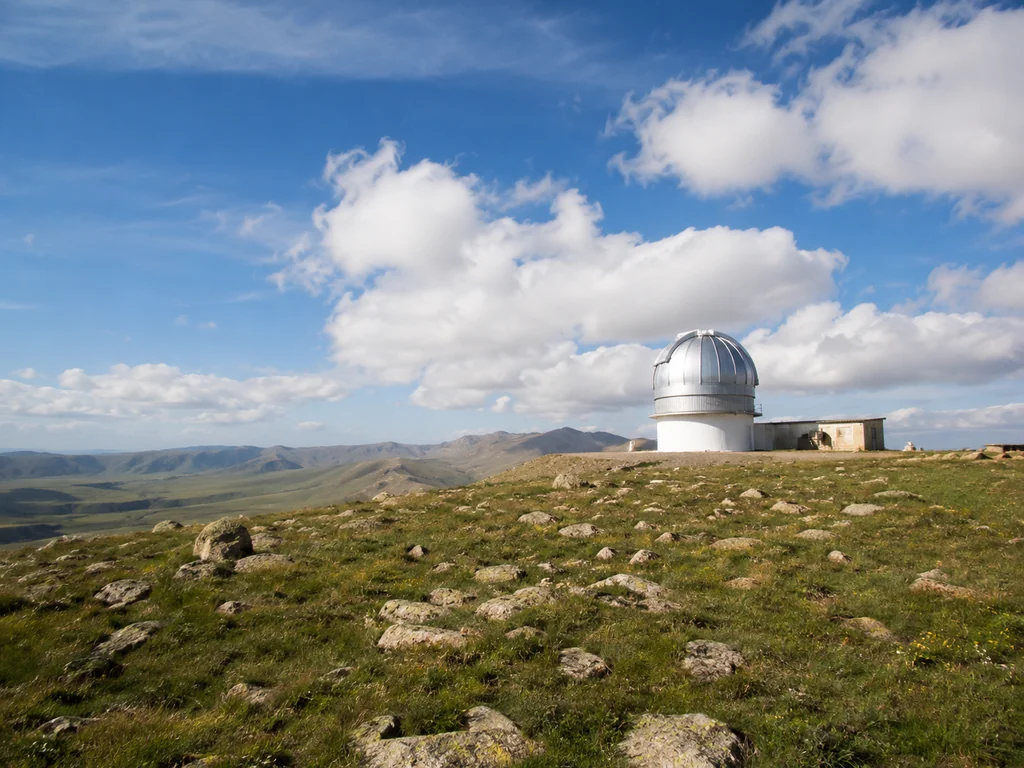
The jeep tour runs daily and lasts about eight hours, combining the Big Almaty Lake with a visit to the abandoned high-altitude structures above it. The vehicle handles the rough upper track that ordinary cars cannot, climbing beyond the dam to where the Soviet-era buildings stand against the sky. From there the panorama opens up across the Tian Shan, with glaciers and rocky ridges filling the horizon. The route is a full day because the driving is slow and the stops are long.
This is the only tour in the section that uses a jeep, and it is priced at $56 per person. The group format keeps costs down while still reaching places a standard car trip cannot. The upper track is bumpy, dusty in summer and snow-covered in winter, so the season changes the feel of the day considerably. In clear weather the views from the station area are among the widest available in a single day from Almaty.
The historical structures themselves are weathered and empty, standing as a reminder of a different era. There is no museum, no guided interior visit and no facilities up there, so the appeal is the setting and the landscape rather than any organized tour of the buildings. Bring windproof clothing: at that altitude the wind is constant even on warm days.
Four-Hour Individual Car Trips
Two of the eight tours are four-hour individual car trips to the lake, both priced at $56 per person and both running daily at a time you choose when booking. They cover the drive up the gorge, the viewpoints along the road, the dam and a period at the water's edge. The difference between them is mostly in emphasis rather than in route, and both are designed for travelers who want speed and comfort without a long walk.
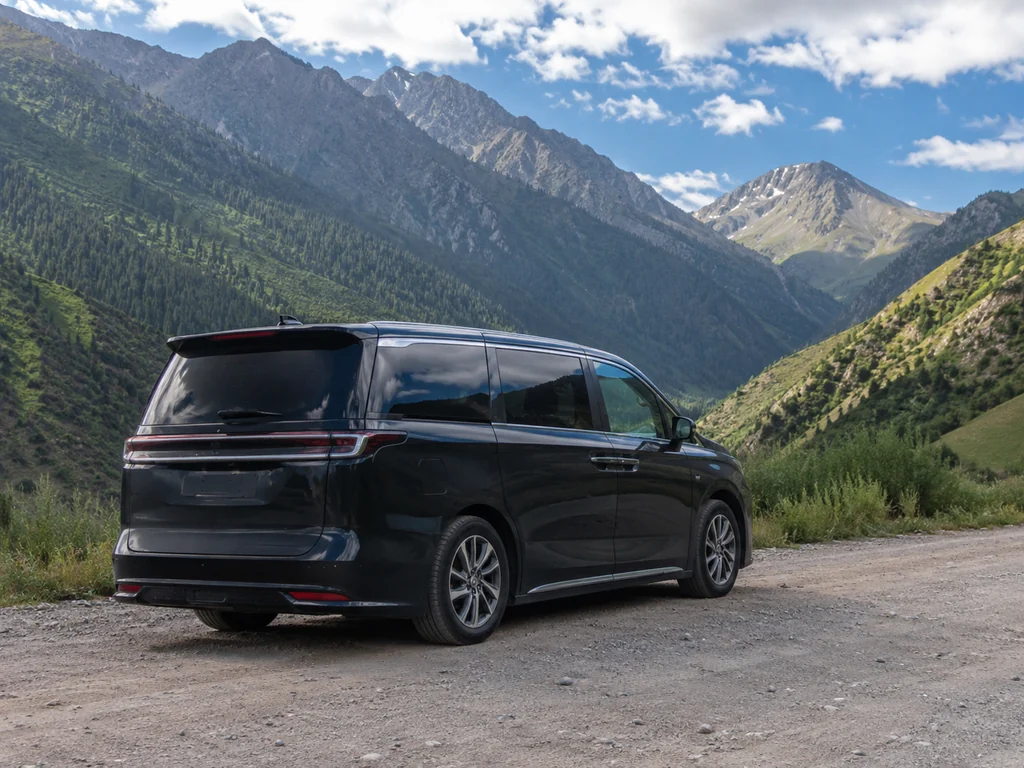
Four hours is enough for the round trip because the road does most of the climbing. You spend roughly an hour and a half driving each way, allowing for photo stops, and about an hour at the lake. The schedule is tight but not rushed if you start early. This is the best option for people with limited time, for families with small children, and for anyone who prefers a heated car to a mountain trail.
Because these are private departures, you can ask to linger at a particular viewpoint or shorten the stop at the lake. The car handles the asphalt road comfortably in all seasons, though winter conditions can slow the upper switchbacks. Extras beyond the standard route are paid separately, and the cost is confirmed when you book.
The Daily Group Car Tour
The group car tour is the most affordable way to see the lake at $27 per person, running daily and lasting six to seven hours. It follows the same road as the private trips but in a shared vehicle, which is why the price is lower. The format suits solo travelers, couples and anyone who does not mind sharing the ride. The route passes through the scenic gorge, climbs to the panorama points and reaches the turquoise water at 2,511 metres.
Six to seven hours gives more time than the four-hour private trips, mainly because group logistics add a little to the schedule. You still get the drive, the viewpoints and a proper stop at the lake. The tour is described as suitable for any age, and any age or weight limits we confirm when you book. It is a good first introduction to the gorge if you have never been above Almaty.
Because it runs every day, it fits almost any itinerary. The main variable is the weather, which can change the view from spectacular to foggy within an hour. Starting early improves the odds of clear skies. In winter the same route becomes a cold-weather excursion, and warm clothing makes the difference.
Big Almaty Lake Multi-Day Tour: Five Days Across the Region
What the Five-Day Route Covers
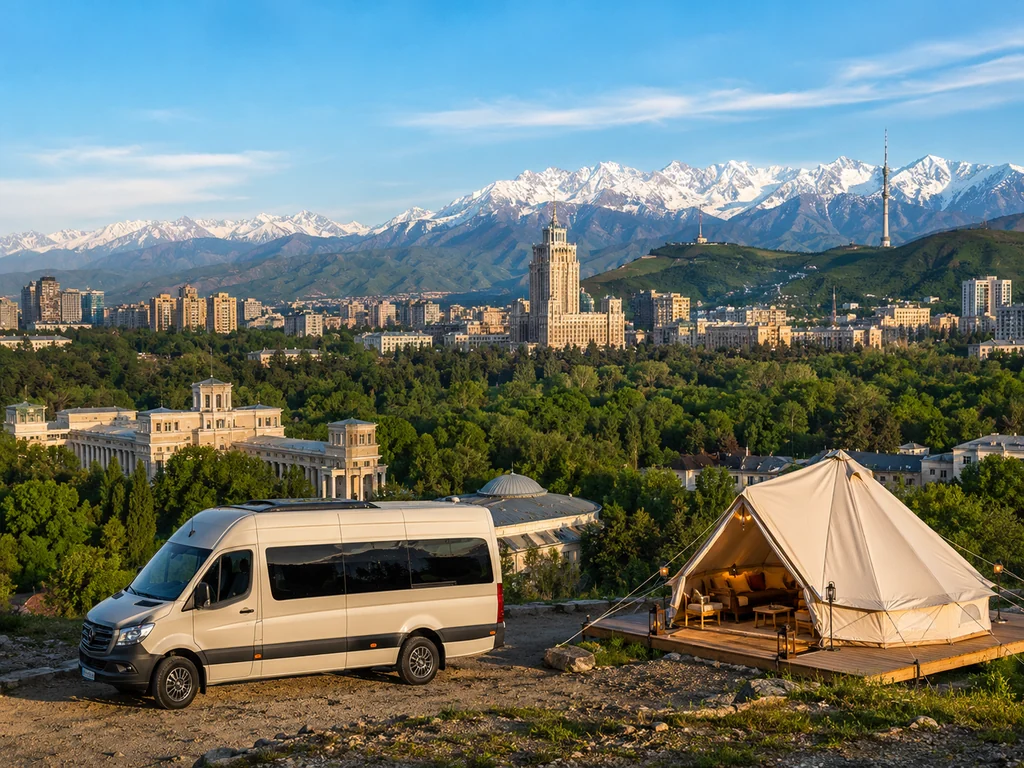
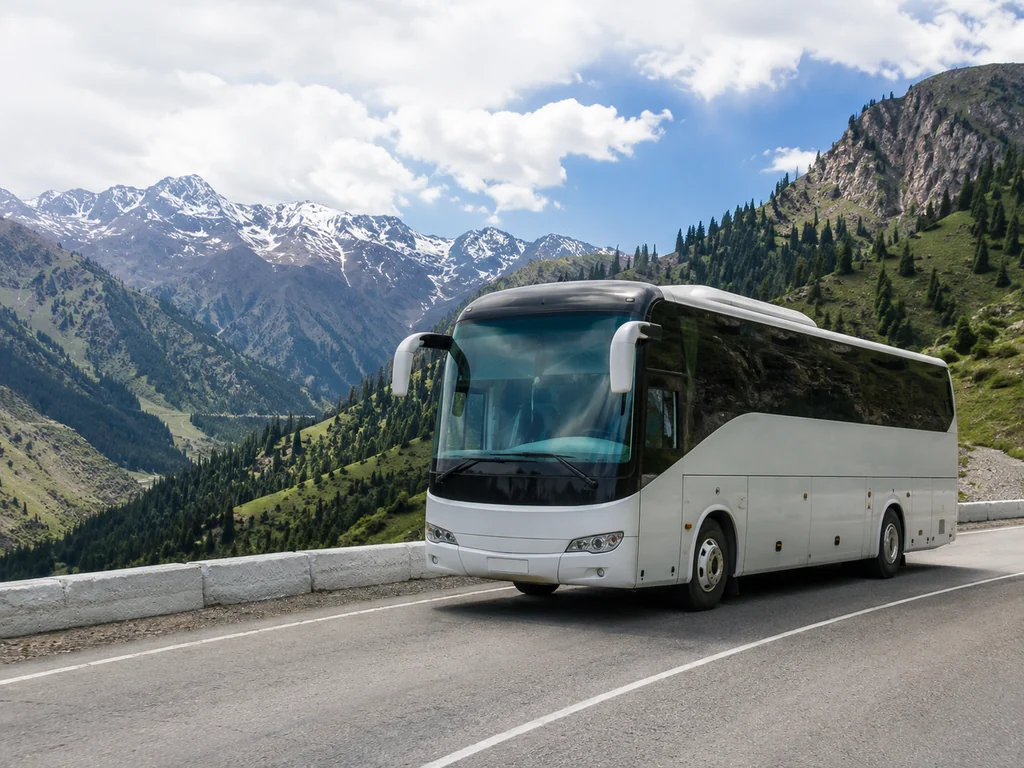
The five-day tour runs on Monday, Wednesday and Friday with a 9 a.m. start and lasts five days and four nights, using a minibus. At $376 per person it is the most comprehensive product in this section. Over the five days it takes in the main sights of Almaty and the surrounding region, including Charyn, the Kolsai lakes and the Big Almaty Lake. The pace is described as full but with comfortable drives and overnight stays in guesthouses and hotels.
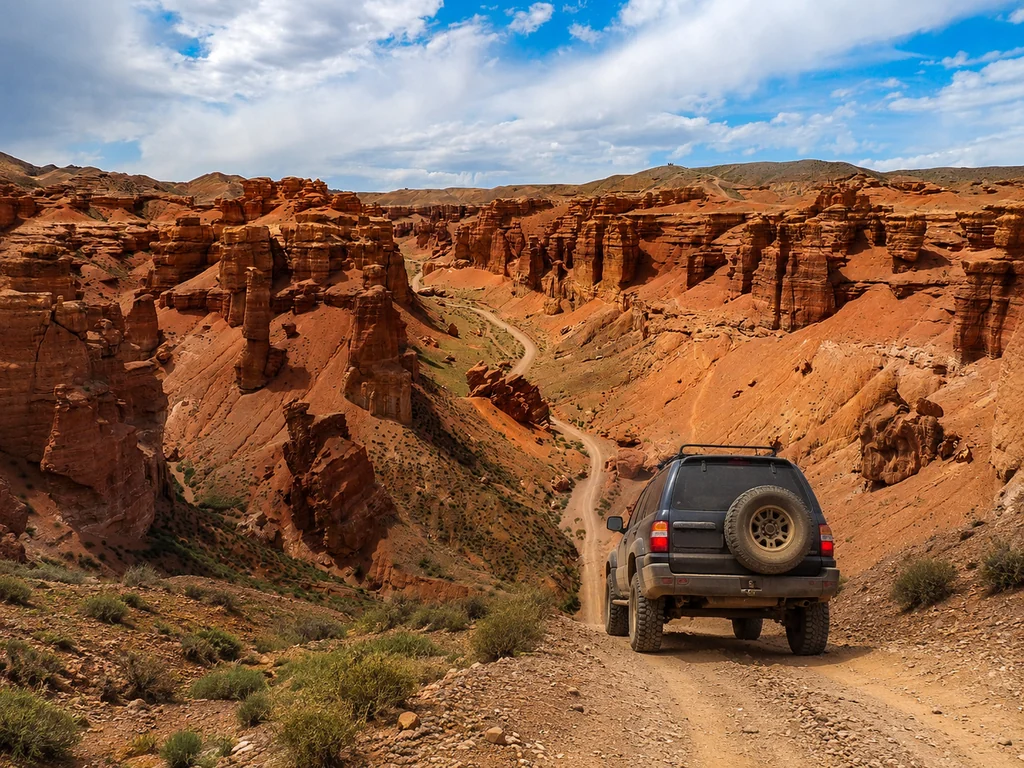
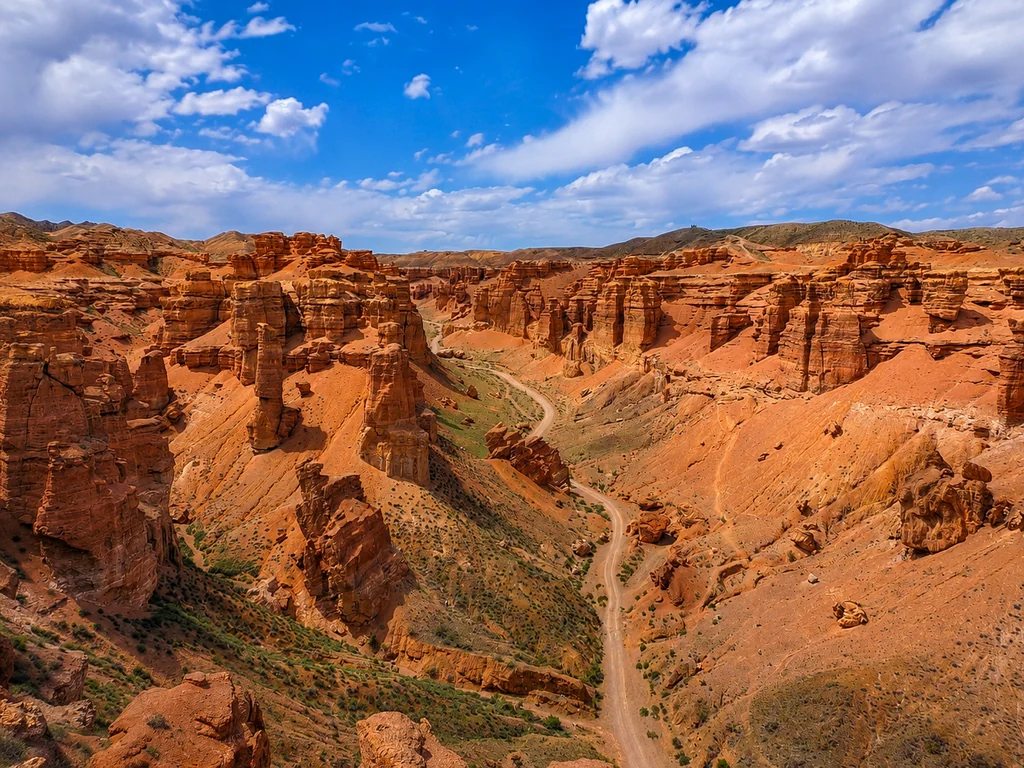
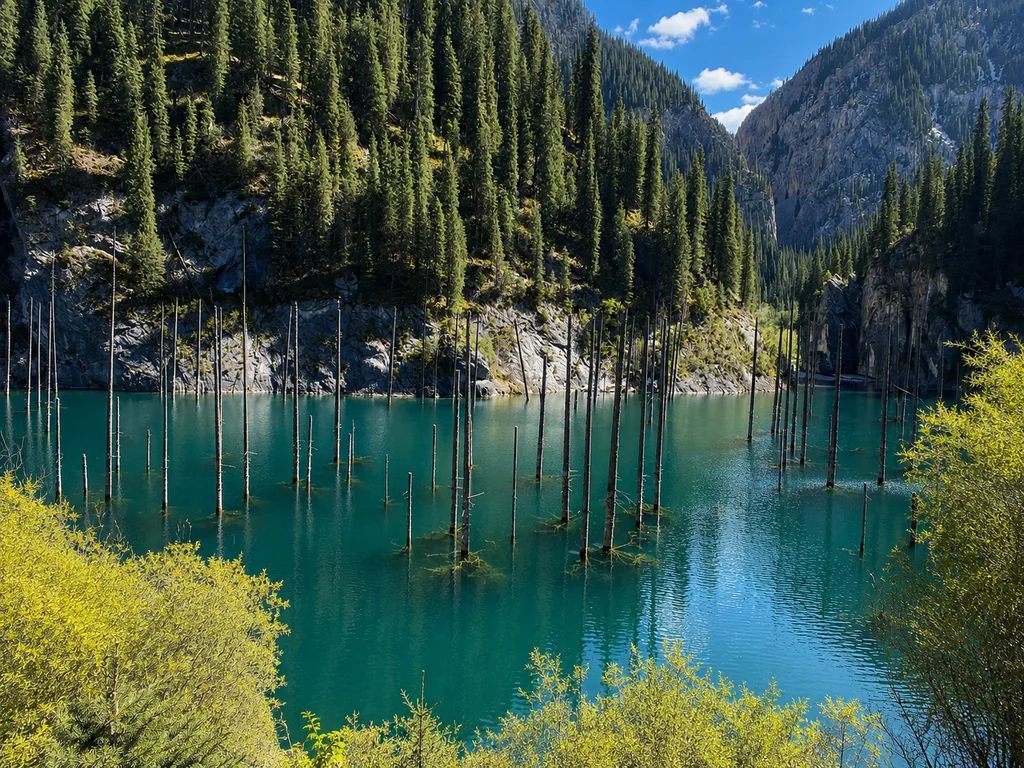
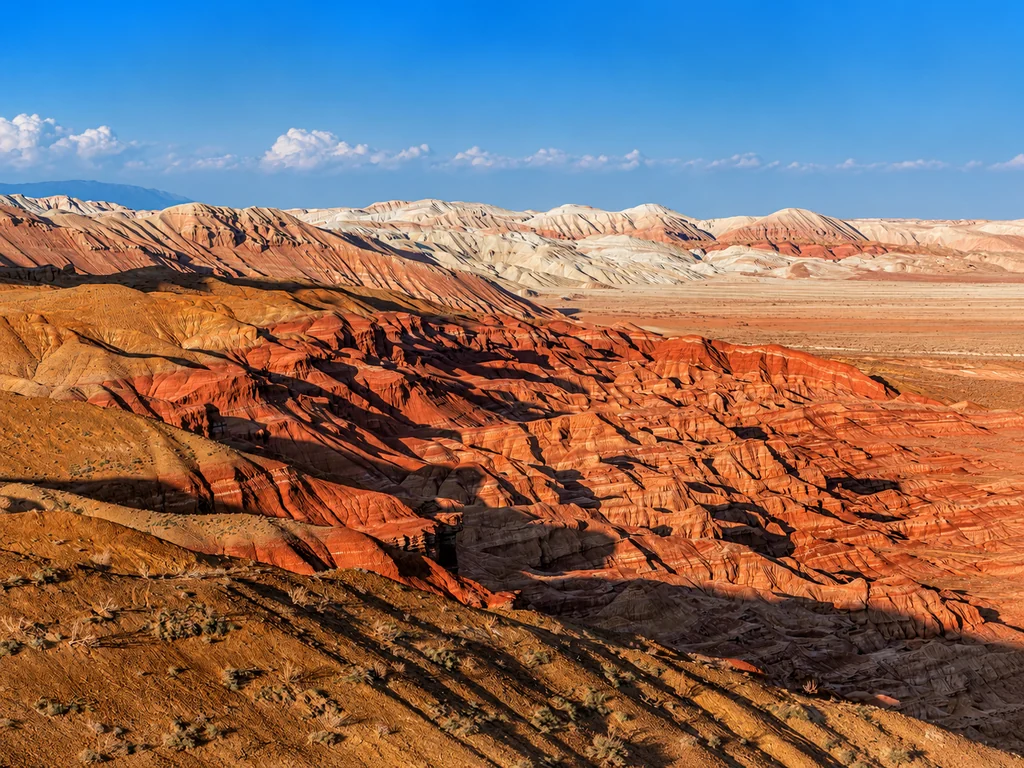
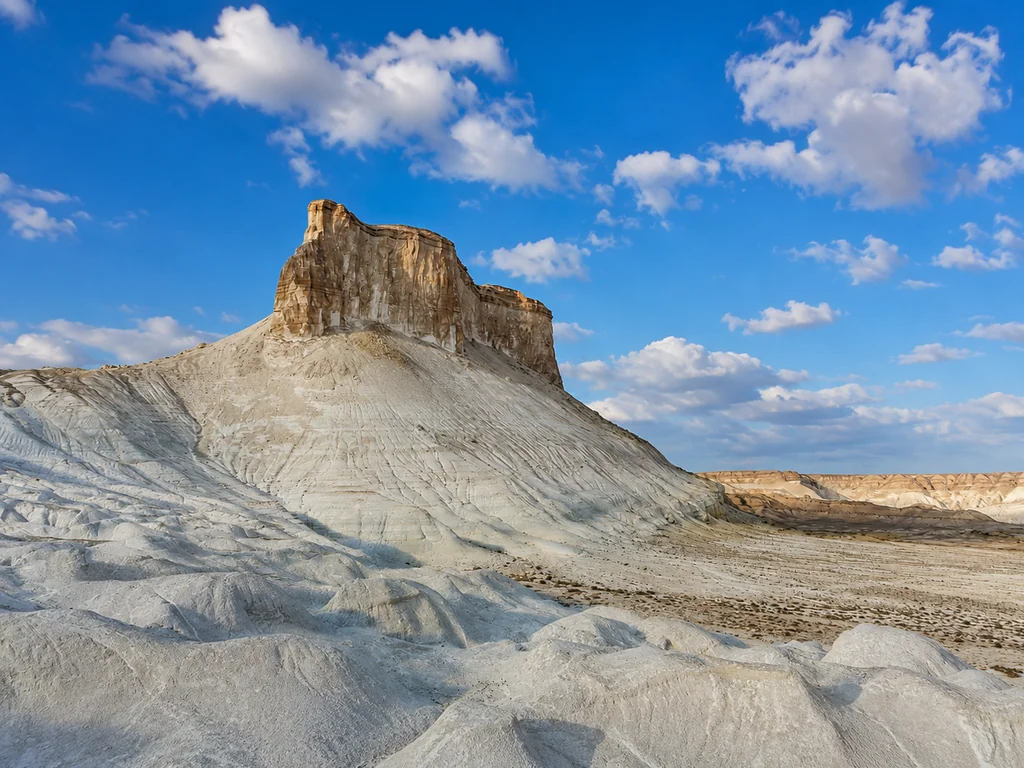
Charyn is a dramatic canyon of eroded red and orange rock, carved by the Charyn river and stretching for tens of kilometres. The Kolsai lakes are a chain of alpine lakes in the Kungey Alatau, lower and warmer than the Big Almaty Lake but equally scenic, set among spruce forest. Adding the Big Almaty Lake to the same trip gives a high-altitude contrast to the canyon and the forest lakes. Distances between these places are significant, which is why the tour needs five days.
The bus format keeps the group together and handles the long road transfers. Overnight stays are in guesthouses and hotels rather than tents, which makes the trip accessible to travelers who prefer a bed and a shower. The daily rhythm is early starts, long drives with stops, and evening arrival at the next hotel. It is a sightseeing tour rather than a trekking tour, though there is walking at each stop.
How the Days Are Structured
With a 9 a.m. start on the first day, the group leaves Almaty after a morning gathering and heads out of the city. The exact sequence of stops across the five days depends on the departure date and road conditions, but the itinerary always includes the three headline destinations named above. Drives between them can take several hours, so the days are built around travel plus one or two main visits. Evenings are free for rest at the hotels.
Because the tour runs only on Monday, Wednesday and Friday, it suits travelers who can align their arrival in Almaty with those days. The five-day length means you need a clear week in your schedule. The reward is a broad introduction to the region's landscapes without organizing transport, accommodation or route-finding yourself. The group size is moderate, and the bus provides a comfortable base between stops.
Fitness requirements are light: you need to walk at viewpoints and short trails, not to climb for hours. The main challenge is the amount of time spent sitting in a vehicle. Pack layers, since the canyon can be hot while the lakes are cool, and the Big Almaty Lake at 2,511 metres is colder than anywhere else on the route. Any extras are paid separately, with costs confirmed when you book.
Who the Five-Day Tour Suits
This tour is aimed at travelers who want to see as much as possible in one trip and do not mind long drives. It suits couples, small groups of friends and independent travelers who are happy to join a bus group. It is less suitable for people who want deep hiking, since the walking at each stop is short. It also requires a full five days, which rules it out for short city breaks.
If your main goal is the Big Almaty Lake itself, one of the shorter tours is more efficient. If your goal is a broad picture of the region, the five-day route delivers Charyn, Kolsai and the lake in a single loop. The contrast between the dry canyon, the forest lakes and the high glacial lake is the strongest argument for the longer trip.
Because departures are limited to three days a week, book early if your travel dates are fixed. The tour is the most expensive item in the section, but it covers the most ground and the most nights. Age and weight limits, where they apply, we confirm when you book.
Preparing for Big Almaty Lake Tours: Fitness, Gear and Safety
Altitude, Fitness and Pacing
Altitude is the single biggest factor that catches visitors off guard. Almaty sits at about 800 metres, and the lake at 2,511 metres, so you gain more than 1,700 metres in a few hours by car or on foot. Symptoms of mild altitude discomfort include headache, breathlessness and a faster heartbeat. They usually pass within an hour if you take it easy. Drinking water, avoiding alcohol the night before and not rushing the first hour all help.
For the walking tours, a basic level of fitness is enough. If you can walk for three to four hours with breaks on hilly ground, you can manage the light trekking and mini-group hikes. The ten-hour individual hike demands more endurance but no technical skill. The car and jeep tours require almost no fitness beyond walking short distances at viewpoints, though the ground at the lake is uneven and rocky.
Pacing matters more than raw fitness. Start slowly, keep a steady rhythm on the climb, and take short breaks rather than long ones. On descents, watch your footing on loose stone. Poles are useful on the walking routes. If you have heart or lung conditions, consult your doctor before booking a high-altitude trip.
What to Pack for the Gorge
The weather at the lake can differ sharply from Almaty, so layering is the key principle. Even in July, a windproof jacket is worth carrying, because the wind off the water is cold. In winter, insulated boots, gloves, a hat and warm base layers are essential. Sun protection matters year-round at this altitude: sunscreen, sunglasses and a hat for sunny days.
- Sturdy shoes with grip, ideally hiking boots for the walking tours
- Windproof and waterproof outer layer, plus a warm mid-layer
- One to two litres of water per person for walking routes
- Sun protection: sunscreen, sunglasses, hat or cap
- Snacks and a packed lunch for the longer hikes
- Power bank and a charged phone, since signal is patchy in the gorge
- Cash in tenge for any extras along the way
- In winter: insulated boots, gloves, hat and traction aids for icy paths
Do not overpack. The walking routes are there-and-back, so you carry everything you bring. A light backpack of 20 to 30 litres is enough for a day trip. For the five-day tour, a small suitcase plus a daypack works well, since the bus carries the luggage between hotels.
Photographers should bring spare batteries, as cold reduces their life, and a cloth to wipe spray and dust from the lens. The turquoise colour of the lake is strongest in bright, clear light, usually in the morning before the afternoon cloud builds.
Safety, Rules and Local Considerations
The Big Almaty Gorge is a protected natural area within the Ile Alatau national park, and certain rules apply. Fires are restricted, litter must be carried out, and picking plants or disturbing wildlife is prohibited. Some upper areas near the border zone require permits, and your guide will advise if any part of a route falls under that regime. Always follow the instructions of your guide on the day.
The mountain river is fast and cold, and swimming in the lake is dangerous for most people because of the temperature and the steep, rocky bottom. Stay back from the water's edge on slippery rocks, and keep an eye on children. Weather can change quickly: a sunny morning can turn to rain or snow by afternoon, so do not leave your outer layer in the car on a walking route.
Mobile signal is unreliable above the lower gorge, so do not rely on it for navigation or emergencies. Travel with a guide or in a group if you are unfamiliar with the area. In winter, check road conditions before departure, as the upper switchbacks can be icy. Wildlife such as ibex and roe deer may be seen, but keep your distance and never feed them.
Comparing Big Almaty Lake Tours: Which Route Fits You
Short on Time: Four-Hour Car Trips
If you have only half a day, the two four-hour individual car tours are the answer. Both run daily at a time you choose, both cost $56 per person, and both deliver the drive, the viewpoints and an hour at the lake. They are private, so the pace is yours. The trade-off is less time at the water and no walking beyond short strolls. For a first taste of the gorge, they are ideal.
These trips also suit travelers who are not acclimatised or who prefer not to exert themselves. The car does the climbing, and you step out at 2,511 metres for the view. In winter they are the most comfortable way to see the frozen lake. If you want more time at the lake without hiking, the six-to-seven-hour group car tour is the next step up.
On Foot: Choosing Between the Walking Tours
The three walking products differ mainly in length, group size and price. The weekend light trekking at $24 is the cheapest and the most social, lasting eight hours on Saturday and Sunday. The mini-group hike at $102 runs Wednesday, Saturday and Sunday, starts at 7 a.m. and lasts seven hours with a small group. The ten-hour individual hike at $56 is private and flexible, with the start time agreed when you book.
If you want company and a lower price, choose the weekend light trekking. If you want a smaller group and an early start, choose the mini-group hike. If you want privacy and a pace set by you, choose the individual hike. All three reach the lake on foot and return the same way, so the difference is in the experience rather than the destination.
The Wider Choice: Jeep and Five-Day Tours
The jeep tour at $56 adds the abandoned high-altitude structures to the lake, making it the most unusual single-day option. It runs daily and lasts eight hours. The five-day bus tour at $376 is a different category altogether, covering Almaty, Charyn, Kolsai and the Big Almaty Lake over five days and four nights, departing Monday, Wednesday and Friday at 9 a.m.
Choose the jeep if you want one day with a difference and do not mind a bumpy track. Choose the five-day tour if you want the broadest possible view of the region and have the time. If your priority is simply the lake, one of the shorter tours will serve you better and cost far less. The table below summarizes the eight options side by side.
Practical Differences That Matter on the Day
The transport mode shapes the day more than anything else. On foot, you earn the altitude and the day is long. By car, you arrive fresh and have more time at the water. By jeep, you go higher and rougher. By bus, you cover distance across the region. Group tours are cheaper and more social; individual tours are flexible and private. Mini-groups sit between the two.
Group size also affects timing. A large group moves more slowly at stops but shares costs, which is why the daily group car tour is the cheapest at $27. A private trip can adjust on the spot but costs more per person. The five-day tour is a different scale entirely, with hotel nights and long drives. Match the format to your temperament, not just to your budget.
Finally, consider the season. A four-hour car trip works in any month, including deep winter. The walking tours are at their best from June to September, when trails are dry and days are long. The jeep tour is possible year-round but feels different in snow. The five-day tour runs on its set days throughout the year, with the landscape changing month by month.
Big Almaty Lake and the Wider Zailiysky Alatau: Beyond the Shoreline
The Gorge Above and Below the Lake
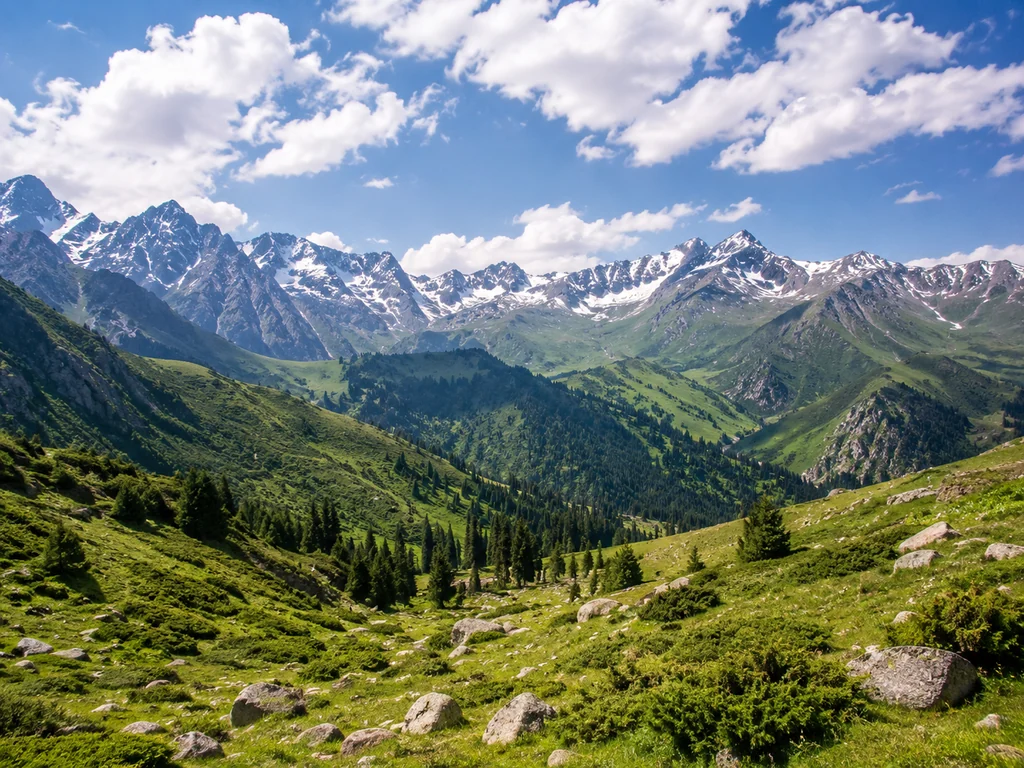
Above the Big Almaty Lake the valley continues toward the glaciers that feed it, including the area around the old high-altitude station. The terrain becomes steeper and more exposed, with moraine, scree and permanent snow patches. This upper zone is where the jeep tour goes and where fit hikers sometimes extend their route. It is not a place for casual strolls, as the ground is rough and the weather turns quickly.
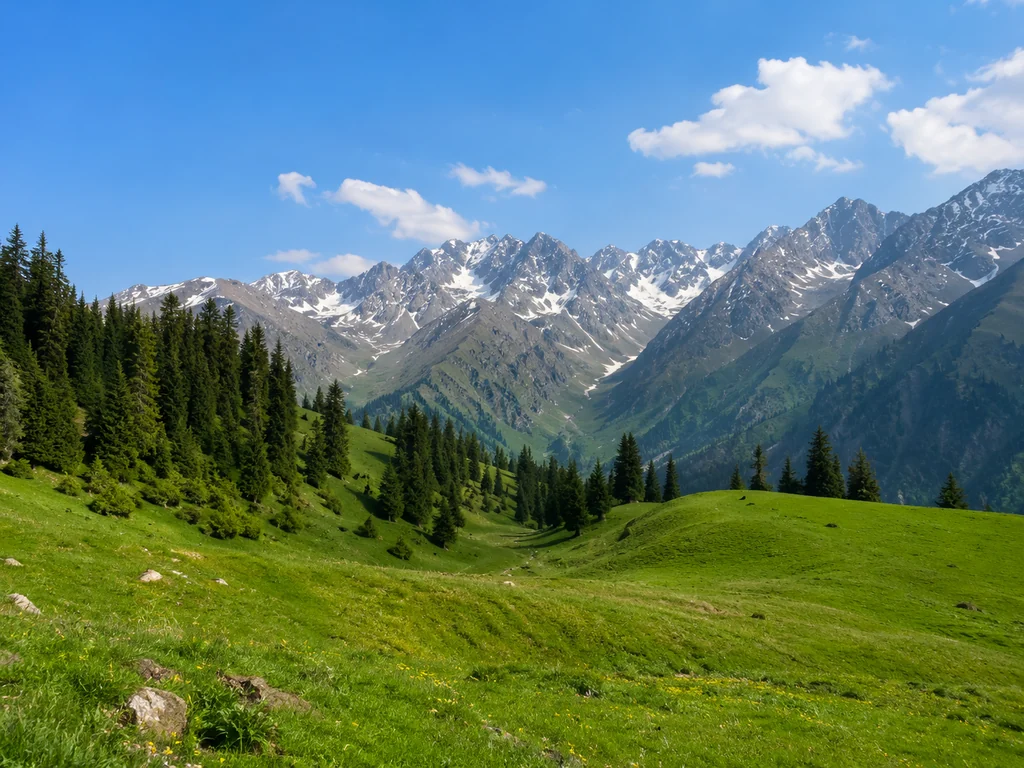
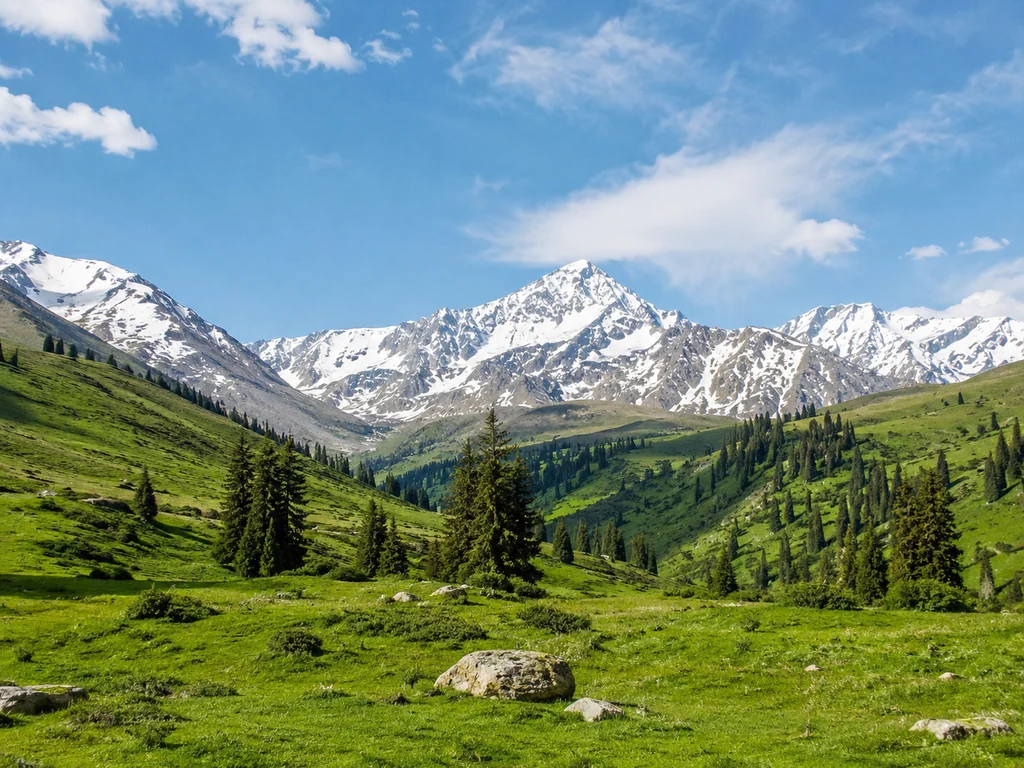
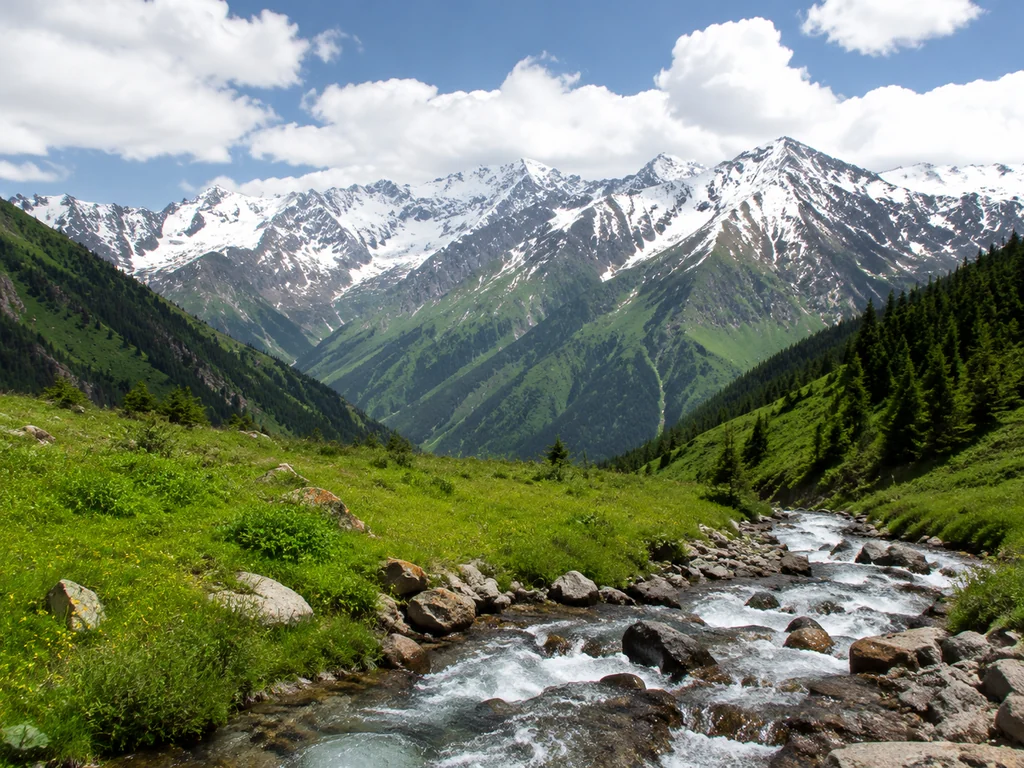
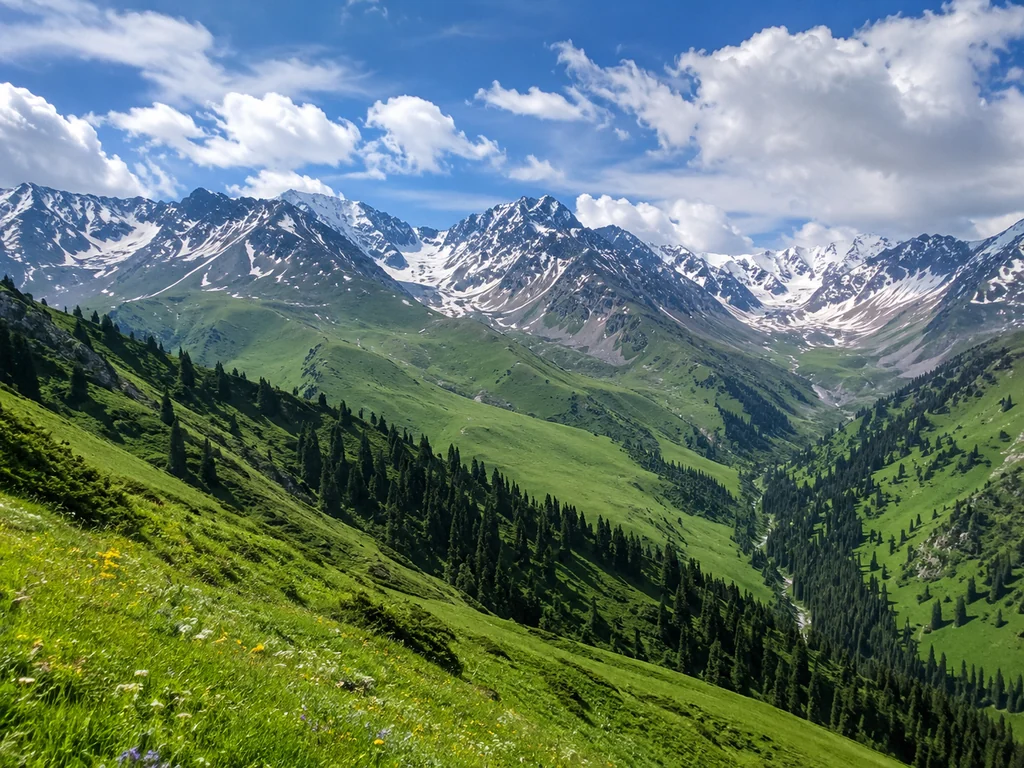
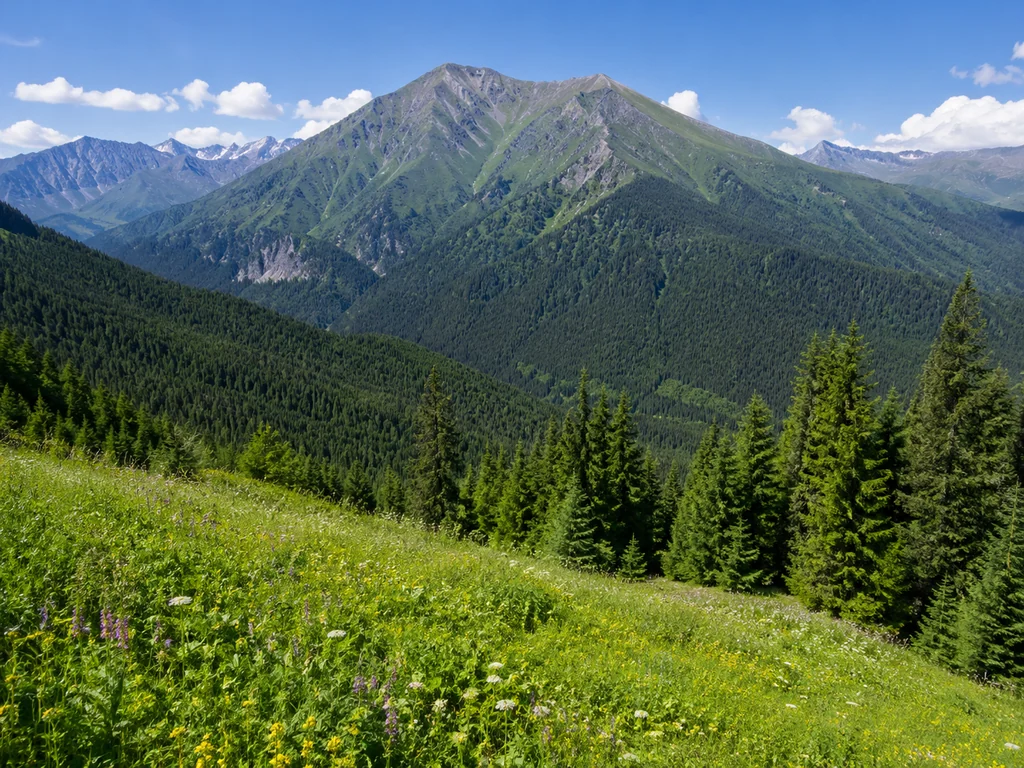
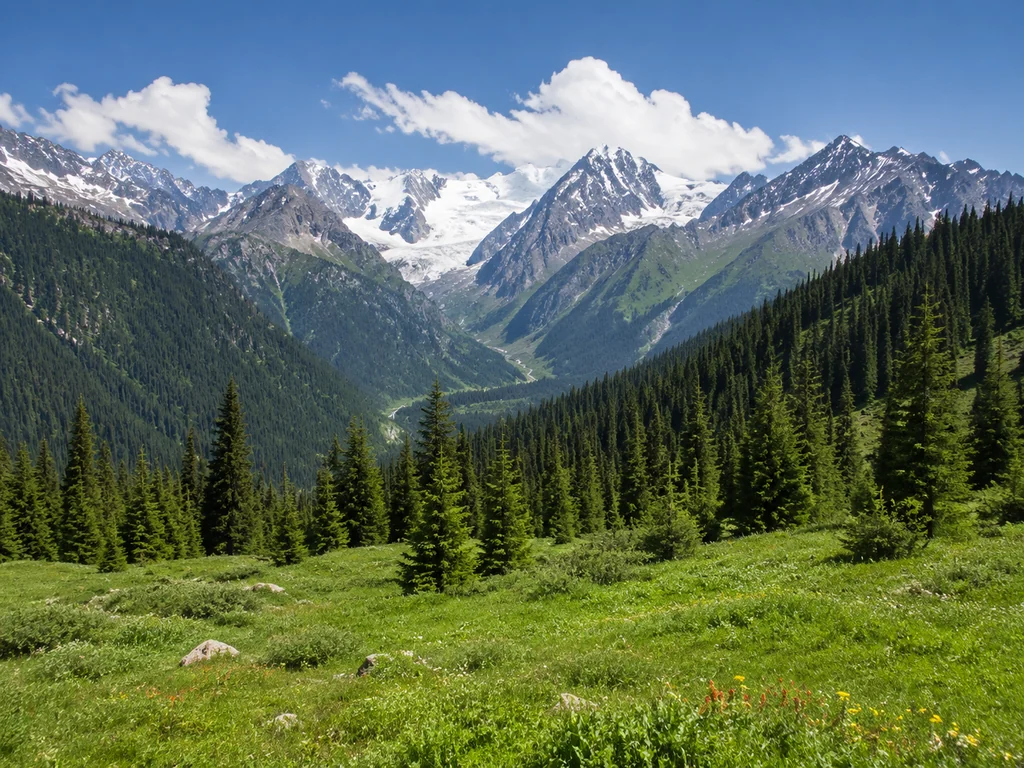
Below the lake, the Big Almaty river carves through the gorge and joins other streams before reaching the city. The forest belt on the lower slopes is a mix of Tian Shan spruce and juniper, with open meadows in between. In spring and early summer these meadows are full of wildflowers, and the birdlife is rich.
The gorge is part of the Ile Alatau national park, which protects a wide band of mountains south of Almaty. The park includes several other gorges, each with its own character, from the busy Shymbulak ski area to the quieter Turgen valley further east. The Big Almaty Gorge is the most accessible of them, which is why it draws the most visitors.
Neighbouring Valleys and Peaks
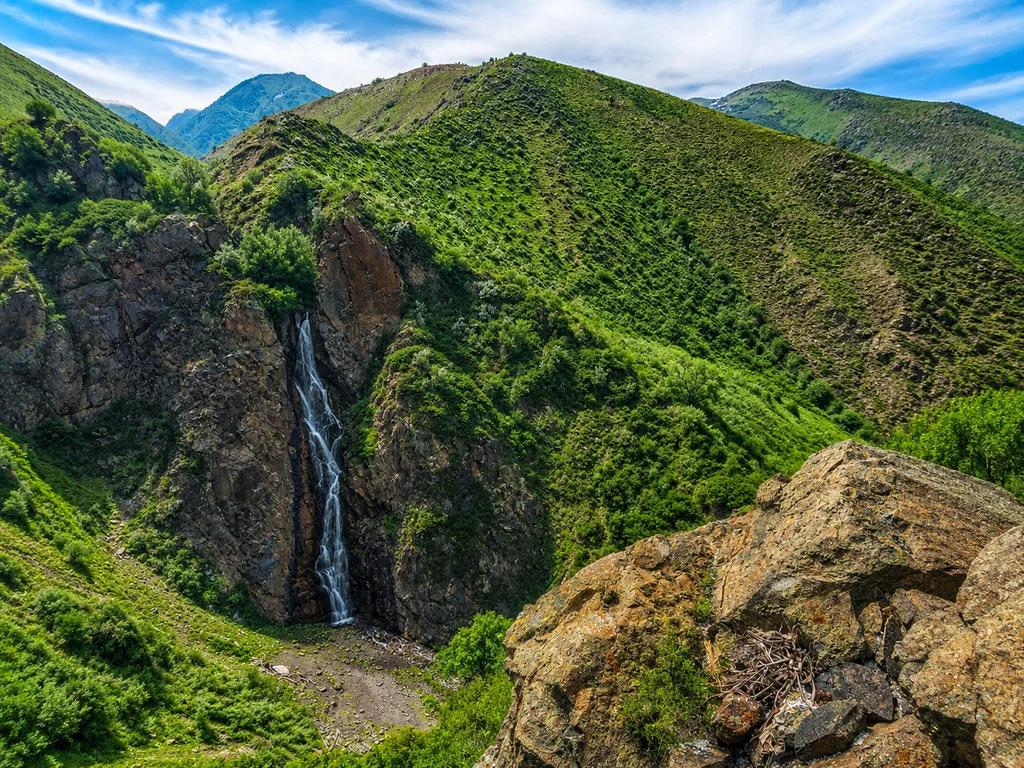
To the east of Almaty, the Turgen valley offers waterfalls and forest trails, and it is often combined with other regional trips. Further afield, the Kolsai lakes and Charyn canyon are the stars of the five-day tour. The wider Tian Shan holds peaks such as Pobeda Peak and Khan Tengri far to the east, though those are serious mountaineering objectives far beyond a day trip from the city.
These names appear in mountaineering literature rather than in day-trip itineraries, but they give context to the range you see from the lake. The glaciers above the Big Almaty Lake feed the Big Almaty river, which flows down the gorge to the city.
Closer to Almaty, Kapchagay reservoir on the Ili river offers a different landscape of warm water and open shore, popular in summer. Bayankol, Ushkonyr and the Dzungarian Alatau lie further out and require more time and planning. For a single day, the Big Almaty Gorge remains the most rewarding and the easiest to reach.
Wildlife, Plants and Respect for the Park
The mountains around Almaty support ibex on the high rocky faces and roe deer in the forest belt. Birds of prey, including eagles and falcons, are often seen soaring above the ridges. Smaller mammals and a variety of songbirds inhabit the meadows and scrub. Sightings are never guaranteed, but early mornings and quiet movement improve your chances. Hunting and fishing are regulated activities in the region and are not part of any tour in this section.
Plant life changes with altitude. Spruce forest climbs to roughly 2,700 metres, so the lake is still framed by trees; higher up the forest gives way to meadow and juniper, and above that only mosses, lichens and hardy alpine plants survive. Wildflowers peak in June and July. Picking them is prohibited, as is disturbing the soil or leaving marked trails in sensitive areas.
Respect for the park is simple: carry out all litter, keep noise down, do not feed or approach wildlife, and stay on established paths where they exist. Fires are restricted and often banned in summer. If a route passes near the border zone, permits may be required, and your guide will handle the details. Following these rules keeps the gorge open and beautiful for everyone.