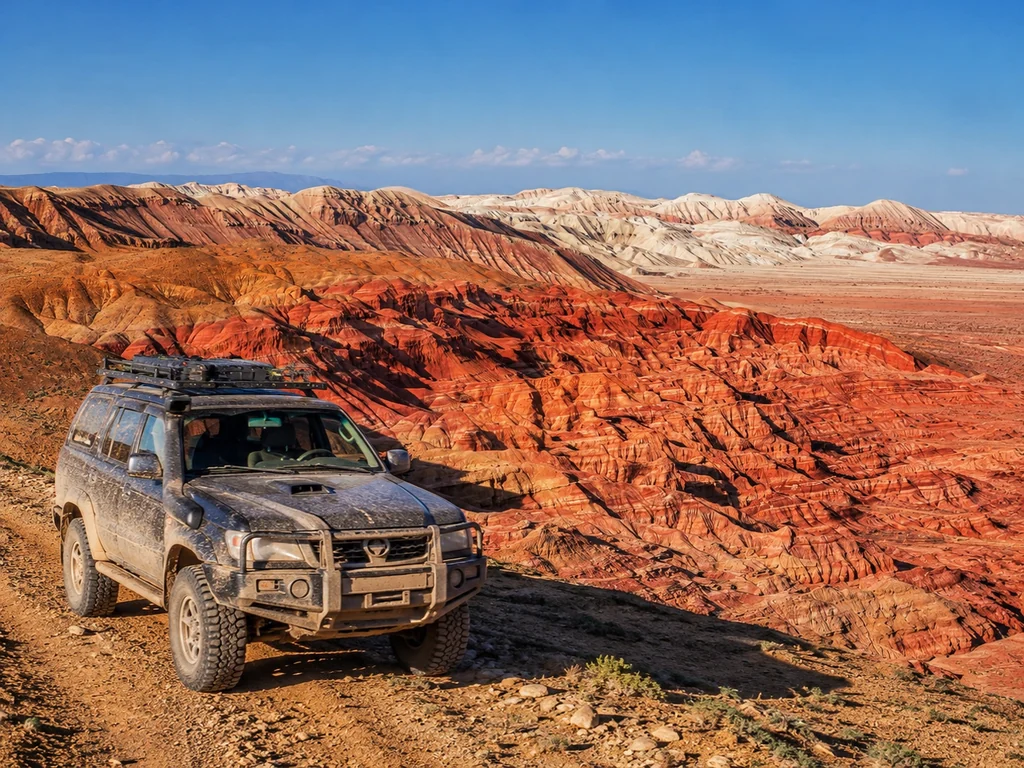
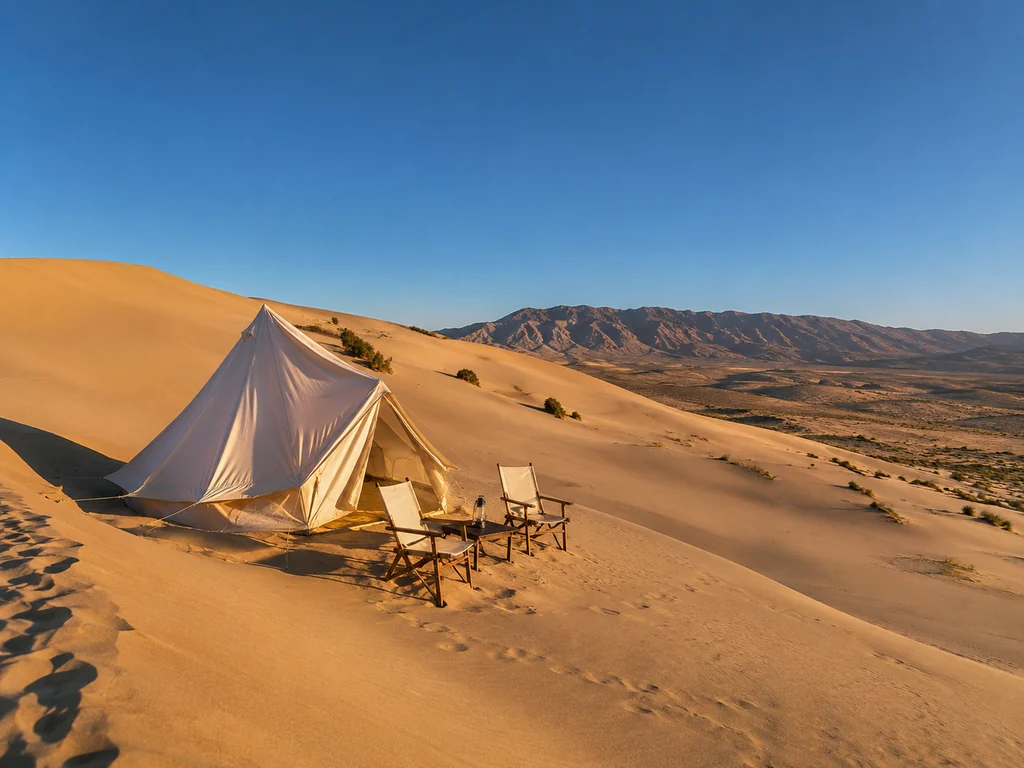
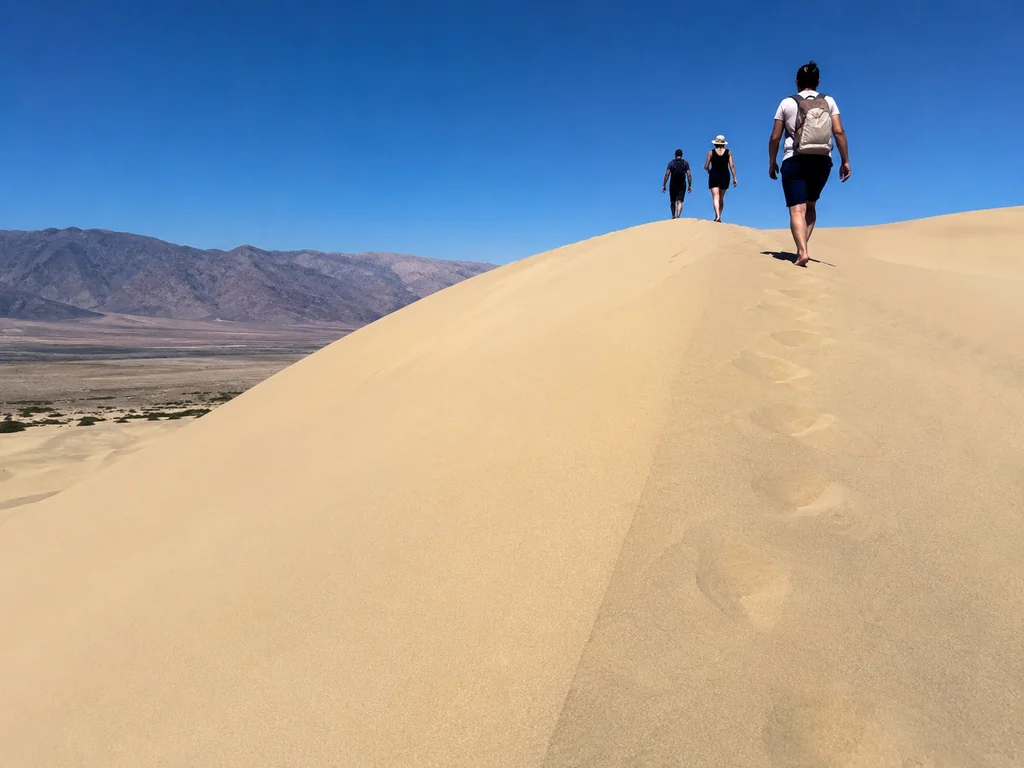
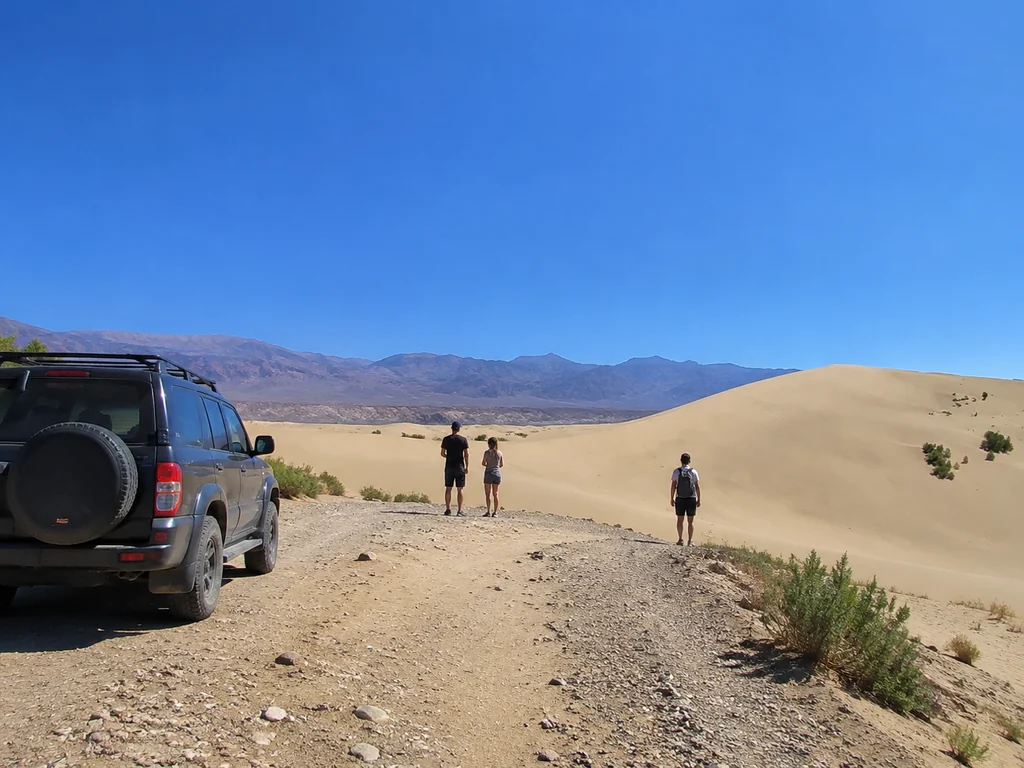
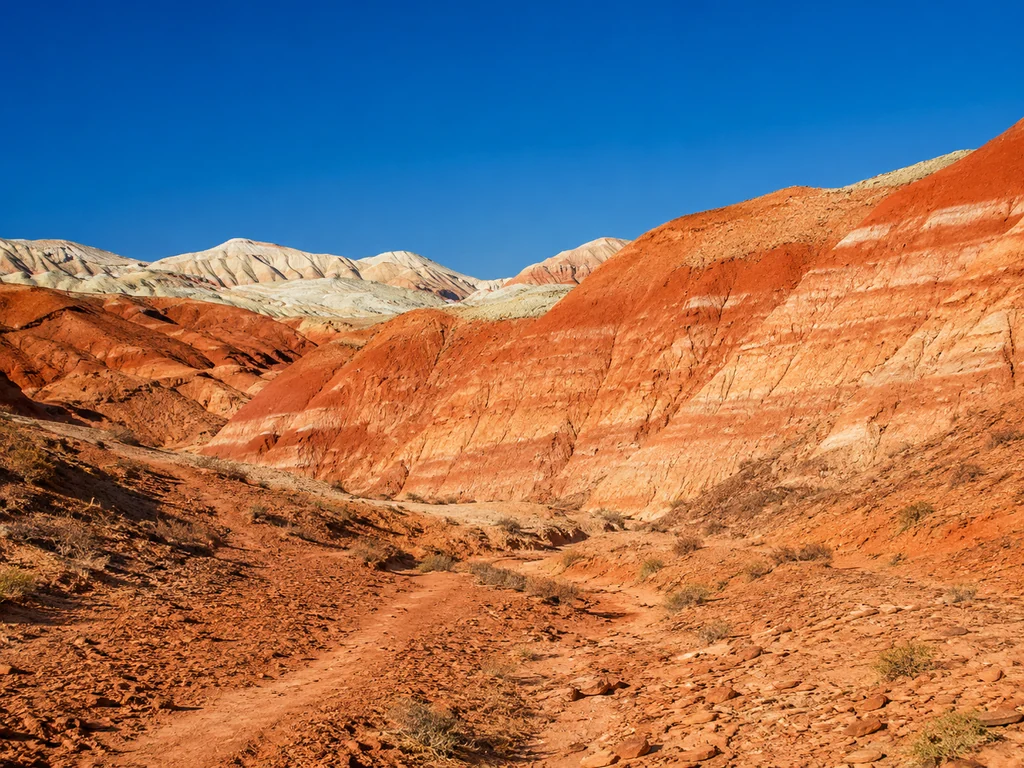
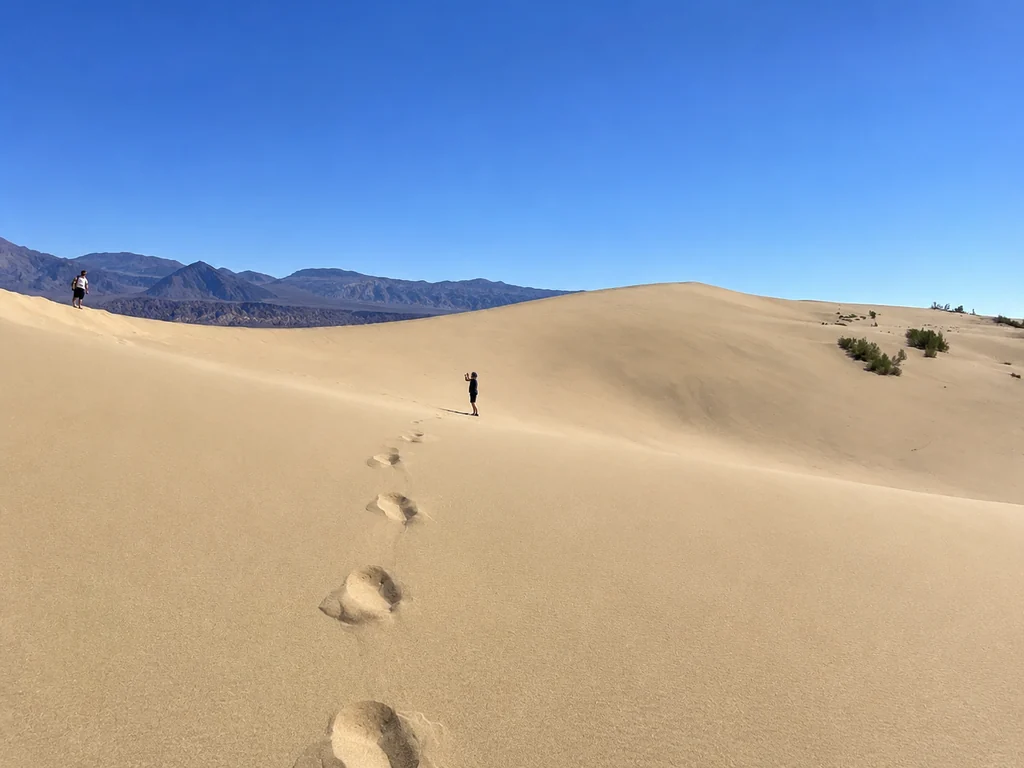
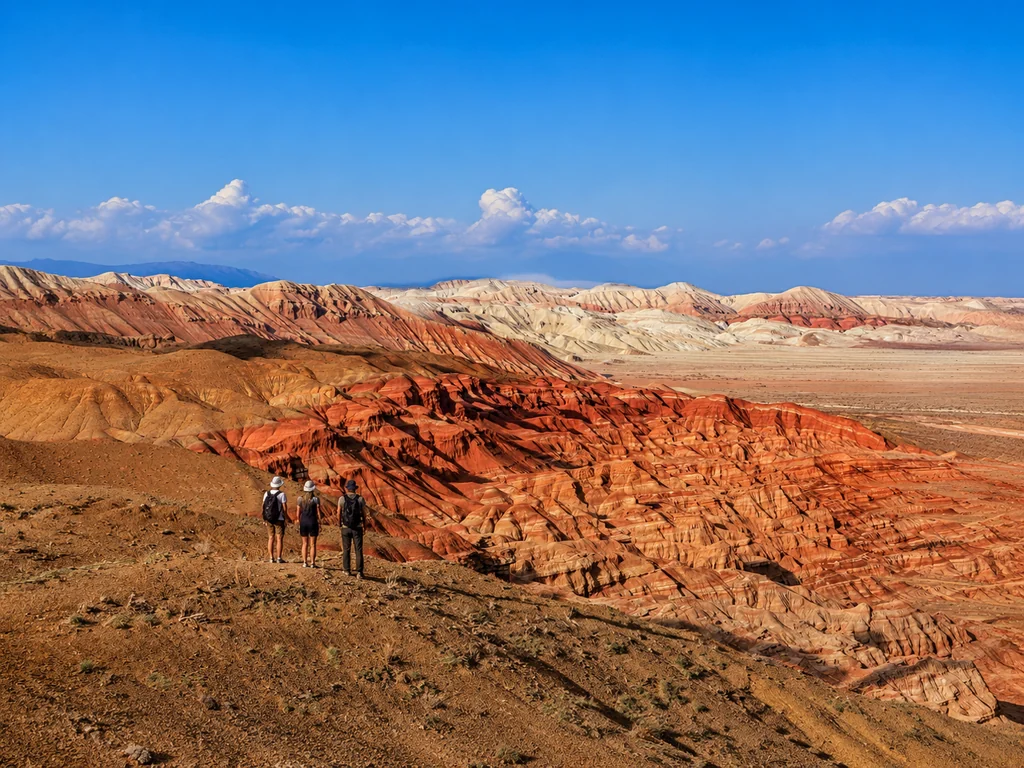
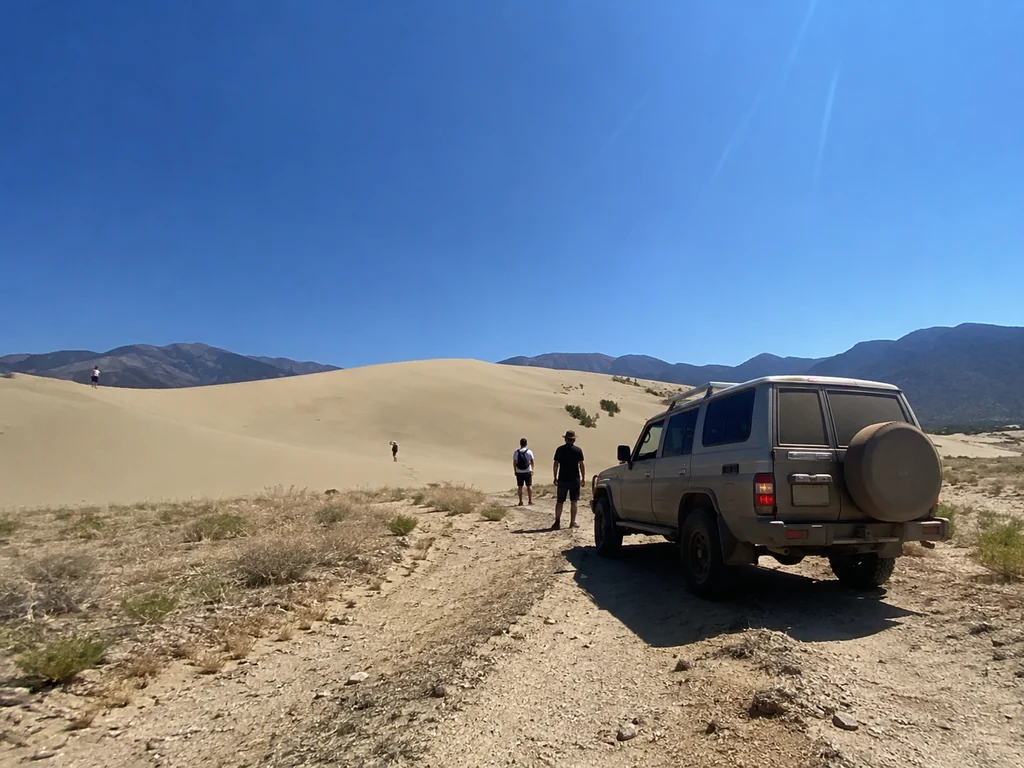
We at toor have been organizing tours to the Singing Dunes from Almaty since 2019. The cost includes a 2.5–3 hour transfer, a certified guide, insurance, and equipment. Prices start from 17,900 KZT for a one-day tour, groups of up to 6 people. The season runs from April to October, with peaks in May and September.
How the 'singing' of the dunes is formed: scientific explanation
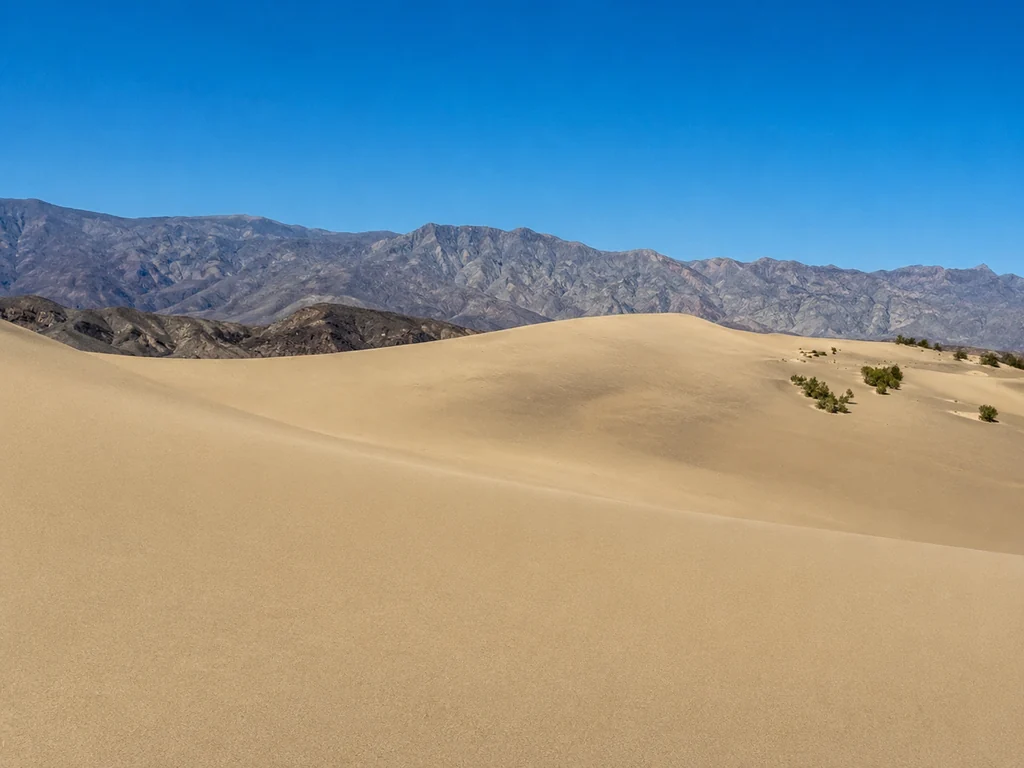
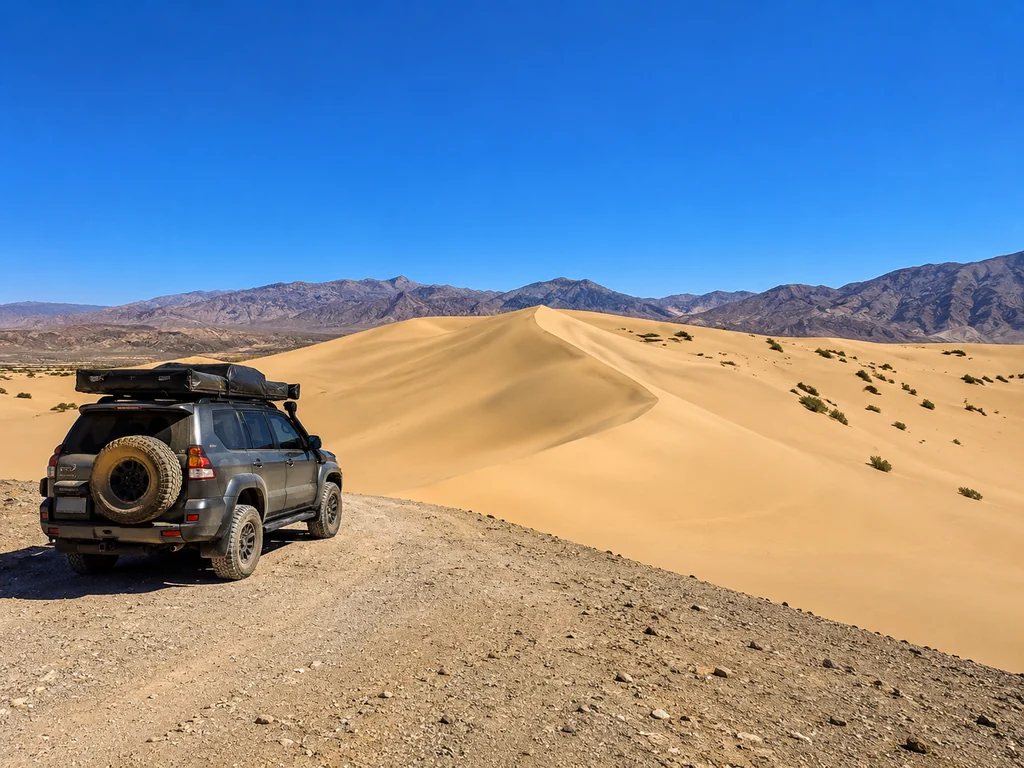
The Singing Dunes got their name for a reason — the sound produced by the 150-meter high and 3 km long dune can be heard for several kilometers. Let's break down how this natural phenomenon works.
Why the sand on the Singing Dunes makes a sound
The sound arises from the friction of quartz sand grains against each other when moving — the drier the sand and the stronger the wind, the louder and longer the 'singing'. In the Altyn-Emel dune, the sand consists of 97% pure quartz with rounded edges — it is this shape of grains that creates resonance in the near-surface layer 20–50 cm thick. The sound frequency varies from 100 to 800 Hz depending on wind speed: during gusts up to 10–12 m/s, a low rumble similar to a diesel engine is heard; in light wind, a higher whistling tone. Humidity dampens the acoustic effect, so after rain or early in the morning when dew falls, the dunes are 'silent' — the best time for sound is dry weather and wind after noon.
What conditions are needed to hear the singing of the dunes
The singing of the dunes is best heard in dry, windy weather after 2–3 PM, when the sand warms up and the wind picks up. In the Altyn-Emel National Park, the most stable wind blows from the southeast from May to September — during these months, the sound occurs almost daily, especially towards evening. Sand temperature above 25 °C and air humidity below 40% are two key indicators for the acoustic effect, easily checked via weather apps before departure. In calm or high humidity conditions, the sound practically does not occur — if you arrive on a windless day, you can climb the dune and descend, creating friction with your feet to hear the characteristic rumble.
Best time to visit the Singing Dunes: weather and wind
The season at the Singing Dunes lasts from April to October, but the weather varies greatly by month. We tell you when to go for the best experience and how weather affects the route.
Seasonality at the Singing Dunes: April–October
The season for trips to the Singing Dunes is from April to October, with peaks in May and September when temperatures are +20–25°C and the risk of overheating is minimal. In April and October, the air warms up to +10–15°C, and the dunes are blown by moderate winds — on such days, the sound of the sand is heard less well because humidity after rains dampens the vibration of the quartz grains. In July and August, the thermometer rises to +35°C, the sand surface heats up to +50°C, and climbing the 150-meter dune, 3 km long, becomes a challenge with stops every 15–20 minutes. In May, the blooming steppe makes the views from the summit especially picturesque, and in September, the summer heat subsides, but the sand still retains warmth — this is the ideal window for hiking without the risk of sunstroke.
Why we depart early in the morning: wind and temperature
We depart from Almaty at 6–7 AM to arrive at the dunes before 10 AM — by this time, the wind is still light, and the sun has not yet reached full strength. In the first half of the day, wind speed rarely exceeds 5–7 m/s, the sand is dry and mobile — this is when the dune 'sings' at maximum volume, audible for 2–3 km. By 2 PM, the sand surface heats up to +40°C, even in thick-soled sneakers you can feel the burning, and after 4 PM, the wind strengthens to 10–15 m/s, raising sand dust — visibility drops to 20–30 meters, and climbing the 150-meter slope becomes dangerous due to crumbling sand. An early departure is not only more comfortable but also safer: you have 4–5 hours before the peak heat and wind to calmly climb, listen to the singing, and descend. The Singing Dunes excursion from Almaty with toor starts early in the morning — this allows you to catch the best time for the dune's singing.
Weather comparison by month
| Month | Daytime temperature | Wind | Recommendation |
|---|
| April | +15–20°C | Moderate | Good but cool — need a windbreaker |
| May | +20–25°C | Light | Ideal — peak season, steppe in bloom |
| June | +25–30°C | Moderate | Hot but bearable — bring 2–3 L of water |
| July | +30–35°C | Strong | Hot — one-day tour, depart at 6 AM |
| August | +28–33°C | Strong | Similar to July |
| September | +20–25°C | Light | Ideal — peak season, warm and windless |
| October | +10–15°C | Moderate | Cool but possible — need warm clothes |
Comparison of one-day and multi-day tours: which to choose?
For a trip to the Singing Dunes, three formats are available — 1, 2, and 3 days. We break down the program, prices, and scenarios for each.
One-day tour: itinerary and who it's for
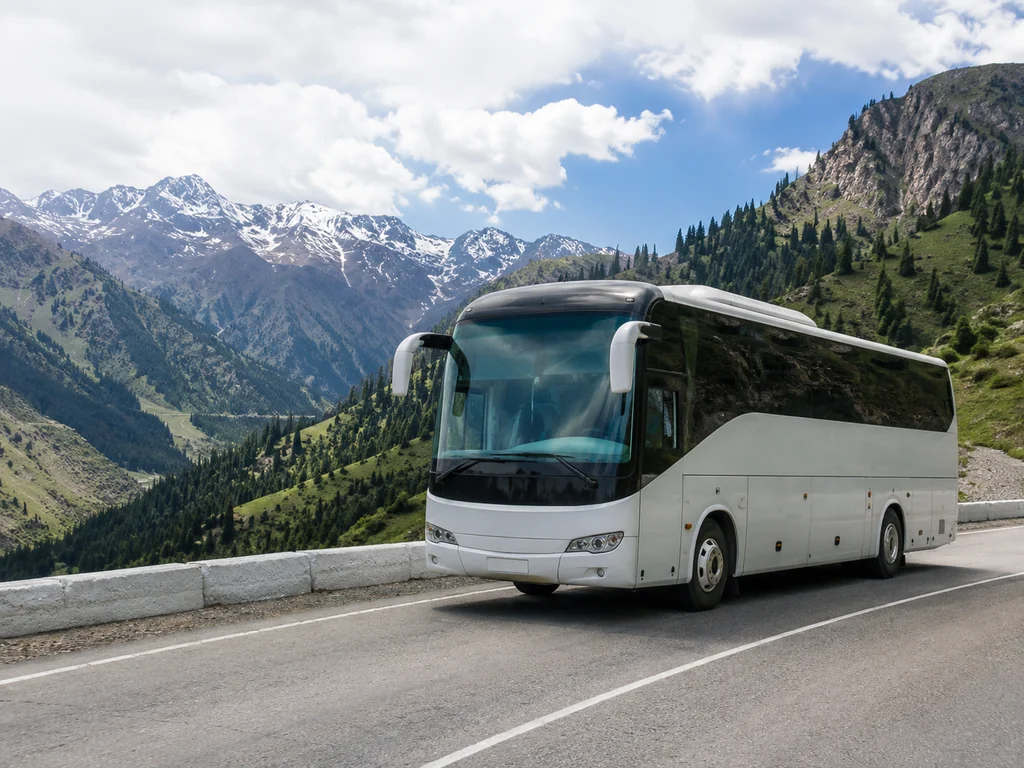
The Singing Dunes Almaty one-day tour from toor lasts 10–12 hours with a 6 AM departure, includes 5–7 km of walking on the dunes, and returns by 6–7 PM. Tours to the Singing Dunes from Almaty from toor include transfer, guide, and equipment — everything you need for a comfortable day in the steppe. Transfer by SUV from the city center to the foot of the dune in Ili district takes 2.5–3 hours, 200 km along the Kulzhinka highway. The guide provides trekking poles and a windbreaker; the route runs along the crest of the main dune, 150 meters high: 40 minutes up, 20 minutes down. Lunch is included — hot food in a thermos and snacks, drone photos — 5000 KZT per group. This format is ideal for those passing through the region for 1–2 days or traveling with a child aged 7+ — the load is moderate, and impressions last a full day.
Two-day tour with overnight in yurts: what the extra day offers
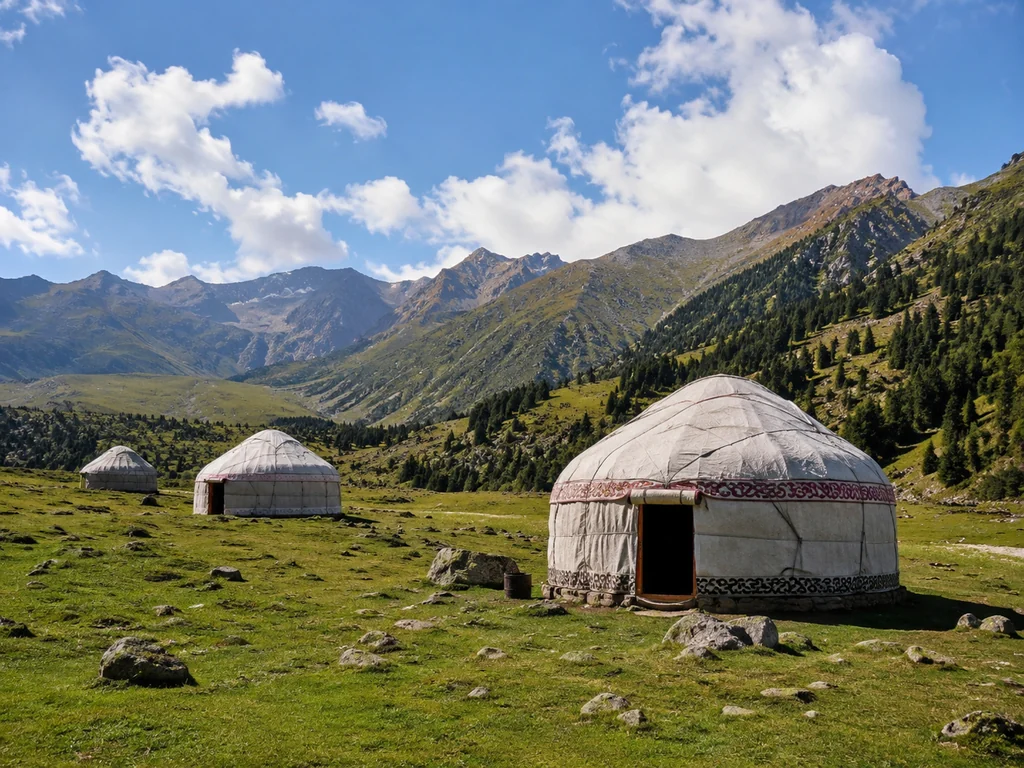
A two-day tour from us adds an overnight stay in yurts at the foot of the dunes, dinner (2500 KZT/person), evening singing at sunset, and a morning climb up the dune before 9 AM without crowds of tourists. On the first day, the group covers 5–7 km; after sunset, the guide builds a campfire and serves beshbarmak or plov from a cauldron. Evening silence is the main advantage of the two-day format: when the main groups leave, the sound of the singing sand in complete silence is heard especially clearly, and it's for this reason that photographers and couples choose the two-day tour. In the morning, the sand is still cool, the sound is most distinct; return by 2–3 PM.
Three-day tour with a trip to the Ili River: extended route
A three-day tour from us adds a radial trip to the Ili River (10 km on foot) and a visit to the Bartogai dam — for those who want to fully immerse themselves in the nature of the Ili district. The first day is identical to the two-day tour; on the second day, the group goes to the river along sandy paths through a canyon with tamarisk thickets and shepherd camps — lunch by the water, swimming in July–August (+22…+25°C), overnight in tents. The third day — return via the Bartogai dam with a stop at the observation deck. This route suits experienced tourists and photographers: three days allow you to catch sunrise on the dunes, sunset by the river, and the starry night sky in the steppe.
Comparison table of toor tours
| Parameter | 1 day | 2 days | 3 days |
|---|
| Price from | 17,900 KZT/person | 54,900 KZT/person | 69,900 KZT/person |
| Duration | 10–12 hours | 2 days / 1 night | 3 days / 2 nights |
| Walking distance | 5–7 km | 10–12 km | 20–25 km |
| Overnight | No | Yurts at the foot | Yurts + tents |
| Meals | Lunch (included) | Lunch + dinner (2500 KZT) | Full board |
| Additional locations | No | No | Ili River, Bartogai |
| Suitable for | Tourists in region for 1–2 days, families with children | Photographers, couples, nature lovers | Experienced tourists, groups of friends |
If you're undecided between a one-day and two-day format, consider: the price difference is 37,000 KZT/person, but the two-day gives a unique experience of overnighting in the steppe and evening singing without crowds — in the one-day, you leave at 6 PM when the sound is just beginning.
Tour prices in 2026: what determines the cost
The price of a trip to the Singing Dunes consists of several components. We break down what makes up the cost and why one route costs 17,900 KZT and another 69,900 KZT.
What makes up the price of a toor tour
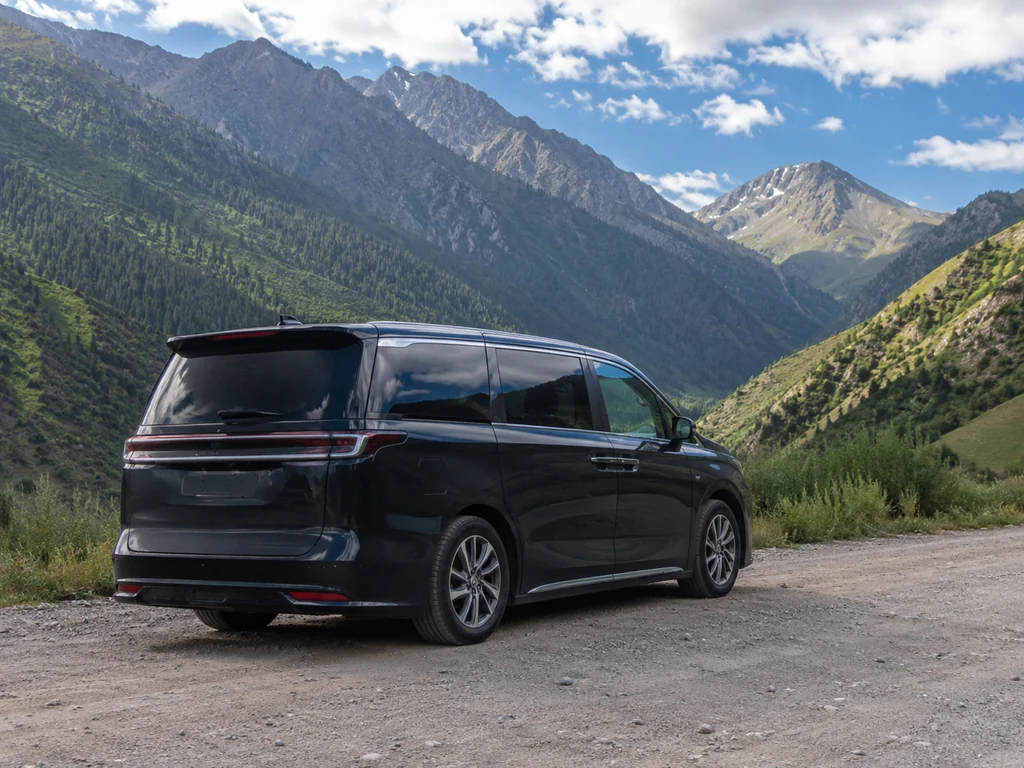
The cost of a toor tour includes transfer from Almaty and back (200 km one way, 2.5–3 hours), a certified guide, insurance, equipment (trekking poles, headlamp, windbreaker, first aid kit), and lunch. On a one-day route, this is a hot lunch with tea in the field; on multi-day tours, full board at the base. The transfer is carried out in prepared SUVs with air conditioning — the road partially runs along the Almaty — Sharyn highway and partially along a dirt road along the Ili River. The guide accompanies the group from departure to return, tells about the geology, flora, and fauna of the national park, and shows the safe way up the dune. Equipment is issued before the start and returned after the route — poles help on loose sand, the windbreaker protects from wind at the top of the dune. We are a direct tour operator, not an aggregator, so the price has no intermediary markups — you pay for real services: transport, guide work, equipment rental, and insurance, not for a marketplace commission.
Additional services: drone photos, dinner in a yurt
Additionally, you can order drone photography (5000 KZT/group) and dinner in a yurt (2500 KZT/person) — these services are not included in the base cost and are paid separately. The drone rises to a height of up to 150 meters, capturing a panorama of the dune, the Ili River, and the mountain ranges on the horizon — perfect shots for social media and personal archives. Dinner in a yurt is served after sunset: beshbarmak, kumis, flatbreads, and tea from a samovar — Kazakh cuisine dishes prepared by local cooks over a fire. Both services can be ordered when booking or on site from the guide, payment in cash or via Kaspi. Drone photos cost 5000 KZT for the entire group of up to 6 people — if split, it's less than 1000 KZT per person for professional shots from the height of a 150-meter dune.
Why prices in 2026 remain the same
For 2026, toor maintains prices at the 2025 level: one-day tour — from 17,900 KZT/person, two-day — from 54,900 KZT/person, three-day — from 69,900 KZT/person, with no hidden surcharges. The cost has not increased due to long-term contracts with carriers and food suppliers: we fix rates for transport and products for the season in advance, so exchange rate fluctuations or inflation do not affect the price for the client. The base cost includes everything necessary for a comfortable trip — from transfer to lunch, no surprises like 'guide fee on site' or 'separate equipment rental' are provided. The price is fixed at the time of booking — even if the tenge exchange rate changes by the trip date, you pay the amount that was at booking, no recalculations or additional payments.
Discounts and payment terms
We accept payment in cash in tenge and via Kaspi transfers, and for children aged 7 to 14, a 20% discount on the tour price applies. Kaspi transfer goes instantly to the guide's phone number, and the receipt arrives in the app — convenient if you don't carry large amounts of cash. Booking is confirmed 2 days before departure, cancellation without penalty is possible 24 hours in advance — if plans change, you don't lose money. For multi-day routes, a 50% prepayment is required, the rest on the day of departure. The child discount is applied automatically when booking — no need to ask or confirm, just indicate the child's age in the request, and we recalculate the price.
What to bring to the Singing Dunes: gear checklist
Proper equipment is half the success of a trip to the Singing Dunes. Singing Dunes what to bring — we've compiled a full checklist so you don't forget anything. We separate what is provided on the trip and what you need to bring yourself.
What is included in the gear from toor
In every tour, we provide trekking poles, a headlamp, a windbreaker, and a first aid kit — a basic set covering the main needs for a 5–7 km route. Trekking poles are critical when descending the 150-meter dune: the sand is loose, and without support it's easy to lose balance, especially for children aged 7+ and elderly tourists. The windbreaker protects against gusts of wind up to 10–15 m/s, which intensify after 4 PM — in the open steppe without it, you'll freeze in an hour even at +25°C. A headlamp comes in handy if the group lingers at sunset or goes on a two-day tour with an overnight in a yurt — phone light is not enough to illuminate the path in the dark. The first aid kit includes plasters, bandages, antiseptic, and painkillers — in case of abrasions from sand or cuts from dry grass. Before the start, the guide checks that each participant adjusts the poles to their height: incorrect height overstresses the wrists and reduces stability on the descent.
What you must bring yourself
- Water (1.5–2 liters per person): there are no sources on the route, and at +35°C over 5–6 hours of walking, the body loses up to 2–3 liters of fluid.
- Headgear: a cap or wide-brimmed hat protects the face and neck from burns — on the open dune, reflected UV from the sand increases by 30–40%.
- Sunscreen SPF 50+: apply every 2 hours, especially on ears and nose — the most vulnerable areas that tourists often miss.
- Closed shoes without mesh: sneakers with fine mesh let sand in, and in an hour of walking without gaiters, up to 200–300 grams accumulate — this chafes feet and adds extra weight with every step.
- Gaiters for shoes: dense fabric that fits over sneakers and covers the shin to the ankle — the most common recommendation from guides, but ignored by 70% of beginners, even though gaiters turn walking on loose sand from a trial into a walk.
Checklist: what the tour provides vs what you bring
| What the toor tour provides | What you need to bring |
|---|
| Trekking poles | Closed shoes (no mesh) |
| Headlamp | Gaiters for shoes |
| Windbreaker | 1.5–2 L water per person |
| First aid kit | Headgear (cap/hat) |
| Lunch (included) | Sunscreen SPF 50+ |
| Insurance | Buff or scarf for sand |
| Transfer from Almaty | Sunglasses |
| Certified guide | Wet wipes (sand sticks to skin) |
| Spare pair of socks |
| Power bank (signal unstable) |
Gaiters and a buff — two things tourists forget most often, but they are exactly what save you from sand and sun throughout the day, turning a walk from a trial into a pleasure.
How to get to the Singing Dunes independently vs with a tour
Many travelers think: 'Why pay for a tour when you can drive yourself?' Singing Dunes how to get there — the main question we hear from tourists planning a trip. We compare both options in terms of money, time, and risks — with real numbers.
Route by car: road, navigation, nuances
The road to the Singing Dunes from Almaty takes 2.5–3 hours (200 km) along the A-3 highway towards the border with China, the last 15–20 km is a dirt road requiring an SUV or a car with high ground clearance. After the turn from A-3 at the sign, a gravel road begins, which in dry weather is passable for a crossover, but after rain it turns into a state where even all-wheel-drive pickups get stuck — mobile signal is only available until the start of the dirt road; beyond that, an emergency call is possible via satellite if you download maps in advance on 2GIS or Maps.me. Parking at the foot of the dune is free but unguarded; on weekends, spaces run out by 10 AM. Navigation often suggests a shortcut through fields, but this road is broken and after rain becomes impassable for a regular sedan — it's better to stick to the main road until the 'Singing Dunes' sign.
Cost comparison: independent trip vs toor tour
An independent trip to the Singing Dunes by car will cost 15,000–20,000 KZT: fuel for 400 km (about 6000–7000 KZT at 205 KZT/l for AI-92), lunch for two at a roadside cafe (4000–5000 KZT), water and snacks (2000–3000 KZT), and suspension wear on the dirt road. A toor tour per person costs from 17,900 KZT, with the price including transfer in a prepared SUV with a driver-guide, insurance on the route, trekking poles, headlamp, and first aid kit. Additional expenses on the tour are only personal (souvenirs, drone photos for 5000 KZT per group), while on an independent trip, to the base amount you add the risk of a punctured tire on the dirt road (repair from 3000 KZT) or calling a tow truck from the steppe (from 15,000 KZT). The difference between the options is only 2000–3000 KZT, but on the tour you don't get distracted from the road and don't risk getting stuck — a breakdown on the dirt road easily adds 10,000–15,000 KZT to expenses.
Risks of an independent trip: what can go wrong
The main risks of an independent trip are the lack of insurance on the route, the risk of getting lost on the dirt road (mobile signal is unstable on the dunes), a car breakdown in the steppe, and the absence of a first aid kit in case of heatstroke. The sand temperature in July reaches +50°C — without trekking poles and a windbreaker, you can get sunstroke in 30 minutes of walking on the open dune, and water runs out in an hour of climbing the 150-meter summit. Returning before sunset is another factor: at 6 PM, visibility on the dirt road drops, and without fog lights, it's easy to drive into a ditch from which you can't get out on your own. According to national park data, rescuers were called to the Singing Dunes 12 times in a season — mainly due to travelers who overestimated their strength and didn't calculate water or time before sunset.
Safety on the route: risks and how to avoid them
The Singing Dunes are wild nature, and there are risks here. We break down the main dangers of the route and how to avoid them — from heat to fines.
Main risks at the Singing Dunes: heat, wind, sand
The three main risks at the Singing Dunes are heatstroke at temperatures above +30°C (especially in July–August), strong wind after 4 PM that knocks you off your feet at the top of the dune, and sand causing skin and eye irritation. In summer noon, the sand on the dune surface heats up to +50–60°C — even through the soles of sneakers, you feel a burning sensation, and without a headdress, you can get sunstroke in 15 minutes. The wind at a height of 150 meters strengthens to 10–12 m/s by midday, and the sand dust it raises reduces visibility to 5–10 meters, making the descent down the steep slope dangerous — it's easy to stumble or lose orientation. Climbing the 150-meter dune on loose sand is a load comparable to walking up 30 flights of stairs: without preparation and water, you can get heatstroke within 20 minutes of climbing.
How we at toor ensure safety on the route
On every trip, we are accompanied by a certified guide with a first aid kit and communication devices; we insure all participants, and when the wind exceeds 15 m/s, we adjust the route — not cancel, but shift the activity to the foot of the dune. Singing Dunes with a guide — it's not only interesting stories but also complete safety on the route. The guide issues trekking poles before the climb — they reduce the load on knees by 30% on loose sand, where each step slips 10–15 cm back, as well as headlamps in case the group lingers until dark. The car always has a thermos with hot tea and a supply of drinking water at the rate of 1.5 liters per person — this is especially important since there are no shops on the route, and the nearest settlement (Bakanas village) is 70 km from the dunes. We have a clear protocol: if the wind strengthens at the top, the guide leads the group to the leeward side of the dune, where sand doesn't blow into the face, and the sound of singing, on the contrary, is heard louder due to the slope's acoustics.
National park rules: what is prohibited
On the territory of the Altyn-Emel National Park, it is forbidden to light fires outside specially equipped areas, leave the route, leave litter, or make noise — the fine for violation is up to 100 MCI (about 369,200 tenge). Also prohibited is entry into the park territory in a personal vehicle without a pre-issued permit, which is arranged through the park administration at least 3 working days in advance — permits are not sold on site, and a U-turn at the checkpoint means losing 2.5 hours of travel back to Almaty. Alcohol is prohibited on the route by park rules: drinking on the protected area results in a protocol and a fine of 30 MCI (about 110,760 tenge), and the guide is obliged to stop the excursion and call an inspector. We arrange the park visit permit for the entire group in advance and conduct a briefing on the rules — this saves you from bureaucracy and the risk of getting a fine on site.
Conclusion
The Singing Dunes are wild nature, and there are risks here. We've gathered the main takeaways so that your trip leaves only good impressions.
Main takeaways
- Best season: the Singing Dunes are open for visits from April to October, with peak comfortable weather in May–June and September, when there is no exhausting heat.
- Trip format: a one-day route is ideal for getting to know the dune and its singing, while a two-day with an overnight in a yurt gives full immersion in the park.
- Gear: comfortable shoes, headgear, at least 1.5 L of water per person, and sunscreen are mandatory — without them, heatstroke on the open dune is real within an hour.
- Main risks: heatstroke and sudden strong wind at the top of the 150-meter dune; simple preparation and avoiding climbing during peak sun hours minimize them.
- Way to get there: an independent trip requires a four-wheel-drive vehicle and a permit, while an organized tour removes all logistical hassles.










 Nature