Turkestan: A Living City of Pilgrimage and Steppe History
Where Turkestan Sits and Why It Matters
Turkestan is a city in the South Kazakhstan Region, standing on the right bank of the Syr Darya river at an elevation of roughly 200 metres above sea level. It lies about 160 kilometres northwest of Shymkent and around 300 kilometres from Tashkent, close to the fertile floodplain that has supported settlement for more than fifteen centuries. The city is one of the oldest urban centres in Kazakhstan and has served as a crossroads for caravans moving between the steppe, the oases of Central Asia and the markets of the Silk Road.
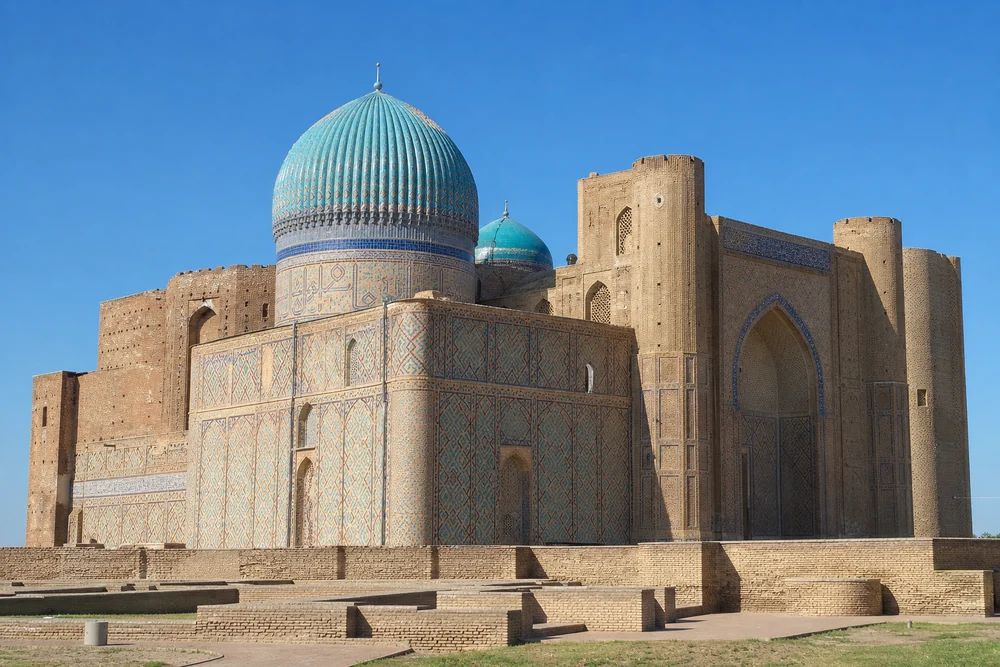
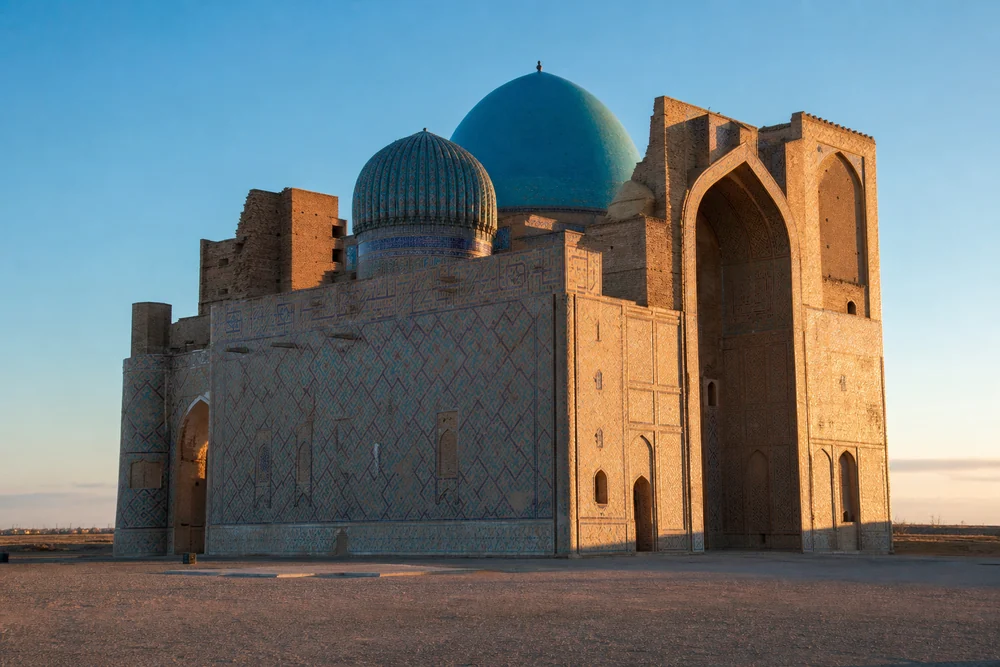
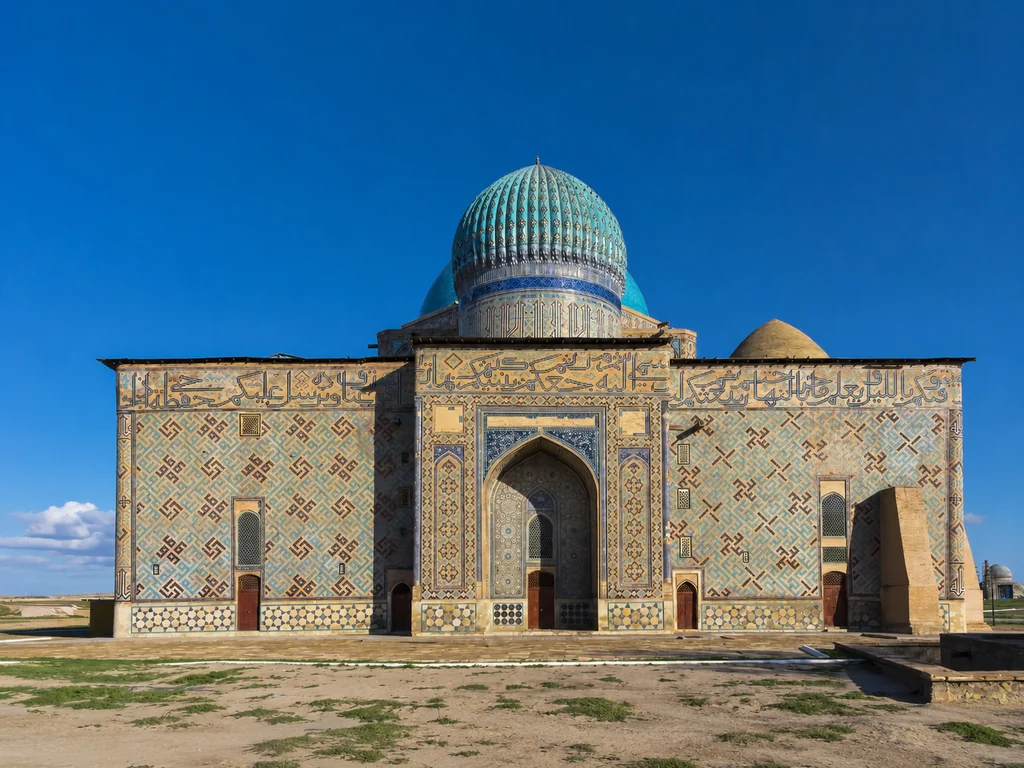
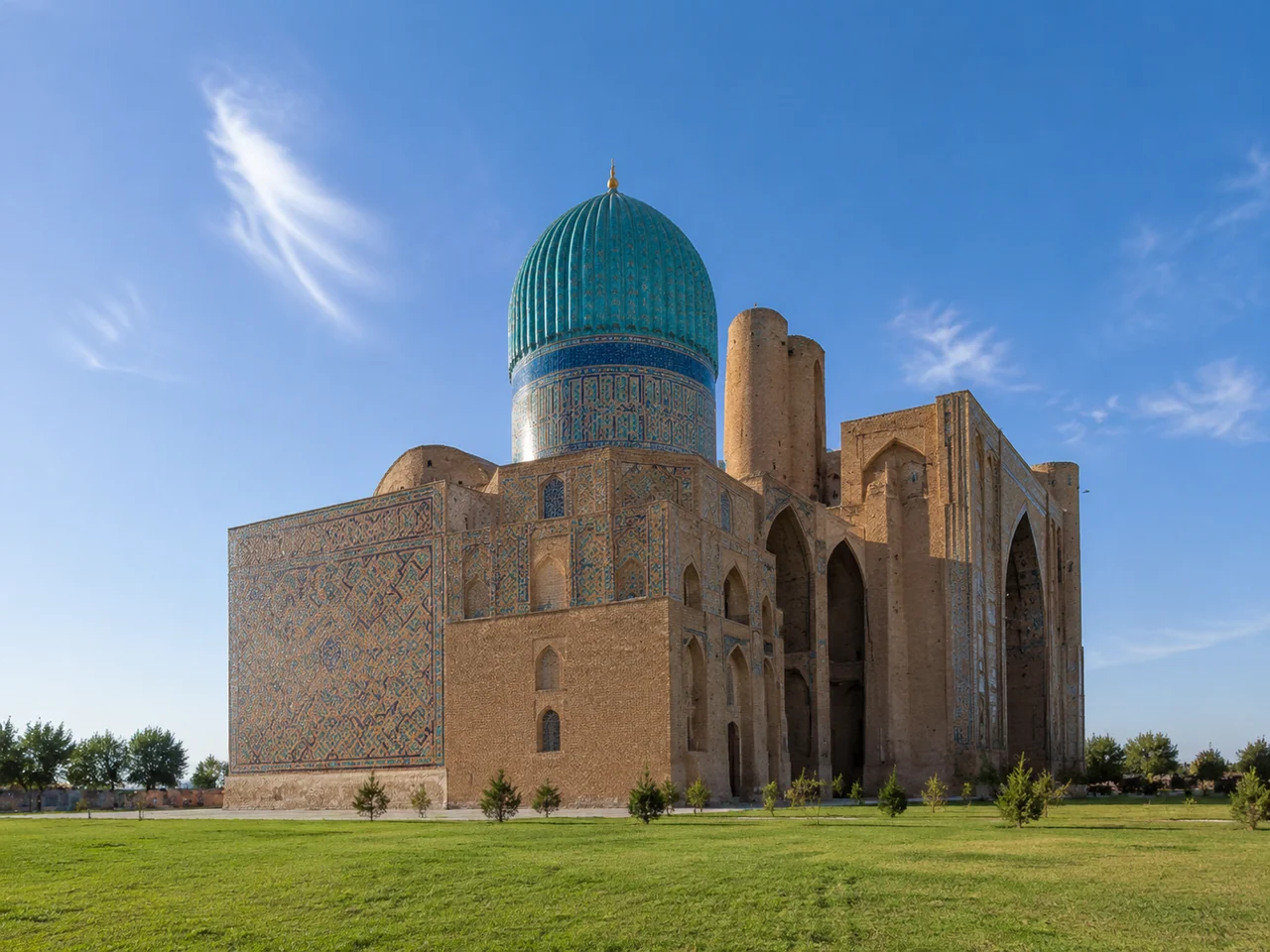
The single most recognisable landmark is the Mausoleum of Khoja Ahmed Yasawi, a vast Timurid structure begun at the end of the 14th century and inscribed on the UNESCO World Heritage List in 2003. Its blue-tiled dome rises above the surrounding low-rise town and is visible from several kilometres away on the approach road. Around the mausoleum lie the remains of the old citadel, a necropolis and the archaeological layers of the medieval city of Yasi.
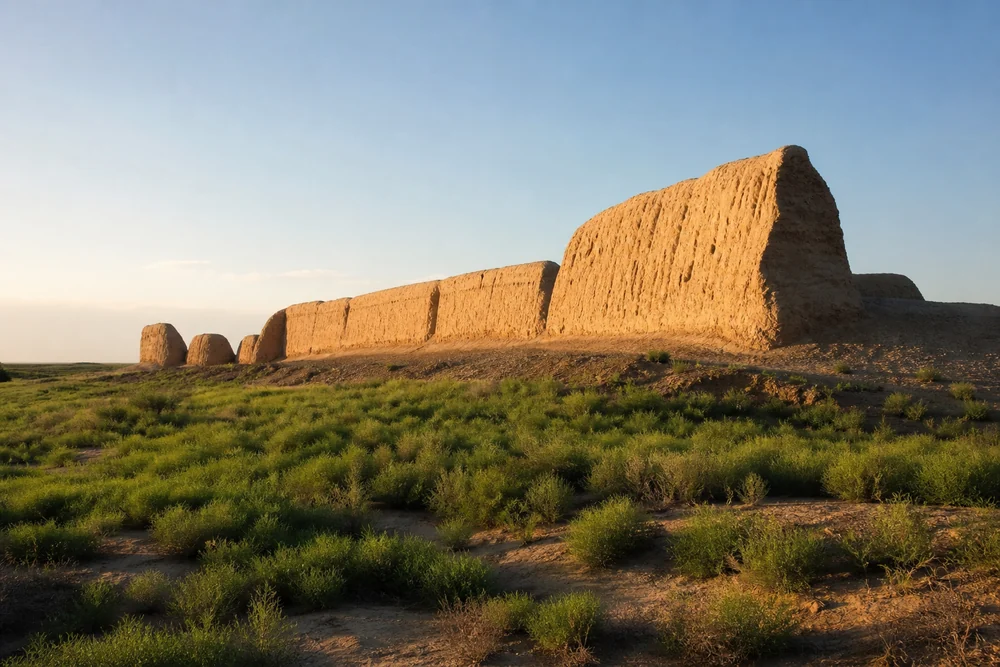
The wider region holds two other major archaeological sites: Otrar, once a wealthy trading city destroyed in the 13th century, and Sauran, a fortified settlement whose walls and towers still trace the outline of a substantial medieval town. Together these three places form the backbone of almost every route sold under the Turkestan heading, and each of them sits within a two-hour drive of the city.
Climate and the Best Months to Travel
The climate is sharply continental: summers are hot and dry, winters are cold with occasional snow. July and August regularly push daytime temperatures above 35 degrees Celsius, and the open archaeological sites at Otrar and Sauran offer almost no shade. April, May, September and October are the most comfortable months, with daytime temperatures between 15 and 28 degrees Celsius and clear skies over the steppe.
Late autumn and early spring can bring strong winds across the open ground, and winter travel is possible but requires warm layers and a tolerance for short daylight hours. The region receives very little precipitation, so rain is rarely a planning factor, but dust and fine sand are common on windy days at the ruins. Whatever the season, a hat, water and sun protection are practical essentials.
How People Reach Turkestan
The most common approach from Almaty is a flight of roughly two hours to Shymkent, followed by a road transfer of about two hours to Turkestan. A direct train from Almaty takes considerably longer, often overnight, and arrives at the town's railway station on the northern edge of the city. Road travel from Almaty covers roughly 850–900 kilometres; our group tours cover it in one long day with stops.
Once in Turkestan, the mausoleum and the old town are easy to explore on foot, while Otrar, Sauran and Arystan-Bab require vehicle transfers. Roads to the main sites are paved or graded, and the distances are modest: Otrar lies about 60 kilometres south of Turkestan, and Sauran about 40 kilometres northwest. Arystan-Bab is roughly 60 kilometres from the city, close to Otrar.
The Three Routes We Run in This Section
Golden Ring of Turkestan: Yasawi, Otrar, Sauran
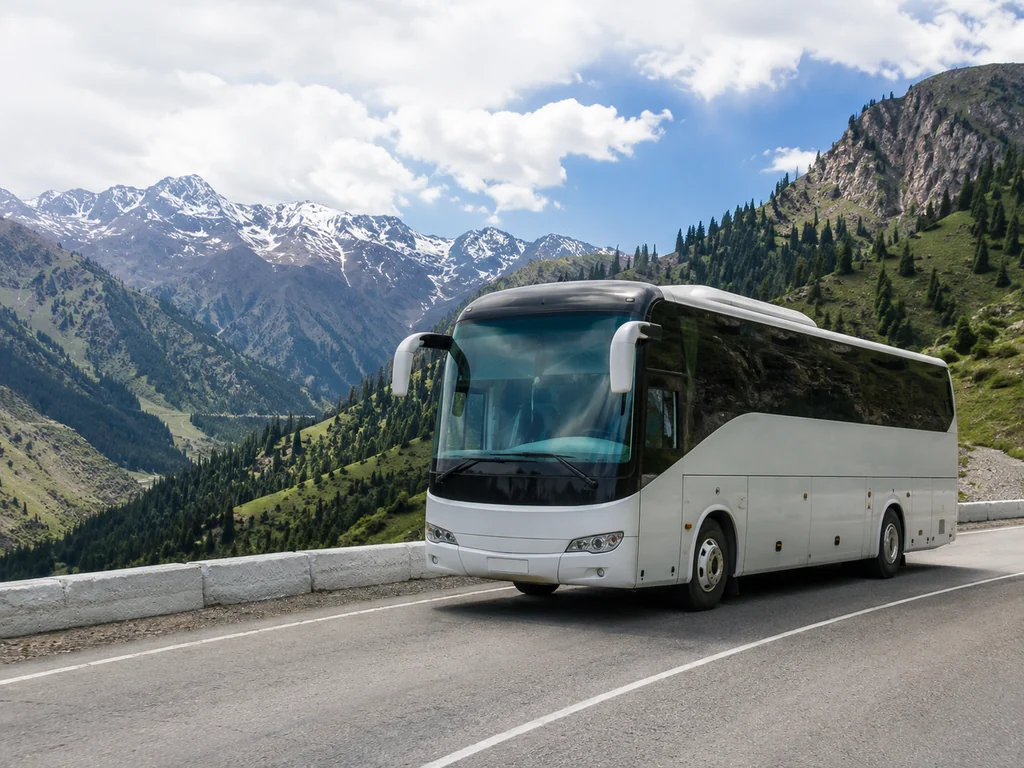
This is a three-day, two-night group tour by bus and the broadest introduction to the region. Day one is the drive from Almaty and a walk around Turkestan. Day two starts at the Mausoleum of Khoja Ahmed Yasawi and then moves south to Otrar, where the ruins of the medieval settlement spread across a low hill above the Arys river, and then north to Sauran, whose surviving walls and corner towers give a clear sense of a fortified town plan.
The pace is steady rather than rushed, with guided explanations at each site and time to walk the grounds. Group travel by bus keeps the logistics simple and suits travellers who prefer a fixed programme with company. The tour is priced at $268 per person and runs on a published schedule across three days and two nights, with transfers, accommodation and guided excursions included as described in the tour card.
Because the route covers long stretches of open steppe, the driving itself is part of the experience: you pass irrigated fields along the Syr Darya, low ridges on the horizon and occasional herds of sheep and camels. Binoculars are useful for spotting birds of prey on the roadside poles, and a camera with a zoom lens is worth packing for the mausoleum facades.
Sanctuaries of Turkestan: Yasawi and Arystan-Bab
This two-day, one-night group tour by bus concentrates on the two most important pilgrimage sites in the region. The Mausoleum of Khoja Ahmed Yasawi is the centrepiece, and the Mausoleum of Arystan-Bab, located near the village of Shaulder, is traditionally associated with the spiritual teacher of Yasawi. The programme also includes a walk through the older quarters of Turkestan, where low houses, small mosques and market streets give a sense of everyday life in the city.
The shorter duration makes this route a good fit for travellers with limited time who still want to see the UNESCO-listed monument and one of the region's principal shrines. Apart from the long drive from Almaty, the distances between sites are short. The tour costs $145 per person and operates on a published schedule over two days and one night, with transport, accommodation and guiding included as stated in the tour card.
Visitors should dress modestly at both mausoleums, since they remain places of pilgrimage as well as monuments. Women are generally expected to cover their heads inside the shrines, and shoes are removed at the entrance to certain halls. Photography is usually permitted in the grounds, but it is polite to ask before photographing people at prayer.
Individual Journey Through the Ancient Cities
The third option is a private three-day, two-night tour by jeep covering Turkestan, Otrar, Sauran and Arystan-Bab in a single loop. Because it is an individual tour, the schedule can be adjusted around light, weather and personal interests, and the guide also drives, which keeps the group small and the pace flexible. The jeep is well suited to the graded tracks around the ruins and to the longer stretches of open country between sites.
This route suits travellers who want more time at each location, the freedom to stop for photographs or a short walk, and a programme built around their own priorities rather than a fixed group timetable. It is priced at $559 per person and runs on a published schedule across three days and two nights, with the guide-driver, transport and accommodation included as described in the tour card.
Practical advantages include the ability to start early to catch morning light on the mausoleum tiles, to linger at Otrar in the late afternoon, and to add short detours to viewpoints or village markets where the group routes cannot easily stop. Travellers who prefer quiet, unhurried days and a private vehicle generally find this the most comfortable way to see the region.
What You Actually See Along the Route
The Mausoleum of Khoja Ahmed Yasawi
The mausoleum is a vast rectangular building with a monumental portal, a series of domed halls and a central chamber under the largest dome in the complex. Construction began in the late 14th century under Timur, and the unfinished state of some elements, including the main portal, is part of its architectural character. The exterior is clad in blue and turquoise tiles with geometric and floral patterns, and the interior contains a large bronze cauldron, a well and a set of rooms that once served pilgrims and scholars.
Allow at least two hours to walk the complex properly, including the surrounding necropolis and the small museums on site. Morning light is best for the main facade, while late afternoon brings out the colour of the tiles on the side walls. The site is active as a place of worship, so expect visitors praying and local families paying respects at the tombs.
The old city around the mausoleum contains further traces of medieval Turkestan: fragments of walls, the remains of a citadel and archaeological excavations that continue seasonally. A short walk downhill brings you to the Syr Darya floodplain, where the river runs wide and slow between low banks. The contrast between the monumental shrine and the quiet river landscape is one of the defining images of the city.
Otrar: Ruins of a Caravan City
Otrar sits on a low hill about 60 kilometres south of Turkestan, near the confluence of the Arys and Syr Darya rivers. In the medieval period it was a major trading city on the Silk Road, with a citadel, shakhristan and rabad, and it was here that a Mongol siege in the early 13th century ended in the city's destruction. Today the site is an archaeological reserve with exposed walls, a reconstructed section of the citadel gate and a small museum explaining the finds.
The ruins are spread over a considerable area, and walking the full circuit takes about an hour and a half in good conditions. There is little shade, so a hat and water are essential, and sturdy shoes help on the uneven ground. The museum provides useful context on the layers of occupation, from early settlement through the medieval city to its abandonment.
From the top of the citadel mound the surrounding plain opens up in every direction, with the Arys river winding through fields and scrub. On clear days the view stretches for many kilometres, and the scale of the medieval trade routes becomes easier to imagine. The site is fenced and staffed, and a small entrance arrangement applies; any such local fees are paid on the spot.
Sauran and Arystan-Bab
Sauran lies about 40 kilometres northwest of Turkestan and preserves a rectangular circuit of walls with corner and interval towers, giving a clear picture of a fortified medieval town. Inside the walls, the ground is largely open, with traces of streets, building foundations and a mosque. The walls are the main attraction, and walking the perimeter takes about an hour at an easy pace.
Arystan-Bab, near the village of Shaulder, is a pilgrimage site centred on the mausoleum traditionally associated with the spiritual teacher of Khoja Ahmed Yasawi. The complex has been rebuilt and expanded over the centuries and includes a mosque, a well and a small garden. It is a quieter, more intimate site than the great mausoleum in Turkestan, and visitors often spend forty minutes to an hour here.
Arystan-Bab lies close to Otrar south of Turkestan, while Sauran is to the northwest, so a day that covers all three involves a fair amount of driving. The driving between them crosses flat, open country with long views, occasional camel herds and small settlements. Dust can be significant in dry weather, so a scarf or light buff is useful.
Season by Season on the Turkestan Steppe
Spring: March to May
Spring arrives gradually, with March still cool and windy and April bringing milder days and the first green flush across the steppe. By May, daytime temperatures sit comfortably between 20 and 28 degrees Celsius, and the countryside around Otrar and Sauran is at its most photogenic, with wildflowers in the uncultivated ground. Rain is infrequent but possible, and the wind can still be sharp on exposed mounds.
This is one of the best periods for walking the archaeological sites, since the ground is firm and the heat is manageable. Evenings can be cool, so a light jacket is worth carrying. The mausoleum complex in Turkestan is busy around Nauryz in late March, when local families gather to celebrate the spring holiday.
Summer: June to August
Summer is hot and dry, with July and August often exceeding 35 degrees Celsius in the shade and considerably more in direct sun. The archaeological sites at Otrar and Sauran offer almost no shade, so visits are best scheduled for early morning or late afternoon. Water consumption rises sharply, and a hat, sunscreen and loose light clothing are essential.
The mausoleum in Turkestan is cooler inside thanks to its thick walls and domed halls, making it a comfortable midday stop. Evenings are warm and pleasant, and the long daylight hours allow for extended walks along the Syr Darya or through the old town. The individual jeep tour is particularly convenient in summer, since it can be timed around the heat.
Autumn and Winter: September to February
September and October bring some of the most pleasant conditions of the year, with warm days, cool nights and clear light. The steppe takes on a golden tone, and the low sun in the afternoon brings out the texture of the mud-brick walls at Sauran and Otrar. November is transitional, with colder winds and shorter days, and by December daytime temperatures often hover near or below freezing.
Winter travel is possible and the sites are far quieter, but daylight is limited and the open ground can be icy or muddy. Warm layers, windproof outerwear and sturdy boots are necessary, and the shorter days mean fewer hours at each location. The mausoleum remains the most comfortable winter stop because of its enclosed halls.
Practical Preparation for the Region
What to Pack
- Hat, sunglasses and high-factor sunscreen for the open archaeological sites.
- At least one and a half litres of water per person for a half-day at Otrar or Sauran.
- Sturdy closed shoes with a firm sole for uneven ground and loose stones.
- Light long-sleeved layers for sun protection and a warm jacket for spring and autumn evenings.
- A scarf or light buff against dust, useful in dry and windy weather.
- Binoculars for birds of prey and long views across the steppe.
- Modest clothing for visits to the mausoleums, including a head covering for women.
Physical Demands and Pace
The walking at each site is moderate: mostly flat ground with some low mounds, uneven surfaces and short climbs to viewpoints. A typical day involves two to four hours on foot spread across the morning and afternoon, with vehicle transfers in between. Anyone comfortable walking for an hour or two at a time will manage the standard routes without difficulty.
Heat is the main challenge rather than distance, and the individual jeep tour allows the pace to be adjusted more easily than a group departure. Travellers with limited mobility can still see a great deal from the vehicle and from the paved paths around the mausoleum. Any specific age or weight restrictions are confirmed at the time of booking.
Local Rules and Permits
The mausoleums are active religious sites, so visitors should dress modestly, speak quietly and follow instructions on where shoes are removed. Photography is generally allowed in the grounds, but it is polite to ask before photographing people. Some interior spaces may be closed during prayers or restoration work.
The archaeological reserves at Otrar and Sauran are protected areas, and visitors are expected to stay on marked paths and not remove any fragments or objects. Local entrance arrangements may apply at individual sites, and any such fees are paid on the spot. There are no special border-zone permits required for the standard Turkestan, Otrar, Sauran and Arystan-Bab routes.
Comparing the Three Routes
Side-by-Side Overview
Which Route Suits Which Traveller
The two-day Sanctuaries tour is the shortest and the most focused, and it fits travellers who want the essential pilgrimage sites without a long programme. The three-day Golden Ring adds Otrar and Sauran and gives a fuller picture of the region's medieval history, while still travelling in a group by bus. The individual jeep tour covers the same ground as the Golden Ring plus Arystan-Bab, with a flexible schedule and a private guide-driver.
Group departures suit travellers who are happy with a fixed itinerary and enjoy the company of a small group, while the individual tour suits those who value privacy, flexibility and the ability to adjust the day around light and weather. All three routes use Turkestan as their base, so the choice mainly comes down to time, preferred pace and how much of the surrounding archaeology you want to see.
How to Choose by Season
Beyond the Monuments: Landscapes and Details
The Syr Darya and the Steppe
The Syr Darya is one of the great rivers of Central Asia, flowing from the Tian Shan mountains through Uzbekistan and into the northern part of the Aral Sea basin. Around Turkestan it runs wide and slow, bordered by irrigated fields, poplar groves and patches of reed. The floodplain supports birdlife, and herons, egrets and birds of prey are common along the water and above the fields.
Away from the river, the landscape is open steppe with low ridges, dry channels and scattered settlements. The horizon is often distant and unbroken, which makes the approach to each archaeological site visually dramatic. Sunrise and sunset are the best times to appreciate the scale of the country, and the low light brings out the texture of mud-brick and stone.
Wildlife and Farming Around the Sites
The region is home to typical steppe and semi-desert wildlife, including rodents, lizards, foxes and a variety of raptors. Near the rivers and irrigation canals you may see herons, ducks and other waterbirds, while the open ground attracts kestrels and buzzards. Larger mammals are rare close to the main routes, but the wider region supports species such as ibex and roe deer in more mountainous areas far to the south and east.
Agriculture is a visible part of the landscape: cotton, wheat, melons and vegetables are grown on irrigated land along the Syr Darya, and livestock graze on the poorer pasture away from the water. The contrast between green fields and dry steppe is striking, and it explains why the medieval cities grew where they did. Hunting and fishing exist in the wider region but are not part of the standard Turkestan routes.
Around Turkestan: Other Places of Interest
Shymkent, about 160 kilometres to the southeast, is the largest city in the region and a common arrival point for flights. It has markets, museums and a lively centre, and it works well as a stop before or after a Turkestan programme. Further afield, the oases and historical sites of the wider South Kazakhstan Region offer additional context for the Silk Road story.
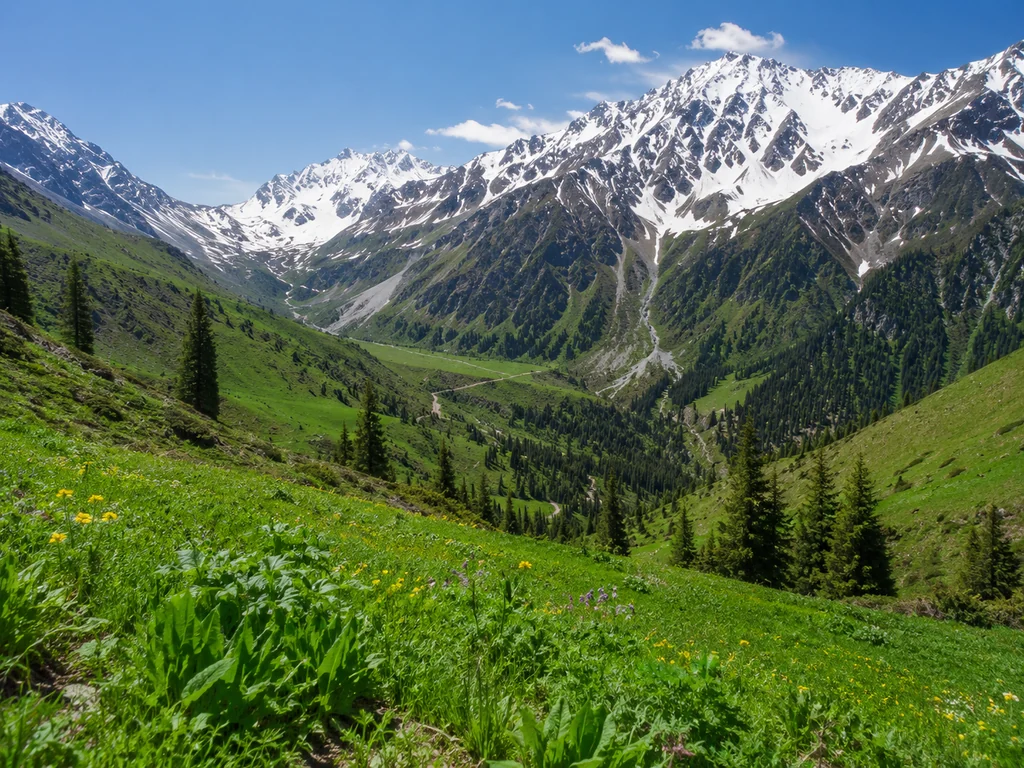
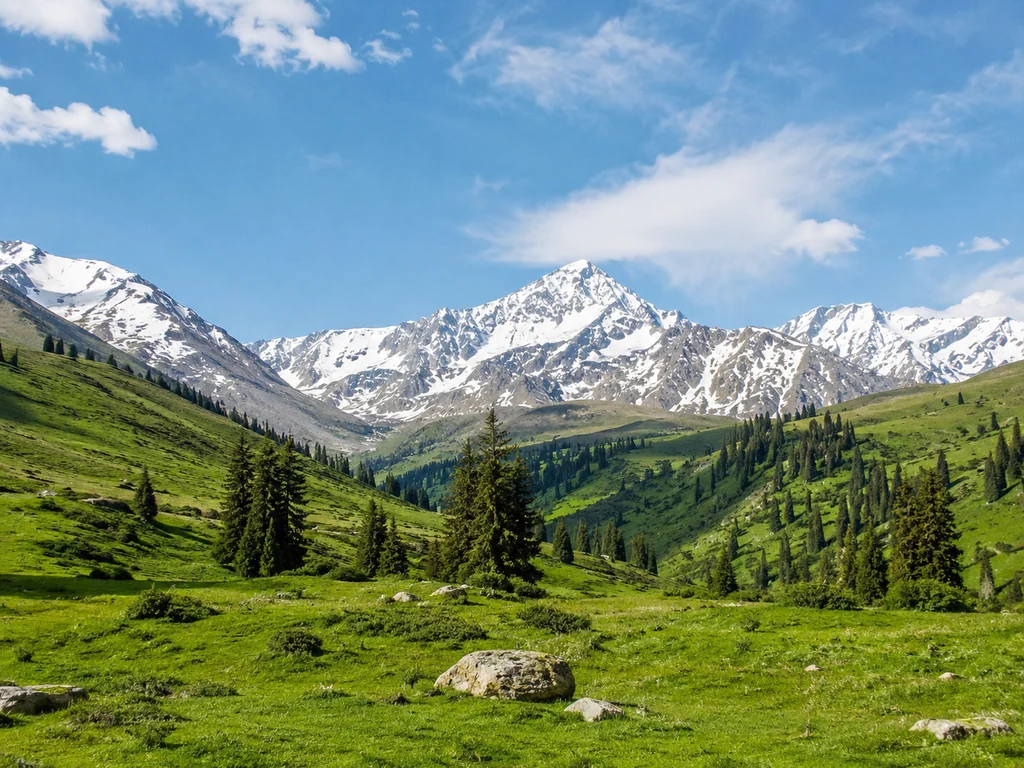
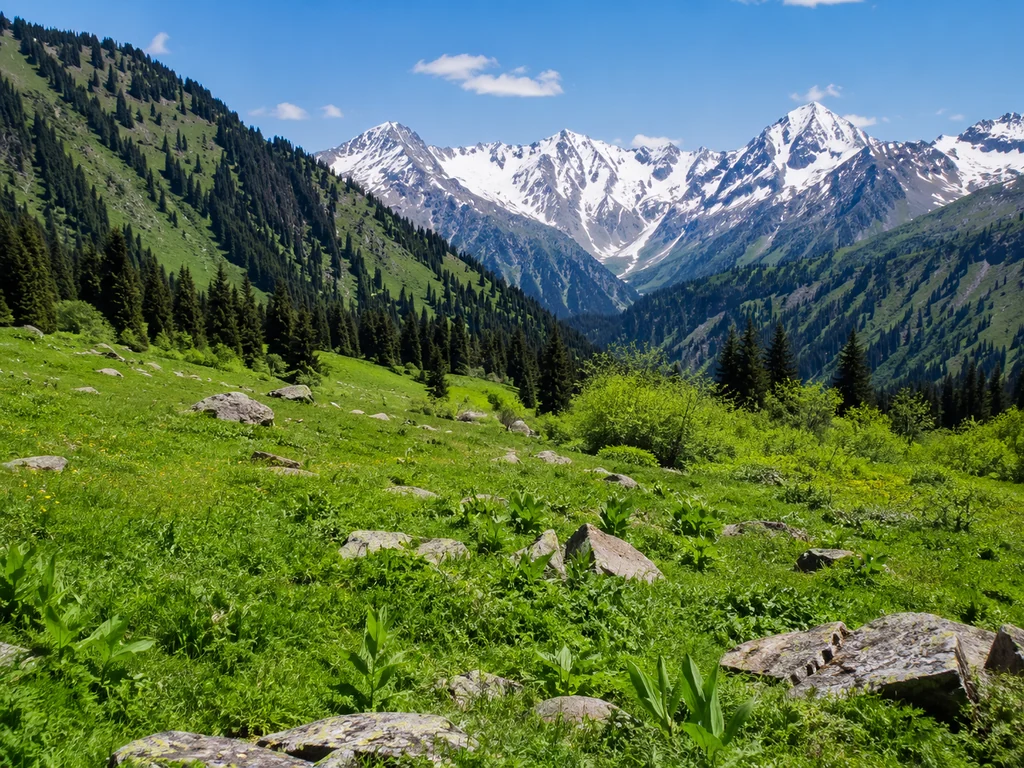
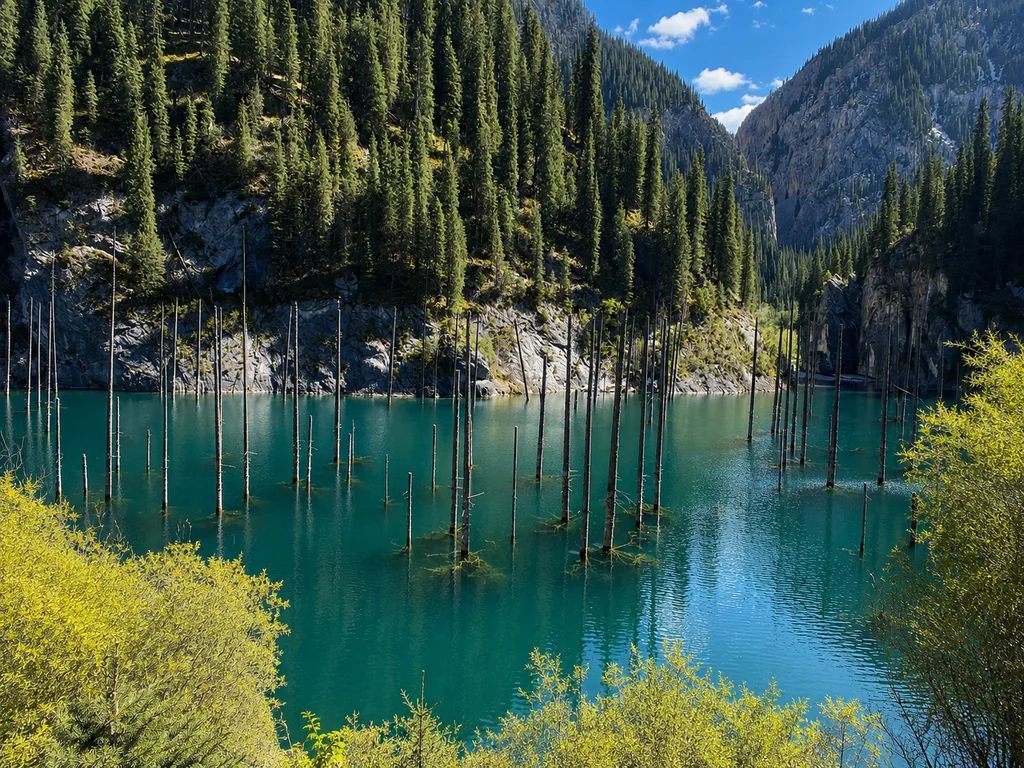
To the east and southeast lie the mountains of the Tian Shan, including the Zailiysky Alatau above Almaty, with destinations such as Shymbulak, Turgen, Kolsai and Charyn. These are separate regions with their own routes and seasons, and they are not part of the Turkestan tours described here. Travellers combining the two should allow extra days for the long distances involved.
Within a short drive of Turkestan itself, the main additional stops are the archaeological sites already covered, the river floodplain and the old town streets. The city is compact, and a walk between the mausoleum, the bazaar and the river takes less than an hour. That compactness is one reason the region works well for short, focused itineraries.
Planning Your Days on the Ground
A Typical Three-Day Rhythm
- Day one: arrival in Turkestan, check-in, and an afternoon at the Mausoleum of Khoja Ahmed Yasawi and the old town.
- Day two: morning transfer to Otrar, walking the ruins and museum, then on to Sauran in the afternoon.
- Day three: Arystan-Bab or a return to the mausoleum for a slower visit, then departure.
This rhythm keeps driving to manageable stretches and puts the hottest hours in the middle of the day, when the mausoleum interiors are most comfortable. The two-day Sanctuaries route compresses the same idea into a single overnight, with one full day for the mausoleum and Arystan-Bab. The individual jeep tour follows a similar structure but can shift the order to suit light and weather.
Time at Each Site
As a rough guide, allow two hours at the Yasawi mausoleum and its surroundings, one and a half hours at Otrar, one hour at Sauran, and forty-five minutes at Arystan-Bab. Add driving time between sites: about an hour from Turkestan to Otrar, around an hour and a half from Otrar to Sauran, and about an hour from Turkestan to Arystan-Bab. Meals and short stops add another hour or two across a full day.
These timings are comfortable rather than rushed and leave room for photographs, a museum visit and a slow walk around the walls. In summer the same schedule shifts earlier in the morning and later in the afternoon to avoid the peak heat. In winter the shorter daylight hours mean fewer sites per day, so the two-day route is often the more realistic choice.
What to Expect from the Experience
The Turkestan region rewards travellers interested in history, architecture and open landscapes rather than in active sports or mountain scenery. The days are built around walking, looking and listening, with long views across the steppe between stops. Comfortable shoes, water and sun protection matter more here than specialised gear.
The three routes differ mainly in duration, group size and the number of sites covered, and all of them use the same base in Turkestan. Choosing between them is largely a question of how much time you have and whether you prefer a fixed group programme or a private vehicle with a flexible schedule. Whichever you pick, the mausoleum, the ruins and the river landscape form the core of the experience.