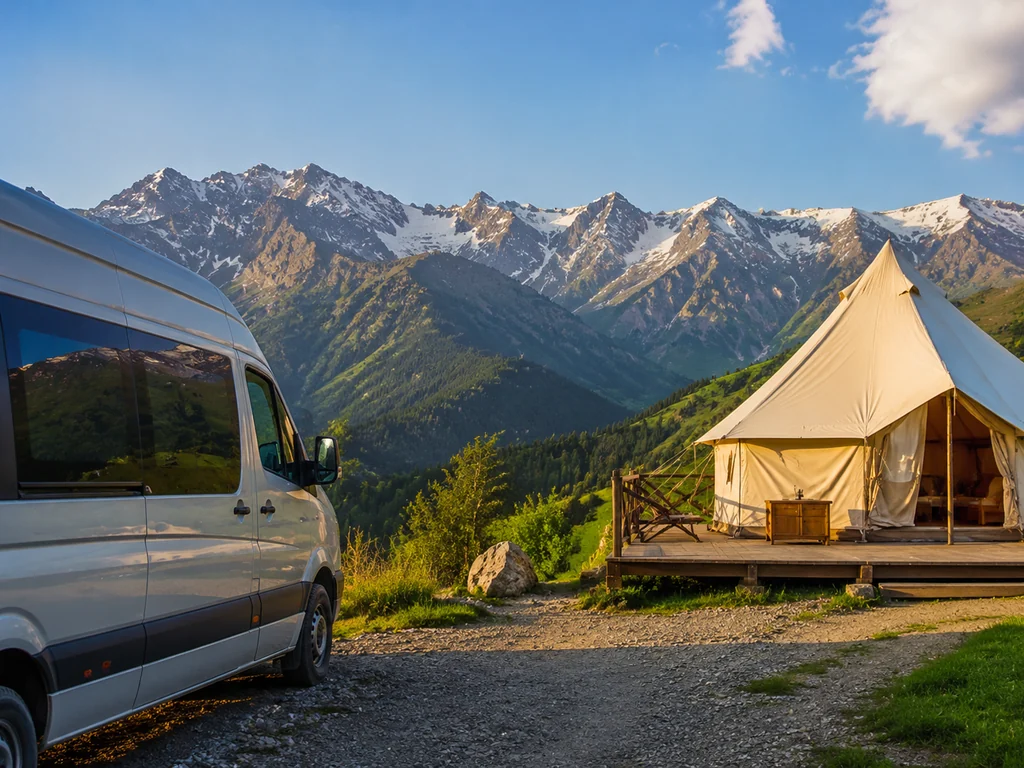
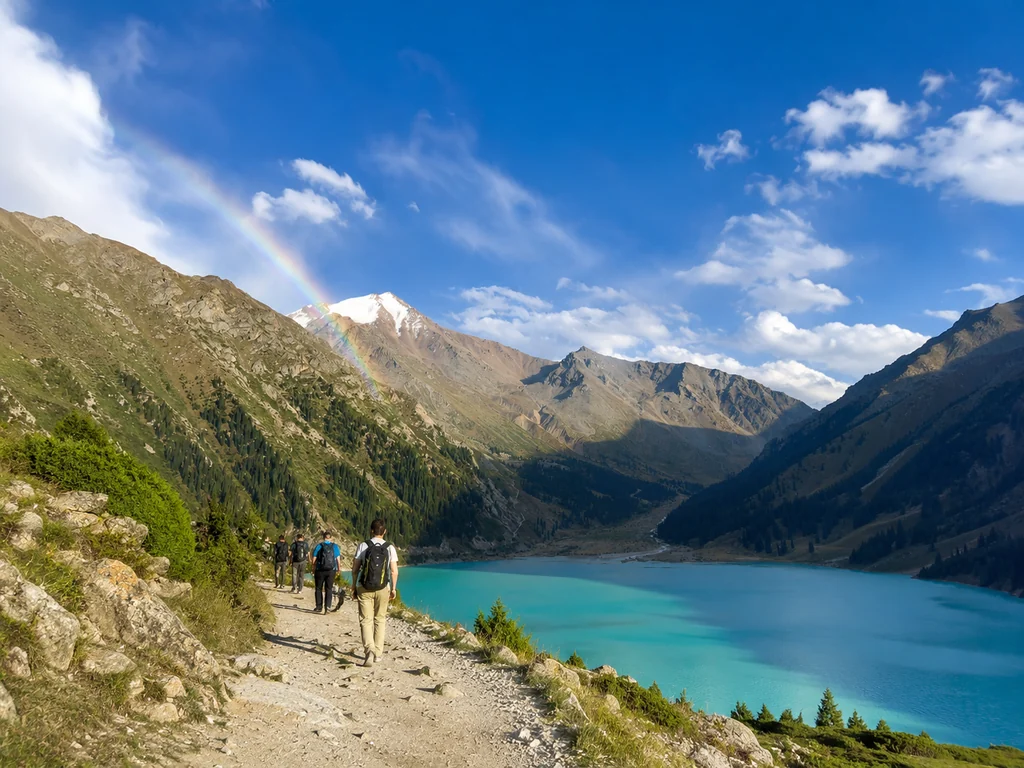
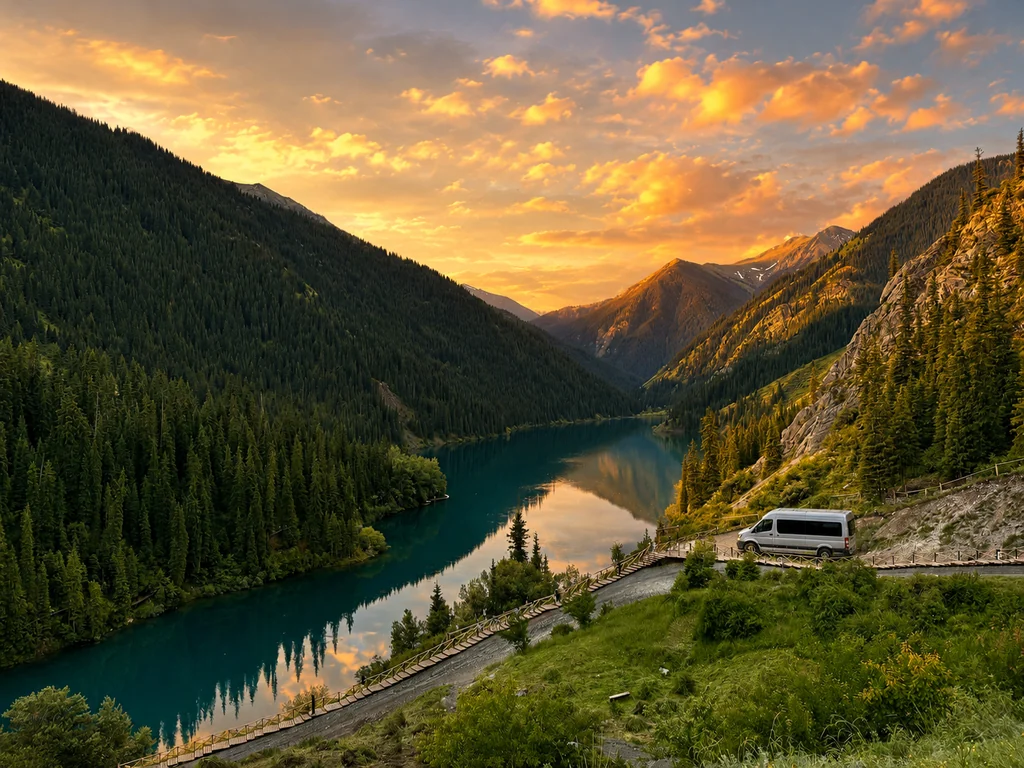
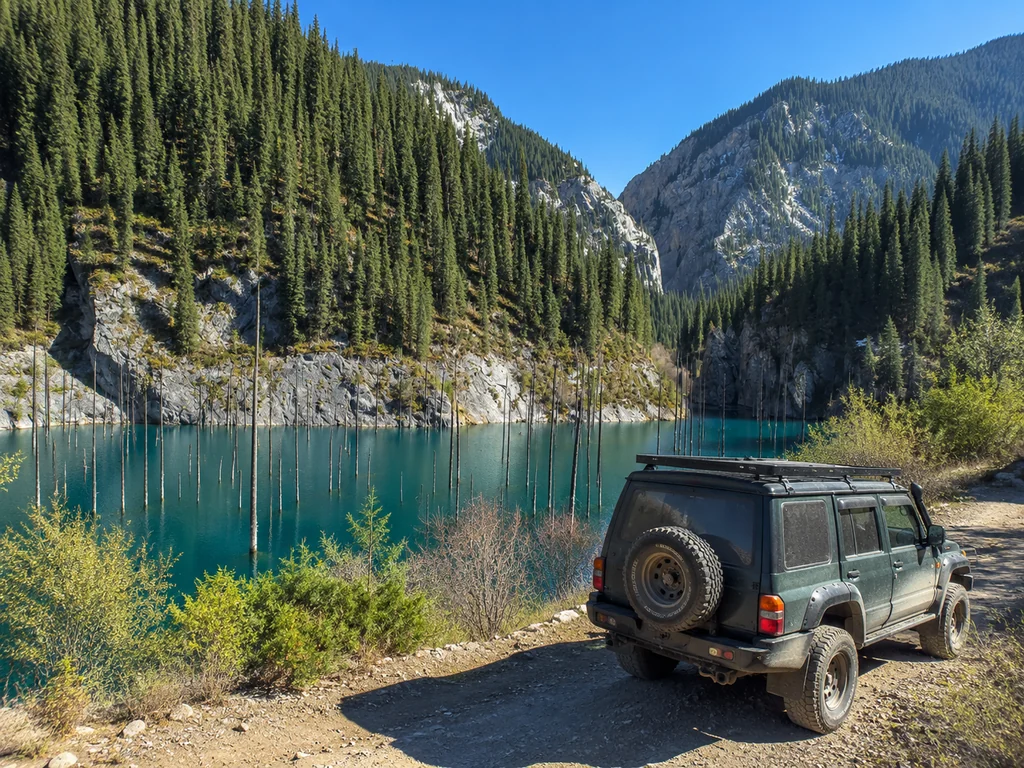
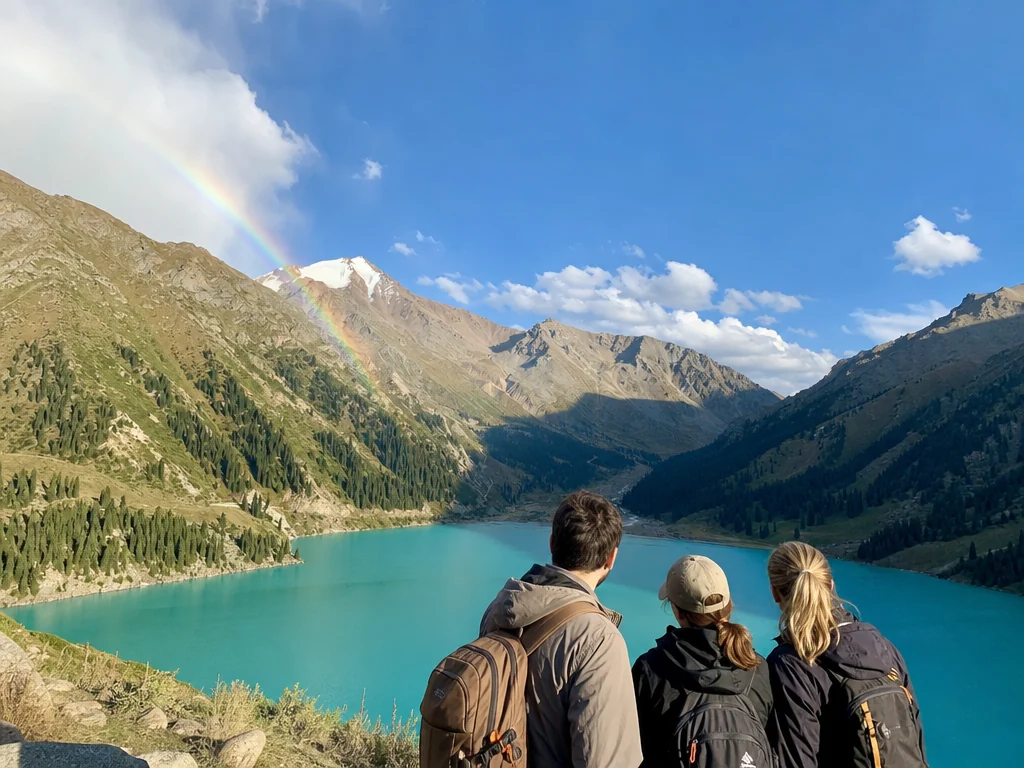
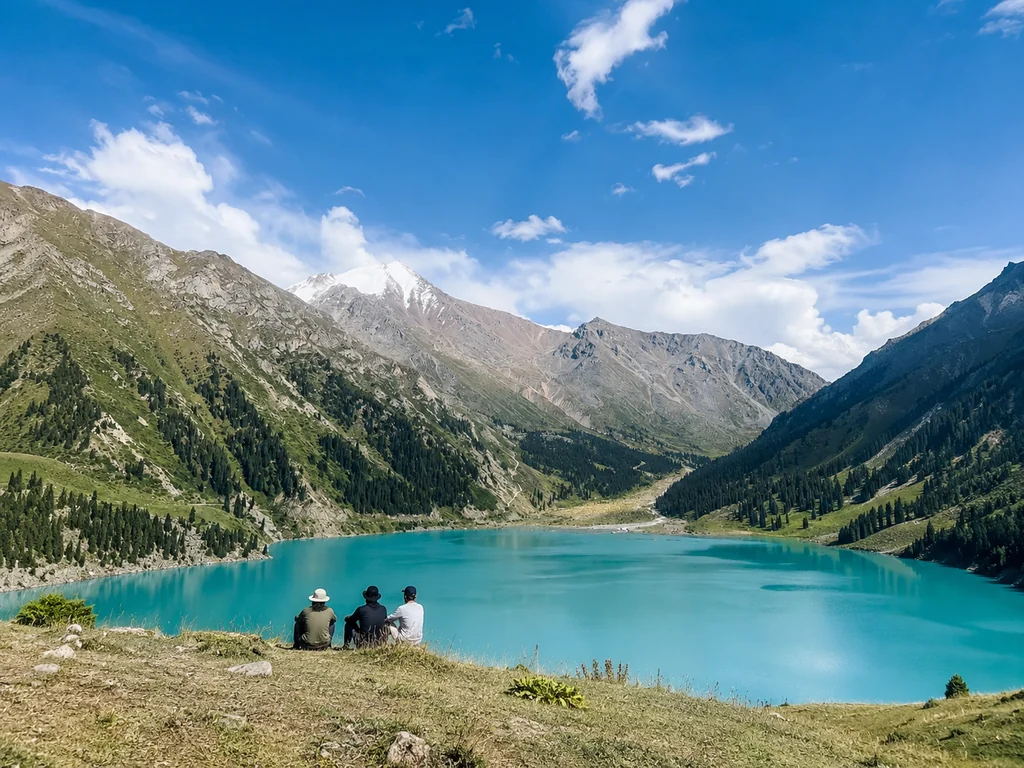
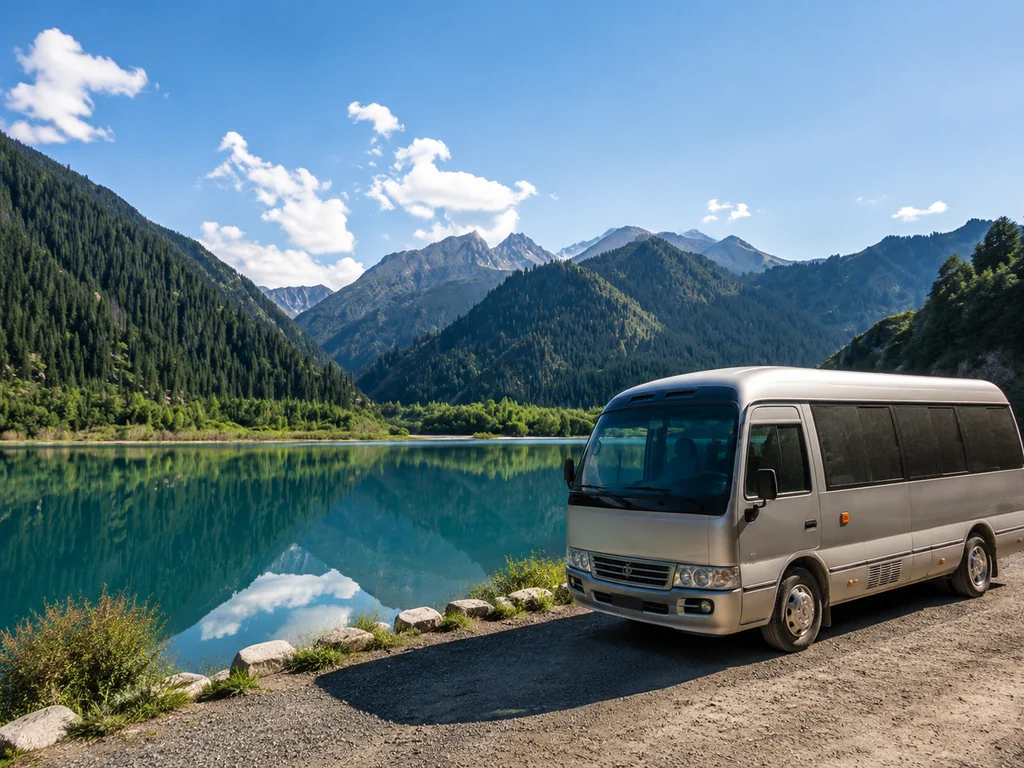
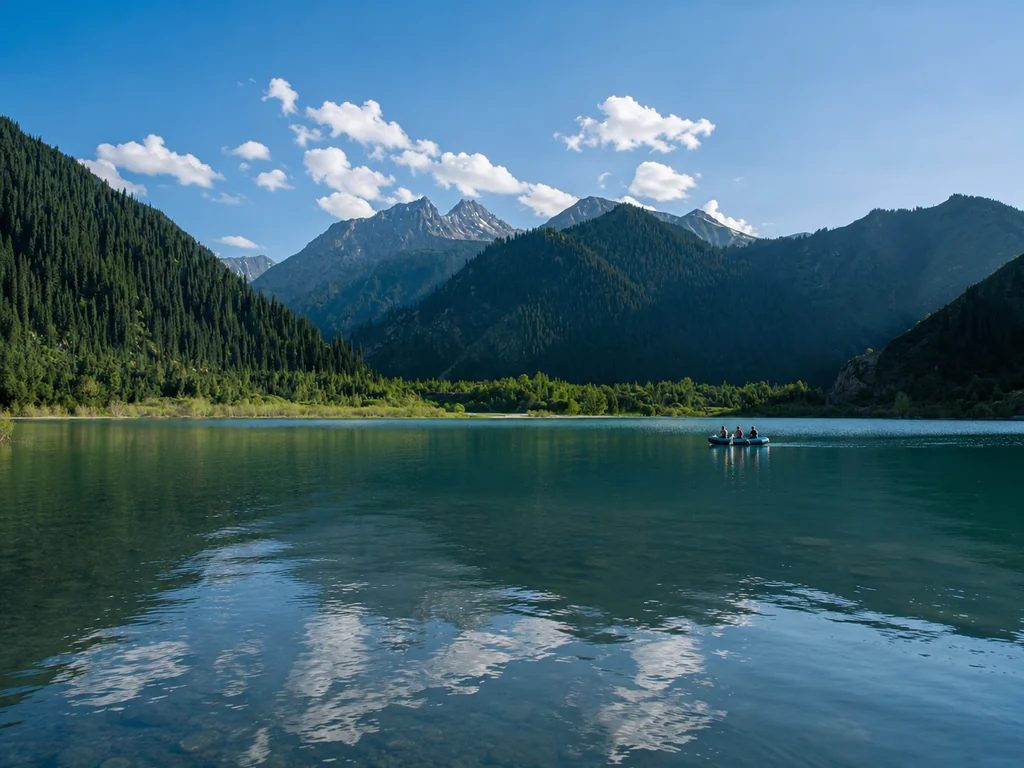
Tour to Shavly Lakes from Almaty by toor is an organized hike in the Severo-Chuysky Ridge of Altai with transfer, certified guide, tents, and meals. Prices range from 9,900 KZT for a one-day trip to 98,900 KZT for a 10-day trekking. Season: June–September. Difficulty: from 1 (easy) to 4 (experienced).
Cost of the Shavly Lakes Tour: What Makes Up the Price
The main question for any tourist is how much it costs and whether there are hidden surcharges. Let's break down what makes up the price of a hike to Shavly Lakes from Almaty and why the final amount is what it is.
The Shavly Lakes tour from Almaty by toor includes transfer, meals, guide, and insurance — no hidden fees.
Toor Tour Prices: From One-Day to Ten-Day
The Shavly Lakes tour price starts from 9,900 KZT for a one-day trip — the most affordable option to get acquainted with the route.
| Tour Type | Duration | Distance | Price (KZT) |
|---|
| One-day | 1 day | 8 km | from 9,900 |
| Multi-day (basic) | 3 days | 20 km | from 45,000 |
| Multi-day (full) | 7 days | 45 km | from 72,000 |
| Multi-day (maximum) | 10 days | 60 km | from 98,900 |
| VIP with horse rental | 7–10 days | 45–60 km | from 85,000 |
The difference between a one-day and a ten-day hike is almost tenfold: on a short route there are no costs for meals, tents, and a cook's work, while on a long one, horse rental for gear transport (from 5,000 KZT per horse) and extra guide days are added to the base price.
The Shavly Lakes tour by toor is now available for booking — prices are fixed with no seasonal surcharges.
What Is Included in the Trip to Shavly Lakes
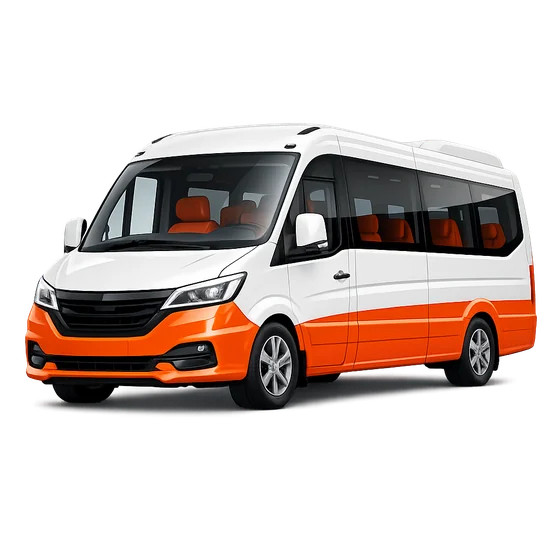
- Transfer: Transportation of the group to the Shavly tract (300 km, 6 hours from Almaty) and back by minibus with air conditioning — fuel and depreciation are already included in the price.
- Certified guide: A local guide familiar with the routes of the Severo-Chuysky Ridge, weather at the Oroy Pass (3000 m), and safe campsites at Lower Shavly Lake.
- Participant insurance: Medical insurance for the duration of the hike covers injuries, bites, and evacuation from the route — no tour starts without it.
- Accommodation and meals: Tents, sleeping bags, mats, stoves — plus hot lunches/dinners and dry rations for the entire route, starting from breakfast on the first day.
- Horse rental (optional): The only option paid separately — from 5,000 KZT per horse for gear transport, and this is always agreed upon in advance, not added post factum.
Why the Price Is What It Is: Cost Breakdown
The cost of Altai Shavly Lakes consists of transfer, meals, guide work, and insurance — no hidden fees.
In a 7-day hike for 72,000 KZT, about 30% goes to transfer — 300 km one way to the Shavly tract, fuel, and minibus depreciation. Another 25% is for meals and equipment: hot lunches and dinners for a group of up to 12 people, tents, sleeping bags, and stoves that wear out over 2–3 seasons. A quarter of the price is for the guide and cook: a certified guide with experience on the Severo-Chuysky Ridge gets a daily rate, plus a cook on long routes. The remaining 20% is split between insurance (10%), permits to visit the border zone, and organizational expenses (10%) — booking transfer, communication, reserve fuel. In my opinion, an independent hike turns out more expensive: car rental (from 25,000 KZT), buying a tent and sleeping bag (from 15,000 KZT), insurance (from 3,000 KZT), and food for a week (from 10,000 KZT) total the same 60–70 thousand, but without a guide and without return transfer.
Route and Difficulty: From Shavly Tract to Oroy Pass
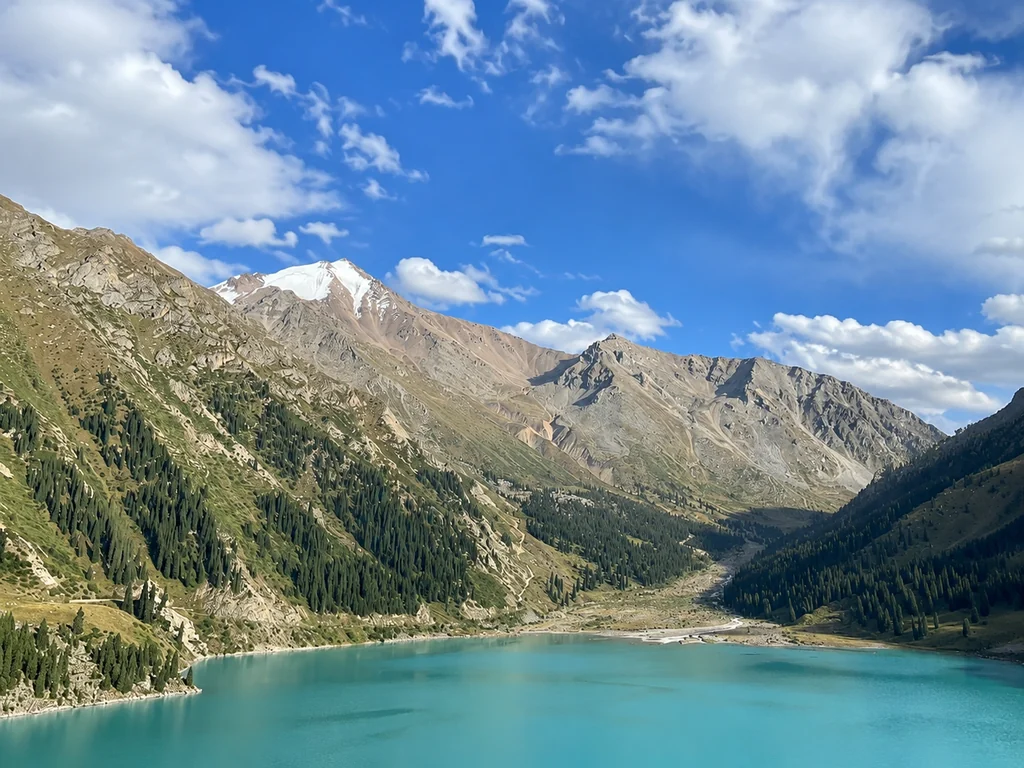
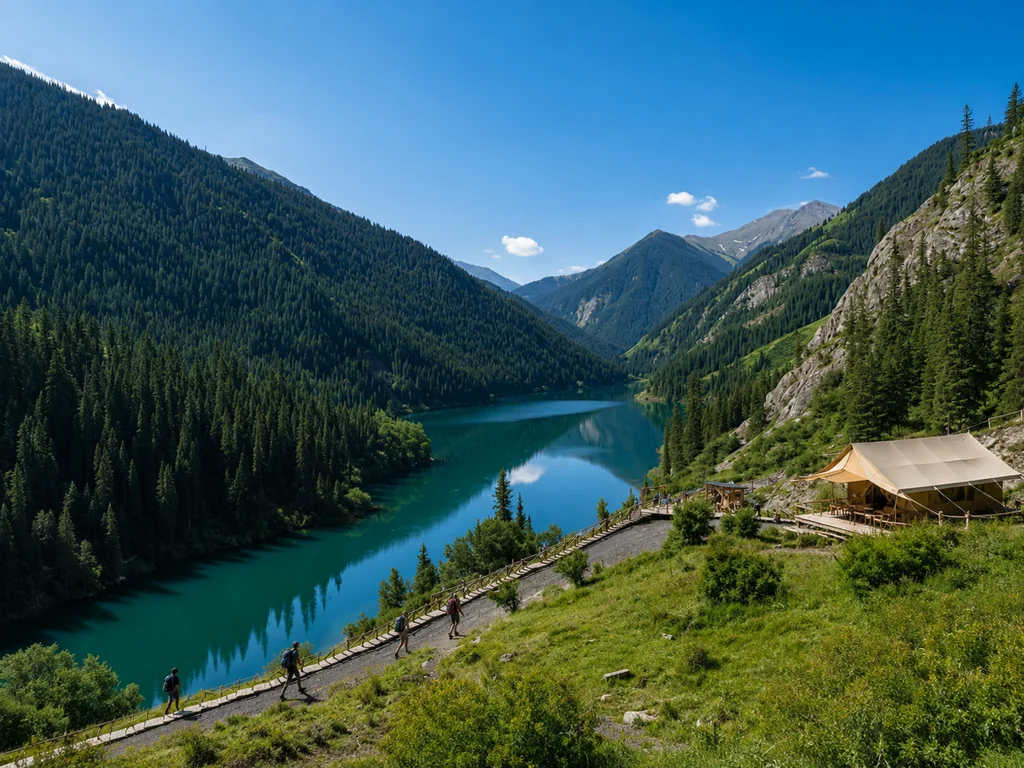
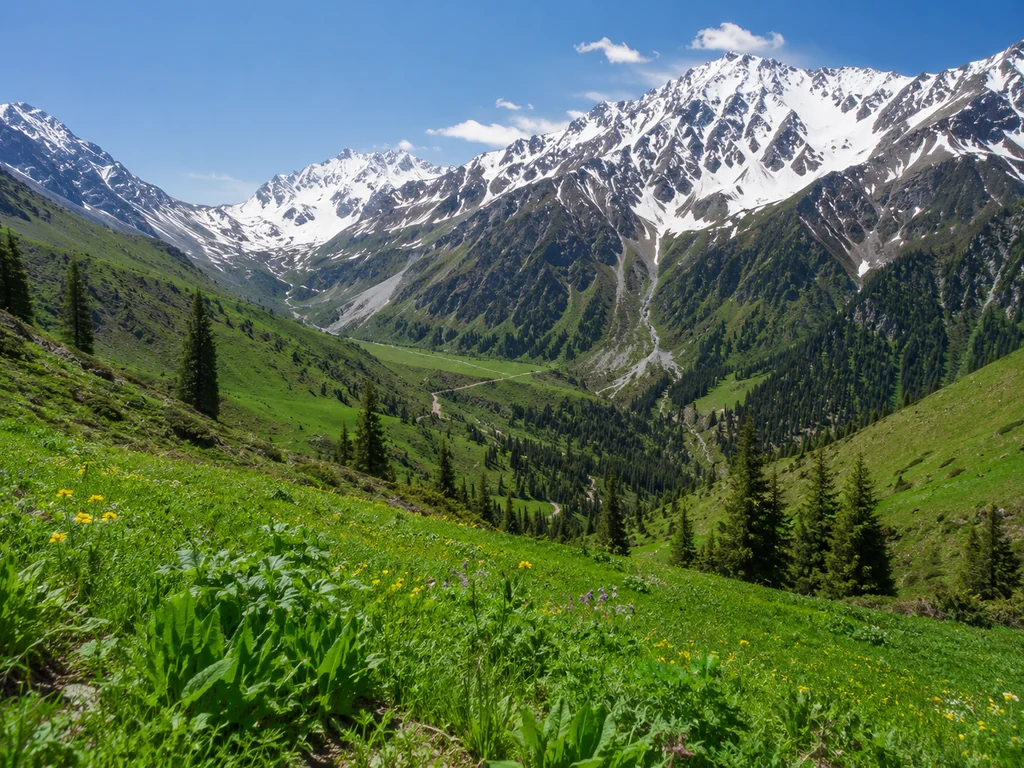
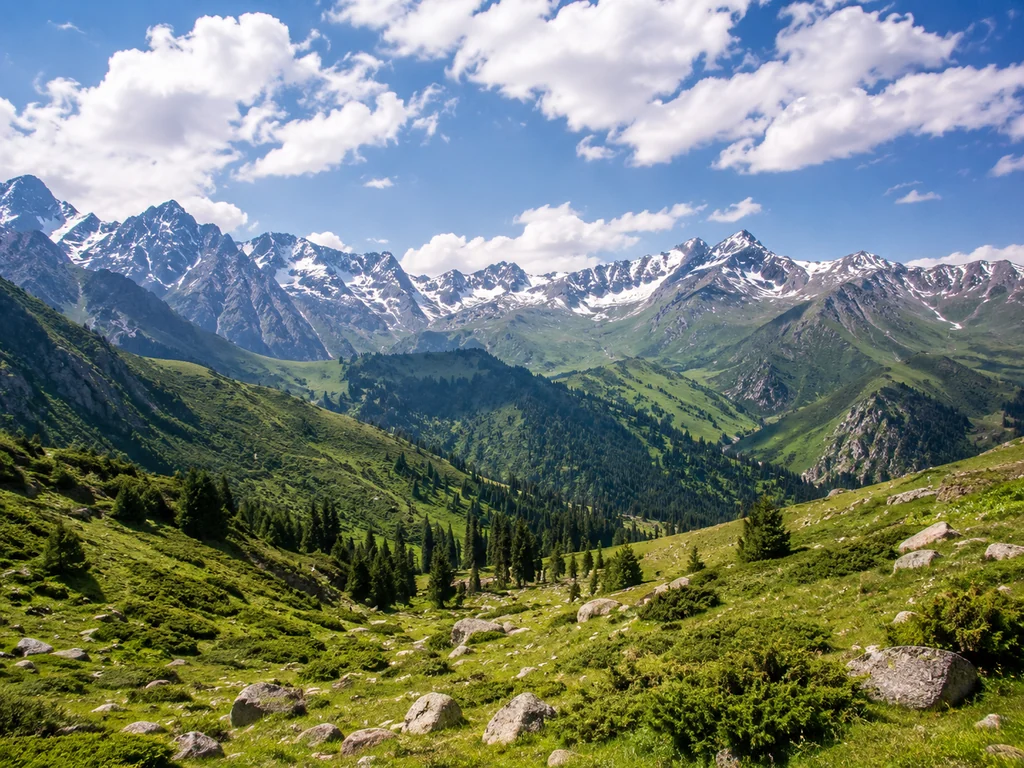
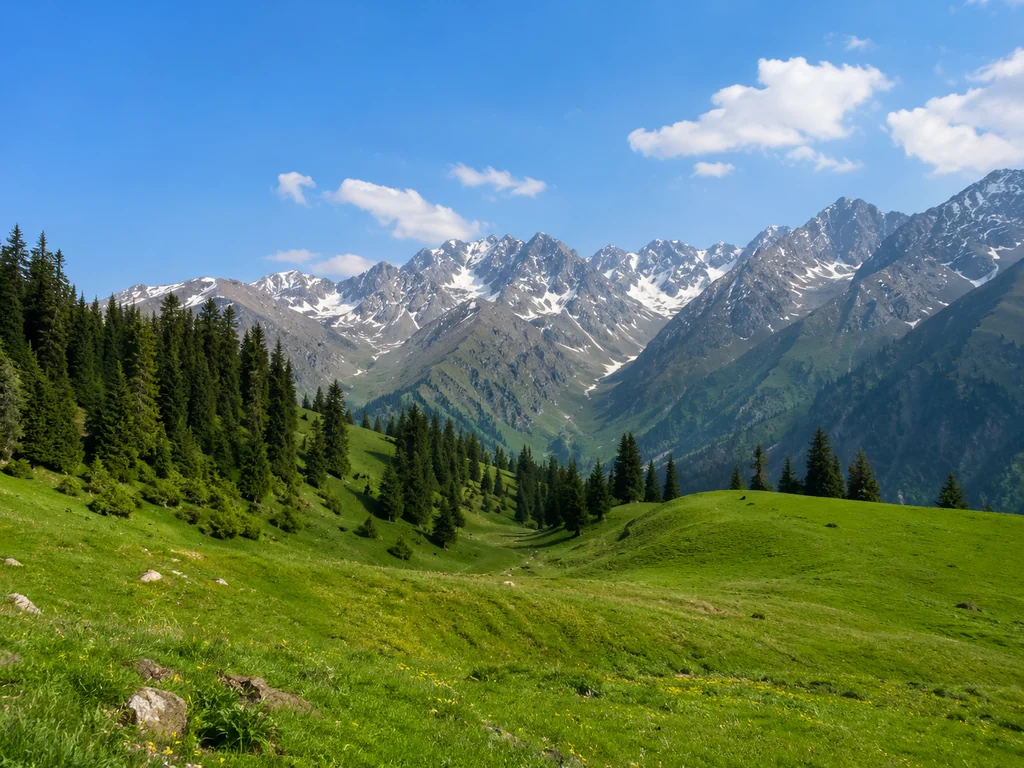
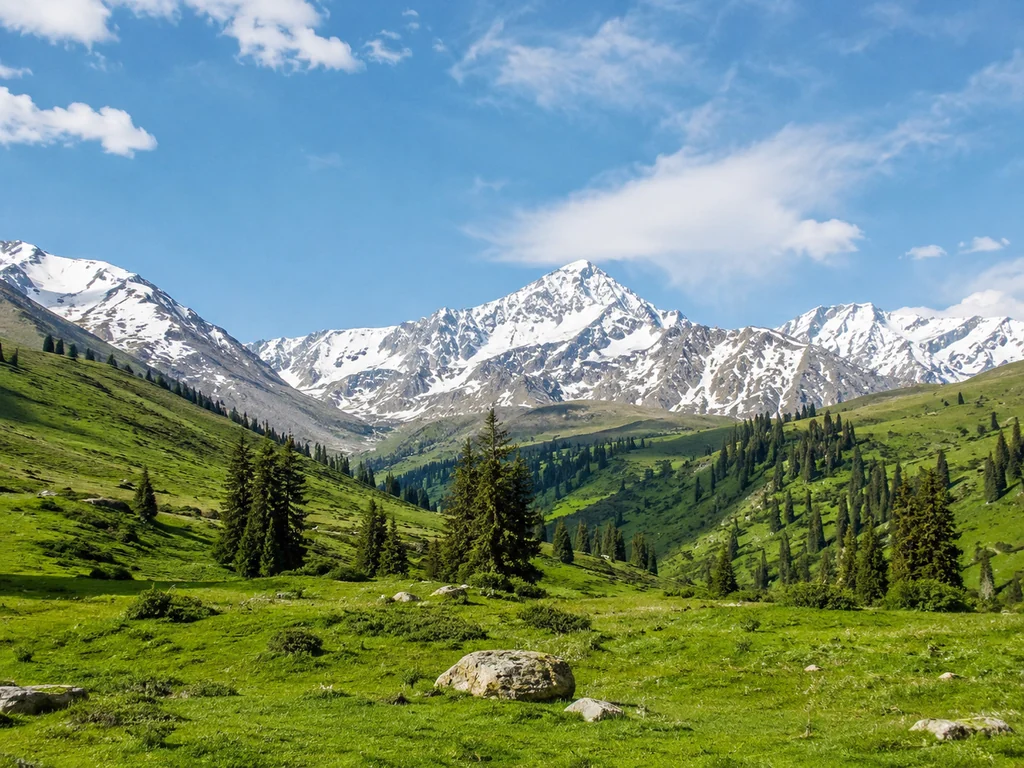
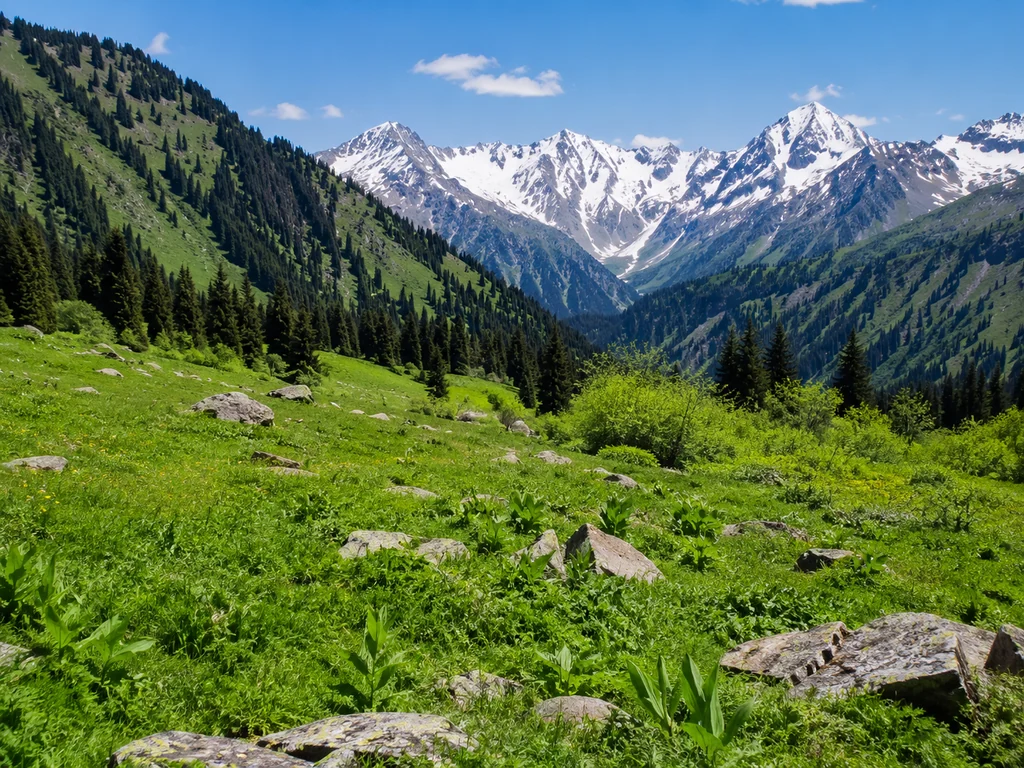
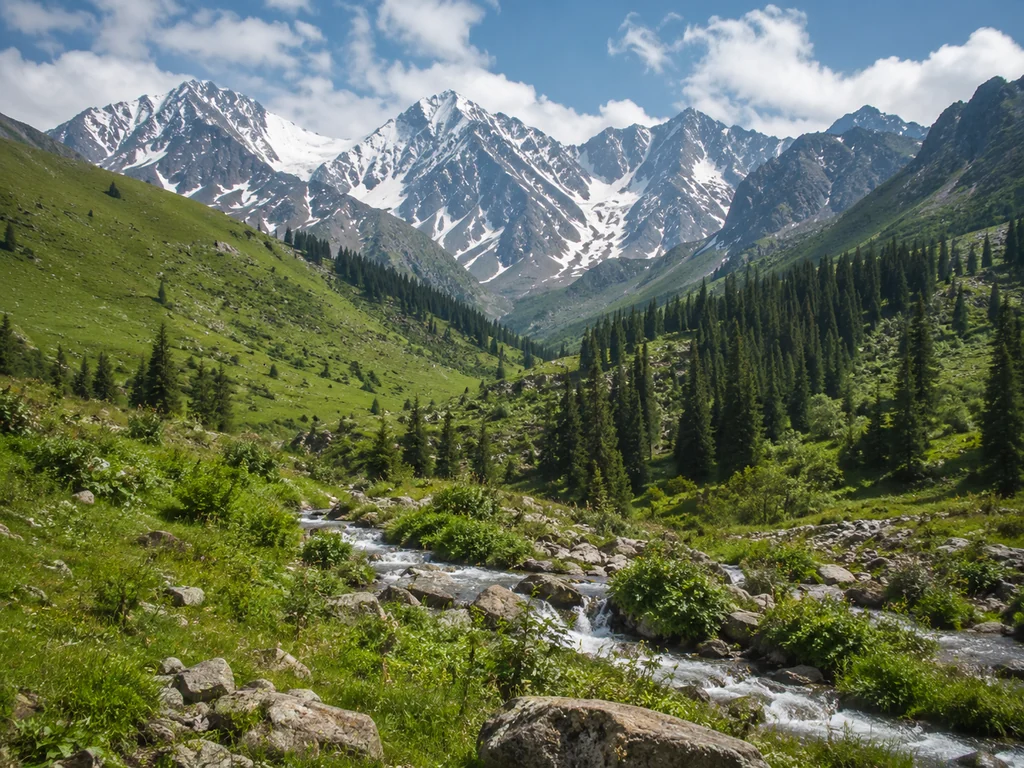
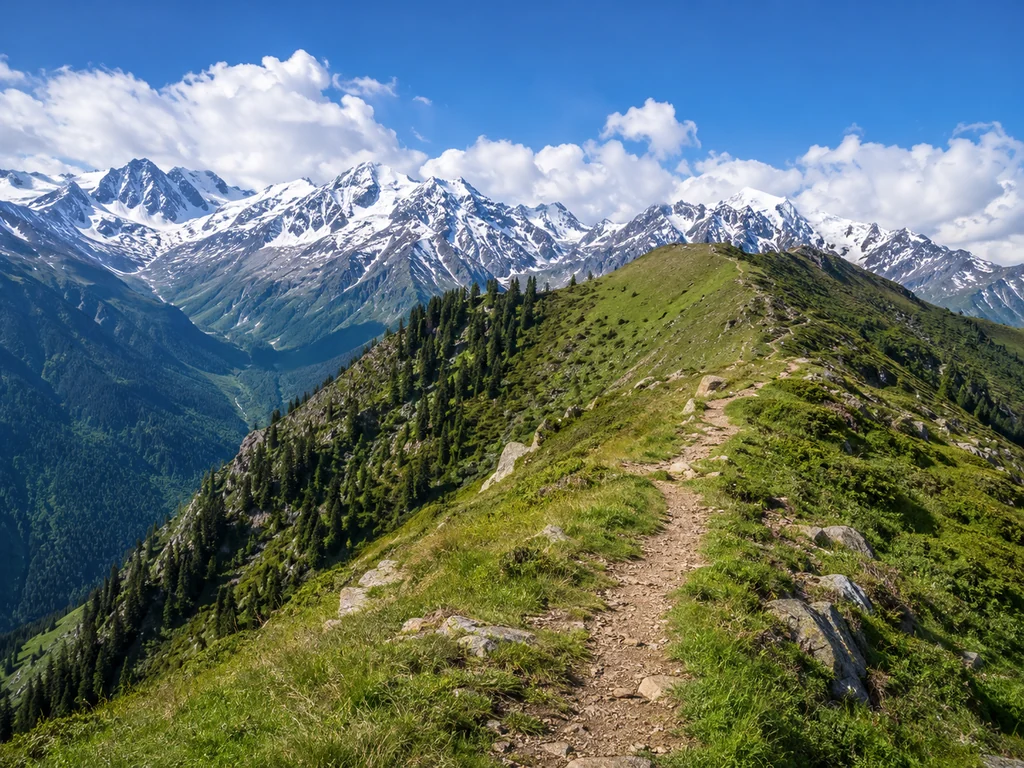
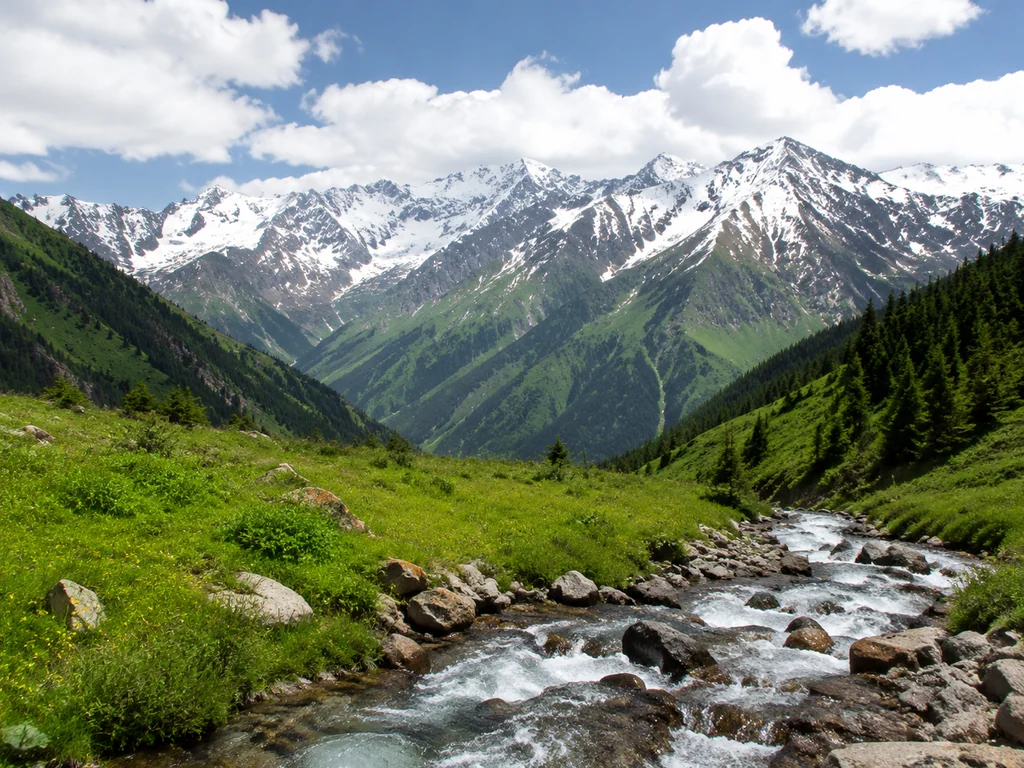
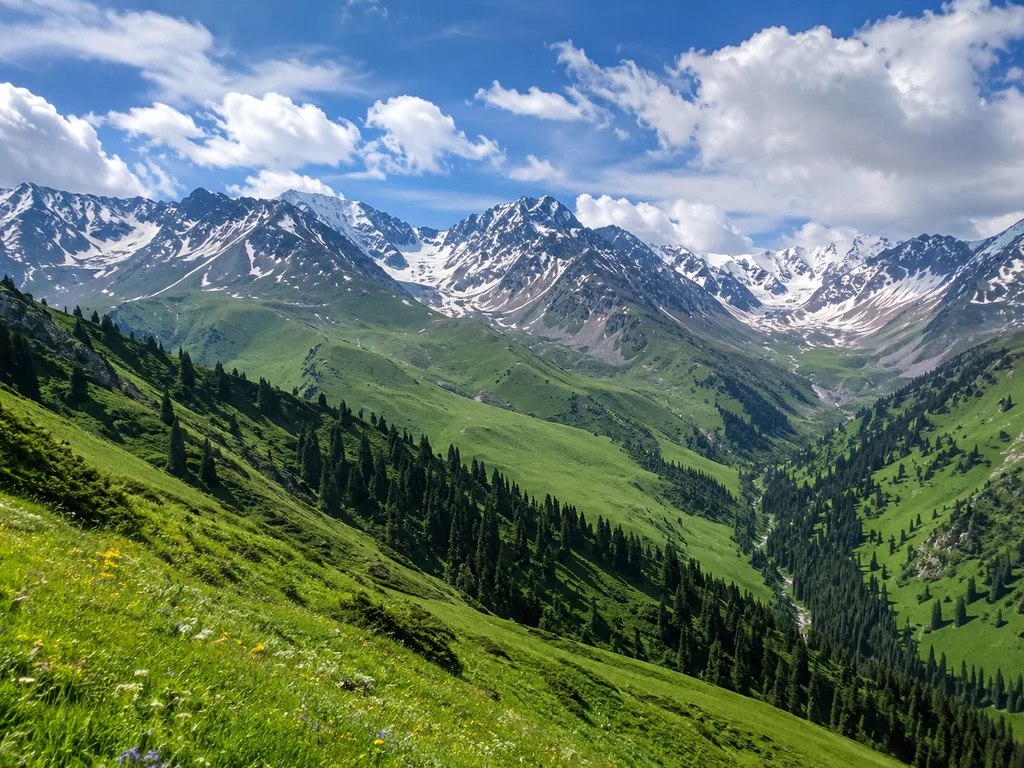
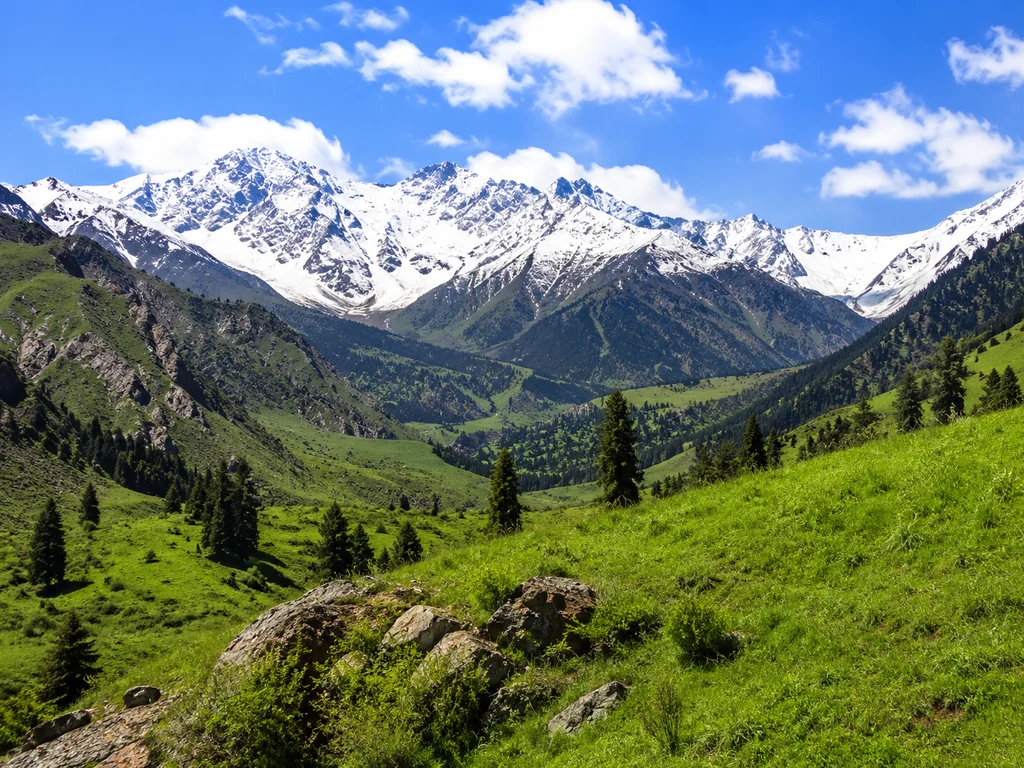
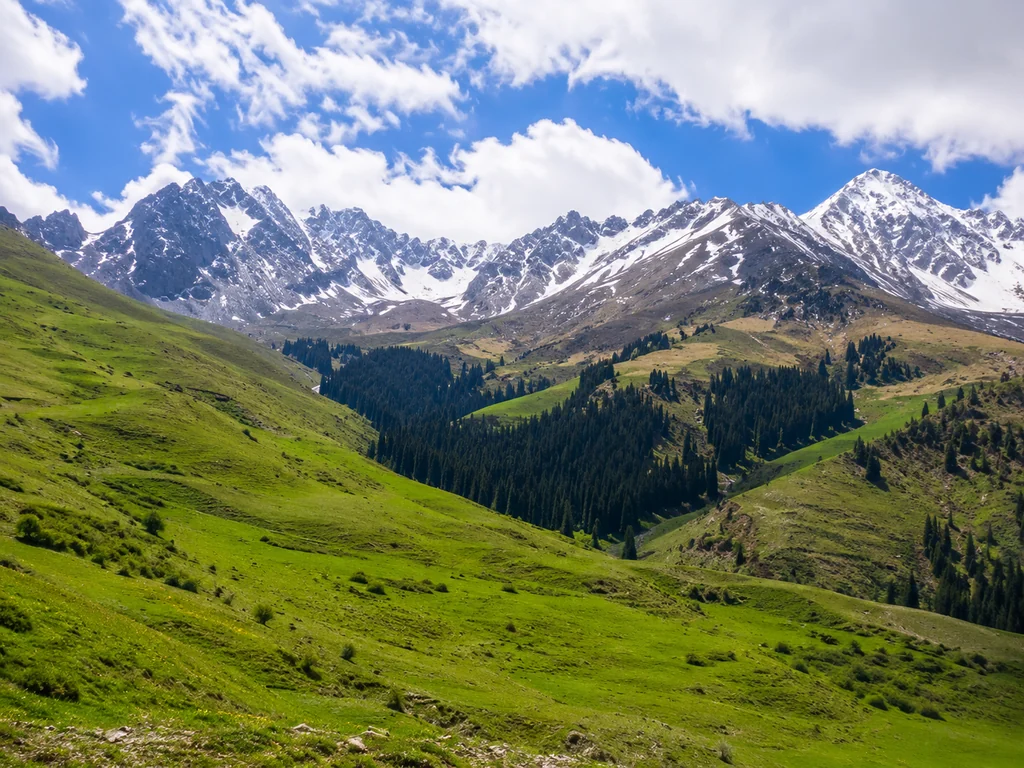
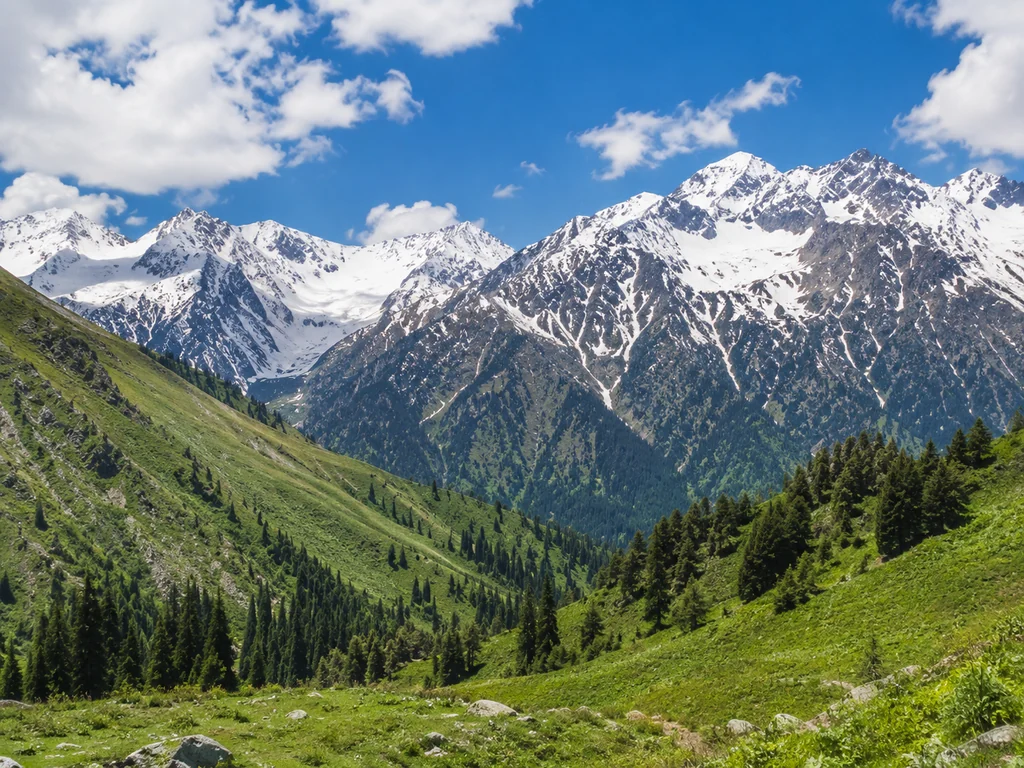
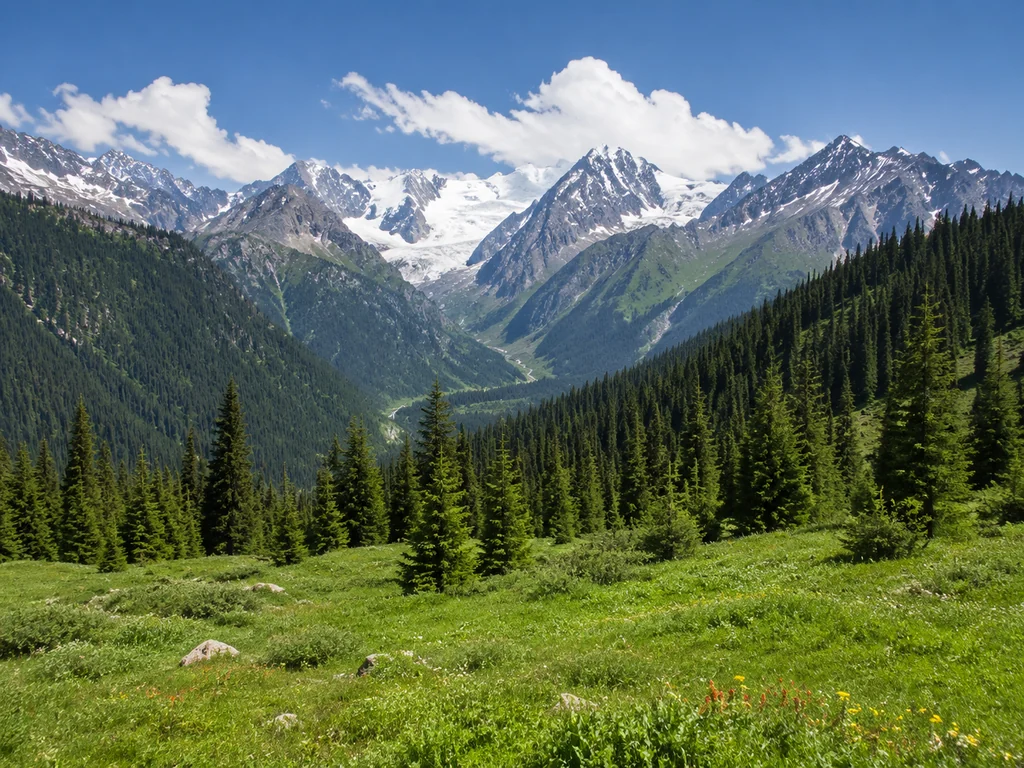
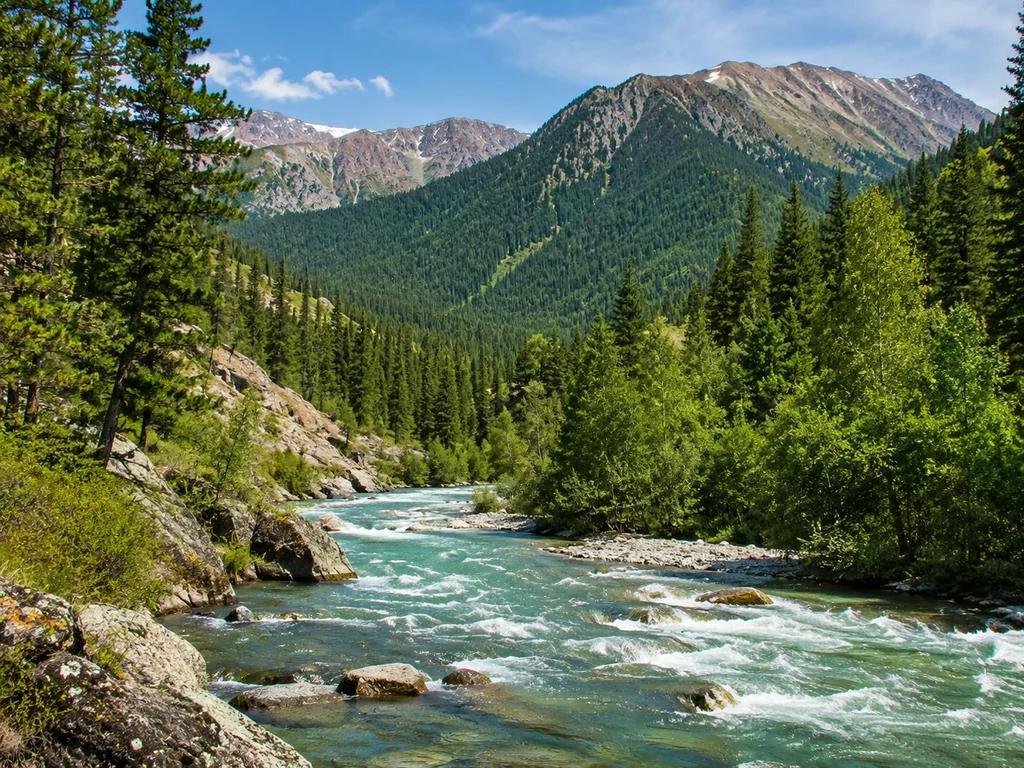
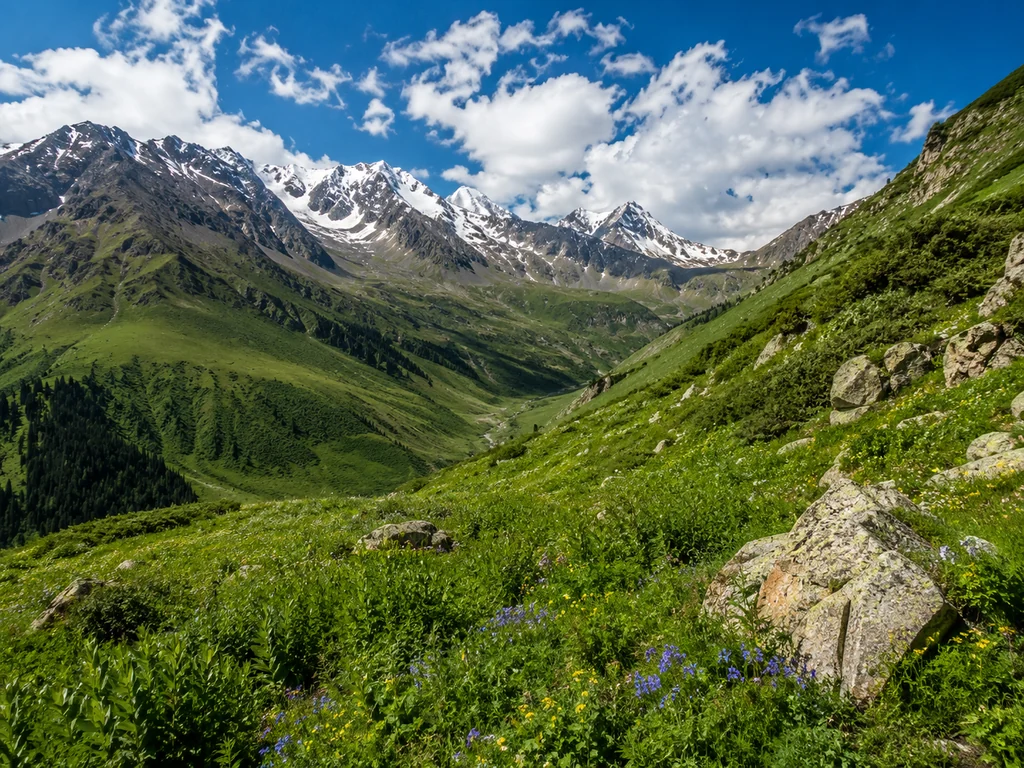
Shavly Lakes lie in the Severo-Chuysky Ridge; the route starts at an altitude of 1800 m at the Shavly tract. The trail goes through cedar forests and alpine meadows to the turquoise lakes. Let's break down distances, elevation changes, and load levels for different travelers.
Shavly Lakes Altai from Almaty is one of the most popular trekking routes in the Severo-Chuysky Ridge.
Lower Shavly Lake — the Main Goal of the One-Day Route
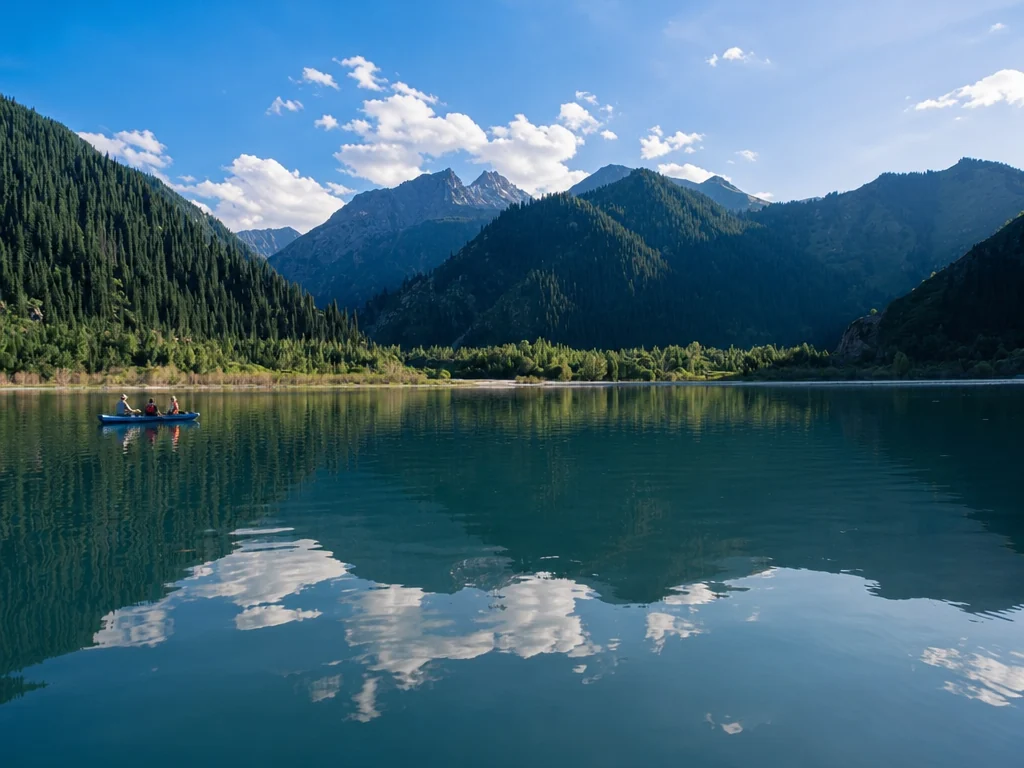
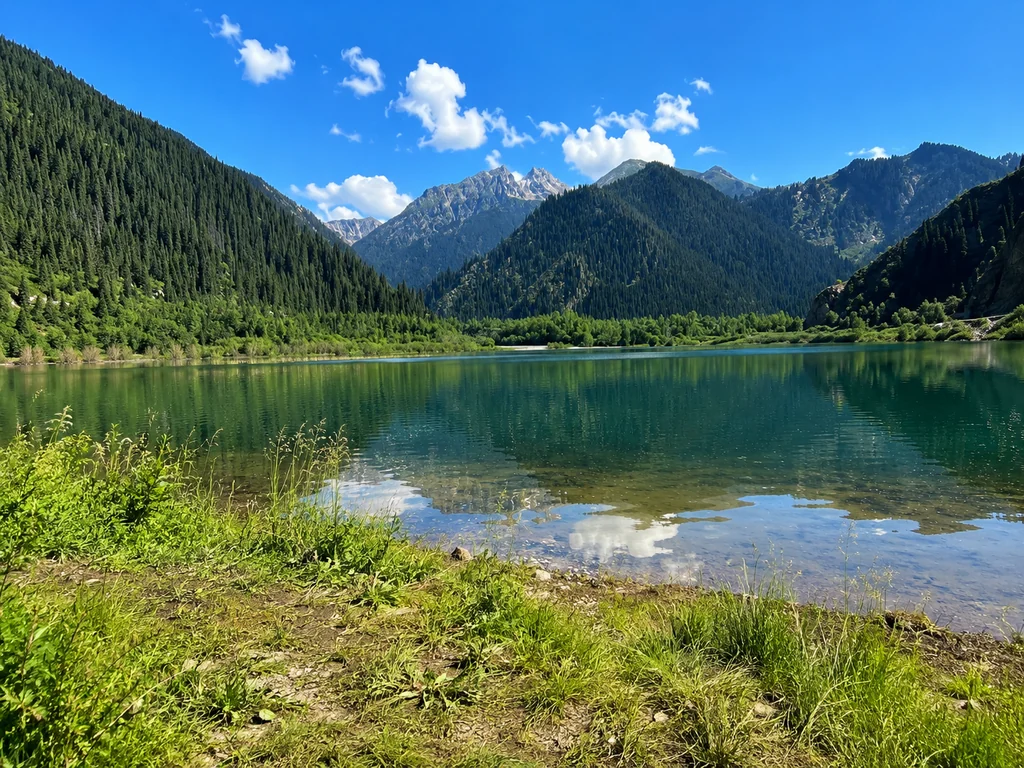
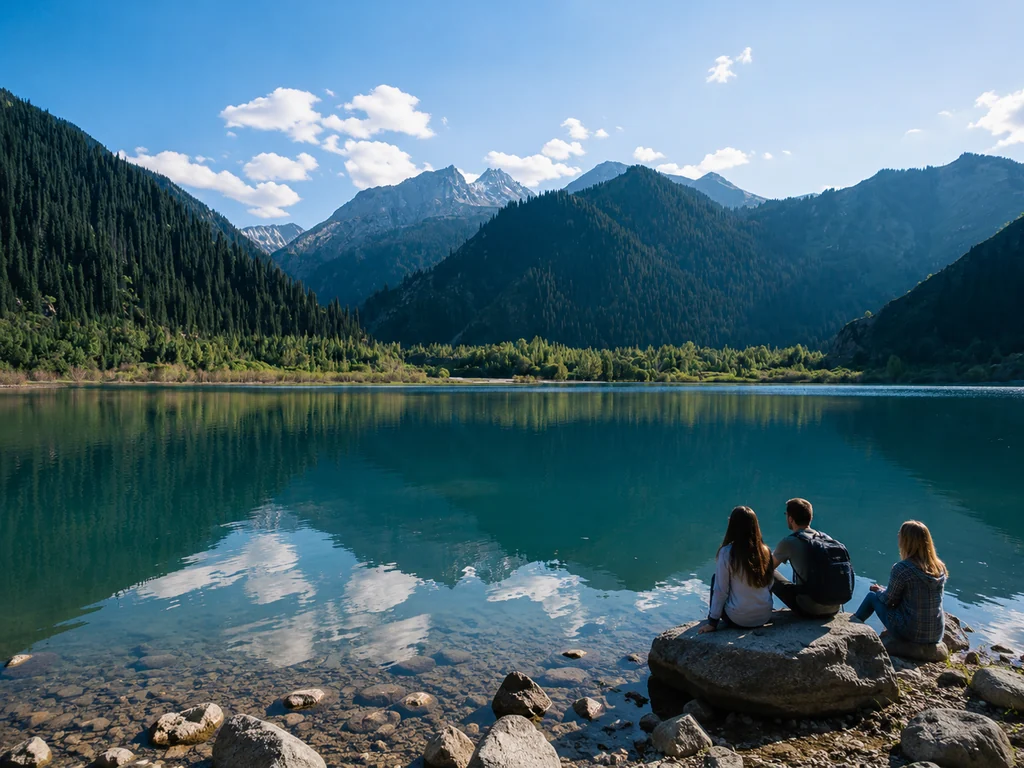
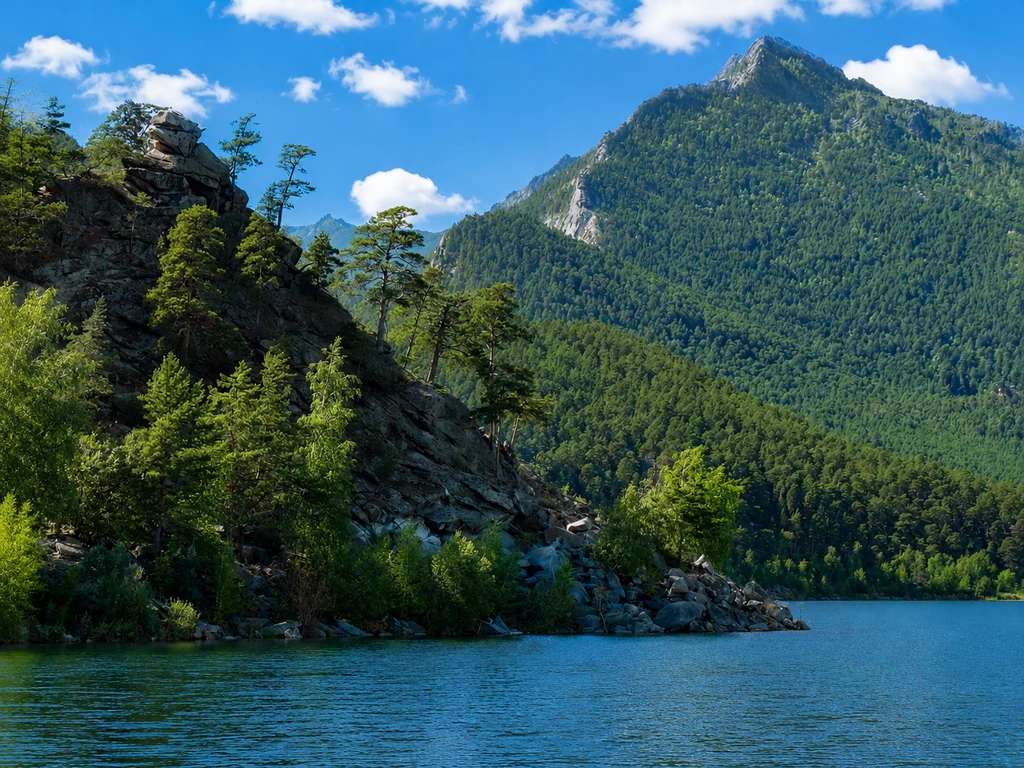
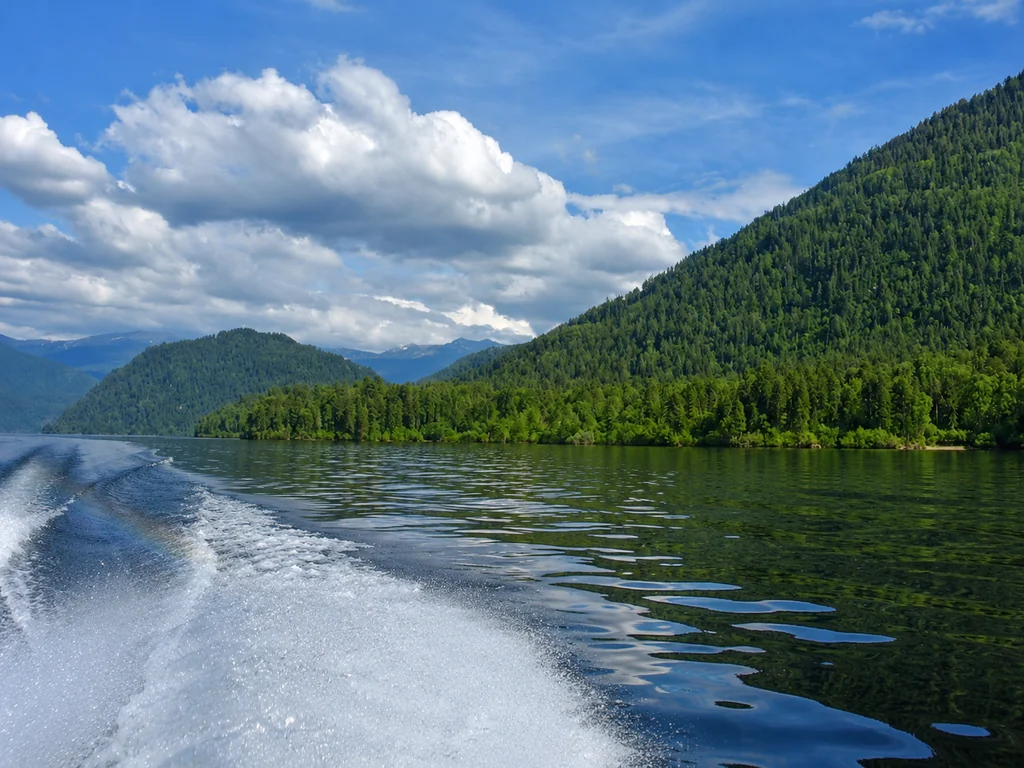
The Shavly Lakes route from Almaty starts at the Shavly tract and passes through cedar forests to the turquoise lakes.
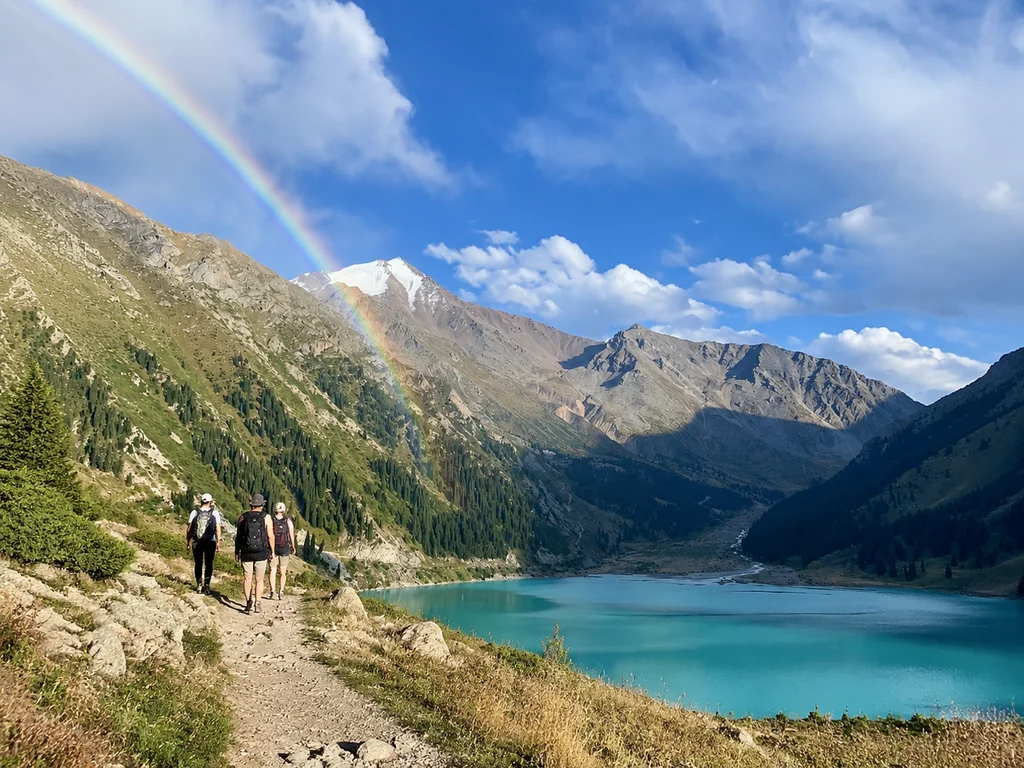
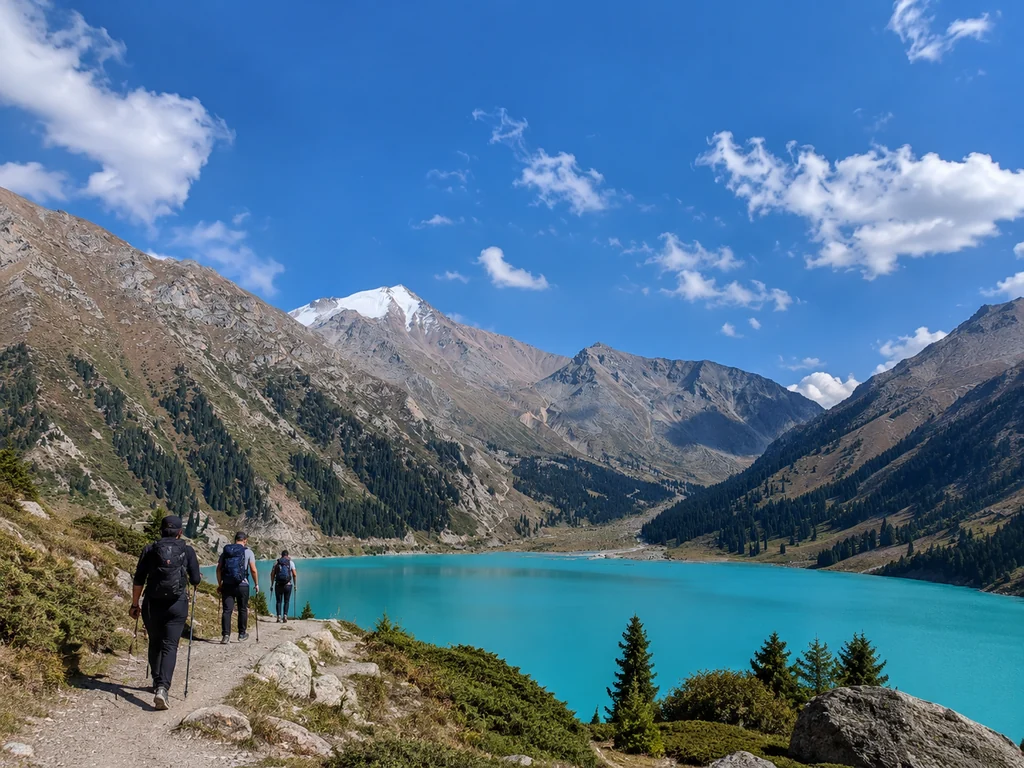
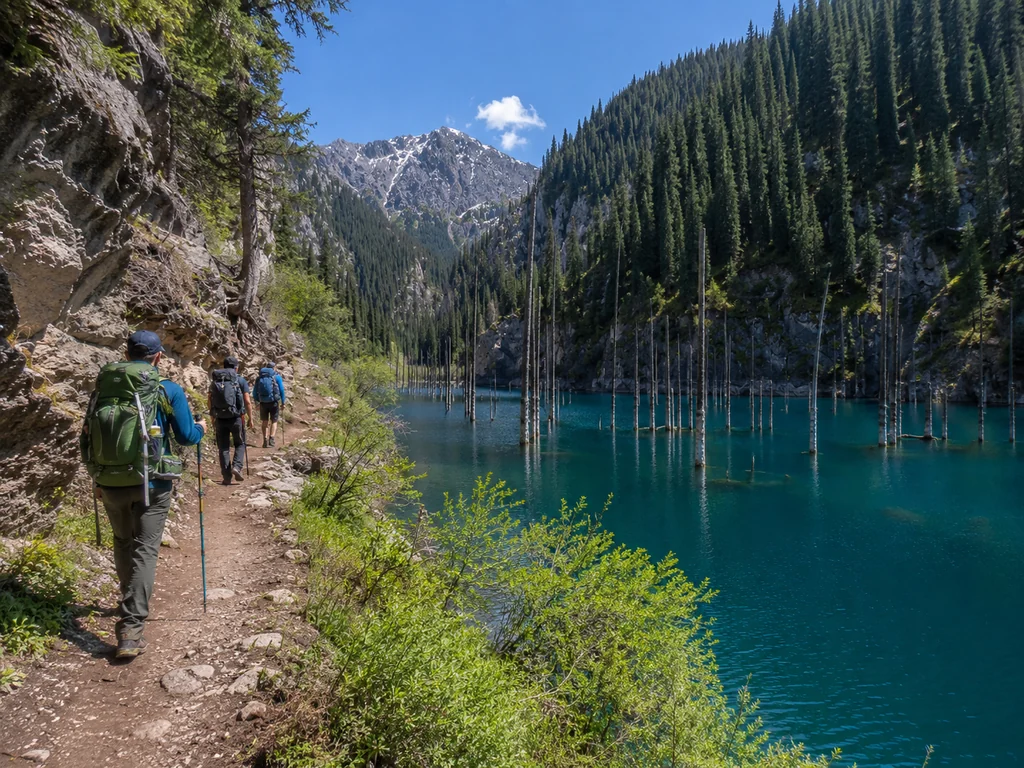
To Lower Shavly Lake — 8 km one way from the Shavly tract, elevation gain of about 400 m, travel time 3–4 hours. This is the largest lake in the group (1.5 km long) with characteristic turquoise water due to glacial silt. The trail runs along the Shavly River through cedar forest without steep climbs — only a gradual ascent. In the one-day hike by toor, the group leaves at 6:00 AM, walks to the lake with two breaks, has lunch on the shore, and returns by 6:00 PM. The one-day route is suitable for beginners with no hiking experience — the trail is well-trodden, and you can have a hot lunch break at the lake.
Multi-Day Route: Middle, Upper Lakes, and Oroy Pass
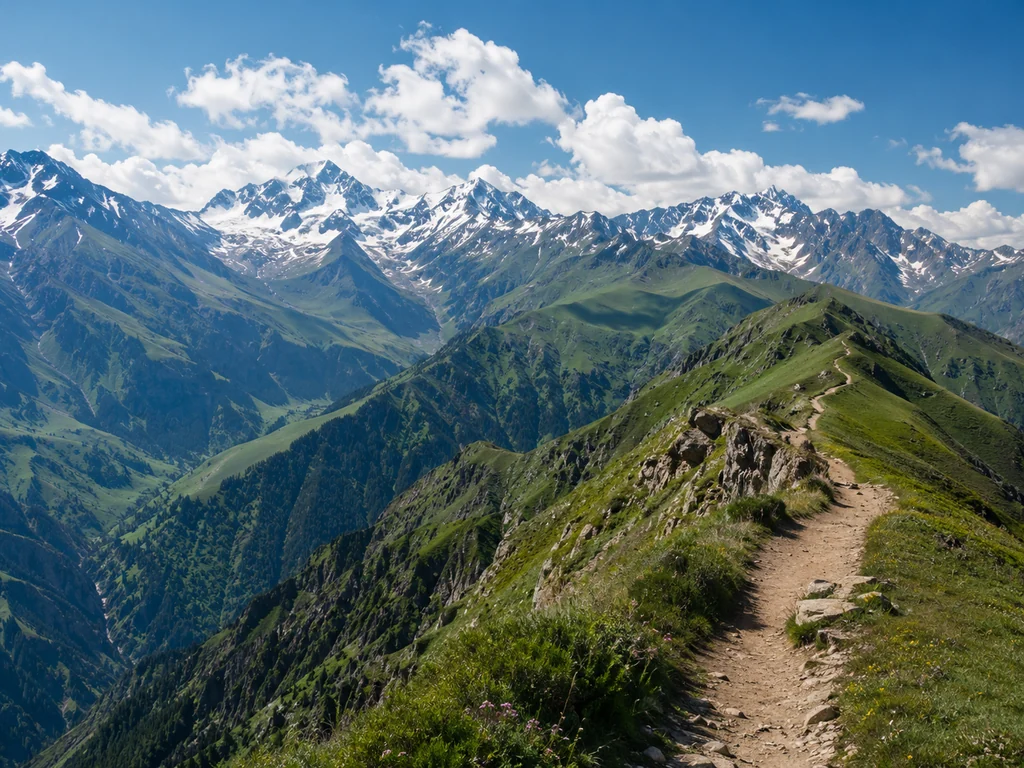
In the multi-day hike by toor, the group passes three key points: Middle Shavly Lake (2400 m), Upper Shavly Lake (2700 m), and Oroy Pass (3000 m). Total elevation gain — 1200 m, route length — up to 60 km over 7–10 days. Middle Lake is the most photographed spot: water of a rich turquoise color, shores covered with rhododendrons blooming in July. At Upper Lake, tourists set up camp for the night — from here you can see the Ak-Tru glacier and a panorama of the ridge. Oroy Pass is the most difficult part of the route: the climb over kurum (rock scree) takes 2–3 hours, but from the summit, a panorama of the Ak-Tru glacier and the entire Severo-Chuysky Ridge opens up.
Difficulty Levels: Which Route to Choose for Beginners and Which for Experienced
Toor classifies routes on a scale from 1 (easy) to 4 (requires mountain hiking experience) — this helps to choose a trip according to physical fitness.
| Level | Description | Suitable For | Example Route |
|---|
| 1 (easy) | Flat trail, up to 10 km, no backpack | Beginners, families with children 12+ | One-day to Lower Lake |
| 2 (moderate) | Elevation gain up to 600 m, backpack 5–8 kg | Tourists with basic fitness | 3-day to Middle Lake |
| 3 (above average) | Elevation gain up to 1000 m, backpack 10–12 kg | Experienced tourists | 7-day with Oroy Pass |
| 4 (difficult) | Elevation gain >1200 m, full backpack, kurum | Tourists with mountain hiking experience | 10-day + Ak-Tru glacier |
Equipment for the Hike: What Toor Provides and What to Bring Yourself
The main fear of a beginner is “I don't have equipment, I'm not ready.” Let's break down what is provided for free in the tour and what is really worth buying or borrowing before the route.
A hike to Shavly Lakes requires minimal personal equipment — the rest is provided by the organizer.
Equipment That Toor Provides in the Tour
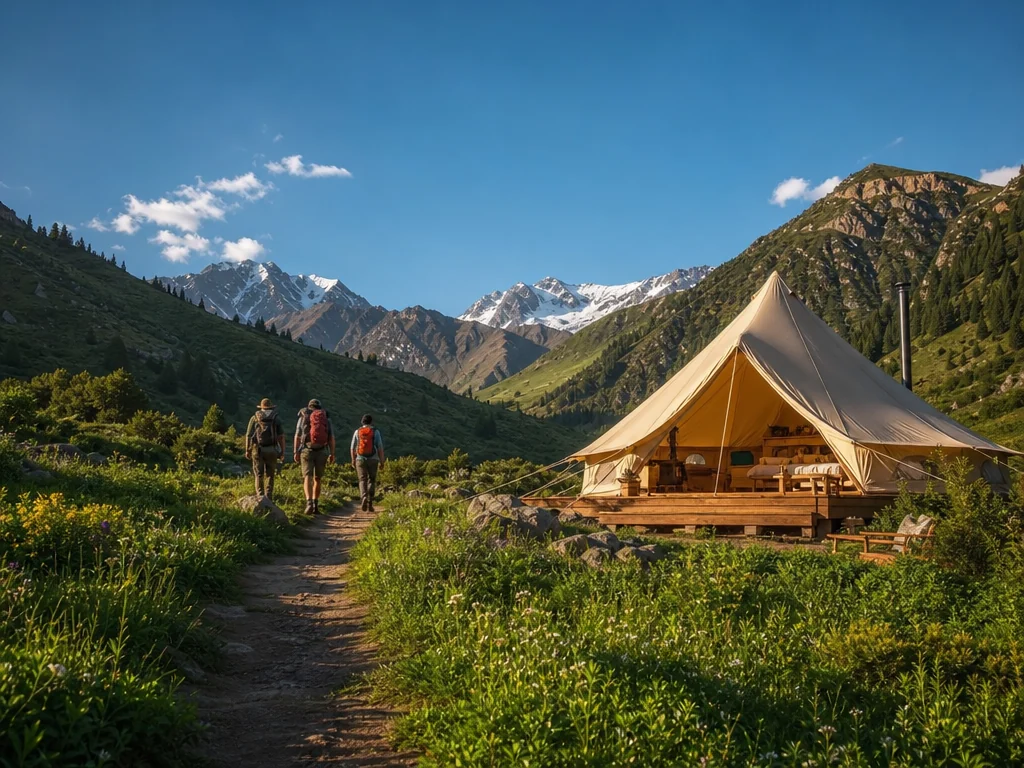
- Tent: We provide two- to three-person tents with rainflies — for a group of 4–6 people, two tents are set up, each for 2 people.
- Sleeping bag: Sleeping bags with comfort down to +5°C — in July-August at an altitude of 1800–2500 m this is enough, but in September it's better to bring your own with comfort at 0°C.
- Mat and stove: A foam camping mat (karemat) and a gas stove with a 220 g canister — one stove is enough to cook dinner and breakfast for 4 people.
- Trekking poles: Telescopic aluminum poles — on the climb to Oroy Pass (700 m elevation gain), they reduce knee load by 30–40%.
- Group first aid kit: Includes a tourniquet, bandages, plaster, painkiller, antihistamine, sorbents — the guide carries it in their backpack; the tourist assembles their own personal first aid kit.
What to Bring Yourself: Personal Checklist
- Trekking boots: Only boots with a stiff sole and high ankle support — sneakers do not fix the foot on rocky trails and get wet in 10 minutes on wet grass.
- Waterproof jacket: A membrane jacket (separate raincoat is bad) — on Oroy Pass, wind reaches 15 m/s, and a regular raincoat tears in an hour.
- Thermal underwear and fleece: Thermal underwear wicks moisture, fleece warms — synthetic T-shirts and pants dry overnight, while cotton stays wet until morning.
- Spare socks: 3–4 pairs of trekking socks made of merino or synthetic — on the second day of the hike, wet socks are the main cause of blisters and ruined mood.
- Headlamp: With spare batteries — in the mountains it gets dark suddenly, and already at 8:00 PM it's impossible to set up a tent or get to the toilet without a light.
Horse Rental for Gear Transport: When It's Needed
We offer horse rental for gear transport on multi-day hikes of difficulty 3–4 — a horse carries tents, food, and participants' personal belongings up to 80 kg total, while the group walks light with backpacks of 3–5 kg. Rental is paid separately (about 12,000 KZT per horse per day) but split among the group — with 8 participants, each pays 1,500 KZT per day. The route with a horse follows the same trail from the Shavly tract to Lower Shavly Lake (8 km one way), but without gear, it takes 2.5–3 hours instead of 4–5. The horse is especially helpful on the climb to Oroy Pass (altitude 2400–3000 m), where every kilogram in the backpack feels twice as heavy. Horse rental makes the hike physically accessible even for tourists without special training — the main thing is comfortable boots and a desire to walk.
When to Go to Shavly Lakes: Weather, Seasons, and Turquoise Water
Shavly Lakes are accessible to tourists from June to September, but each month differs in weather, blooming, and water color. Let's break down when it's best to go for the turquoise water and when for solitude and mushrooms.
An excursion to Shavly Lakes is possible from June to September, but the best season is July and August.
Weather at Shavly Lakes by Month
| Month | Daytime (°C) | Nighttime (°C) | Precipitation | Water Color | Features |
|---|
| June | +10..+15 | +2..+5 | Moderate | Light turquoise | Rhododendron blooming, few tourists |
| July | +15..+20 | +5..+10 | Frequent | Bright turquoise | Peak season, maximum water flow |
| August | +15..+20 | +5..+10 | Frequent | Turquoise | Mushrooms (butter mushrooms, birch boletes) |
| September | +10..+15 | 0..+5 | Rare | Pale turquoise | Golden autumn, few tourists |
When to Go to See the Turquoise Water
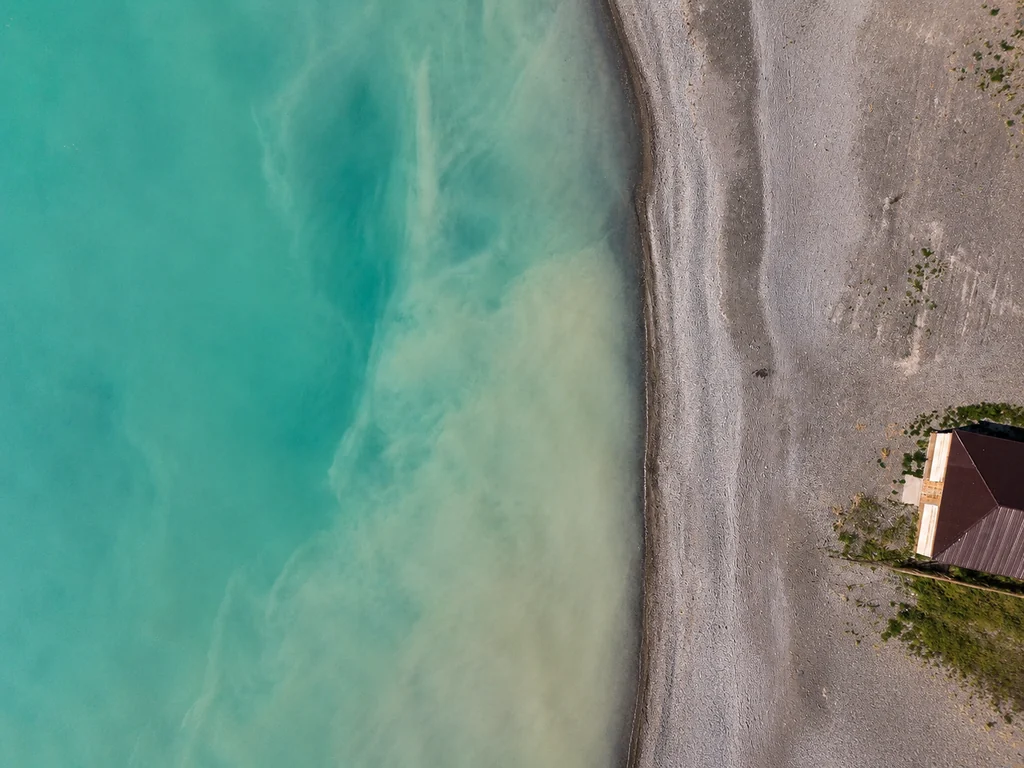
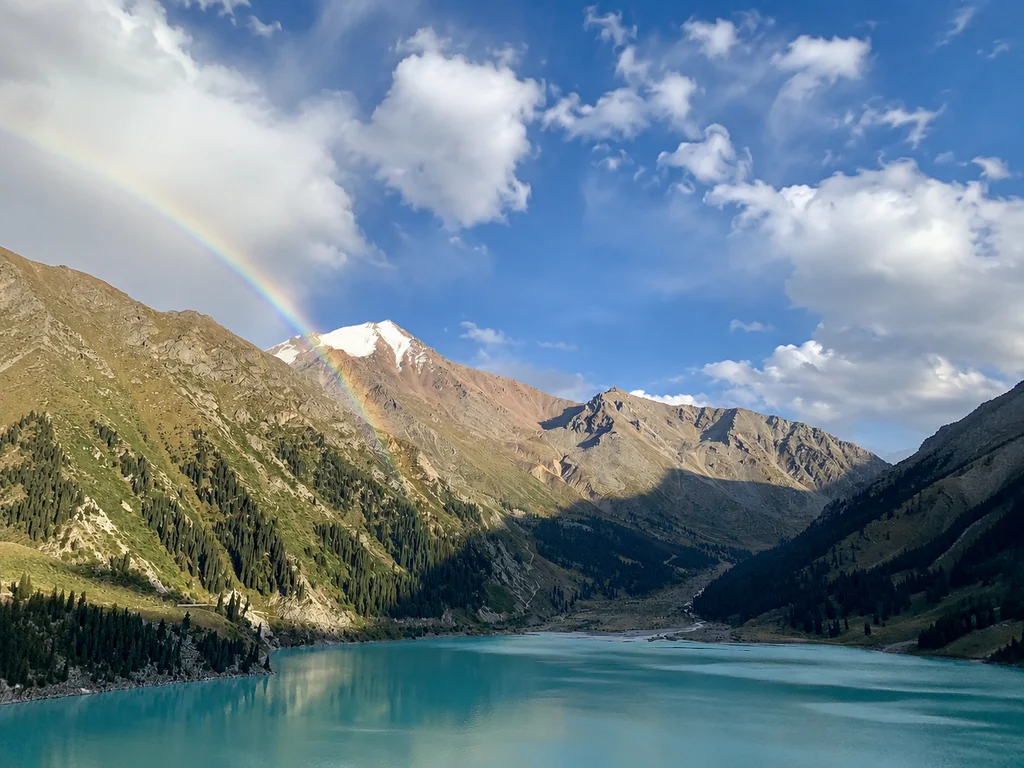
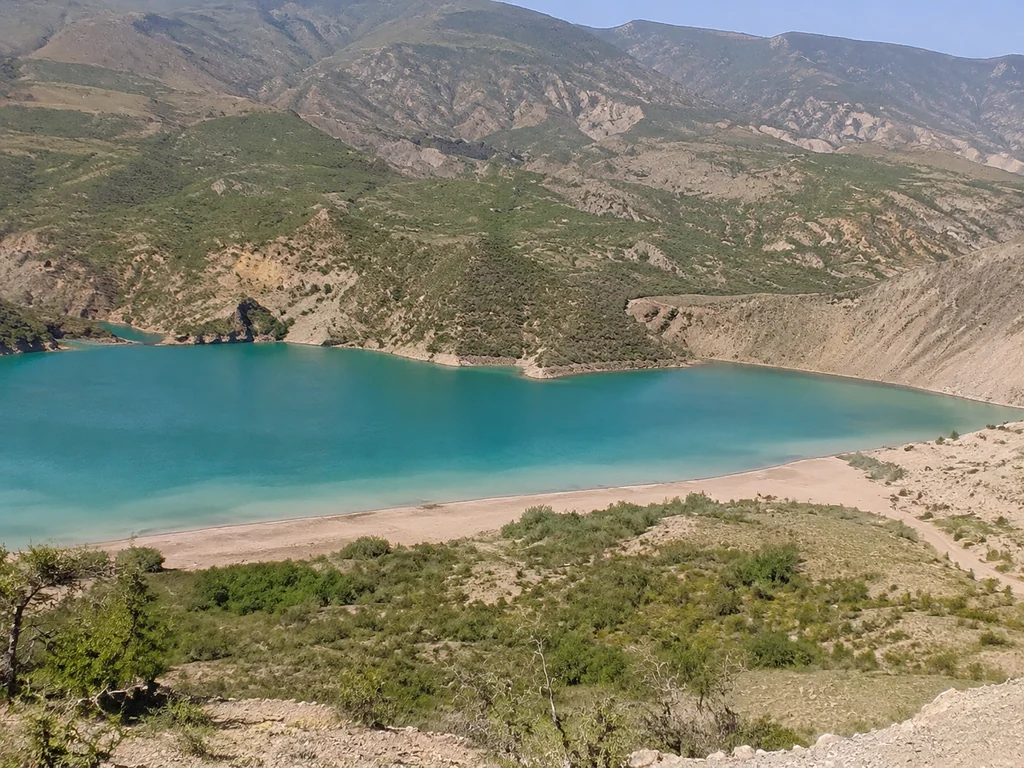
The brightest turquoise color of the water at Shavly Lakes is from mid-July to the end of August, when glaciers are actively melting and saturating the water with glacial silt (suspension of fine rock particles). The melting of the Ak-Tru glacier and snowfields in the cirque of Lower Shavly Lake begins at the end of June, peaks in July, and subsides by the end of August. It is the suspension — particles 1–10 microns in size — that scatters sunlight in the blue spectrum, giving that very “postcard” hue that photographers seek. In June, the water only starts to become turbid, and in September it already lightens, so if the main goal is exactly that “postcard” turquoise color, plan the hike for July–August.
Rhododendron Blooming and Alpine Meadows
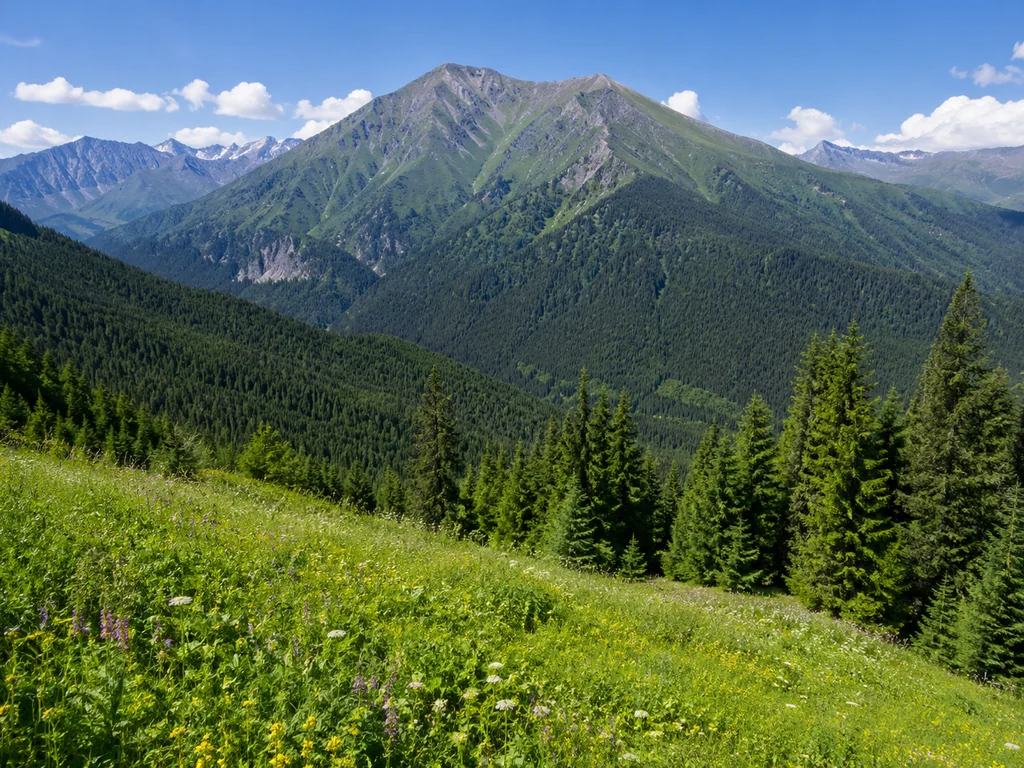
At the end of June – beginning of July, rhododendrons (maralnik) bloom en masse on the alpine meadows around Shavly Lakes, creating a continuous pink-violet carpet at an altitude of 2000–2500 m. On the approaches to Lower Shavly Lake through cedar forests and clearings, rhododendron blooms especially densely — bushes up to one and a half meters high form a solid wall along the trail. In early July, they are joined by yellow globeflowers (Asian globeflower) and blue gentians on the alpine meadows near Oroy Pass. The blooming lasts only 2–3 weeks, and this is the best time for photographers: the contrast of turquoise water, green cedars, and pink rhododendrons gives unique shots that are not repeated in other months.
Safety in the Mountains: Acclimatization, Weather, and Wild Animals
The Severo-Chuysky Ridge is beautiful but requires preparation. Let's break down three key risks of a hike to Shavly Lakes — altitude, wild animals, and emergency situations — and how they are minimized in practice.
Acclimatization at Altitudes 1800–3000 m
We build routes with acclimatization in mind: the first day — ascent to 1800–2000 m with an overnight stay, the second — climb to 2400 m, and only on the third day — Oroy Pass at 3000 m. This stepwise schedule gives the body time to adapt to reduced oxygen: at 2500 m, its concentration drops by 25% relative to sea level, and at 3000 m — already by 30%, and with a sharp ascent from 1800 to 3000 m in one day, symptoms of mountain sickness — throbbing headache, nausea, shortness of breath with minimal exertion — occur in 40–50% of unprepared tourists. The guide measures pulse daily and asks about each participant's well-being — if symptoms appear, the group takes an extra rest day or descends, rather than continuing the ascent according to schedule, which prevents the development of pulmonary edema.
What to Do When Meeting a Bear and Other Animals
- Bear: Do not run, scream, or look into the eyes — slowly back away without turning your back, let the animal leave on its own.
- Maral (deer): Do not approach during the mating season (September) — males are aggressive and attack with antlers when defending territory.
- Marmots and golden eagles: Do not feed by hand — marmots may carry rabies, and golden eagles guard nests on cliffs and dive at people without warning.
- Guide's signaling devices: Flare, whistle, and radio are always with the guide, and food at campsites is stored in sealed containers away from tents — this minimizes the risk of attracting animals.
Insurance and Evacuation: What the Trip Covers
Participant insurance is included in the cost of every toor tour — it covers accidents, injuries, and emergency evacuation from the route, including helicopter call if necessary. The standard policy covers fractures, dislocations, heat strokes, animal and snake bites, poisoning — everything that can happen in a remote hike 100 km from the nearest hospital. The arrival time of rescuers by helicopter to the Shavly tract is about 40 minutes from Gorno-Altaysk in clear weather, but in fog or rain, the flight is impossible until visibility improves. Unlike an independent hike, where insurance often does not cover mountain routes above 2500 m, in a toor tour you are insured from the first step — this is stated in the contract and requires no additional payment.
Common Mistakes of Beginners: Overpacking, Footwear, and Underestimating Altitude
In five years of working as a guide, I have seen the same mistakes among beginners — from an overloaded backpack to sneakers instead of boots. I have compiled the top 5 so that you do not repeat them. Trekking to Shavly Lakes requires proper footwear and a light backpack — this is the foundation of a comfortable hike.
Overpacking: What You Really Need vs. Extra Weight
- Optimal weight: 8–12 kg for men and 6–9 kg for women — anything heavier turns trekking into torture and increases the risk of knee and back injuries.
- Most common “extra” items: A second pair of jeans, a hardcover book, a bath towel, a cosmetic bag, and spare shoes — each item adds 300–800 g, and together they add +3–5 kg.
- The first-day principle: If you haven't used an item on the first day of the hike, you won't need it on the rest — this rule cuts out 90% of excess weight.
- What the organizer provides: Tents, sleeping bags, mats, and stoves weigh 4–6 kg per group — you don't have to carry them; only personal gear is needed.
Inappropriate Footwear — the Main Reason for Dropping Out of the Route
Trekking boots with a high ankle and stiff sole are the only correct footwear for Shavly Lakes; sneakers, trainers, and especially city shoes guarantee blisters, wet feet, and the risk of sprains on kurum. The route features three types of surfaces: large kurum (scree on the approaches to Oroy Pass), wet areas near the lakes, and steep traverses with a slope of 20–30 degrees. Sneakers with Gore-Tex membrane cost 40–80 thousand KZT but do not fix the ankle — on a rocky trail this leads to ankle twisting, and on a descent from 3000 m such an injury means evacuation. The group first aid kit has elastic bandages and painkillers, but it's better not to need them — choose boots with a stiff heel and Vibram sole; they work on any scree.
Underestimating Altitude and Temperature Differences
At an altitude of 2500–3000 m, even in July, the temperature can drop to +2..+5°C at night, and on Oroy Pass, wind increases the feeling of cold by another 5–7°C — a warm jacket is mandatory in any month. Beginners often think: since it's +30°C in Almaty, it will be the same in the mountains — but at 3000 m, the sun burns, and in the shade it's instantly cold, so clothing should be layered: thermal underwear, fleece, windbreaker. The daily elevation gain — from 1800 to 3000 m in 5–7 hours of walking — puts stress on the heart and lungs that you don't notice until you stop; headache and shortness of breath are the first signs that you are walking too fast. Due to the dry mountain air, the temperature drops sharply at night — if your sleeping bag comfort is +5°C and it's +2°C outside, you will be cold, so check the sleeping bag's comfort temperature before the hike.
How to Get to Shavly Lakes from Almaty: Transfer and Road
The road to Shavly Lakes is part of the adventure. We tell you how the transfer is organized, how long the journey takes, and where the group stops for the night.
Transfer from Almaty to the Shavly Tract: Route and Time
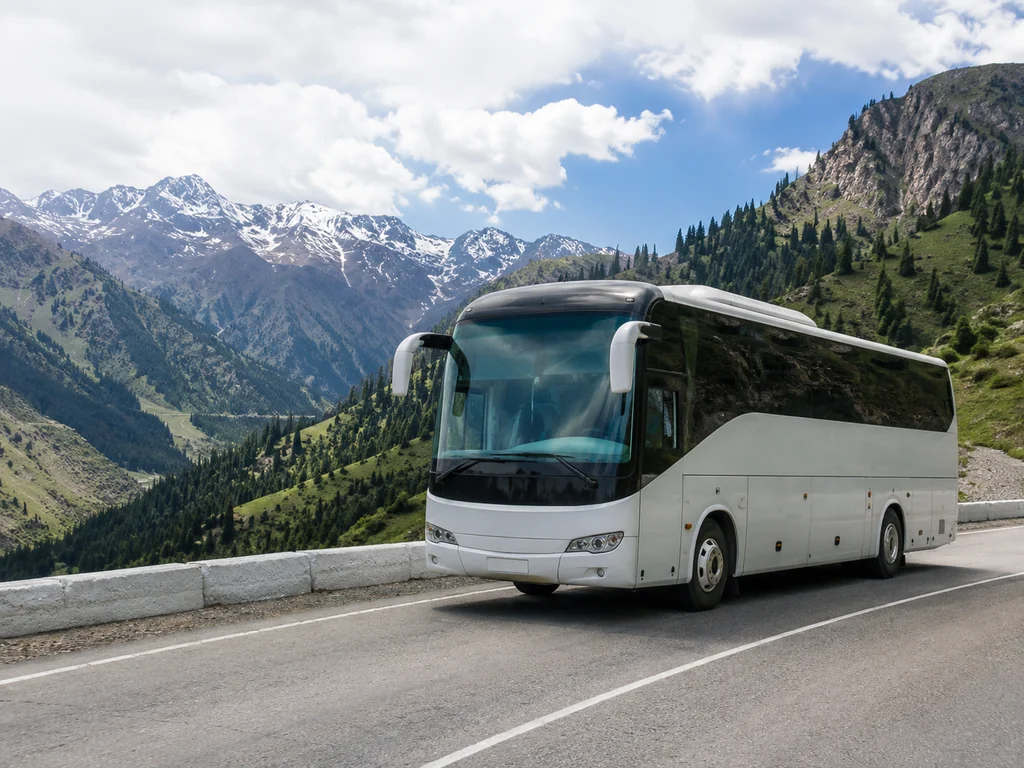
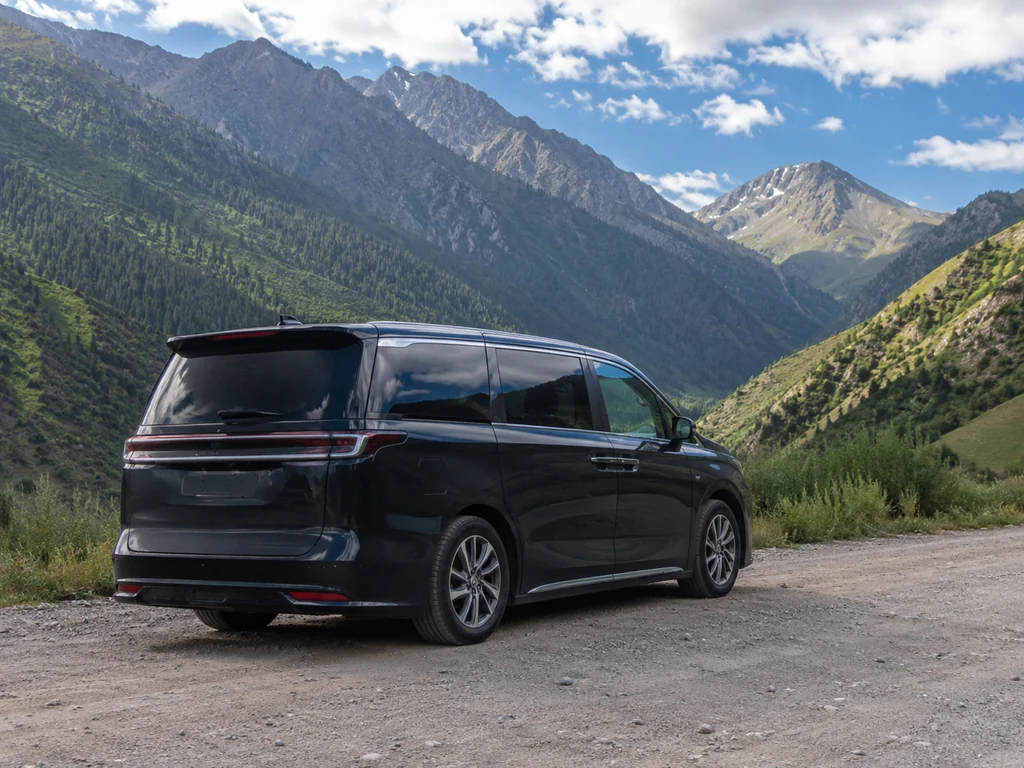
We organize transfer from the city to the Shavly tract — about 300 km, 6 hours by minibus with stops for lunch and photo sessions. The route goes along the A-7 highway through Ust-Kamenogorsk and Ridder, then north to the village of Cheremshanka on a local road with variable asphalt quality. The last 40 km is a dirt road along the Shavlinka River, which after rains turns into a muddy mess with ruts up to 30 cm deep; a regular car risks bottoming out or tearing the underbody protection. Transfer drivers know every ford and detour — they use UAZ Patriot or Toyota Hiace with differential locks. If you decide to go in your own car, allow an extra hour for the last kilometers and bring a shovel and tow rope — there is no cell reception on the dirt road, and help is nowhere to be found.
Can You Drive Your Own Car?
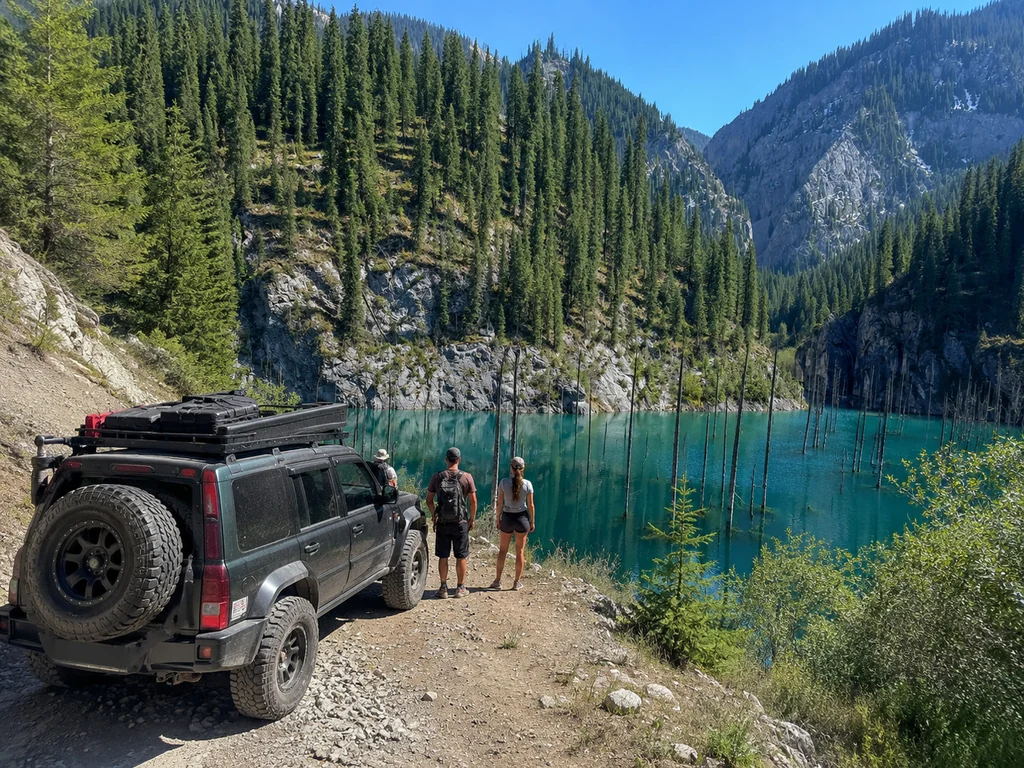
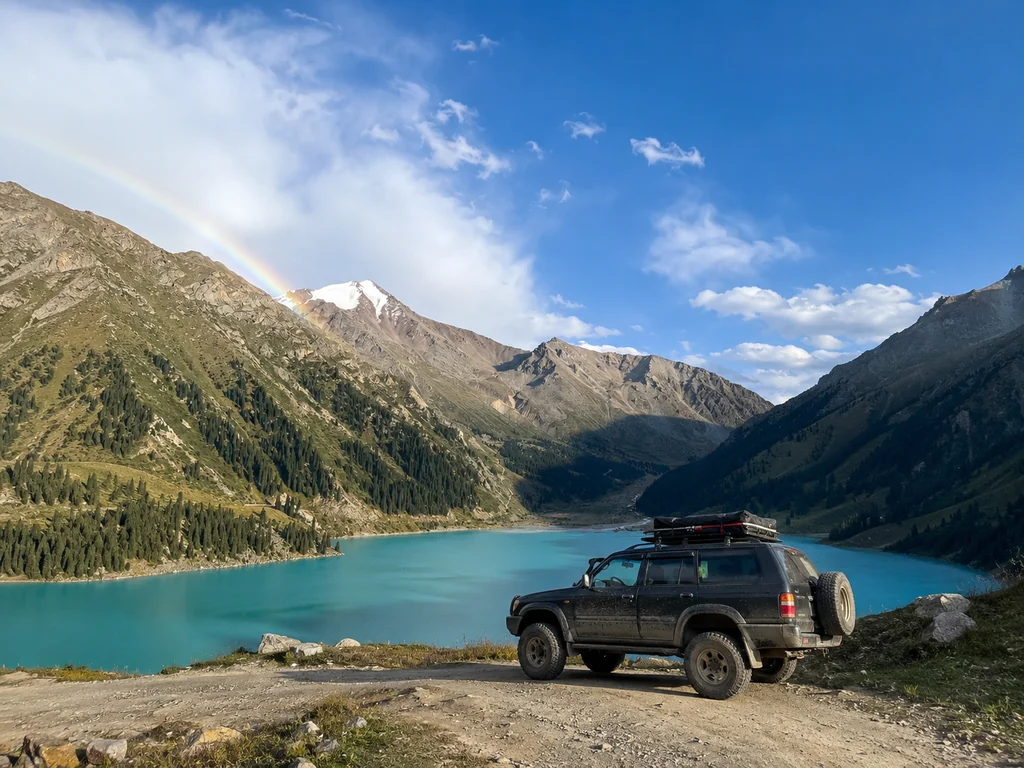
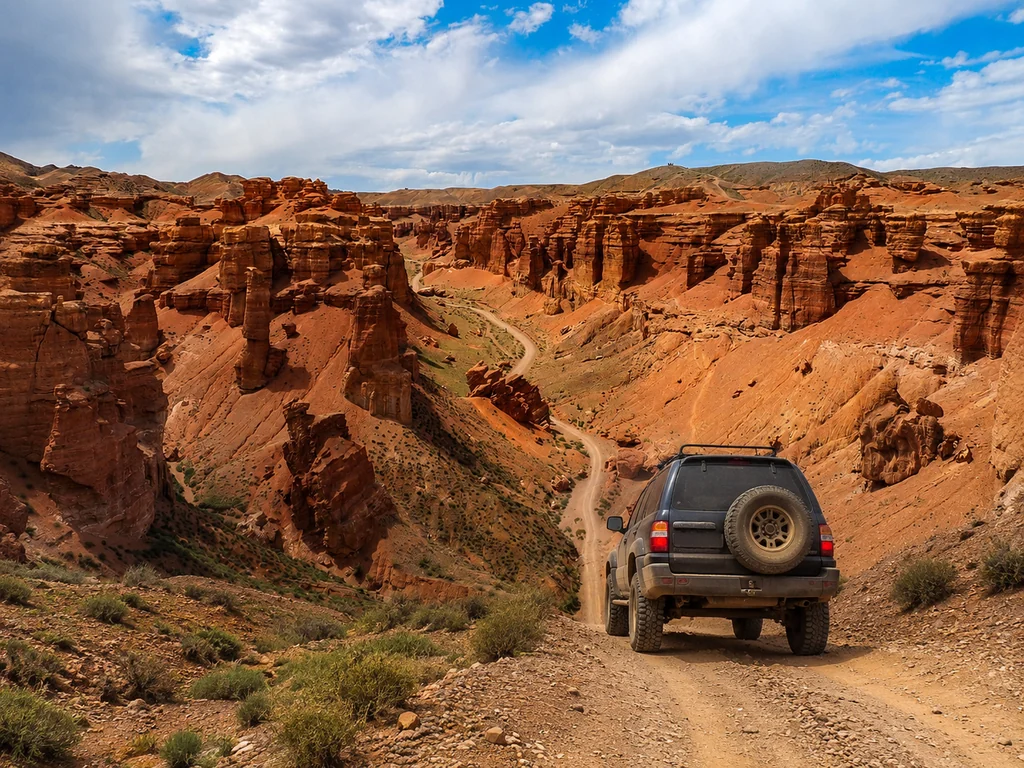
You can drive to the Shavly tract in a personal vehicle with high ground clearance (preferably 4WD), but the last 40 km of dirt road requires caution, especially after rains. Almaty residents in Toyota Land Cruiser or Mitsubishi Pajero usually pass without problems — they have 200+ mm ground clearance and low range, while front-wheel-drive crossovers like Kia Sportage have a 60–70% risk of getting stuck in mud after a downpour. Fuel costs round trip — about 15,000–20,000 KZT at 205 KZT per liter of AI-95, plus suspension wear on the dirt road and tire depreciation. The main risk is a breakdown in an area without communication: the nearest gas station is in Cheremshanka, and a tow truck from Almaty will cost 80,000–100,000 KZT. In an organized trip, these risks are borne by the company — the group travels in a prepared vehicle with a driver who knows the road and has a satellite phone.
Overnight Stops Along the Road and Logistics of Multi-Day Tours
In our multi-day hikes (from 3 days), the first overnight stay is already on the route, in tents at Lower Shavly Lake; the transfer departs at 6:00 AM to be at the start by 2:00–3:00 PM. During the 6-hour journey, the group has time to have lunch in Ridder (cafe “Altai” — beshbarmak for 2,500 KZT) and make a stop at the viewpoint at the Ust-Kamenogorsk HPP dam. For 7–10-day trips, the company pre-books campsites in the forestry area — this guarantees that the group won't have to look for a clearing for tents in the dark or violate the reserve regime. On the second day — a crossing to Middle Shavly Lake (6 km, 400 m elevation gain), on the third — a radial exit to the Ak-Tru glacier. Equipment is carried by a pack horse hired from local shepherds for 5,000 KZT per day — tourists walk light, with one backpack of 5–7 kg.
Conclusion
Five main takeaways about the route — from price and season to preparation level and alternatives for beginners.
Key Takeaways
- Cost: A trip to Shavly Lakes costs from 45,000 KZT per person for 3 days — this includes transfer, meals, guide, and equipment rental.
- Difficulty: The route has moderate difficulty (category 2-3), but for beginners there are lighter programs with less mileage and more rest days.
- Season: The best time to go is July–August, when the water in the lakes turns turquoise and the weather is most stable.
- Preparation: The minimum set of equipment includes trekking boots, a warm jacket, a raincoat, a sleeping bag with a comfort rating of -5°C, and a first aid kit.
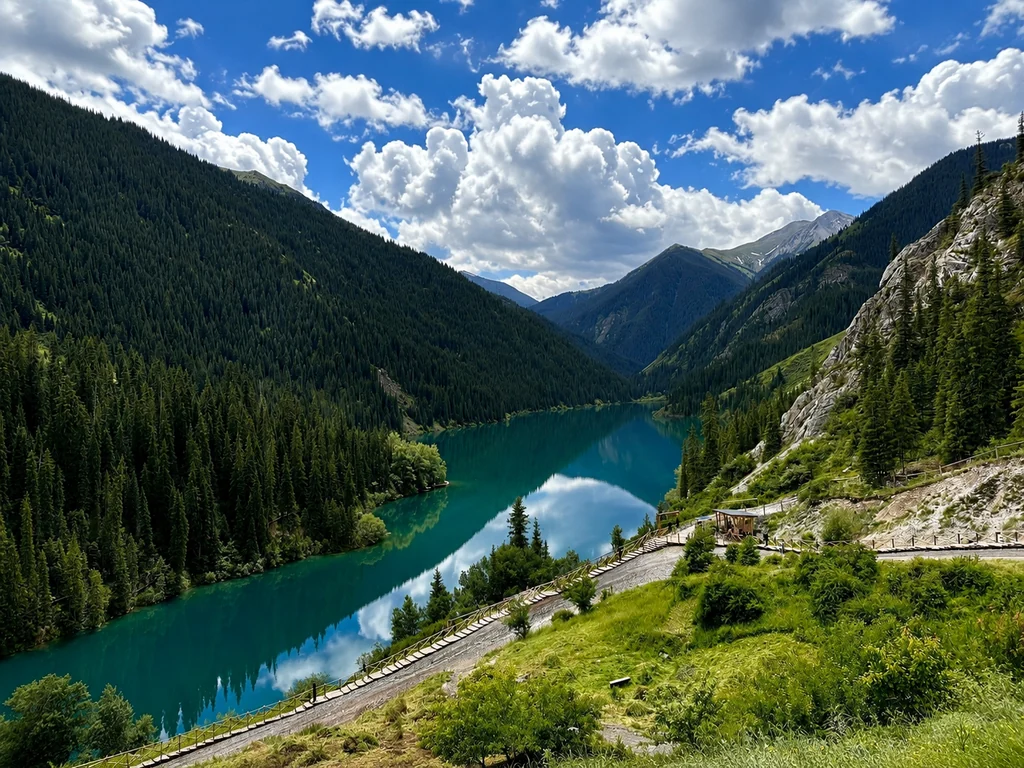
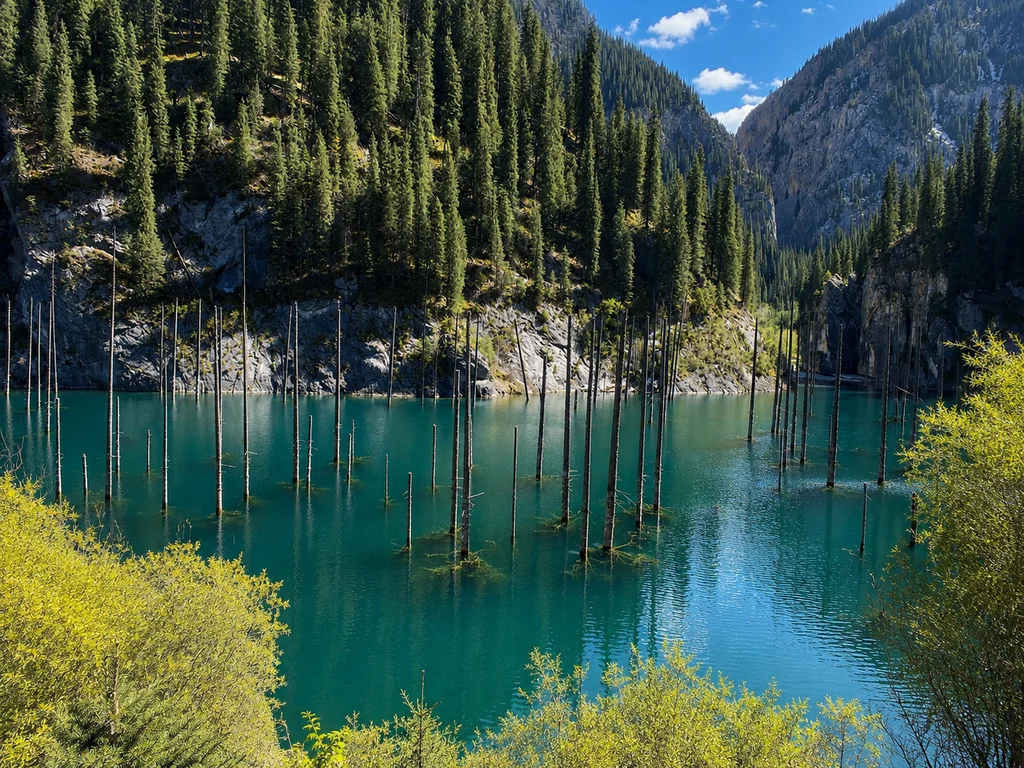
- Alternatives: If Shavly Lakes seem too challenging, consider Kolsay Lakes or Turgen Gorge — they are less demanding on physical fitness.










 Weekend Top