Blog
Assy Plateau: Complete Guide from Almaty — How to Get There, What to See, and What to Bring
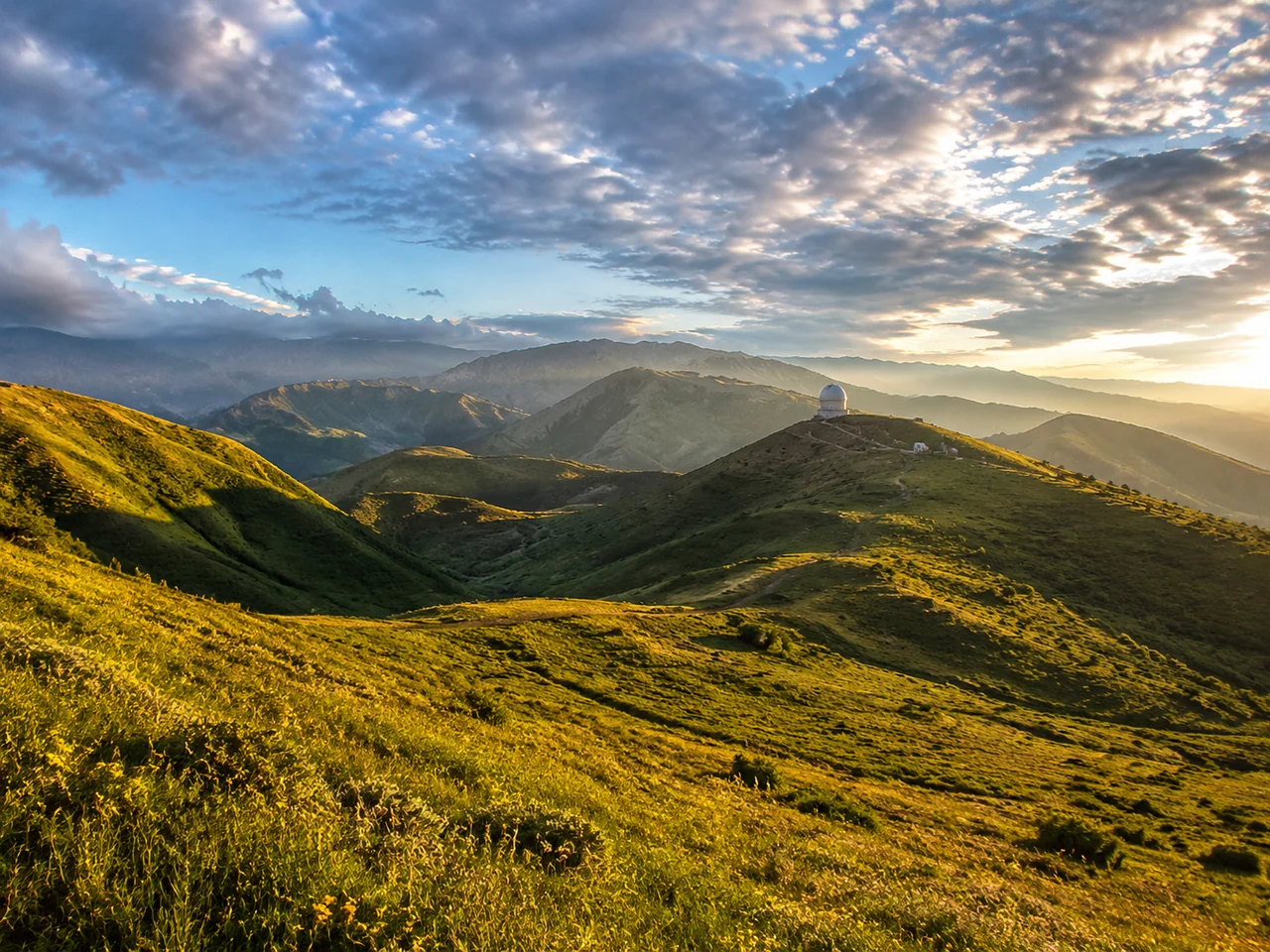
The Assy Plateau is a high-altitude plateau in the Zailiysky Alatau at an elevation of 2800–3200 m, 150 km from Almaty. People come here for the panorama of the Tien Shan, alpine meadows, and the Assy-Turgen Observatory. The best season is June–September, and the drive takes 2.5–3 hours. At toor, we organize tours with a guide and transfer from 15,000 KZT per person.
Assy Plateau: What This Place Is and Why It's Unique
The Assy Plateau is a high-altitude plain in the Zailiysky Alatau that is rarely included in standard tourist routes. But it is here that a panorama opens up, worth traveling 150 km from Almaty for.
Why the Assy Plateau Is Called the "Roof of the Zailiysky Alatau"
The Assy Plateau is a high-altitude plain in the Zailiysky Alatau (part of the Tien Shan system) at an elevation of 2800–3200 m, called the "roof" because of its panoramic view of the ridge. From the site, you can see a chain of three-thousand-meter peaks: Talgar Peak (4973 m), Korzhenevsky Peak, and Aktau Peak — on a clear day, they seem within arm's reach. Unlike the neighboring peaks, the plain itself is not a rocky summit but a gentle area with alpine meadows and scattered stones. Above 3000 meters, there are no shrubs — only grass, lichens, and snowfields that last until July. In my opinion, it is the contrast between the accessibility of the altitude and the wild high-mountain landscape that creates the feeling people come to Assy for. Unlike many mountain points, this plain is not a peak but a flat area, so it is comfortable to walk here without mountaineering training.
What Makes the Assy Plateau Unique Among Mountain Locations Near Almaty
The Assy Plateau is unique in its combination of accessibility (150 km from the city, 2.5–3 hours by car) and altitude — here you have alpine meadows, an observatory, and a panorama of the Zailiysky Alatau. For comparison: you can reach Furmanov Peak (1700 m) in 40 minutes, but it lacks such scale, and the Turgen Gorge (1600 m) takes the same time but is half the altitude. Assy offers 3000 meters without a serious climb — the car drives directly onto the plain. The Assy-Turgen Observatory is located here — one of the few astronomical facilities in Kazakhstan open to visitors. There are no permanent settlements or infrastructure in this area — it is wild nature, so the trip needs to be planned in advance, especially if staying overnight.
Where Is the Assy Plateau Located and What Is Its Elevation
The exact location and elevation of this area are key parameters that determine the logistics of the trip and the level of preparation. Let's break down the coordinates and elevation changes.
Coordinates and Distance from Almaty
The Assy Plateau is located 150 km east of Almaty, with the nearest settlement being the village of Turgen (25 km from the plateau). The drive by car takes 2.5–3 hours. The route goes along the Alatau Highway to the village of Turgen, then along a dirt road through the Turgen Gorge past the Medvezhy Waterfall and further south to the plateau itself. After rains, the dirt road becomes difficult for regular sedans — an SUV with a ground clearance of at least 200 mm is needed. The asphalt ends right after Turgen, followed by 18 kilometers of gravel and switchbacks. The path passes through the Turgen Gorge — along the way, you can stop in the village of Turgen to grab a bite or replenish water supplies.
Elevation of the Assy Plateau: From 2800 to 3200 Meters
The elevation of this area varies from 2800 to 3200 m above sea level — this is high altitude, where even healthy people experience shortness of breath when walking. The main part is a gentle plain at an elevation of 2900–3000 m, where the Assy-Turgen Observatory (2750 m) is located. To the south, the area rises to the Kokzhota Pass (3200 m), from which a panorama of the Zailiysky Alatau glaciers opens up — Talgar Peak (4979 m) and Komsomol Peak (4300 m). The elevation difference on the plateau itself is about 400 m, so there are routes of varying difficulty: from easy walks near the observatory to climbs to the upper points. At elevations above 3000 m, blood oxygen saturation drops to 88–92% — for comparison, at sea level, the norm is 95–100%, so it is better to spend the first half hour after arrival sitting, without sudden movements.
When to Go to the Assy Plateau: Seasons and Weather by Month
The weather in this high-altitude area changes dramatically by season — from summer warmth to winter snowfalls. We'll tell you when it's best to plan your trip and what to expect from each month.
Best Season: June–September
The best season for a trip to the Assy Plateau is from June to September, when daytime temperatures are +15…+20°C and the road is free of snow. In July and August, the green meadows are dotted with edelweiss, and the air warms up the most — this is the peak of tourist flow with the most comfortable conditions for hiking routes to the foot of Sovetov Peak. In June, remnants of snow may still lie at the upper points above 2900 m — at the Kok-Zhaylau Pass, caution is needed on screes. In September, daytime temperatures drop to +10…+15°C, and for photographers, this is an ideal moment: the low sun gives long shadows and golden light, and the grass on the meadows takes on ochre hues — dramatic shots without crowds of tourists.
Weather by Month: Temperature Table
| Month | Daytime Temperature | Nighttime Temperature | Features |
|---|---|---|---|
| June | +15…+18°C | +5…+8°C | Possible snow at upper points |
| July | +18…+20°C | +8…+10°C | Peak season, green meadows |
| August | +15…+20°C | +5…+10°C | Warm, possible thunderstorms |
| September | +10…+15°C | +2…+5°C | Cool, fewer tourists |
| October–May | -5…-15°C | -10…-20°C | Snowfalls, road closed |
Even in July, nighttime temperatures drop to +5…+10°C — warm clothing is essential in any season.
Is It Worth Going in September
In September, you can still head to this highland: daytime temperatures are +10…+15°C, but be sure to bring a warm jacket and wind protection — the wind at 3000 m amplifies the feeling of cold by 5–7°C. The road from the city to the plateau is passable, snowfall only begins at the end of the month, and there are noticeably fewer tourists than in July. September is the best time for photographers: the low sun casts long shadows and golden light, and the grass in the meadows takes on ochre hues.
How to get there from Almaty: car, taxi, tour
You can reach the Assy Plateau from Almaty in three ways: by your own car, by taxi, or as part of an organized tour. Let's break down the pros and cons of each option.
Route Almaty — Turgen — Assy Plateau: what you need to know about the road
The route from Almaty to the Assy Plateau goes along the highway to the village of Turgen — 125 km of asphalt in good condition, then 25 km of dirt road with switchbacks and steep turns up to the plateau, total time — 2.5–3 hours. The paved section to Turgen is passable in any car, but after the turn, a rocky surface begins with an elevation gain from 1500 m to 2800 m — on some stretches, the road narrows to one lane with a cliff. After heavy rains, which occur every 3–5 days in July-August, the soil turns into a muddy mess — you can only drive with all-wheel drive and a ground clearance of at least 180 mm. Before setting out, check the weather forecast for the Assy Plateau: on a dry day, the dirt road is firm and passable, but after a downpour, there's a risk of getting stuck or damaging the suspension on rocky outcrops.
By your own car: will a regular car make it
You can reach the Assy Plateau in a regular car in dry weather, but after rains or in the off-season, it's better to take a car with high ground clearance — the dirt road is broken in places, and a front-wheel-drive sedan with 140 mm clearance risks bottoming out on the last 3 km before the plateau. Crossover SUVs like the Kia Sportage or Hyundai Tucson with 180 mm clearance have no issues — they handle the entire road without risk, but fuel consumption on the dirt road climb increases to 15–18 liters per 100 km. If you're driving your own car, check the spare tire and jack: punctures from sharp stones are common on the dirt road, and it's best to fill up the tank in Almaty — there are no gas stations along the route.
Taxi from Almaty: prices and specifics
A taxi to the Assy Plateau costs from 25,000 KZT one way — in season (July–August), the price for an SUV reaches 35,000 KZT, and through aggregators like Yandex Go, drivers in sedans often show up and refuse to drive on the dirt road. It's better to order a taxi through specialized services marked "mountain route" or arrange with private drivers at Almaty bus stations — they know the road and have experience with mountain trips. Agree with the driver on the return time in advance: there's no mobile signal from some operators on the plateau, and you won't be able to call a taxi on the spot.
Organized tour with toor: what's included and how much it costs
A guided tour to the Assy Plateau with toor.kz starts from 15,000 KZT per person and includes transfer from Almaty, guide services, and route support in a comfortable minibus with air conditioning — the guide picks up the group from a hotel in the city center at 8 am. Along the route, the guide talks about the plateau's geology and alpine meadows, makes stops at viewpoints overlooking the Zailiysky Alatau panorama, and helps with acclimatization at 2800 m altitude. Before departure, check whether lunch is included in the tour cost — some programs don't include it, and you'll need to bring your own snack.
Assy-Turgen Observatory: what to see and how to get in
The Assy-Turgen Astrophysical Observatory is the main man-made attraction of this area. Let's tell you how to get there and what's inside.
Assy-Turgen Observatory: history and location
The Assy-Turgen Observatory is located at an altitude of 2750 m on the southern edge of the Assy Plateau — it's one of Kazakhstan's high-altitude astrophysical stations, operating since the 1980s. It was built during the Soviet period for observing solar activity and space objects: the site features several telescopes, including the AZT-14 horizontal solar telescope with a meter-long mirror. From the main group of buildings to the edge of the cliff is literally a hundred meters, and from this point, a panorama opens up over the Turgen River valley and the ridges of the Zailiysky Alatau. It's precisely this location on the border of the plateau and the steep slope that makes the observatory both a scientific facility and a viewing platform. In my opinion, even if you're indifferent to astronomy, it's worth coming up here for this view — on a clear day, peaks from the Kyrgyz Range to Chon-Kemin are visible.
How to get into the observatory: tours and overnight stays
You can get into the Assy-Turgen Observatory as part of a guided tour (included in the toor tour) or independently — entry to the grounds is free, but you're only allowed inside the building by arrangement. Independent travelers need to call the administration in advance (numbers are on the Astrophysical Institute's website) and arrange a time: staff give a tour of the telescopes and the pendulum laboratory if there are at least two or three interested people. The second option is to arrive in the evening and stay overnight: the observatory grounds have several guest rooms with basic amenities (no need to bring sleeping bags, bedding is provided). An overnight stay at the observatory costs from 10,000 KZT per person and includes a tour of the facility — this is the only option to sleep directly on the plateau with a roof over your head. In practice, I recommend booking the overnight stay two to three weeks before your trip: in July-August, spots fill up, especially on weekends.
Routes and spots on the plateau: where to go and what to see
The Assy Plateau is not just the observatory. There are hiking routes, alpine meadows, and panoramic viewpoints. Let's tell you where to go and what to see.
Alpine meadows and panorama of the Zailiysky Alatau
The main natural attraction of the Assa Plateau is its alpine meadows with diverse grasses, which bloom in July–August, and the panorama of the Zailiysky Alatau opening from the plateau's edge. At an altitude of 2800–2900 m in midsummer, edelweiss, gentians, and astragalus bloom here — the grass cover rises up to half a meter, and in calm weather, only the hum of bumblebees is heard. From the southern edge of the plateau, 200 meters from the Assy-Turgen Observatory, a view opens onto the Turgen River valley and the snowy peaks of the ridge — on a clear day, Talgar Peak (4973 m) and Aktau Peak are distinguishable. The best panoramic spot is the southern edge near the observatory: from here, the Turgen River valley and the snowy peaks of the ridge are visible, and photos turn out most impressive in the morning hours when the sun illuminates the peaks from the east.
Hiking routes on the plateau: from easy to moderate
On the Assa Plateau, there are several hiking routes: from a 30-minute walk to the observatory to a 2–3-hour trek through the meadows to the upper points (3200 m). The shortest is from the parking lot to the observatory: 400 m along a dirt road with an elevation gain of 50 m, suitable for any fitness level. The moderate route is a loop through the alpine meadows to the panoramic edge and back: 3 km, elevation gain of 150 m, takes 1–1.5 hours. The advanced route is an ascent to the upper point (3200 m) along the northwestern slope: 5 km one way, elevation gain of 300 m, requires 2–3 hours and good acclimatization. At toor, they plan the route considering the weather and the group's level: for beginners — a walk along the lower part, for the prepared — an ascent to panoramic points with an elevation gain of 200–300 m.
What to see on the Assa Plateau: table of key points
| Point | Altitude | Time from parking lot | What to see |
|---|---|---|---|
| Assy-Turgen Observatory | 2750 m | 10–15 min on foot | Astrophysical station, panorama of the valley |
| Alpine meadows | 2800–2900 m | 20–30 min | Diverse grasses, flowers in July–August |
| Panoramic edge | 2900 m | 30–40 min | View of the Zailiysky Alatau and the Turgen valley |
| Upper point of the plateau | 3200 m | 1–1.5 hours | Maximum altitude, 360° view |
All four points can be covered in 3–4 hours at a leisurely pace with stops for photos — this is the optimal route for a day trip.
Prices in 2026: transport, accommodation, excursions
The cost of a trip to the Assa Plateau consists of three items: transfer, overnight stay, and excursion. We've gathered current figures for all options.
How much does a trip to the Assa Plateau cost: 2026 price table
| Option | Cost | What's included |
|---|---|---|
| Taxi from Almaty (one way) | from 25,000 KZT | Transfer only |
| Excursion tour with toor.kz | from 15,000 KZT/person | Transfer + guide + support |
| Overnight at the observatory | from 10,000 KZT/person | Accommodation + excursion |
| Guesthouse at the base (room) | from 5,000 KZT | Accommodation without meals |
| Entry to the plateau | free | — |
Tour with toor: what's included in the price and why it's beneficial
The tour to the Assa Plateau with us starts from 15,000 KZT per person and includes transfer from Almaty, services of a local guide, a stop in Turgen, and support at all route points. The group has no more than 8–10 people so the guide can give attention to each person: show the observatory, explain how the telescopes work, and suggest the best angles for photos on the alpine meadows. A direct tour operator without intermediaries sets the price without markups: with a group of two or more, the tour is cheaper than going alone by taxi (25,000 KZT one way). The cost does not include meals and entry to the observatory during the night excursion — the guide arranges lunch at a cafe in Turgen at the group's request.
Where to stay on the Assa Plateau: accommodation options
On the Assa Plateau, you can stay overnight at the observatory (from 10,000 KZT per person with an excursion) or at a guesthouse at the base in the village of Turgen (from 5,000 KZT per room). The observatory offers a unique opportunity to observe the stars through a telescope in clear weather — the program lasts 1.5–2 hours after sunset. The guesthouse is more comfortable: kitchen, hot water, outlets — important after a day at 3000 m altitude, but it's 25 km from the plateau, so allow 30–40 minutes for the drive up the dirt road in the morning. The overnight stay at the observatory is more atmospheric, but amenities are minimal: a shared shower, and the temperature at night even in summer drops to +5°C — check your sleeping bag before departure.
What to bring to the Assa Plateau: gear checklist
The altitude of 3000 meters dictates its own rules: it's colder, windier, and the sun is brighter than in the city. We've compiled a full checklist — what you must bring to make the trip comfortable and safe.
Clothing and footwear: what to wear at 3000 m altitude
At this elevation, you must bring a warm jacket or fleece (even in summer), wind protection, sunglasses, and comfortable trekking shoes — sneakers with flat soles slip on rocks, and canvas shoes get soaked on the alpine meadows in 15 minutes. In July, the air warms up to +15…+20 °C during the day, but the wind from the pass instantly blows away the heat, so layered clothing is essential: thermal underwear, a fleece sweater, a windbreaker. Sunglasses with UV400 protection are needed — snowy passes and white stones reflect ultraviolet, and without them, your eyes get tired in an hour. On your feet — boots with a stiff sole and tread: after rains, the dirt road to the observatory turns into clay mush, and regular sneakers don't grip. At toor, we always warn: the most common mistake is to go in shorts and a T-shirt, but the wind at 3000 m feels like −5°C from the actual temperature even at noon in July.
Water, food, and sun protection: what you can't forget
On the Assi Plateau, be sure to bring 1.5–2 liters of water per person, SPF 50 sunscreen (the sun at altitude burns even in cloudy weather), and a snack — there are no cafes on the plateau, and the nearest grocery store is in the village of Turgen, 25 km down the serpentine road. Water is consumed faster than in the city: due to dry air and wind, the body loses moisture with every breath, so a 4-hour hike to the panoramic viewpoint uses up the entire liter. For food, sandwiches, nuts, and granola bars are optimal — nothing that melts in the sun (chocolate in a backpack turns into mush within an hour). Apply SPF 50 sunscreen to exposed areas every 2 hours, even if the sky is overcast: ultraviolet radiation at an altitude of 3000 m is 30–40% more intense than in the city and can cause corneal burns within 2–3 hours without protection.
Conclusion
The Assi Plateau is not just a point on the map, but a full-fledged adventure at an altitude of 3000 meters, accessible to anyone ready for a trip outside the city.
Key Takeaways
- The Assi Plateau is an accessible high-altitude location 3–4 hours from Almaty, ideal for a day trip or an overnight stay in a tent.
- Best time is June–September, but even in summer, a warm jacket and sunscreen are mandatory: the wind at altitude feels 10 degrees colder.
- Trip budget ranges from 5000 KZT per person for a self-guided trip to 25,000 KZT with a tour including transfer and a guide.
- Altitude of 3000 m requires attention to acclimatization: headache and shortness of breath are normal, but if you feel severely unwell, you should descend immediately rather than endure it.
- The main rule is to prepare in advance: bring water, food, warm clothing, and do not rely on infrastructure on site — there are no shops or cafes in this area.