Blog
Kolsai Lakes from Almaty: Complete Guide 2026 — Routes, Prices, Seasons and Tips
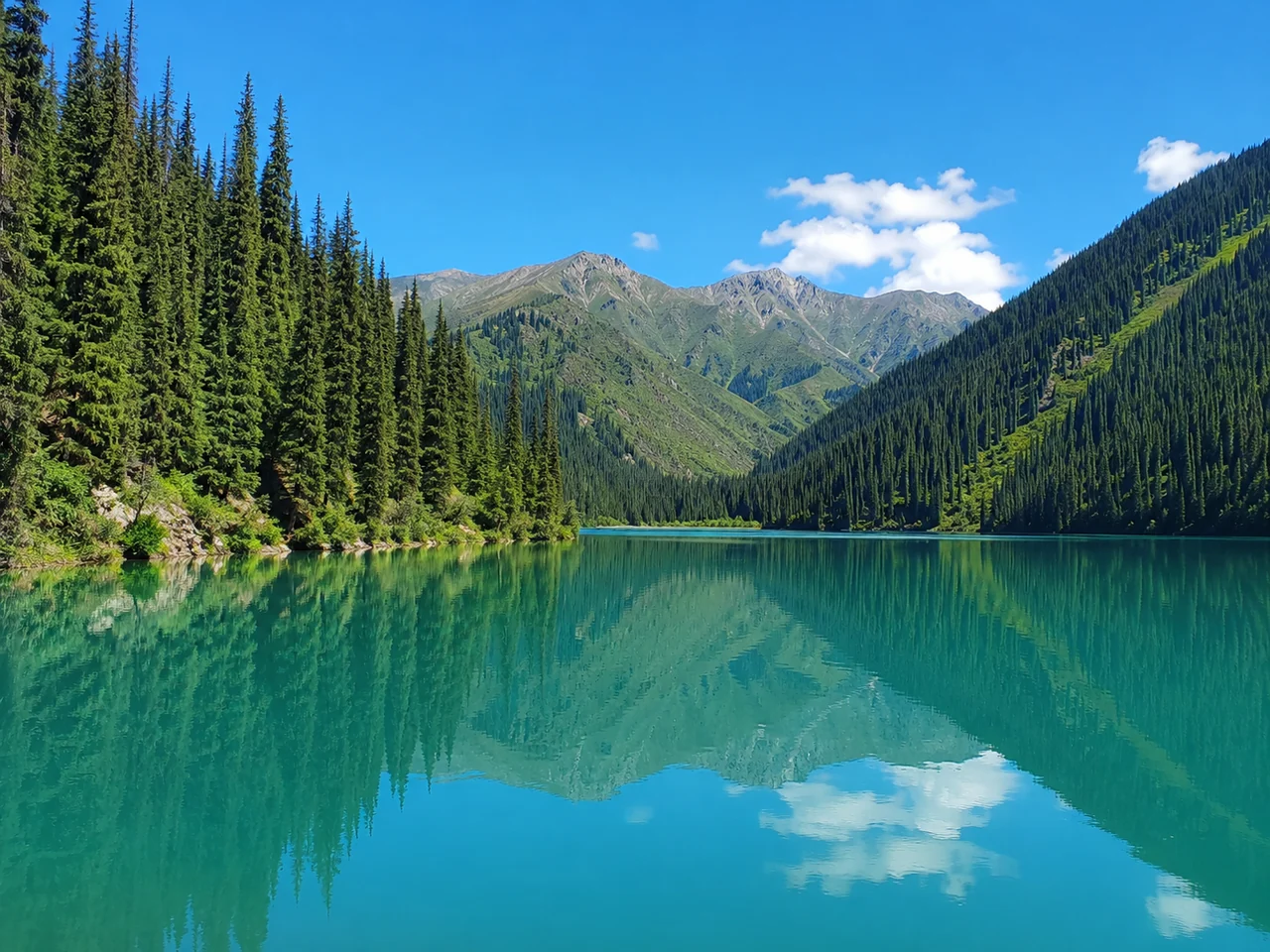
Kolsai Lakes are three high-altitude lakes 300 km from Almaty, the pearl of the Tien Shan. The route includes trekking from the first lake (1800 m) to the third (2700 m) — 12 km with an elevation gain of 900 m. Best season: May–September. Entry fee — 600 tenge, a tour with toor — from 15,000 tenge per person with transfer, guide, and lunch.
What are the Kolsai Lakes and what makes them unique
The Kolsai Lakes are a cascade of three mountain reservoirs 300 km southeast of Almaty, the main natural attraction of the Kegen district. The system is part of the eponymous national park and attracts tourists with an elevation difference of 900 meters between the lower and upper lakes.
Three lakes at three altitudes: from 1800 to 2700 meters
The Kolsai Lakes are a cascade of three reservoirs located at altitudes of 1800 m (first), 2250 m (second), and 2700 m (third) above sea level. The first lake is the most accessible, with asphalt leading from the Almaty–Kegen highway and parking 50 meters from the water. The second lake (Kolsai-2) is 8 km higher up the gorge — a hiking trail through a spruce forest with an elevation gain of 450 meters leads here. The third lake (Kolsai-3) is located at the foot of the pass; in winter, only prepared groups with ice axes have access. The height difference between the lower and upper lakes is 900 meters, creating a unique microclimate: at the first lake, it's +25 °C in summer, while at the third it can be +15 °C with wind, so even in July, a windbreaker should be in your backpack.
Why are they called the "pearl of the Tien Shan"
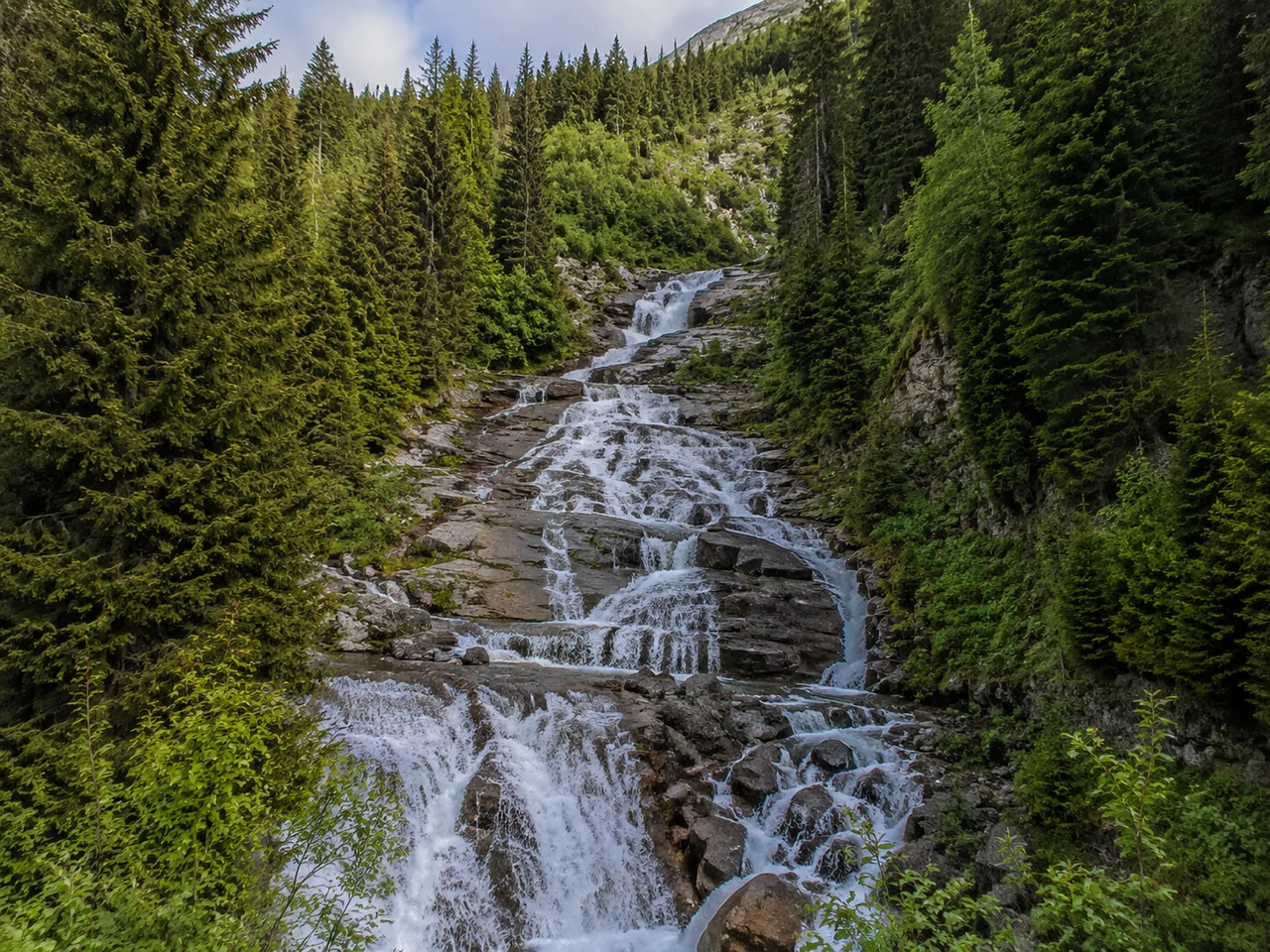
The Kolsai Lakes are among the top five most picturesque places in Kazakhstan due to their turquoise water surrounded by spruce forests and snowy peaks of the Tien Shan. The water has a characteristic bluish-green hue due to suspended limestone particles — at the lower lake, the color is most saturated, while at the upper lake, it is clearer. The Kolsai Lakes National Park protects an area of 160,000 hectares, home to marals, roe deer, and snow leopards. Near these reservoirs, there are waterfalls you can see along the way — for example, the waterfall on the Kolsai River 2 km from the first lake, a 20-minute walk away.
When to go: seasons, monthly weather, and features
The weather at the Kolsai Lakes dictates when trekking to the third lake opens, whether swimming is possible, and if it's worth going in October. Let's break it down by month.
Best season: May–September — what awaits the tourist
The best season to visit these lakes is from May to September, when daytime temperatures stay at +20…+25 °C, dropping to +5…+10 °C at night. May is a transitional month: at altitudes of 1800–2200 m, snow remains on the passes until early June, so full trekking to the third, highest lake only opens from late May. June–August offers stable warmth, with the peak tourist flow in July, when up to 80% of campsites near the first lake may be occupied. September is the golden season with minimal tourist numbers, but night frosts down to −2 °C are possible. If planning a trip for the May holidays, plan your route only to the second lake — the third is inaccessible due to snow, and the road from Almaty takes 4–5 hours one way, shortening the daylight hours.
Monthly weather: temperature and precipitation table
| Month | Daytime temperature | Nighttime temperature | Precipitation | Features |
|---|---|---|---|---|
| May | +15…+20 °C | +3…+8 °C | Moderate | Snow on passes until June, trekking to the 2nd lake |
| June | +20…+25 °C | +5…+10 °C | Moderate | Full season, all three lakes accessible |
| July | +22…+27 °C | +7…+12 °C | Low | Peak season, many tourists |
| August | +20…+25 °C | +5…+10 °C | Low | Warm water for swimming (+15 °C) |
| September | +15…+20 °C | +2…+7 °C | Moderate | Golden season, few people, possible frosts |
| October | +5…+12 °C | −2…+3 °C | Frequent | Snowfalls, road washes out, trip not recommended |
Can you swim in the Kolsai Lakes?
Swimming here is only possible on the hottest days of July–August, when the water warms up to +10…+15 °C — it's refreshing, but calling it comfortable swimming is a stretch. The water remains icy due to meltwater from glaciers: even at +25 °C air temperature, the water temperature at the first lake (altitude 1800 m) rarely exceeds +12 °C, and at the second and third, it's 2–3 degrees colder. Locals usually dip in for 30–60 seconds for a boost rather than leisurely swimming. If planning to swim, choose the first half of the day when the sun is actively warming, and be sure to bring a towel and change of clothes — the wind at altitude cools you down quickly.
How to get there from Almaty: car, taxi, tour
Let's break down three ways to get to the Kolsai Lakes — by your own car, by taxi, and with a tour — with prices and travel times.
By your own car: route, road, nuances
The distance from Almaty to the Kolsai Lakes is 300 km, travel time by car is 4–5 hours one way along the highway to Narynkol through the village of Saty. The route goes through Kegen: leave the city via the Kuldzha highway, drive to the turnoff to Saty (landmark: sign "Kolsai Lakes"), then 10 km of dirt road to the national park barrier. The road is paved to Saty — there are potholes, but it's passable for any car. On the dirt road after rain, the ruts become deep: a sedan scrapes its bottom, while an SUV passes easily. Fill up with gas in Almaty — there are no gas stations on the road to Saty; the nearest is in Kegen, 50 km before the turnoff. The last 10 km to the first lake is a dirt road that becomes difficult for a passenger car after rain; we recommend an SUV or a car with high ground clearance.
Taxi from Almaty: prices and what's included
A taxi from Almaty to Kolsai Lakes costs from 25,000 KZT per car one way — the price is fixed, but haggling is appropriate when booking in advance. Drivers on Yandex.Taxi and local aggregators (e.g., InDrive) often charge extra for the dirt road — from 3,000 to 5,000 KZT on top, if they agree to go to the first lake. Without the extra charge, the taxi driver will drop you off in Saty, and from there you'll have to walk 10 km or hitch a ride among tourists. Calling a taxi back from Saty is problematic — mobile reception is unstable; it's better to negotiate with the driver to wait (from 2,000 KZT/hour). Check with the driver whether he will take you to the first lake or only to the village of Saty (10 km from the lake) — many taxi drivers won't drive on the dirt road without extra payment.
Tour with toor: transfer, guide, lunch — all inclusive
toor organizes one-day tours to Kolsai Lakes from Almaty from 15,000 KZT per person — the price includes transfer, services of a local guide, and a field lunch. A minibus picks up the group from Republic Square at 6:00 AM, stops at the viewpoint near the Kegen Pass along the way, and arrives at the first lake by 11:00 AM. The guide accompanies the group to the second lake along a marked trail (5 km, elevation gain 450 m), talks about the flora and geology, and prepares hot food from thermoses for lunch. Departure back at 4:00 PM, return to Almaty by 8:00–9:00 PM — you have time to see the first and second lakes without rushing, and the guide handles all organizational matters.
Trekking route between the three lakes: distance, elevation, time
Let's break down the trekking route between the three Kolsai Lakes in detail: distances, elevation gain, time for each section, and realistic scenarios for different fitness levels.
From the first to the third lake: 12 km with 900 meters of elevation gain
The trek from the first to the third lake is 12 km with an elevation gain of 900 meters, taking an average of 5–7 hours one way depending on pace and stops. The section from the first (1818 m) to the second (2250 m) is the steepest: over 5 km, 432 meters are gained through a shady spruce forest with springs, where you can replenish water supplies in the heat, while the second half — 7 km from the second to the third (2700 m) — is gentler but goes along an open slope without shade, which is critical on a sunny day. Covering all three in one day and returning is a task for prepared hikers: a total of 24 km and 1800 meters of elevation gain require 8–10 hours of pure walking time, so beginners are recommended to go to the second and return, while for the third, plan an overnight stay.
Step-by-step route: Almaty — Saty — 1st lake — 2nd lake — 3rd lake
| Route section | Distance | Elevation gain | Travel time | Difficulty |
|---|---|---|---|---|
| Almaty — Saty village | 290 km | — | 4–5 hours by car | Easy (transfer) |
| Saty — 1st lake | 10 km | +100 m | 20–30 min by car / 2 hours on foot | Easy |
| 1st lake — 2nd lake | 5 km | +450 m | 2–3 hours on foot | Moderate |
| 2nd lake — 3rd lake | 7 km | +450 m | 3–4 hours on foot | High |
| Return (3rd → 1st) | 12 km | -900 m | 3–4 hours | Moderate (descent) |
You can get to the second lake by horse (rental 5,000 KZT/hour) — an option for tourists without training or with children, but note: the trail to the third goes over screes and rocks where horses cannot pass, so the full trek is only on foot with an overnight stay.
What to see along the way: waterfalls, passes, and views
Along the route between the first and second lakes, there is a waterfall on the Kolsai River — a 20-minute detour from the main trail, a must-see in May-June when the water flow is at its maximum. The waterfall is hidden in a side gorge 2 km from the first lake — the trail is marked with red flags on trees, but without a navigator, it's easy to miss the fork in thick fog, which lingers here until 10 AM. From the pass between the second and third lakes, a panoramic view opens up of the valley and the snowy peaks of the Zailiysky Alatau — the best photo spot on the entire route; plan a 10–15 minute stop, and also check the schedule: at this same pass, marmots are often encountered, coming out to warm themselves on the rocks in the first half of the day, but you should photograph them from a distance, otherwise they whistle and hide when approached.
Prices 2026: entry, transport, accommodation, food
Let's summarize all current expenses for a trip to Kolsai Lakes — from entry ticket to lodging — and break down where you can save without losing comfort.
Entry ticket and mandatory fees
Entry ticket to the Kolsai Lakes National Park — 600 KZT per person, paid at the checkpoint upon entry in cash or via Kaspi transfer. If you plan to fish, add 2,000 KZT for a license to catch rainbow trout — it is issued at the same checkpoint, but forms run out by noon in July-August, so it's better to arrive before 10 AM. Parking for private cars near the first lake is free, unlike Charyn Canyon or Burabay National Park, where parking costs 300–500 KZT. Before starting the trek to the third lake, keep your receipt — inspectors may check payment on the trail, and without it, you'll be fined from 5 MCI.
Accommodation: guesthouse, camping, or tent
Accommodation at these lakes: guesthouse at the first lake from 5,000 KZT per person per night, tent at the campsite 1,000 KZT per spot, your own sleeping bag is mandatory. Guesthouse conditions are Spartan: a shared kitchen with a gas stove, an outdoor toilet, a shower only in warm weather for 500 KZT, and at the campsite there are rain shelters and a fire pit, but you need to bring your own firewood or buy it from locals (500 KZT per bundle). You can also pitch a tent for free outside the campsite in the clearings near the second lake, but there is no toilet or source of drinking water, and at night even in July the temperature drops to +5 °C. Guesthouses in the village of Saty (10 km from the lake) cost from 3,000 KZT, but factoring in a taxi to the lake (1,000–1,500 KZT one way), the final price is comparable to staying by the water, but you lose an hour of travel time in the morning.
Comparison: independent trip vs tour with toor
| Expense item | Independent (1 person) | Independent (4 people) | Tour with toor (1 person) |
|---|---|---|---|
| Transfer (taxi/tour) | 25,000 KZT (taxi) | 6,250 KZT (split by 4) | Included |
| Entrance fee | 600 KZT | 600 KZT | Included |
| Lunch | from 2,000 KZT | from 2,000 KZT | Included |
| Guide | — | — | Included |
| Insurance | — | — | Included |
| Total | ~27,600 KZT | ~8,850 KZT | from 15,000 KZT |
For a group of 4 or more, a tour with toor is 30–40% more cost-effective than an independent trip by taxi, plus you get a guide and don't have to worry about logistics.
What to bring: clothing, gear, food
Let's put together a checklist of items for a trip to the Kolsai Lakes, from clothing to food, so you don't forget anything and don't freeze at altitude.
Clothing: layers, footwear, and sun protection
For a trip to the Kolsai Lakes, the following are essential: a warm jacket (nighttime +5 °C), a raincoat (weather changes within an hour), comfortable trekking shoes, and sunscreen — at an altitude of 2000+ m, the sun is active even on a cloudy day. A windbreaker with a membrane and waterproof pants will save you from a sudden downpour, which can start at the pass between the first and second lakes within 15–20 minutes without warning. Trekking boots with a tread, not sneakers, are mandatory: on the descent to the first lake after rain, the stones are slippery, and on the ascent to the third lake, the trail goes over scree. Apply SPF 50+ sunscreen to your face and neck every 2–3 hours — at an altitude of 2700 m, UV is 20–30% more aggressive than in Almaty, and a burn within half a day is guaranteed. The layering principle works perfectly: t-shirt + fleece + windbreaker — you can remove layers during the day and put them back on in the evening without carrying a puffy jacket.
Food and water: what to bring and what to buy on site
Bring at least 1.5 liters of water per person and a snack (nuts, bars, sandwiches) — there are no cafes on the route, only at the first lake can you buy water and snacks in season. There will be no hot meal at roadside stalls: the village of Saty is 10 km from the lake, but going back for food means losing 40 minutes one way. Chocolate and dried fruit are the best option for quickly replenishing energy on the climb to the second lake, where the elevation gain is 450 m over 2–3 km of trail. In our tour, lunch is included — we prepare it in field conditions, so you only need to bring water and a small snack for the trekking between the lakes.
Gear: trekking poles, first aid kit, and communication
Mobile phone reception at the Kolsai Lakes is only available near the first lake — there is no signal higher up the route, so remote work is impossible, and for emergency communication, a satellite phone is needed. Trekking poles reduce the load on your knees during descents with a 900-meter elevation difference between the first and third lakes — without them, even trained tourists' legs will "ache" by evening. Add blister plasters to your basic first aid kit (at the second lake, shoes rub due to the wet trail) and remedies for stomach upset — water from streams above the first lake is unboiled, and the body's reaction is unpredictable. In our tours, we provide walkie-talkies and have a satellite phone for group communication — this is a safety standard that independent tourists lack.
Common tourist mistakes and how to avoid them
Let's break down the five most common mistakes tourists make at the Kolsai Lakes, and how to avoid them so your trip doesn't turn into stress.
Mistake 1: Going in the rain or right after it
The main mistake is going to these lakes in the rain or right after it: the dirt road from Saty to the first lake gets washed out, trekking becomes dangerous due to slippery trails, and there are no shelters on the route. The clay on the climb to the second lake sticks to sneakers in a layer of a couple of centimeters, and descending on wet rocks at an altitude of 2250 meters is a direct risk of an ankle sprain. In October 2025, a group of five tourists got stuck at the pass between the first and second lakes for three hours — the car couldn't climb the washed-out road, and a local tractor from Saty pulled them out for 15,000 KZT. Check the forecast for 3 days before your trip — if rain is forecast for day X, postpone your departure to a dry day, otherwise you risk getting stuck on the road or getting injured on the descent.
Mistake 2: Not bringing warm clothing
The second most common mistake is going without a warm jacket: even in July, the temperature drops to +5 °C at night, and at the altitude of the second and third lakes, the wind makes +15 °C "feel" like +5 °C. At a rest stop near the second lake without a windbreaker, you'll start to get cold within 15–20 minutes — muscles lose elasticity in the cold, increasing the risk of cramps on the way back down. In our trips, we see this constantly: tourists in shorts and a t-shirt make it to the first lake, but on the trail to the second, they turn back — 70% of such groups don't reach their goal precisely because of the cold. The physical fitness required for trekking to the second lake is moderate — a 450-meter ascent over 2–3 hours, but without warm clothing, you risk getting cold at rest stops and suffering from hypothermia.
Mistake 3: Relying on mobile signal above the first lake
The third mistake is relying on mobile signal: above the first lake, there is no signal from any provider, so navigation via maps and calls are impossible. Install Maps.me or 2GIS in advance, download the map of the Kegen district and the track "Saty — 1st Lake — 2nd Lake" — without internet, the app will show your location via GPS. In practice, tourists without offline maps often lose the trail near the pass between the first and second lakes — there is a fork where the left path leads to Charyn, not to Kolsai. Download route maps offline and warn your family that you will be without communication for 6–8 hours — this is basic safety for any mountain trekking.
Mistake 4: Trying to hike all three lakes in one day without preparation
The fourth mistake is trying to hike all three lakes in one day without preparation: 24 km round trip with an elevation gain of 1800 meters is 8–10 hours of walking, which is physically challenging for an unprepared person. An average tourist without regular training runs out of steam already on the ascent to the second lake (3 km, +450 m) after 2–3 hours, and then there's another 5 km with a 450-meter climb to the third — legs "give out" at the 6th kilometer, and the descent back becomes painful due to shaky knees. In our tours, we do not take the group to the third lake in one day — the optimal route is the first and second lakes with a return, while the third requires a separate two-day program with an overnight stay.
Life hacks: how to save money and get the most out of your experience
We've covered prices, packed gear, remembered mistakes — now about how to get 30–40% more impressions for the same money: from a cost-effective format to hidden spots.
How to save on your trip without losing quality
The main way to save is to go with a tour: the price of 18,000–25,000 KZT includes transport, a guide, insurance, and lunch, whereas a self-guided trip by taxi will cost 30,000–40,000 KZT without these services. The difference of 10,000–15,000 KZT arises not from a markup, but from the group format: the tour gathers 8–12 people in one jeep, splitting costs for gas, parking, and entrance fees. In my practice, there was a case where a tourist planning a self-guided trip spent 38,000 KZT on a taxi one way and another 6,000 on lunch at a roadside cafe — totaling 44,000 KZT without a guide or insurance. Savings of 30–40% are achieved through the group format: the guide works for everyone, not for one tourist, and their cost is distributed among participants.
What is included in the toor tour that self-guided tourists don't have
In the tour, we include transfer from Almaty in a comfortable jeep, services of a licensed guide, insurance, lunch (a hot main course with meat, tea, and pastries), entrance tickets to the Kolsai Lakes National Park (600 KZT per person), and a photo session against the backdrop of the lakes. For self-guided tourists, transfer to the first lake costs from 25,000 KZT per car one way, lunch at a cafe by the lake is 2,500–3,500 KZT per person, and the entrance ticket is paid separately at the checkpoint in cash. Without a guide, you miss the observation deck on the "Eagle's Nest" rock and don't learn that the rainbow trout in the lake is stocked, not wild. Self-guided tourists often forget to pay the entrance fee to the national park separately, and without a guide, they don't access hidden viewpoints known only to local guides.
How to get the most out of your experience: secret locations and timing
You'll get the most out of your experience if you arrive at the first lake by 8:00 AM — at this time, there are no crowds of tourists, the water is mirror-calm, and the light is ideal for photos; our guide knows three hidden viewpoints that regular excursions don't take you to. The first is a rocky ledge on the southern shore of the first lake, from which you can see all three cascades at once. The second is a trail along the northern shore of the second lake: there grow centuries-old Tien Shan spruces, and from a height of 200 meters, a panorama of two lakes opens up. The third is a clearing near the third lake, where on a clear day you can see Talgar Peak (4,973 m) 80 kilometers away. The secret location is the trail along the northern shore of the second lake: without a guide, you won't find it, as the trail is unmarked, but it's there that a panorama of two lakes opens up at once.
Conclusion
We've gathered the main things you need to know about the trip: from budget and season to typical mistakes and life hacks — so that your adventure to the Kolsai Lakes goes smoothly.
Key takeaways
- Plan your budget in advance: a self-guided trip will cost 30,000–40,000 KZT, a tour costs 18,000–25,000 KZT, but includes transport, a guide, and lunch.
- Choose the right season: the best time is May–September, for trekking — June–August, for photos — May and September.
- Prepare for trekking: bring warm clothes, comfortable shoes, water, and food; download offline maps.
- Avoid typical mistakes: don't rely on signal above the first lake, don't try to hike all three lakes in one day without preparation.
- Get the most out of your experience: arrive by 8:00 AM, look for hidden viewpoints, and don't forget your camera. By following these tips, you'll avoid typical mistakes and get the maximum enjoyment.