Blog
Kazakhstan Altai from Almaty: Complete Guide to Mountains, Lakes and Hot Springs
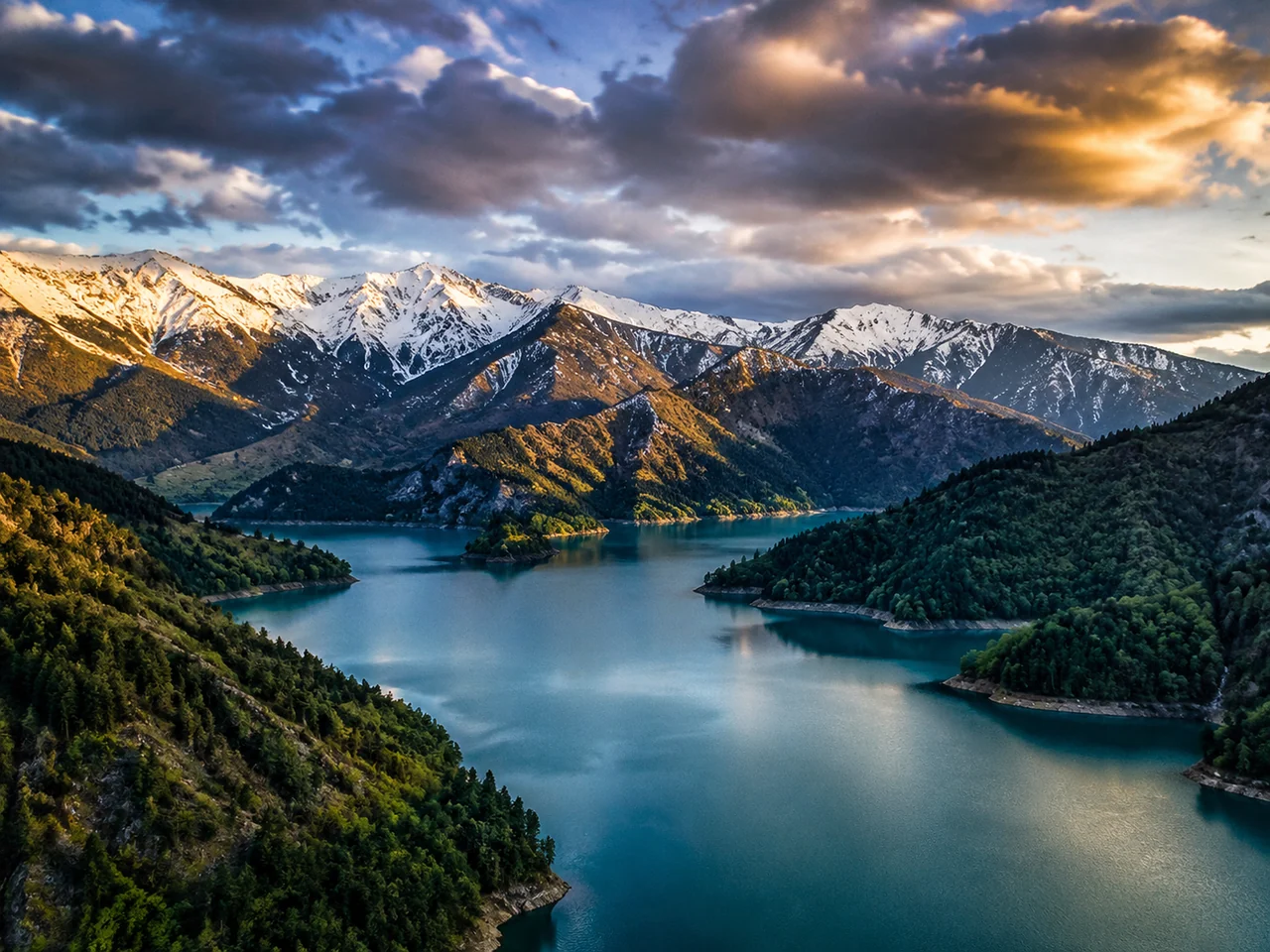
The Kazakh Altai is a mountainous region in the east of the country with Lake Markakol, the Bukhtarma Reservoir, and the Rakhmanov Springs. From Almaty, it takes 12–18 hours by car. The best time is June–September. At toor, we organize 7-day tours with transfer, accommodation, and a guide from 250,000 tenge.
Why the Kazakh Altai is not just mountains, but a whole world
The Kazakh Altai is not one attraction, but an entire region with contrasting landscapes: from steppe foothills to high-mountain lakes and thermal springs.
What is the Kazakh Altai and where is it located
This region occupies the eastern part of the country, bordering Russia and China for over 700 km. The nearest major city is Ust-Kamenogorsk with a population of about 330,000 people, from which almost all routes into the mountains begin. The main areas are Katon-Karagay and Kurchum districts, as well as the area around Lake Markakol — administratively part of the East Kazakhstan Region. It is here that the highest peaks of the region are located — Mount Belukha (4506 m) on the border with Russia and the Mus-Tau massif. Unlike the Russian Altai, the Kazakh part is less promoted among mass tourists, but is not inferior in beauty: there are fewer people, lower accommodation prices, and wilder nature — making the region ideal for those who want to see the real Altai without crowds.
The three main gems of the region: Markakol, Bukhtarma, Rakhmanov Springs
- Lake Markakol: a freshwater lake with an area of 455 km² at an altitude of 1447 m — one of the largest in Kazakhstan, popular for fishing (grayling, lenok) and trekking along the shoreline.
- Bukhtarma Reservoir: an artificial sea about 400 km long with a depth of up to 80 m — the main water recreation area with beaches, boat trips, and the possibility of renting houses on the shore.
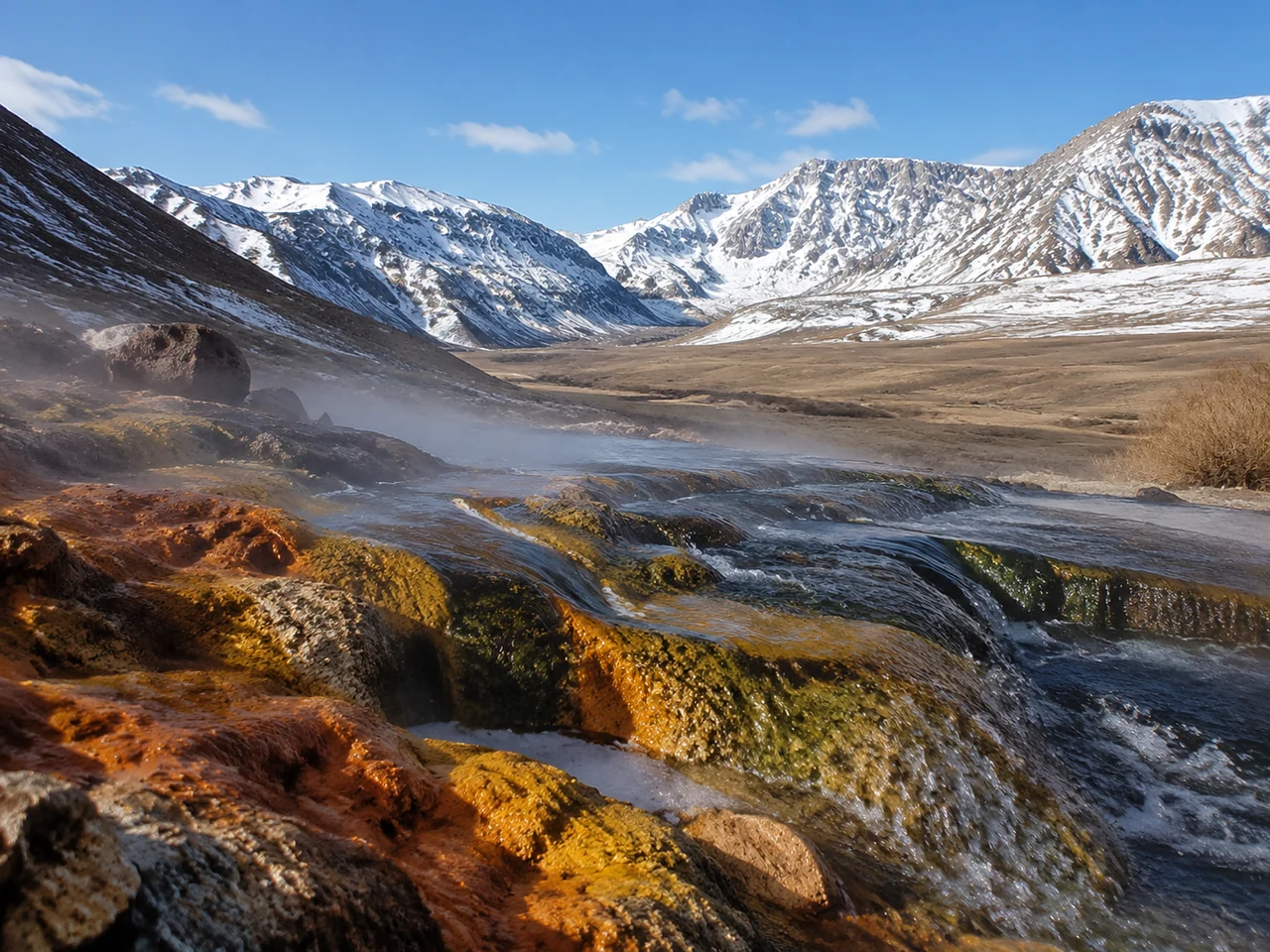
- Rakhmanov Springs: thermal springs with water temperatures of +37…+42°C at an altitude of 1760 m — the only place in the region where you can combine mountain hiking with year-round health improvement.
When to go: monthly breakdown of weather and seasons
The weather in the Kazakh Altai is sharply continental: warm in summer, frosty down to −30°C in winter. Mountain roads are open only from June to September.
June–September: the ideal season for a trip
The best time to visit the region is from June to September, when temperatures stay at +15…+25°C. In June, night frosts down to −2°C are still possible in the highlands, and by the end of September, the first snowfalls are not uncommon on passes above 2000 m. In July and August, all recreation centers on Bukhtarma and Markakol are operating, the passes of the Katon-Karagay district are open, and the water in mountain lakes warms up to +18…+20°C. But this is also the peak of tourist flow: the number of guests at Rakhmanov Springs and Lake Markakol triples compared to June. Accommodation during this period should be booked 2–4 weeks in advance, especially for weekends — available spots at the bases run out as early as May.
Monthly table of weather and conditions
| Month | Average t°C daytime | Road conditions | What to do |
|---|---|---|---|
| June | +15…+20 | Roads open, locally washed out after rains | Hiking, fishing, thermal springs |
| July | +20…+25 | All dirt roads passable, passes dry | Swimming in lakes, trekking, rafting |
| August | +18…+23 | Dry, stable, dusty on gravel roads | Peak season — all routes and activities |
| September | +10…+15 | Roads open, morning ice on passes | Photography, springs, mushrooms, hunting |
Even in July, it can suddenly get cold to +5°C in the mountains within an hour — always take a warm jacket and waterproof shoes, regardless of the forecast on the plain.
Winter Altai: for whom and is it worth going
In winter, the temperature in the Kazakh Altai drops to −30°C, and the snow cover in the mountains reaches 1–1.5 m. Most roads to Markakol, Rakhmanov Springs, and Bukhtarma are closed until May: you can only get to Ust-Kamenogorsk and the villages of the Katon-Karagay district by regular car on the road that is cleared. The main attractions — lakes, waterfalls, thermal springs — are inaccessible in winter, except for ski tours in the vicinity of Katon-Karagay, where routes of 10–30 km are laid. The winter Altai is only suitable for prepared travelers in SUVs, and even then, it is worth checking the avalanche danger forecast in the highlands in advance.
How to get there from Almaty: car, taxi, bus, tour
The road from the southern capital to the Altai is a separate adventure. The distance to Ust-Kamenogorsk is ~1000 km, to Rakhmanov Springs ~1100 km, to Markakol ~1200 km. Choose an option based on your budget and time.
By car: route, time, road conditions
By car from Almaty to Ust-Kamenogorsk — 12–14 hours along the A-3 highway via Semey, almost all asphalt, except for a section near the pass. To Rakhmanov Springs — 14–16 hours: after Katon-Karagay, a dirt road with steep serpentines begins, which gets washed out to a "washboard" state in the rain. To Lake Markakol — 16–18 hours, the last 60 km is a rocky gravel road, where the average speed drops to 20–30 km/h. In a regular sedan, you will get to Ust-Kamenogorsk and Katon-Karagay without problems, but further — only a crossover or SUV with a ground clearance of 180 mm or more. Spare wheels and a tow rope are mandatory: there are no tire repair shops beyond Katon-Karagay, and communication disappears on sections 30–40 km long. Before departure, check the spare tire and raincoat — downpours occur on the passes even in July, and mud on the windshield halves visibility.
Taxi and bus: prices and features
A taxi from Almaty to Ust-Kamenogorsk costs 50,000–70,000 tenge (you look for one at the pick-up point for 4–5 hours via apps or at the Sayran bus station), a bus costs 5,000–8,000 tenge with daily departures at 7:00 and 20:00, travel time ~14 hours with one lunch stop in Semey. From Ust-Kamenogorsk to Katon-Karagay takes 3–4 hours by taxi for 15,000–20,000 tenge, or by scheduled bus for 2,000 tenge (runs twice a day). The bus is the most budget-friendly option, but luggage is limited to 20 kg per passenger, and there is no toilet or air conditioning in the cabin — it's stuffy to travel in summer. For a group of 3–4 people, a taxi from Ust-Kamenogorsk to Rakhmanovsky Klyuchi costs 5,000–7,000 tenge per person, which is cheaper and faster than changing transport with an overnight stay in Katon-Karagay. Agree with the driver in advance about the final destination: many taxi drivers refuse to go beyond Katon-Karagay without an extra charge for the dirt road.
Organized tour: what's included and how much it costs
Through toor you can take a 7-day tour from Almaty for 250,000–400,000 tenge — the price includes round-trip transfer, accommodation in guesthouses and tents, three meals a day on the hike, the work of a licensed guide, and medical insurance. You won't have to pay extra — neither for entry to Rakhmanovsky Klyuchi (500 tenge is included in the program) nor for equipment rental (tents, sleeping bags, mats are provided on site). The route is designed so you don't waste time on transfers: departure from the southern capital at 6 am, lunch in Semey, by evening — check-in in Katon-Karagay. For those visiting the Kazakh Altai for the first time, the tour removes the main headache — logistics, booking accommodation in season (when there are no free spots a month in advance), and finding a trusted guide who knows trails bypassing the swamps.
Bukhtarma Reservoir: water recreation, fishing, bases
The Bukhtarma Reservoir is one of the largest in Kazakhstan: length ~400 km, depth up to 80 m. It is the main place for water recreation in the Kazakh Altai.
What to do on Bukhtarma: swimming, boats, fishing
At the Bukhtarma Reservoir you can swim (water warms up to +22°C in July), ride boats and motorboats, and fish. Fishing — pike, perch, pike perch, bream — is popular both from the shore and from a boat: locals rent motorboats (from 5,000 tenge/hour) at recreation bases or from private owners in the villages of Aksuat and Kurchum. Along the shore there are dozens of recreation bases and wild campsites: on the northern shore there is a gentle entry, less wind, and it's convenient to pitch a tent right by the water, while on the southern shore there are rocky cliffs where you can catch pike perch from a boat, but swimming is inconvenient. The best places for camping are the northern shore, where there is less wind and a gentle entry into the water — on the southern shore there are rocky cliffs, making it more convenient to fish from a boat than to swim.
Recreation bases and campsites: what to choose
- Recreation base: from 15,000 tenge/night with shower, toilet, and electricity — suitable for families with children who need comfort and hot water.
- Wild camping: free, without infrastructure — for a company for several days, but water, firewood, and gas need to be brought from Almaty or purchased in Aksuat.
- Guesthouse in the village: 10,000–20,000 tenge/night in Aksuat or Kurchum — an option for those who want to sleep in a bed but cook on a barbecue in the yard and walk to the reservoir for 10–15 minutes.
Lake Markakol: fishing, swimming, routes around
Lake Markakol is one of the most beautiful high-mountain lakes in Kazakhstan: area 455 km², depth up to 30 m, altitude 1447 m. The water is clean but icy even in summer.
Fishing on Markakol: fish species, license, season
In Markakol there are grayling and lenok — for fishing you need a license, which is issued at the forestry office of the Katon-Karagay Nature Reserve or through tour organizers for 2,000–5,000 tenge per season. The best time is July–August, when the fish rises to the surface after spawning. Grayling is caught with fly fishing and spinning, lenok with spoons and wobblers, but both species are shy: complete silence, camouflage, and no sudden movements on the shore are required. Local guides know the holes and riffles where the fish constantly stay — with them, the chance of a trophy catch is many times higher than when searching independently.
Can you swim and what routes are around
You can swim in Markakol, but the water does not warm above +15…+18°C even in the July heat — for hardened people it's excellent conditioning, for ordinary tourists it's more of a refreshing dip for a minute than a full beach holiday. Several hiking routes of varying difficulty are laid around the lake: a circuit along the southern shore (2–3 days, 40 km) with overnight stays in tents, an ascent of Mount Aksu about 3000 m high, and a radial hike to Kokkol Waterfall. All trails go through the territory of the reserve — entry is paid, about 500 tenge per person, and registration at the forestry office is mandatory. The routes are of moderate difficulty, requiring basic physical fitness and trekking boots — sneakers get soaked on mountain streams within an hour of walking.
Rakhmanovsky Klyuchi: water temperature, benefits, visiting rules
Rakhmanovsky Klyuchi is a thermal spring at an altitude of 1760 m in the Katon-Karagay district. The water temperature of +37…+42°C remains constant year-round. It is one of the main health resorts of the Kazakh Altai.
Water temperature, composition, and health benefits
The water at Rakhmanovsky Klyuchi is low-mineralized, siliceous, with a constant temperature of +37…+42°C — beneficial for diseases of the musculoskeletal system, skin, and nervous system. Radon at a concentration of 5 nCi/L provides a mild anti-inflammatory effect, and silicic acid (up to 45 mg/L) improves vascular elasticity. The bathing time is 15–20 minutes, longer is not recommended: the load on the heart increases. In September, it's comfortable at the springs: daytime +10…+15°C, the temperature contrast enhances the health benefits. Wearing a swimsuit over warm clothes is normal practice, entry is 500 tenge.
Operating hours, infrastructure, and visiting rules
- Operating hours: year-round, during the season (June–September) from 9:00 AM to 8:00 PM. Off-season — by prior appointment with the ranger.
- Infrastructure: changing rooms, toilets, a café with hot tea and pastries. Nearby — a guest house for 20 people, but book 2–3 weeks in advance.
- Other sources: Kokkol and Arasan are also hot, but less developed: no changing rooms or café, access only by UAZ vehicle.
- Rules: take a shower before entering, do not use soap or shampoo in the spring, do not jump into the water. After bathing — rest for 20–30 minutes. Alcohol is prohibited. Best time — morning before 10:00 AM, when there are few people.
Routes and Multi-Day Hikes: From Easy to Challenging
Routes in the Kazakh Altai are divided into three difficulty categories — from one-day walks to serious expeditions. Choose based on your fitness and time: beginners will manage two days, experienced hikers two weeks.
Easy Routes for 1–2 Days (for Beginners and Families)
For a first introduction to the region, we recommend the "Katon-Karagay — Rakhmanov Springs" route: 2 days, 30 km on foot with an overnight stay in a guest house. During the day — a walk to the thermal spring and a sightseeing tour of the village surroundings. The route is suitable for families with children aged 10 and up and does not require tents or special equipment — toor provides everything needed. Elevation changes here are minimal (up to 200 m), roads are gravel and well-maintained. Another one-day option is a radial hike from Belukha (not to be confused with the mountain: this is a tract near the border with Russia), 12 km round trip with lunch in a clearing. The main thing is comfortable trekking shoes and a raincoat; without them, even an easy route turns into a trial under the Altai rain.
Moderate Routes for 5–7 Days (Main Attractions)
The main seven-day tour from toor: Almaty — Ust-Kamenogorsk — Katon-Karagay — Markakol — Bukhtarma Reservoir — Rakhmanov Springs — back to Almaty. The hiking part of the route is about 80 km with elevation changes up to 500 m; we stay both in tents (3 nights) and in guest houses (4 nights). The tour price per person is 250,000–400,000 tenge, depending on the season and group size (usually 6–12 people). Along the way — swimming in Markakol (+18°C in July), lunch on the Bukhtarma shore, and an evening banya in Katon-Karagay. Basic fitness is required: covering 10–15 km per day with a backpack of 8–12 kg. Groups are led by a local guide who knows the trails and water points — without them, it's easy to wander onto a pasture and lose half a day.
Challenging Routes for Experienced Tourists
- "Around Markakol" (10 days, 120 km): elevation gain of 1200 m, overnight stays only in tents, good fitness and experience in autonomous hiking required. toor provides guide support and equipment rental (tent, sleeping bag, mat — 15,000 tenge for the entire tour).
- "Altai Ridge" (14 days, 180 km): a route for the prepared — crossing the Kara-Kaba (2000 m) and Kokkol passes with a radial hike to a 30-meter waterfall. No cell service in the mountains, a satellite phone is mandatory (rental — 5,000 tenge/day).
- Photo tip: the most spectacular shots are at Kara-Kaba Pass (view of Markakol from 2000 m) and at sunset on the Bukhtarma. Bring a DSLR or a smartphone with good optics, but note: there are no outlets in tents, so a 20,000 mAh power bank will save half your shots.
Where to Stay: Guest Houses, Resorts, Camping
In the Altai, there are three main accommodation options: guest houses in villages, resorts on the Bukhtarma, and tent camping. The choice depends on your budget and trip format.
Guest Houses in Katon-Karagay, Kurchum, and Aksuat
Guest houses in Katon-Karagay, Kurchum, and Aksuat — 10,000–20,000 tenge/night per person, the price includes a bed, bed linen, shared kitchen, and shower. Many hosts have a banya for an additional 3,000–5,000 tenge, and also offer meals — breakfast or dinner for 2,000–3,000 tenge, which saves you from cooking on site. During the season (July–August), vacancies may be scarce — book 2–4 weeks in advance, otherwise you'll have to look for accommodation in neighboring villages 30–50 km away.
Camping: When to Bring a Tent
A tent is an option for those who want to be closer to nature and save money: free campsites are available on the shores of Bukhtarma and Markakol. Basic gear includes a tent, sleeping bag, mat, raincoat, and warm clothing — nighttime temperatures even in July drop to +5°C. Camping is suitable for groups of 4 or more and trips of 3 days or longer, but the downsides are noticeable: no shower or toilet, water and food must be carried, and cooking is only on a stove. For a first introduction to the region, it's better to choose a guest house and save the tent for next time.
Prices in Tenge: Transport, Accommodation, Meals, Excursions
Prices for a holiday in the Kazakh Altai range from budget to premium — we've gathered current figures so you can plan your trip.
Cost of a Trip to the Altai from Almaty: Expense Table
| Expense Item | Budget Option (tenge) | Comfort Option (tenge) | Premium Option (tenge) |
|---|---|---|---|
| Transport (round trip) | 20,000–30,000 (train/bus) | 50,000–70,000 (car/taxi) | 80,000–120,000 (flight + taxi) |
| Accommodation (7 nights) | 70,000–140,000 (guest house) | 175,000–350,000 (hotel) | 350,000–700,000 (hotel + cottage) |
| Meals (7 days) | 21,000–35,000 (cook yourself) | 35,000–70,000 (café/canteen) | 70,000–140,000 (restaurants) |
| Excursions (3–5 days) | 15,000–30,000 (independently) | 30,000–50,000 (group) | 50,000–100,000 (private) |
| Total per person | 126,000–235,000 | 290,000–540,000 | 550,000–1,060,000 |
A budget train trip with guesthouse accommodation starts from 126,000 KZT per person, a premium trip with a flight and cottage from 550,000 KZT. Budget an extra 20% on top: renting a boat on Bukhtarma or a guide on Markakol adds 5,000–15,000 KZT per day.
Conclusion
We've covered all the key questions: when to go, how to get there, what to see, and how much it costs. Here are the main takeaways in a checklist for planning your trip.
Key Takeaways
- Budget: A trip to Altai from Almaty will cost from 80,000 to 500,000 KZT per person — the cheapest option is train + guesthouse, the most expensive is a tour with a flight.
- Logistics: It's best to get there by train (15–20 hours) or by car (12–14 hours) — for your first time, choose a ready-made tour, it will take care of transport and accommodation.
- Season: July–August is the peak season with warm weather but high prices and crowded spots — May–June and September are a comfortable off-season with fewer tourists.
- Route: In a week, you can cover the main locations: Rakhmanovskie Klyuchi, Bukhtarma, Markakol, Katon-Karagay — for an in-depth experience, budget 10–14 days.
- Safety: Bring warm clothes, a raincoat, and a first aid kit — there's no cell service in the mountains, inform your loved ones about your route, and learn the rules of behavior when encountering a bear.