Blog
Hot Springs of Almaty's Recreation Areas: Where to Go for a Weekend in 2026

The hot springs of the recreation areas around Almaty are thermal pools with water at +36…+45 °C, operating year-round. The most popular areas: Alatau (15 km), Ak-Bulak (40 km), and Kapal-Arasan (200 km). Entry starts from $3. At toor, we organize group trips with transfer from $11/person.
What are hot springs recreation areas and how are they different from regular pools
We'll explain how thermal water differs from chlorinated water in a water park, why it's popular for weekends, and what the recreation areas with pools in Almaty actually offer.
What is thermal water and how is it beneficial
Thermal water in the springs of the Almaty region is natural mineral water, heated by geothermal processes to +36…+45 °C and rich in silicon and calcium. At a depth of 800–1500 meters, it becomes saturated with trace elements from rocks and emerges already mineralized — without chlorine or chemical reagents. In the springs of Kaskelen and Issyk, for example, the concentration of silicic acid reaches 60–80 mg/l, which promotes skin regeneration and strengthens joints. Unlike chlorinated water in regular pools, thermal water does not dry out the skin or irritate mucous membranes — which is why families with allergic children often relax at the springs. Moreover, for diseases of the musculoskeletal system, doctors recommend natural thermal water rather than a heated pool — the effect of trace elements is cumulative, not temporary.
How is a thermal spring different from a water park or regular pool
The main difference is that the water at the springs is not chlorinated or chemically filtered, but is constantly replenished from a natural well, preserving its mineral composition year-round. In water parks, such as 'Akvalend' or 'Great-Fun', the water undergoes heavy chemical treatment, and the temperature is maintained at +27…+30 °C — comfortable for slides, but not for warming joints. At the springs, the depth of the pools ranges from 0.5 m in children's areas to 1.8 m in adult sections, and the temperature in different basins can differ by 5–7 degrees — you can choose according to how you feel. There are no slides, waterfalls, or attractions here — it's a place for quiet relaxation, not active games. If you bring children under 7, choose a recreation area with a separate shallow pool — in the main basin at a depth of 1.5 m, a child will be uncomfortable, and you won't be able to relax.
Top 5 recreation areas with thermal pools around Almaty
We'll cover the three most popular areas — Alatau, Ak-Bulak, and Kapal-Arasan, and also add two more locations for variety. Let's compare them by distance, price, and infrastructure.
Alatau — the closest spring (15 km from the city)
Alatau is the most popular hot spring 15 km from the city, where we at toor most often take groups on weekends due to its proximity and affordable prices. An adult entry ticket costs $3-$7, making this area one of the most budget-friendly in the region. The territory is compact, but there are three pools of different depths — from 0.5 m for toddlers to 1.8 m for adults, with water temperature maintained at +38...+42 °C year-round. Due to its location right within the city limits, it's crowded on weekends, especially from 11:00 AM to 3:00 PM. Thanks to its proximity to the city, it's easy to get here by taxi for $3-$6, making Alatau an ideal option for a spontaneous trip.
Ak-Bulak — the optimal choice for a full-day getaway (40 km)
Ak-Bulak is located 40 km from the city and offers a more spacious area with pools of varying depths, which is convenient for families with children. There is a separate children's zone with a pool 0.5 m deep and warm water at +36...+38 °C, while the adult pool reaches 1.8 m with temperatures up to +45 °C — the difference allows you to choose a comfortable mode. Adult entry costs $4-$9, the area has cafes, changing rooms, and relaxation zones with sun loungers, and accommodation in an economy-class room starts from $27 per night. The taxi ride will cost $7-$11, but if you go with us on a toor tour, the transfer is already included in the price, and you don't need to worry about the return trip.
Kapal-Arasan — a distant spring with a unique atmosphere (200 km)
Kapal-Arasan is the most remote spring 200 km from the city, but its water is considered one of the most mineral-rich, and it's worth going there for 1-2 days. The water temperature here reaches +45 °C, and the composition includes silicon and calcium, which is especially valued for joint problems — guests come here specifically for therapeutic treatments. An entry ticket costs $7-$11, the area has several pools of different depths and a hotel with rooms from $34 per night for luxury class. The 3-hour trip one way requires planning, so an overnight tour from toor is the most comfortable way to see this place without the fatigue of a long journey.
Comparison table of recreation areas
| Parameter | Alatau | Ak-Bulak | Kapal-Arasan |
|---|---|---|---|
| Distance from Almaty | 15 km | 40 km | 200 km |
| Travel time | 30 min | 1 hour | 3 hours |
| Taxi (one way) | $3-$6 | $7-$11 | from $18 |
| Entry ticket (adult) | $3-$7 | $4-$9 | $7-$11 |
| Pool depth | 0.5-1.8 m | 0.5-1.8 m | 0.5-1.8 m |
| On-site accommodation | from $18/night | from $27/night | from $34/night |
| Children's pools | Yes | Yes, separate zone | Yes |
| Toor tour with transfer | from $11/person | from $16/person | from $27/person |
How to get to the hot springs from Almaty: by car, taxi, tour
We'll break down three ways to get to the thermal zones: by your own car, by taxi, or with a tour. Each option has its pros and cons.
By your own car: routes and parking
You can reach Alatau in 30 minutes via the Kuldzha highway, Ak-Bulak in an hour along the Almaty-Kaskelen highway, and Kapal-Arasan in 3 hours through Talgar and Esik. All three routes follow paved roads suitable for any passenger car, including in winter—the roads are cleared; a sign leads to Alatau right after the ring road at the exit, for Ak-Bulak the landmark is the turn to Kaskelen after the bridge over the river, and Kapal-Arasan is further: after Esik you need to turn onto a 7 km dirt road, which can become muddy after rains—a crossover will get through, but a sedan risks bottoming out. All major hot springs have free parking, but on weekends during the season it's better to claim a spot before 10 am, otherwise you'll have to park on the roadside 200 meters from the entrance.
Taxi from Almaty: prices and where to order
A taxi ride to Alatau will cost $3-$6, to Ak-Bulak—$7-$11, and to Kapal-Arasan—from $18 one way via the Yandex Go or inDrive apps. The price depends on the time of day: it's cheaper on weekday mornings, on Friday evenings rates rise by 20-30% due to demand, and on inDrive you can haggle—drivers often agree to $1-$2 below the stated price if the hot spring is close to the city. It's better to book a return trip in advance—there are few cars in remote locations: in Ak-Bulak in the evening, searching takes 15-20 minutes, and from Kapal-Arasan, taxi drivers ask for double the usual price. It's worth ordering a taxi with a fixed price, as drivers may add a surcharge for the return trip if the hot spring is far away.
Tour with transfer from toor: what's included and how much it costs
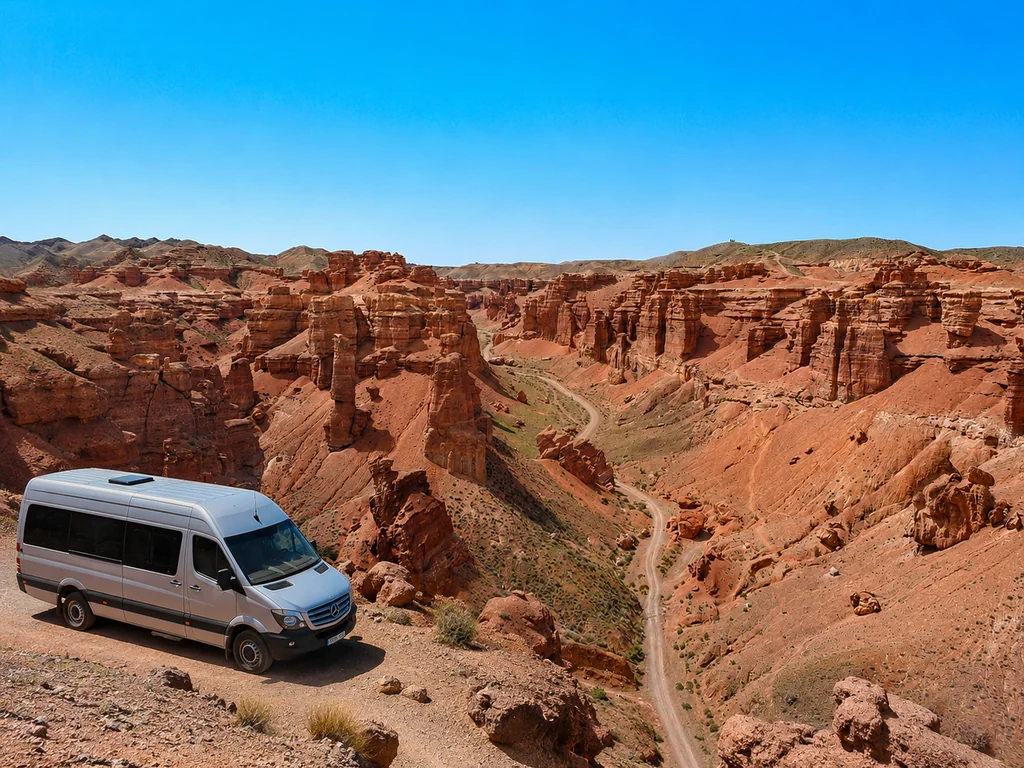
A tour to the hot springs from us starts from $11/person and includes transfer from Almaty, entrance tickets, and guide accompaniment—when traveling as a group of four, a taxi to Ak-Bulak ($7-$11/person) plus entrance at $4-$8 totals $11-$19/person, while the tour offers the same for $11/person with a ready-made program. The price includes travel in a minibus for up to 12 people with air conditioning, tickets without queuing, and services of a Russian-speaking guide who will show the best pools and explain the water's composition. Our team organizes the trip itself: provides the minibus at a convenient time, buys tickets in advance to avoid queues, and the guide will advise where the best pools are.
When is the best time to go: seasons and weather by month
The hot springs operate year-round, but the experience of the trip greatly depends on the season. We'll tell you when it's best to go and what to expect from the weather.
Summer season (June-August): heat, queues, and how to avoid crowds
In summer, the air warms up to +25…+35 °C, and Almaty's thermal complexes become a place for mass recreation—on weekends there are many people, especially at Alatau. The water in the pools remains at +36…+45 °C, so not everyone wants to get in during the heat: many just sit by the edge or cool off in the shade on loungers. On weekdays, there are noticeably fewer visitors—you can swim calmly without bumping into neighbors and grab a lounger without a reservation. To avoid queues, come on a weekday or early Saturday morning before 9:00 am—at this time the pools are just opening, and there are almost no people.
Winter season (December-February): steam, contrasts, and romance
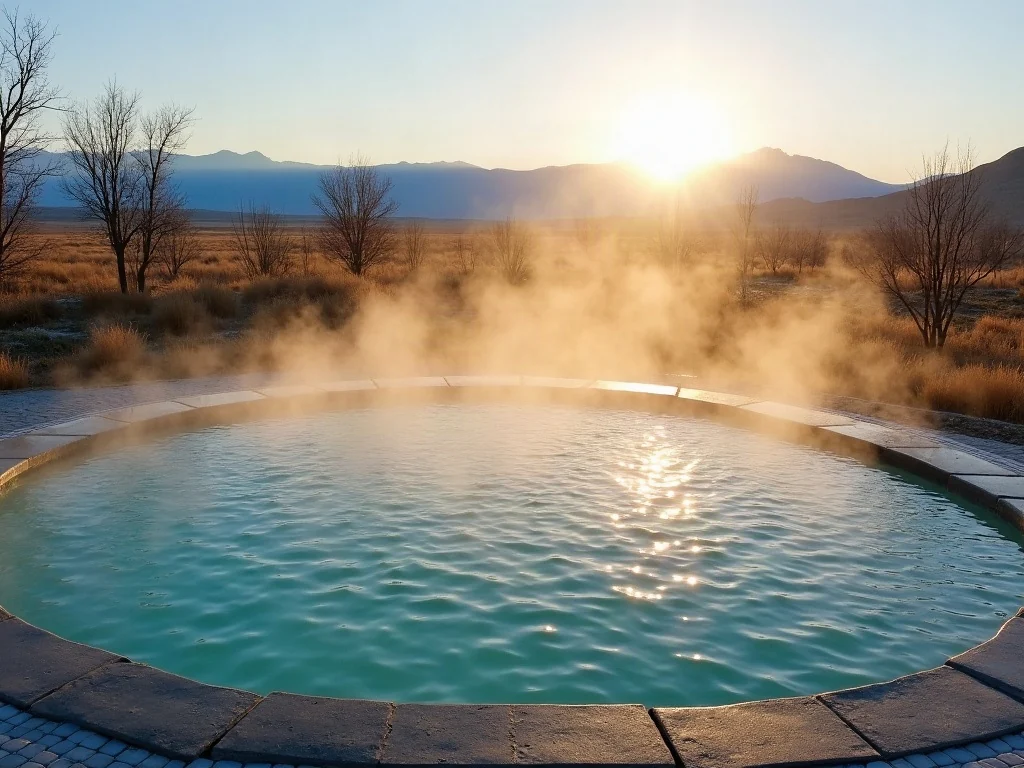
In winter, with air temperatures of -5…-15 °C, the water in the pools remains at +36…+45 °C, and steam rises above the surface—this creates an incredible atmosphere. The contrast is especially noticeable when you emerge from the warm water into the frosty air: your body burns, and your hair instantly becomes covered with frost. Due to the cold, even a 15-minute stay outside without protection makes you freeze, so in winter people come to the hot springs specifically to swim, not to sunbathe. The temperature contrast is invigorating, but it's important to leave the water only in a robe and slippers to avoid freezing—so don't forget to bring them with you.
Shoulder seasons (spring and autumn): comfortable weather and low prices
Spring (April-May) and autumn (September-October) are the best times for a trip: no summer heat or winter frosts, and accommodation prices are often lower. Air temperatures of +15…+25 °C allow you to stay outside for a long time, and the water in the pools is still +36…+45 °C. During the shoulder seasons, there are the fewest visitors at the hot springs, as most tourists prefer summer, but the weather still allows for comfortable outdoor relaxation.
Infrastructure: what's available on the premises (changing rooms, cafes, children's areas)
To make your relaxation comfortable, it's important to know in advance what's available on the premises of each hot spring. Let's break down three key amenities: changing rooms, cafes, and children's areas.
Changing rooms, showers, and lockers for belongings
All three hot springs have paid and free changing rooms, as well as lockers for storing belongings—at Alatau, a locker costs about $1, at Ak-Bulak and Kapal-Arasan it's often included in the entrance fee. Showers with hot water are available everywhere, but bring your own soap and shampoo—they are not provided at many hot springs. At Alatau, there are common changing rooms and separate cubicles for changing; at Ak-Bulak, there are spacious cubicles with benches and hooks. At Kapal-Arasan, the changing rooms are in a separate building with heated floors, which is pleasant in cold weather. Bring your own lock for the locker or use a padlock—at some hot springs, locks are not provided, and belongings may not be secure.
Cafes and picnic areas: where to eat and whether you can bring your own food
All hot springs have cafes with Kazakh and European cuisine: the average check is $4-$9 per person, but at Ak-Bulak and Kapal-Arasan, there are equipped picnic areas with grills. At Alatau, there is a canteen with set lunches for $3-$4 and a small shop with drinks and snacks. At Ak-Bulak, in addition to the stationary cafe, there is a summer veranda and gazebos with grills—you can barbecue there if you bring your own food in advance. At Kapal-Arasan, meals are served in a restaurant with a mountain view, prices are higher—dinner for two will cost $13-$18. You can bring your own food, but alcohol is prohibited on the premises of most hot springs—this rule is strictly enforced by security.
Children's areas and pools
All sources have separate children's pools with a depth of 0.5 m, and at Ak-Bulak there is a special area with a shallow pool and a slide. At Alatau, the children's pool is located next to the adult one, which is convenient for supervision, and at Kapal-Arasan, there is a separate pool with a gentle entry for toddlers. The water in children's pools is the same thermal water as in adult pools, but its temperature is usually slightly lower — around +36 °C, to ensure the child is comfortable.
Prices in 2026: entry, accommodation, meals
We have compiled current prices for the thermal springs of the recreation area: entrance tickets, overnight stays, and meals. Let's compare what is more profitable — an independent trip or a tour.
Cost of entrance tickets: adults, children, discounts
An entrance ticket to the thermal springs in 2026 costs from $3 (Alatau) to $11 (Kapal-Arasan) for an adult, and schoolchildren often get a 50% discount. At Ak-Bulak, an adult ticket is $7 on weekdays and $9 on weekends, a children's ticket (5–12 years old) is $3, and for pensioners with a valid ID — $4. At Alatau, it's the most budget-friendly option: $3 on weekdays and $4 on weekends, children under 12 years old — $2, and for residents of nearby villages (Alatau, Aktogan) there is a rate of $2 upon presenting proof of registration. Kapal-Arasan is the most expensive: $9 on weekdays and $11 on weekends, a children's ticket is $6, but the price includes access to both the open and indoor pools. If you plan to stay overnight, check whether the entrance fee is included in the room price — at some springs, accommodation already includes unlimited pool access.
Accommodation on site: from economy to luxury
An economy-class room on the spring's premises will cost from $18/night, a standard room — $27–$34, and a luxury room with a private exit to the pool — up to $56/night. At Alatau, an economy cottage for two costs $18/night with a shared shower and toilet, a standard room with amenities — $27, a VIP cottage with its own plunge pool — $45. At Ak-Bulak, prices are higher: economy — $27, standard — $40, luxury for 4 people — $78, but each room has a split-system air conditioner, TV, and refrigerator. Kapal-Arasan offers a guest house with a kitchen and a shared terrace: from $22 for a bed in a shared room to $56 for a separate two-room room with a mountain view. It's better to book rooms 2–3 weeks before the trip, especially on weekends and holidays — during the season, there may be no vacancies, and prices on the day of arrival increase by 20–30%.
What is more profitable: an independent trip or a toor tour?
A taxi ride to Alatau ($3–$6) + entrance fee ($3–$7) = $7–$12 per person, while our tour with transfer and entrance fee costs from $11/person — the difference is minimal, but with the tour, you don't need to worry about the return trip and parking. For Ak-Bulak, a round-trip taxi will cost $13–$22 per car, plus an entrance fee of $7–$9 — totaling $13–$20 per person for a trip of two, while a tour costs from $16/person with transfer in a minibus and guide accompaniment. Kapal-Arasan is the most expensive option on your own: a taxi for up to 200 km one way costs $18–$36, entrance fee — $9–$11, gasoline for a personal car — about $11, while a tour costs from $27/person with transport and entrance ticket. If you are traveling in a group of 4 or more, a taxi might be slightly cheaper, but for a trip of two, a tour comes out to about the same price and eliminates all logistics issues.
Hot springs with children: what is important to know
We have compiled the main rules for relaxing with children at thermal springs: where you can swim, how much time to spend in the water, and what to bring for the child.
Depth of children's pools and safety
Children's pools at all springs have a depth of 0.5 m, and at Ak-Bulak, there is a separate area with a shallow pool where the water is no higher than the child's waist. At Alatau, the children's zone is a small fenced-off section of the main pool with a depth of up to 0.7 m; at Kapal-Arasan, there is no separate children's pool — children swim in the shallow part of the main pool, but the depth gradually increases from 0.4 m to 1.8 m. At the Turgen Gorge (the "Pikhtovy" spring), the children's pool with a depth of 0.5 m is located separately from the adult one. All thermal pools have a concrete bottom — when wet, it is slippery, especially on steps and near the edges. Do not leave children unattended, even in a shallow pool — thermal water can be slippery, and the child may slip on the bottom.
How much time can you spend in the water with a child
Children under 7 years old are recommended to stay in thermal water for no more than 15-20 minutes per session, after which a 30-minute break in the shade or indoors is necessary. For children aged 7-12, the time can be increased to 25-30 minutes, but with a mandatory break. The water temperature at all listed springs ranges from +36…+45 °C — for a child, this is noticeably hotter than the usual pool temperature (+26…+28 °C). Due to the high water temperature, the child may overheat faster, so monitor their well-being and offer them water to drink every 10 minutes.
What to bring for the child: a separate list
- Spare swimsuit: a wet swimsuit in the wind quickly cools the body — change the child into a dry one after the first session.
- Hooded towel: a regular towel slips off wet shoulders, while a hooded model stays in place and protects the head from the wind.
- Slippers and robe: concrete paths around the pools heat up to +50 °C in summer and are cold in winter — footwear is essential.
- Drinking water and a light snack: in thermal water, the body loses moisture faster than in regular water — the child needs to drink every 10-15 minutes.
- Headgear: even on a cloudy day, the reflection of the sun from the water gives strong ultraviolet radiation — a cap or sun hat is mandatory.
- Swim diapers: children under 3 years old need special swim diapers — regular ones absorb water, become heavy, and may tear.
What to bring with you: a list of essential items
To ensure your relaxation at the thermal springs isn't marred by searching for slippers or a wet phone, we've put together a complete checklist — from the absolute essentials to items best left at home.
Essential Set: Swimsuit, Towel, Slippers, Robe
- Swimsuit or trunks: take at least two sets — after getting out of the water, a wet swimsuit quickly cools down in the wind, while a dry one keeps you warm.
- Large terry towel: a thin beach towel doesn't warm you after thermal water and gets soaked quickly — take a waffle or terry towel measuring at least 70×140 cm.
- Rubber slippers: wet tiles by the pool are slippery, and on the open grounds of Alatau or Ak-Bulak, you might step on a sharp pebble.
- Robe or poncho: in cool weather (autumn or early spring), without a robe you'll freeze within 5 minutes between dips in the pool.
Additional Comfort Items: Water, Snacks, Change of Shoes
- Drinking water (at least 1 liter per person): thermal water speeds up metabolism and flushes fluids — even if you don't feel thirsty, your body loses moisture faster than usual.
- Light snack: fruits (apples, bananas), nuts, sandwiches — prices at on-site cafes are 30-50% higher than in stores, and hunger hits sharply after swimming.
- Change of shoes for walking: after swimming, your feet swell, and the same rubber slippers can chafe — take sneakers or sandals for walking around the grounds.
- Thermos with tea: in cool weather, hot tea with lemon warms you up faster than another dip in the pool, and such a thermos at a cafe costs from $2.
What Not to Bring: Common Mistakes
- Glass containers: at most springs (Alatau, Kapal-Arasan, Ak-Bulak), glass is prohibited — a broken bottle on a wet floor is a safety hazard; instead, take a plastic bottle or thermos.
- Expensive electronics: humidity by the pool is around 90%, and even a splash-proof smartphone can fail — for photos, a cheap waterproof case for $4 will suffice.
- Synthetic clothing for relaxation: fleece and polyester don't breathe after swimming and create a greenhouse effect — take a cotton tracksuit; it dries faster and doesn't stick to the skin.
Conclusion
We've gathered the key takeaways to help you choose hot springs for your getaway and plan your trip without unnecessary hassle.
Key Takeaways
- Choose a spring based on your needs: for families with children — Arasan and Turgen with gentle slopes, for romance — Kapchagay with evening water views, for health improvement — Chundzha with the highest water mineralization.
- Plan your budget in advance: entry costs from $4 to $16, while sauna, massage, or gazebo rental are paid separately and can double the total amount.
- Best time — off-season (spring, autumn): in April or October, there are half as many visitors, comfortable air temperatures, and accommodation prices are 15–20% lower than in July or during New Year holidays.
- Consider contraindications: for hypertension, arrhythmia, or psoriasis, be sure to consult a doctor — water above 40°C can trigger a flare-up.
- Pack according to the list: swimsuit, towel, slippers, robe, drinking water, and a snack — without this minimum, your relaxation will turn into a rush to the on-site shops.