Blog
Alakol Recreation Centers 2026: How to Choose, Cost, and What to Know Before Your Trip from Almaty
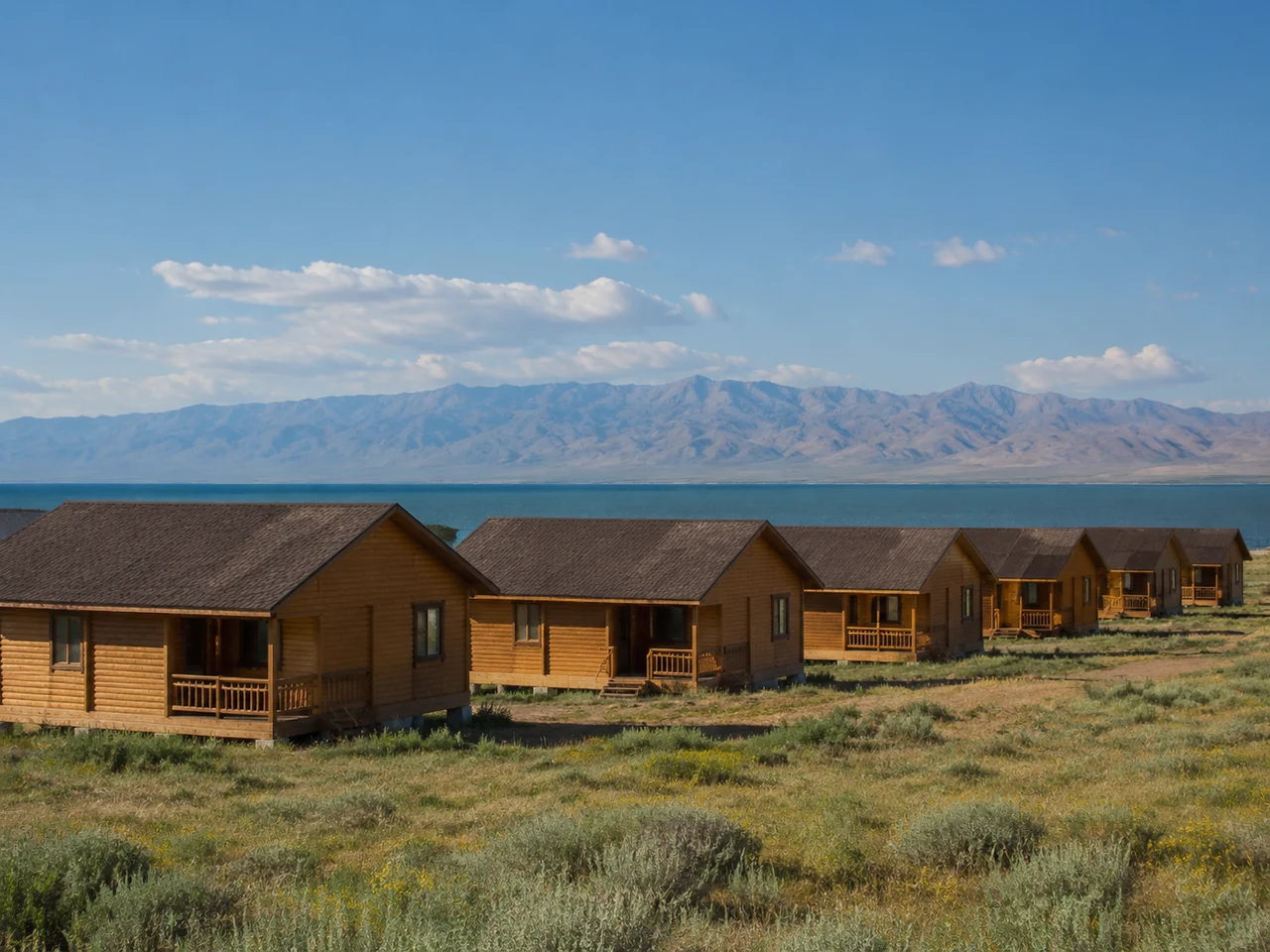
Alakol is a salt lake in eastern Kazakhstan with seawater and therapeutic muds. Resort bases offer accommodation from 8,000 KZT per bed to 50,000 KZT for a luxury suite. You can get there from Almaty by car (8-10 hours), taxi (40,000-60,000 KZT), or as part of a tour from toor from 45,000 KZT per person with transfer and accommodation.
Why Alakol: what makes the lake unique
Alakol is not just a lake, but a natural resort with salt water, therapeutic muds, and a unique microclimate. Let's break down how it differs from other water bodies in Kazakhstan.
Salt water and therapeutic muds: natural features
The water in Alakol is salty, similar in composition to seawater, containing bromine, iodine, and fluorine — this is a natural mineral complex. In July-August, the lake warms up to +22…+26 °C, and the shallows near the shore reach +28 °C, creating comfortable swimming conditions even for children. The salt concentration here is higher than in the Caspian Sea, but milder than in the Dead Sea, so the skin does not tighten after the water. On the coast, there are hydrogen sulfide silt muds used to treat joints, skin, and the nervous system — their composition is similar to the muds of Saki and Tambukan. Therapeutic muds on the coast are available for free; you can apply them to the skin yourself, but it is better to consult a doctor before use.
Size and location: where the lake is located
Lake Alakol is located at an altitude of 347 meters above sea level, with an area of 2,650 km², a length of 104 km, a width of up to 52 km, and a depth reaching 54 meters. It is the second largest lake in Kazakhstan after Balkhash, and its size creates its own microclimate: the air is dry, saturated with salt aerosols, and the wind regime creates constant waves even in calm weather. The nearest settlement is the village of Koktuma (10 km from the lake), the city of Usharal is 50 km away, where the nearest airport with flights from Almaty (1 hour flight) is also located. Due to its remoteness from large cities, the lake remains ecologically clean — there are no industrial discharges, and the water is tested annually by the sanitary and epidemiological station.
When to go to Alakol: seasons and weather by month
The swimming season at Alakol is short but intense. Let's break down when the water warms up, which months are most comfortable for relaxation, and whether it is worth going at the beginning or end of the season.
Swimming season: from mid-June to mid-September
The swimming season at Alakol lasts from mid-June to mid-September, with the peak of comfortable water temperature (+22…+26 °C) occurring in July and August. In mid-June, the water only begins to warm up to +18…+20 °C — you can swim, but only after getting used to it. The salinity of the lake (about 6 g/l) makes the water denser, so it cools on the surface more slowly than in freshwater bodies — this extends the comfortable period by 1-2 weeks. The most stable weather without sharp winds occurs from July 10 to August 20: precipitation is rare, and daytime air warming (+28…+32 °C) combines with warm water. In May and September, the water is still cold (+15…+20 °C), and at night the air temperature drops to +5…+10 °C — for a trip in these months, you must bring warm clothes, as evening walks on the shore without them become a challenge.
Weather by month: what to expect in June, July, August, and September
In July, daytime air temperature reaches +25…+30 °C, at night +15…+18 °C; in August, the indicators are similar, and in September, daytime +15…+20 °C, at night +5…+10 °C. June weather is unstable — the first two weeks may bring rain and wind from the lake, which raises waves up to 1 meter. August is considered the calmest month: calm weather lasts 20-25 days, the water warms up to +24…+26 °C and retains heat even towards the end of the month. September Alakol is no longer a beach holiday, but walks in the steppe and short morning swims until 11 o'clock, before the sun hides behind the clouds. July and August are the peak season: accommodation facilities are full, prices are at their maximum, and booking is needed 2-3 weeks in advance. June and September are the shoulder season with fewer tourists, lower prices, and the opportunity to get a house without prepayment a day before arrival.
How to get there from Almaty: car, taxi, tour
The distance from Almaty to Alakol is about 650 km, the journey takes 8-10 hours. Each method has its pros and cons: let's compare car, taxi, and organized tour.
By car: route, road, expenses
Route by car: highway Almaty — Usharal (asphalt, 600 km), then a dirt road to the lake (50 km). Travel time — 8-10 hours depending on road conditions and stops. Fuel consumption round trip — about 30,000-40,000 KZT if driving a sedan; in an SUV with high ground clearance, consumption will increase to 45,000-50,000 KZT due to greater weight and resistance on the dirt road. The highway to Usharal is a two-lane asphalt road of good quality, there are enough gas stations, the last gas station is in Usharal, there are no gas stations up to the lake. The dirt road after Usharal may be damaged after rains — it is better to drive a car with high ground clearance to avoid risking the suspension on deep ruts.
Taxi from Almaty: prices and features
A taxi from Almaty to Alakol costs 40,000-60,000 KZT one way, drivers usually agree to a trip with waiting for several days. The price depends on the car class: economy sedan (Lada Vesta, Hyundai Accent) — 40,000-45,000 KZT, minivan (Toyota Hiace, Mercedes Vito) — 55,000-60,000 KZT. It is better to agree on the price in advance, through aggregators or acquaintances — it is difficult to find a car on the spot, especially during peak season, when all drivers are already busy with orders.
Organized tour from toor: transfer, accommodation, meals
The tour from toor includes transfer in a comfortable minibus with air conditioning, accommodation at a resort, and meals — from 45,000 tenge per person. The price includes breakfast, lunch, and dinner, as well as accommodation in cottages for 2–4 people right on the shore. Transfer is by a Hyundai County or Mercedes Sprinter minibus for 15–20 seats, departing in the morning from central Almaty, returning in the evening of the last day. Unlike an independent trip, with the tour you don't need to worry about the road, booking a resort, or finding food — everything is organized from group assembly to return.
Types of resorts: from economy to luxury
Resorts on Alakol are divided into three main categories: economy, comfort, and luxury. The difference lies in living conditions, location, and range of services.
Economy: bunk beds and minimal service
The economy option is a bunk bed in a shared room or a small cottage without amenities, price from 8,000 tenge per night. Such options are usually located on the second or third line from the water — 5–15 minutes walk to the beach. Meals are not included in the price, so tourists either cook themselves in a shared kitchen or eat at canteens of neighboring resorts for 2,000–3,000 tenge per lunch. Shower and toilet are shared among several rooms, hot water is available on a schedule. In economy, it's worth bringing a sleeping bag and slippers — bed linen at some resorts may not be changed after each guest, check upon check-in.
Comfort: cottages with amenities and meals
Comfort category cottages for 2–4 people cost 20,000–40,000 tenge per day, usually with a private bathroom, shower, and often with included meals. This category includes most properties on the first line — with their own beach, children's playgrounds, and a canteen serving breakfast, lunch, and dinner on a schedule. Some resorts offer a 10–15% discount when booking three or more nights, reducing the price to 18,000 tenge per day. An optimal choice for a family or group — comfort resorts have barbecue areas and gazebos, but check whether charcoal is included in the rental cost, otherwise firewood is bought separately for 2,000–3,000 tenge.
Luxury: rooms with enhanced comfort
Luxury rooms cost up to 50,000 tenge per night and include a separate cottage with a kitchen, air conditioning, satellite TV, and private area by the water. Some luxury-class properties offer additional services: sauna, massage, equipment rental. But gyms and full-fledged spa centers on Alakol are rare. Usually, luxury cottages are on the first line and have a separate beach access, which is convenient for couples who don't want to share the shore with a crowd. When booking luxury, check whether room cleaning is included in the price — at some resorts it's done once every 3–4 days, and daily cleaning costs an additional 2,000–3,000 tenge.
Comparison of resort types: table
| Parameter | Economy | Comfort | Luxury |
|---|---|---|---|
| Price per night | from 8,000 tenge (bunk bed) | 20,000–40,000 tenge (cottage for 2–4 people) | up to 50,000 tenge (room/cottage) |
| Amenities | shared shower and toilet | private bathroom, shower | air conditioning, kitchen, TV |
| Meals | not included | often included (canteen) | included or own kitchen |
| Location | second-third line | first line, own beach | first line, private area |
| Suitable for | undemanding tourists, groups | families with children, couples | couples, demanding tourists |
Accommodation prices 2026: how much cottages and rooms cost
Prices at Alakol accommodation facilities range from 8,000 tenge for a bunk bed to 50,000 tenge for luxury. Let's break down what's included in the price and how to save.
Accommodation cost by category: table
| Type of accommodation | Price per night | What's included |
|---|---|---|
| Bunk bed (economy) | from 8,000 tenge | Sleeping space, shared amenities on the floor |
| Cottage for 2–4 people (comfort) | 20,000–40,000 tenge | Separate cottage, bathroom, often breakfast |
| Luxury room | up to 50,000 tenge | Cottage with kitchen, air conditioning, Smart TV, fenced area |
| Package tour | from 45,000 tenge/person | Transfer, accommodation, three meals a day, guide |
Prices in July-August are 20–30% higher than in June and September. Booking 2–3 weeks in advance locks in the price and guarantees a spot — during the season, many properties sell out 5–7 days before check-in.
Additional expenses: meals, excursions, transfer
Meals on-site cost from 2,000 tenge per lunch, excursions from 5,000 tenge per person, taxi from Almaty — 40,000–60,000 tenge one way. The most expensive food is at economy properties without a kitchen: breakfast, lunch, and dinner for four — 12,000–15,000 tenge per day, while at comfort options half-board is often included in the room price. Excursions to the Koktubek rocks or to the waterfall on the Urzhar River cost 5,000–7,000 tenge per person, and a jeep transfer from Almaty to Alakol is 15,000–20,000 tenge more expensive than a car. If you add up all expenses for a family of 4 for 5 days, an independent trip will cost 250,000–350,000 tenge, while a package tour with transfer and meals starts from 180,000 tenge, which is 28–40% cheaper for the same set of services.
Beaches and swimming: where it's best to enter the water
The beaches on Alakol are different: some have sand, some have pebbles, and some have stones. We'll tell you which properties have a comfortable water entry and where it's better to relax with children.
Types of beaches: sand, pebbles, stones
On Alakol, sandy-pebble beaches predominate, but in some areas the shore is rocky — it's better to choose places with their own equipped beach. Large pebbles are found on the western coast at the foot of the Dzungarian Alatau, while sandy areas are along the southern shore, near Koktuma and on the eastern side of the lake. Rocky scatterings are typical for "wild" campsites with no infrastructure — there the water entry drops off sharply, and the bottom is strewn with sharp boulders. First-line options usually clean and level the beach, bring in sand, and set up sun loungers — on "wild" sections, water entry can be uncomfortable, especially for children.
Where to swim with children: shallow entry and safety
For a holiday with children, choose places with a gentle sandy entry into the water — on Alakol, such spots are found near Koktuma and at some first-line properties. On the southeastern shore, closer to the village of Koktuma, the width of the sandy strip reaches 20–30 meters, and the depth increases gradually — a child can wade knee-deep for about ten meters without risk of stumbling. The water in the shallows warms up faster than in deeper areas — by mid-swimming season (July), the temperature near the shore reaches +24…+26 °C, while further from the beach it remains 2–3 degrees lower. Children's playgrounds are not available at all bases — check when booking, otherwise the child will get bored on the sun lounger.
What to do: excursions, fishing, therapeutic mud
A holiday on Alakol is not just about the beach. The surroundings have mountains, caves, a waterfall, and on the coast — therapeutic mud and excellent fishing.
Excursions: Mount Arkharly, caves, waterfall
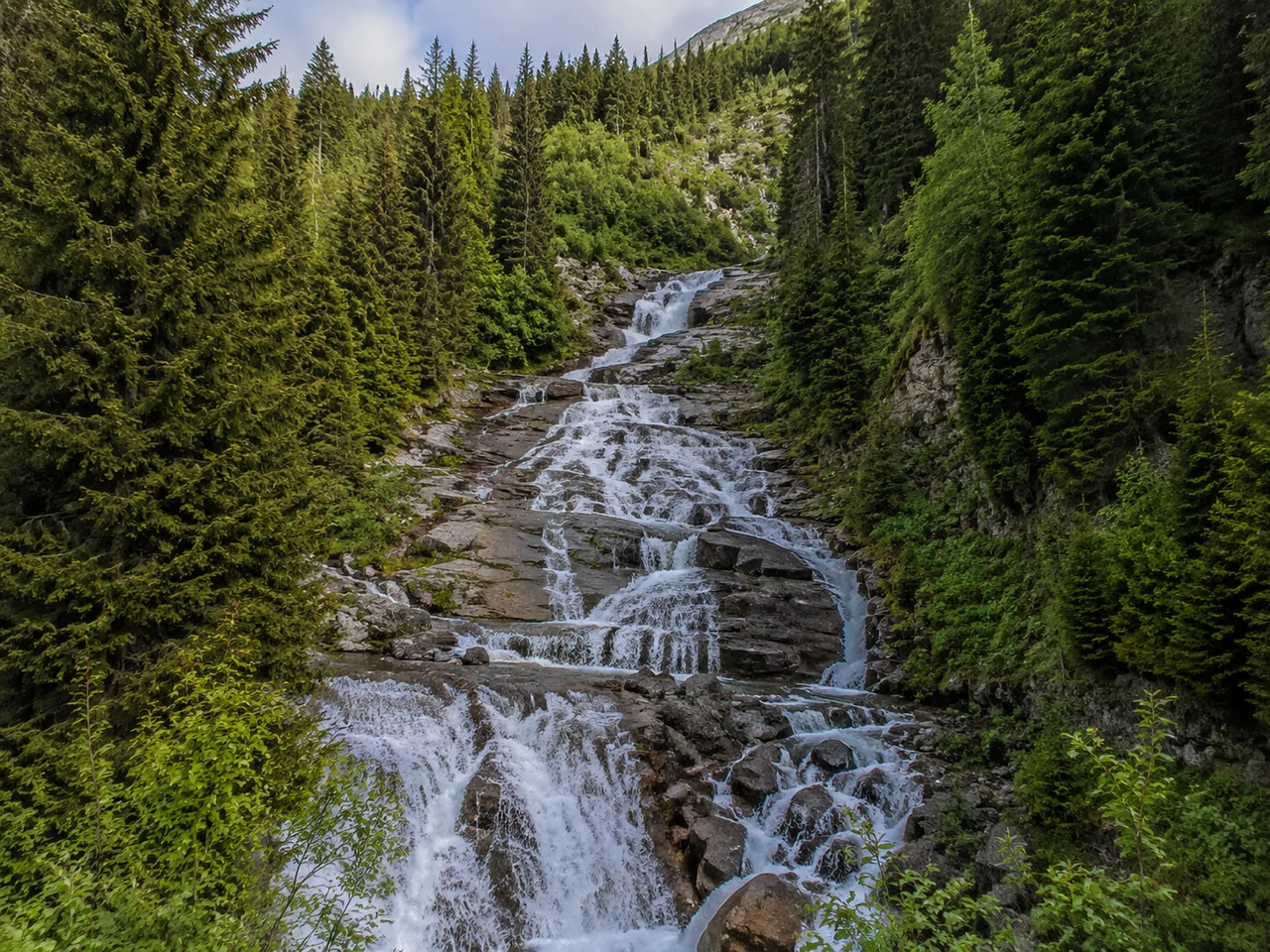
The main excursions on Alakol — Mount Arkharly with a viewing platform overlooking the entire lake, caves in rock outcrops a 20-minute drive from the coast, and a waterfall 30–40 minutes from accommodation. The route to Arkharly is a hike, the ascent takes about an hour, the elevation change is small, suitable for children aged 7–8. The caves are natural karst cavities, cool inside even in the heat, worth bringing a flashlight. The waterfall is seasonal, full-flowing in June–July after snowmelt in the Dzungarian Alatau mountains. Excursions last 2–4 hours and cost from 5,000 tenge per person. Before the trip, check with the base whether transfer is included in the price — some properties transport guests for free, others charge extra for fuel.
Fishing on Alakol: what to catch and do you need a license
Alakol is home to pike perch, carp, perch, and bream — fishing is allowed with permits, which can be obtained on-site or in Usharal for 1,500–3,000 tenge per day. You can fish from the shore or from a boat, rented at bases for 3,000–5,000 tenge for half a day. Pike perch bites best on jig lures, carp on corn or worms. Bring your own tackle and bait: most bases have no rental, and village stores in Usharal have minimal selection. The best fishing is early morning before 8 am and at sunset after 6 pm; in the daytime heat, fish go deeper.
Therapeutic mud: where to find and how to use
Therapeutic mud on Alakol lies right on the coast, mainly along the southern and southeastern shores — it's freely accessible, no permits needed. The mud is black, oily, contains hydrogen sulfide, bromine, and trace elements — helps with skin conditions (psoriasis, eczema, acne), joint pain, and general health improvement. Apply warm mud to clean skin in a 1–2 cm layer, leave for 15–20 minutes, then rinse off in the lake. Do not apply to the face or open wounds — an allergic reaction is possible. After the procedure, the skin remains soft for 2–3 days, and the effect from a course of 5–7 sessions lasts up to six months.
How to choose a base: criteria and tips
Choosing a holiday spot on Alakol is not just about "where it's cheaper." Location, beach, meals, and infrastructure matter. Let's break down a system of criteria to help avoid mistakes.
Main selection criteria: location, beach, meals, infrastructure
Four main selection criteria: location (first line by the water), beach (sand, gentle entry), meals (included or a canteen nearby), infrastructure (children's playground, parking, store). First-line properties cost 20,000–50,000 tenge per house — you reach the water in a minute, but budget options 100–500 meters from the shore start from 8,000 tenge per bed with a 5–15 minute walk. Beaches vary: on the southern shore, sand and gentle entry — ideal for children; on the northern shore, pebbles and a sharp depth drop. All-inclusive meals are convenient but often 20–30% more expensive — many locations have a canteen with lunches from 2,000 tenge à la carte. If traveling with children, priorities are shallow entry and a playground; without a car, choose a property with transfer or near a store to avoid carrying groceries a kilometer from the road.
How to check a base before booking: a checklist
- Current photos: check recent images on Instagram or 2GIS — last year's often don't show nearby construction or worn-out houses.
- Reviews from the last month: look for comments on Google Maps from the past 30 days — seasonal issues (bad water, noisy neighbors) are visible there.
- Cancellation terms: clarify if the deposit is refundable in case of force majeure — in July-August, properties rarely accommodate without a penalty.
- Direct call: call directly, not through aggregators — often the price is 10–15% lower due to no intermediary commission.
- Household details: check if bed linen is included, if there are outlets in the house, and if Wi-Fi works — on budget options, these are not always standard.
Independent or tour: what to choose
An independent trip gives you the freedom to choose your location and route, but requires time for organization: finding accommodation, booking transfers, buying groceries. A tour from toor solves all issues—from transfers to excursions and three meals a day—for a fixed price starting from 45,000 KZT per person. This price includes travel by minibus (8–10 hours with stops), accommodation in a comfort-class facility with air conditioning and shower, as well as breakfast, lunch, and dinner daily. For a family of 4 for 5 days, a ready-made tour is 20–30% cheaper than an independent trip due to wholesale prices—plus you don't need to drive for 10 hours after your vacation, which is especially valuable if there's only one driver.
What to bring: a checklist from the guide
Over 9 years of leading tours to Alakol, I've compiled the perfect list of items. Nothing extra—only what you really need.
Essential set: swimsuit, sun protection, warm clothing
- Swimsuit or trunks: the water warms up to +26 °C in July-August, so you can swim all day without a break.
- Sunscreen SPF 50+: even on a cloudy day, through water vapor, a burn can appear in 20–30 minutes, especially in children.
- Mosquito and midge repellent: after sunset near the water, insects become active—without spray, an evening on the terrace turns into an ordeal.
- Warm sweater or windbreaker: at night, the temperature drops to +15 °C even in peak season, and a cool wind blows from the lake.
- Hat and sunglasses: in open spaces without shade, overheating occurs faster than in the city—a panama hat or cap is a must.
At toor, before departure, we remind tourists: the sun at Alakol is intense—without cream, you can get sunburned in 30 minutes, and repellents will save your evening by the water, where there are especially many mosquitoes.
First aid kit and documents: what not to forget
- Remedies for poisoning (activated charcoal, smectite): water at the bases is brought in or from a well—an unfamiliar composition can cause stomach upset in children and adults.
- Pain reliever and fever reducer (ibuprofen, paracetamol): after a long drive or an active day in the sun, headache is a common complaint among visitors.
- Antihistamine (loratadine, cetirizine): bites from midges and mosquitoes at Alakol cause severe swelling in some people—even in those who have no allergies in the city.
- Band-aids, iodine or brilliant green, bandage: on pebble beaches, it's easy to cut your foot on stones, and it's a 10–15 minute walk to the medical station from the far base.
- Passport, insurance policy, children's birth certificates: at remote bases, documents are checked upon check-in, and the policy will be needed if you have to visit the paramedic station in Koktuma.
In the toor first aid kit for groups, we keep an extended set, but I recommend a personal kit too: at remote bases, the pharmacy only has a basic set—it's better to have your own, especially antihistamines.
Conclusion
Alakol is a lake worth seeing, but the trip requires thoughtful preparation. We've gathered the main takeaways so your vacation goes without surprises.
Key takeaways
- Plan ahead: booking 2-3 weeks before the season gives the best prices on accommodation and transfers, and in peak July, there may be no vacancies at all.
- Choose the format that suits you: a ready-made tour solves all organizational issues, an independent trip gives freedom in the route but requires time to find accommodation and transport.
- Pack according to the checklist: swimsuit, sun protection, warm clothing, and a first aid kit are the mandatory minimum; without a windbreaker, evenings on the shore will become an ordeal.
- Compare options: focus on location relative to the beach, meal availability, and fresh reviews, not just the price—a cheap house far from the water adds extra kilometers of walking.
- Consider the weather: even in July, evenings are cool, and the sun is aggressive—prepare for temperature changes to avoid ruining your vacation with a cold or sunburn.