Blog
Baikonur from Almaty: How to Get There, What to See, and Trip Cost in 2026
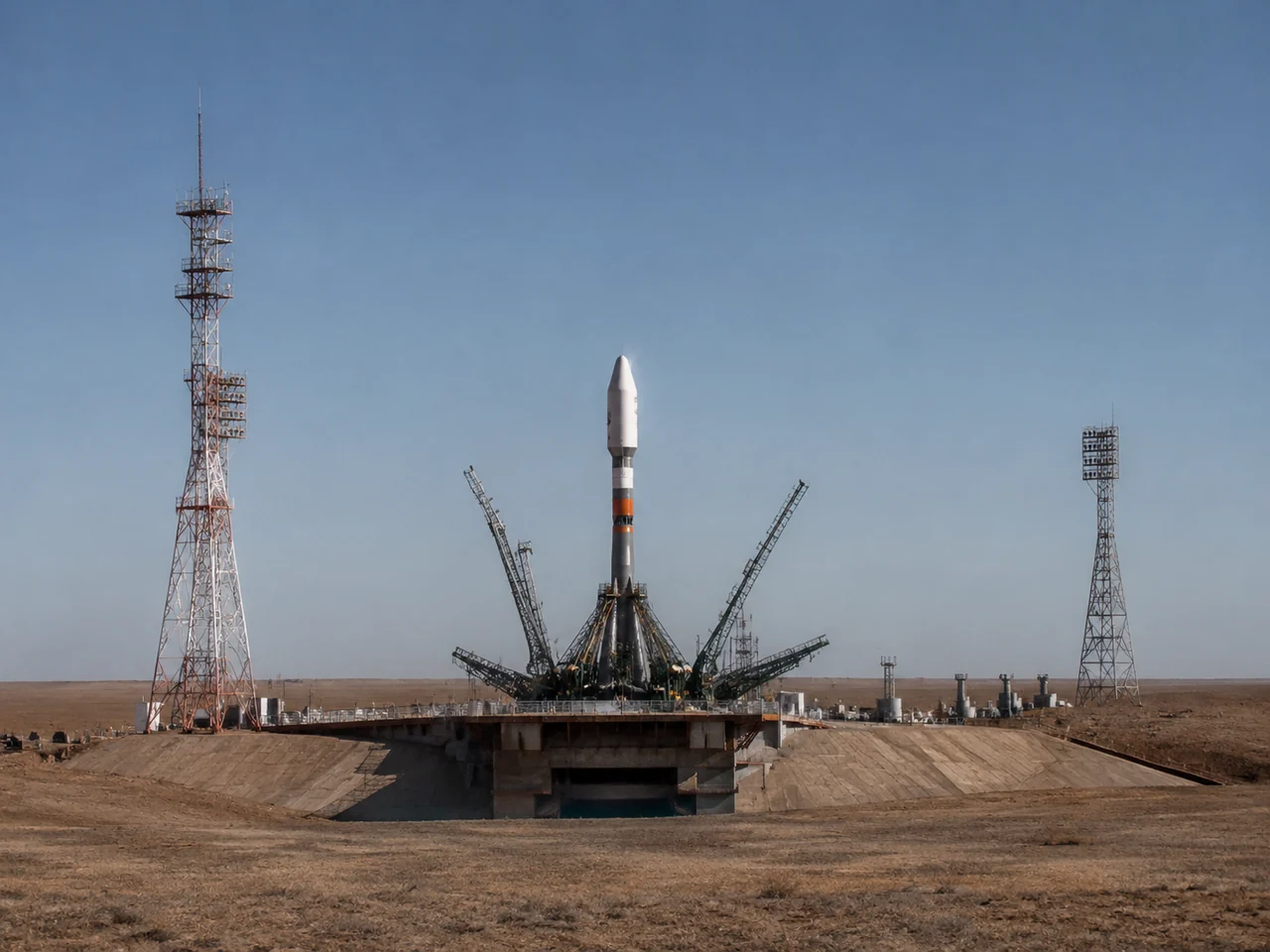
You can get to Baikonur from Almaty by car (1200 km, 14–16 hours via Taraz, Shymkent and Kyzylorda), by train, or with a tour from toor. The main thing is to arrange a pass to the cosmodrome in advance (through a tour operator 2 weeks ahead). The best time to travel is from April to October, when the weather is comfortable and rocket launches are more frequent.
What is Baikonur and why people go there
Baikonur is a unique place: it is home to the world's only active cosmodrome from which manned spacecraft launch. Let's figure out what lies behind this name and why travelers come here.
The city and the cosmodrome: scale and history
Baikonur is both a city (founded in 1955 as Leninsk) and the world's largest cosmodrome, covering an area of 6717 km², located in the Kyzylorda region of Kazakhstan. Leased by Russia until 2050, the complex includes a town of 75,000 residents and dozens of launch pads, assembly and testing buildings, and tracking stations. It was from here on April 12, 1961, that the first human in space, Yuri Gagarin, launched, and today the Gagarin Launch Pad continues to send Soyuz-2 rockets with crews to the ISS and Progress cargo ships. Unlike museums, everything here is "alive": you can enter the assembly and testing building where the rocket is prepared for launch and walk along the launch pad from which spacecraft depart for orbit.
Why tourists travel to Baikonur from Almaty
The main reason is to see a real cosmodrome where rockets are assembled and launched, visit the museum with real Soyuz descent modules, and, if lucky, witness a manned launch. There is no direct air service from the southern capital — travelers go via Kyzylorda or Nur-Sultan, but the 1500 km distance doesn't stop them: the uniqueness of the place outweighs the logistical challenges. The cosmodrome museum displays authentic capsules, Sokol spacesuits, and a model of the Mir station, and tours of the assembly and testing building are allowed on days when the rocket is being prepared for launch — something no museum in the world can show.
When to go: seasons, monthly weather, and launch schedule
The weather in the steppe is harsh: summer heat up to +35°C, winter frosts down to -15°C. Let's figure out when it's best to plan your trip to catch both comfortable weather and rocket launches.
Season for a trip to Baikonur: April — October
The best season for a trip from Almaty is from April to October, when daytime temperatures stay between +15..+30°C, and rocket launches are most often scheduled for spring and autumn. In April, the air warms up to +10..+20°C, but nights are still cool — +5..+10°C, so bring a windbreaker. May and September offer stable +20..+25°C during the day with minimal rainfall — these months usually have the densest launch schedule, with 2-3 launches per month. In summer, from June to August, the thermometer rises to +30..+35°C, so tours of the open cosmodrome area are best planned for the morning before 11:00 or after 16:00. May and September are ideal months: no summer heat, minimal rainfall, and the launch schedule is usually the densest.
Weather in Baikonur by month: temperature table
| Month | Average daytime t°C | Nighttime t°C | Precipitation | Recommendation |
|---|---|---|---|---|
| January | -10..-15 | -20..-25 | Low | Only for enthusiasts, warm clothing needed |
| April | +10..+20 | +5..+10 | Low | Good season, launches possible |
| May | +20..+25 | +10..+15 | Low | Ideal month |
| June | +25..+30 | +15..+20 | Low | Hot, bring water and a hat |
| July | +30..+35 | +20..+25 | Minimal | Very hot, tours best in the morning |
| August | +28..+33 | +18..+23 | Minimal | Hot, but launches are frequent |
| September | +20..+25 | +10..+15 | Low | Ideal month |
| October | +10..+20 | +5..+10 | Low | Good season, launches possible |
Keep in mind that in the steppe, the wind intensifies the feeling of cold in winter and doesn't provide relief from heat in summer — choose clothing with a margin.
Rocket launch schedule: when to come for the spectacle
The exact launch schedule at the cosmodrome is approved 1–2 months before the launch, but most launches traditionally occur in April-May and September-October. In spring, Soyuz-2 rockets with Progress cargo ships launch to the ISS — usually 2-3 launches in May. In autumn, in September-October, manned Soyuz spacecraft with crews launch — these are the most spectacular launches, attracting thousands of spectators. Additionally, throughout the year there are commercial satellite launches — their schedule is less predictable and can shift by weeks. To avoid guessing, the easiest way is to book a launch tour — operators track the launch schedule and adjust trip dates to the nearest launch.
How to get from Almaty: car, train, plane, and tour
There are no direct flights to Baikonur from the southern capital, but there are several proven routes. Let's break down how a self-guided trip differs from a ready-made tour with transfer.
By car: route via Taraz, Shymkent, and Kyzylorda
The distance to the cosmodrome is about 1200 km, and the drive takes 14–16 hours along the highway through Taraz, Shymkent, and Kyzylorda. The route follows the M32 highway to Kyzylorda, then a turn north toward the Tyuratam station — the last 400 km stretch is the most monotonous: settlements are rare, and between Kyzylorda and Baikonur there is not a single roadside gas station or cafe. The optimal schedule is departure at 5–6 AM, lunch in Shymkent (after 5–6 hours), refueling in Kyzylorda, arrival by 9–10 PM. Due to the monotonous landscape and vibration on the highway, fatigue builds up faster than on mountain serpentines — be sure to plan for a second driver or a 30-minute rest every 4 hours, otherwise your reaction time noticeably drops by evening.
By Train and Plane: Alternative Options
There are no direct flights to Baikonur — the nearest airport is in Kyzylorda (400 km from the cosmodrome), served by Air Astana and Scat, or in Nur-Sultan. The flight to Kyzylorda takes 1 hour 40 minutes, a one-way ticket costs from 25,000 to 45,000 tenge, but from the airport to Baikonur you will have to take a taxi — 3.5–4 hours for 15,000–20,000 tenge. By train to the Tyura-Tam station, you can get there with a transfer in Kyzylorda, but the journey will take more than a day, and you will still have to get to the cosmodrome by taxi. The combined "plane + taxi" route will cost at least 40,000 tenge one way, and if the launch is postponed, you will have to change tickets at your own expense — this uncertainty should be factored into your budget in advance.
Tour with Transfer from toor: A Ready-Made Solution
The easiest way is to book a tour to Baikonur: toor picks up the group in the city, takes them by minibus, and handles all issues with documents and accommodation. An organized tour removes the main headaches of an independent trip: you don't need to find where to get a pass to the cosmodrome (the tour operator takes care of this two weeks before the date), hunt for a taxi in Kyzylorda, or guess which hotel is available during launch season. The group minibus accommodates 8–10 people, the air conditioning works properly even in the July heat, and the cost includes lunches at trusted roadside cafes — no price surprises. On the way, we make stops for lunch in Shymkent and Kyzylorda so you don't get tired — unlike an independent trip, where you have to plan all the logistics yourself.
Pass to the Cosmodrome: How to Get It and How Much It Costs
The pass is the main barrier for a trip to Baikonur. Without it, you won't be allowed into the cosmodrome, even if you arrive at the gates. We'll tell you how to get it without any issues.
Is a Pass Mandatory and Who Arranges It
Yes, a pass to the cosmodrome is mandatory for all tourists — without it, you won't be allowed through the checkpoint, even if you just want to look at the launch pads. Access to the restricted area is controlled by the Federal Space Agency, and each visitor undergoes a check against lists submitted two weeks in advance. Entry is only possible through Checkpoint No. 1 from the city of Baikonur, where guards verify passport data against an electronic database. Only an accredited tour operator can arrange a pass — an individual does not have the right to submit an application directly to the cosmodrome administration. It is practically impossible for an individual to arrange a pass independently — it is issued only through an accredited tour operator who submits an application to the administration.
How to Get a Pass Through toor: Deadlines and Documents
To arrange a pass through toor, it is enough to send a scan of your passport (for citizens of Kazakhstan) or foreign passport (for foreigners) at least 14 days before the trip — we transfer the data to the cosmodrome administration. The entire process takes from 7 to 14 working days: first, the tour operator forms a group application, then it is checked by the security service, after which it is approved by the head of the regime department. Citizens of Kazakhstan only need an ID card, while Russians and CIS citizens need a foreign passport, since Baikonur is leased by Russia and entry is subject to international pass regulations. Children under 14 are included in their parents' pass, but separate data is also submitted for each child. If you don't meet the two-week deadline, the pass may not be approved in time, and the trip will have to be postponed — so it's better to book the tour in advance.
What Happens If You Don't Arrange a Pass in Advance
If you don't arrange a pass 2 weeks in advance, you likely won't be able to get into the cosmodrome on the planned dates — the administration does not consider urgent requests. There are no exceptions for tourists: even if you are willing to pay extra for expedited processing, the security service does not change the verification procedure due to staff workload. In our practice, there have been cases where tourists flew to Kyzylorda without an arranged pass and could not go on the excursion — the money for plane tickets and hotels was lost. The only way out in such a situation is to postpone the trip to the next dates and immediately submit documents to avoid losing money on tickets and hotels.
What to See: Launch Pads, Museum, and the City
The program at the cosmodrome is packed: from the legendary Gagarin's Start to the museum with real descent vehicles. We'll tell you what you absolutely must see in one day.
Gagarin's Start and Launch Pads
The main point of the program is Gagarin's Start (Launch Pad No. 1), from where Vostok-1 with Yuri Gagarin launched on April 12, 1961, and today Soyuz rockets continue to launch from here. The height of the Soyuz is 46 meters, and up close it makes a stunning impression: you can approach the launch table, see how the service towers are retracted before launch, and smell the mixture of kerosene and oxygen — a scent remembered by everyone who has been to launches. Besides Gagarin's Start, the cosmodrome has Launch Pad No. 31 ("Vostok") for launching heavy Proton rockets, but access there is only open on days of official missions. In winter, the launch complex looks particularly harsh: metal structures are covered with frost, and in the steppe it's minus 15–20 °C, so for a walk around the territory you will need warm shoes and a windproof jacket.
Cosmodrome Museum and Assembly and Test Building
The museum at the cosmodrome displays real descent modules, spacesuits, and personal belongings of cosmonauts — from the "Vostok" to modern "Soyuz" spacecraft. In the assembly and testing building (MIK), you can see how a rocket is assembled before launch: a "Soyuz" stands horizontally, and engineers, right before visitors' eyes, connect the stages and check the systems. Photography is allowed in the building, but only with regular cameras — professional equipment with long-focus lenses may be asked to be left on the bus, as filming with telephoto lenses is considered a security threat. The museum also has a restriction: photo and video shooting inside is free, but using a flash may result in a reprimand, as light damages the exhibits, especially spacesuits with exposed fabric layers.
Baikonur City: A Walk Through the Space Capital
The city itself — formerly Leninsk — is interesting for its atmosphere: there is a monument to Gagarin, an alley of cosmonauts with palm prints of crew members, and several squares with rocket technology that you can touch. In the city, you can visit local cafes with inexpensive food — lunch will cost 1500–2000 KZT, and in souvenir shops, you can buy patches, badges, and rocket models ranging from 500 to 3000 KZT. On the alley, pay attention to the plaque with the date of the first flight — 1961 — and the stand with portraits of cosmonauts, where you can find the names of those who flew from here in the last couple of years.
Excursions and Tours: Prices, Routes, What's Included
Prices for the trip vary depending on the format: you can go for a day or stay overnight. Let's compare the cost and content of different options.
Baikonur Tour Options from toor: Table
| Parameter | One-Day Tour | Tour with Accommodation (2-3 days) | Launch Tour |
|---|---|---|---|
| Price from | 25,000 KZT/person | 40,000 KZT/person | To be confirmed at booking |
| Transfer from Almaty | Yes | Yes | Yes |
| Accommodation | No | Hotel "Tsentralnaya" / "Sputnik" | Hotel "Tsentralnaya" / "Sputnik" |
| Pass to the cosmodrome | Yes | Yes | Yes |
| Excursion around the cosmodrome | Yes | Yes | Yes |
| Visit to a rocket launch | No | No | Yes |
| Guide | Local guide | Local guide + company guide | Local guide + company guide |
What's Included in the Tour Price: Detailed Breakdown
The price of any tour to Baikonur from us includes transfer from Almaty, processing of the pass, entrance tickets to all cosmodrome facilities, and services of a local guide. In the launch tour, a visit to the rocket launch is added — you are at the observation platform 1.5 km from the Gagarin Launch Pad, hear the countdown, and feel the ground vibration during liftoff. In tours with accommodation, two nights at the hotel "Tsentralnaya" (from 8,000 KZT/night) or "Sputnik" (from 6,000 KZT/night), breakfasts, and transfer around Baikonur city during excursions are included. The price is fixed per person and final — no surprises on the spot like "additional payment for the pass" or "guide service separately."
Independent Trip vs Tour: Budget Comparison
An independent trip to Baikonur by car will cost at least 35,000–40,000 KZT per person for a group of 2-3 people: fuel for 2400 km (about 15,000 KZT), hotel for one night (6,000-8,000 KZT), food on the road (5,000 KZT), processing a pass through an intermediary (5,000-8,000 KZT), and entrance tickets (3,000 KZT). The price of a tour with accommodation from us starts from 40,000 KZT per person and includes all of the above plus the services of a guide who will take you through the assembly and testing building and the cosmodrome museum with details not found in open sources. The main saving is not in money, but in time: you don't need to search for where to get a pass, negotiate with a guide on the spot, or worry that something might go wrong.
Where to Stay: Hotels, Hostels, Prices
The choice of accommodation in Baikonur is small, but there are proven options — from budget hostels to comfortable hotels. Let's break down the prices and conditions.
Hotels "Tsentralnaya" and "Sputnik": Overview
The main hotels in the city — "Tsentralnaya" (from 8,000 KZT/night) and "Sputnik" (from 6,000 KZT/night) — are both located in the center, within walking distance of the station and the cosmodrome administration, and offer a basic set: a private room with shower, toilet, and Wi-Fi. "Tsentralnaya" is noticeably more spacious: rooms from 18 m², has its own restaurant with hot lunches and breakfasts (breakfast — 1,500 KZT, lunch — 2,500 KZT), and a grocery store operates on the first floor. "Sputnik" is more compact — rooms from 12 m², no restaurant, but there is a water cooler and a microwave in the lobby for self-heating food. Both hotels work with organized groups and offer a 10-15% discount when booking 5 or more rooms at once. If you are going for 1-2 nights and want to save money — "Sputnik" is a justified choice, but for a longer stay, "Tsentralnaya" is more convenient due to hot meals within walking distance.
Hostels and Budget Accommodation
There are three hostels in Baikonur with prices from 3,000 KZT/night per bed in a shared room for 4-6 people — an option for the most budget-conscious travelers, especially students and bloggers. All hostels are located in the old housing stock of the city on Nosova and Koroleva streets, 10-15 minutes walk from the hotels "Tsentralnaya" and "Sputnik." Conditions are Spartan: shared showers and toilets on the floor, Wi-Fi only in the lobby, air conditioning is available in only one of the three hostels. In summer, when the temperature in the steppe rises above +35°C, a night without air conditioning becomes a trial — bring a portable fan and choose the "Orbita" hostel: it is the only one with air conditioning in all rooms.
What to Bring: Clothing, Documents, Equipment
The steppe climate and the restricted facility dictate their own rules. We've compiled a checklist of items without which a trip to Baikonur will be uncomfortable or impossible.
Documents: What You Must Have With You
- Passport (for citizens of Kazakhstan) or international passport (for foreigners): this is the document you specified when applying for the pass to the cosmodrome — checkpoint staff will verify the data.
- Copy of passport: take a paper copy — at the checkpoint they may ask you to leave the original during entry, and the copy will be useful for hotel check-in.
- Pass to the cosmodrome: printed or electronic — without it, you won't be allowed onto the territory, even if you arrive as part of an organized group.
- Medical insurance policy: for citizens of Kazakhstan, an ID card and compulsory social health insurance policy are sufficient; for foreigners, an international policy (insurance covering evacuation) is required.
Clothing and Footwear by Season
- Comfortable shoes without heels: walking distances across the cosmodrome territory range from 3 to 5 km per day — sneakers or trekking boots will save your feet.
- Headgear: a cap or sun hat in summer, a hat and buff in winter — the steppe wind burns your face even at zero degrees.
- Windbreaker or light jacket: it can be +30°C during the day, but by evening the wind picks up to 15 m/s, and without protection, you'll be chilled to the bone.
- Warm jacket for launch tours: launches often take place at 5-7 AM, when the temperature is 10-15°C lower than daytime — even in May, bring a down jacket or fleece with a membrane.
Gear and Additional Essentials
- Sunscreen SPF 50+: the steppe sun burns your skin in 20-30 minutes, even on a cloudy day — apply to exposed areas every two hours.
- Drinking water: at least 1.5 liters per person — there are no shops at the cosmodrome, and in the steppe heat, dehydration sets in within an hour of active walking.
- Power bank of 10,000+ mAh: there are no outlets in open areas, and your phone drains faster in the cold and during active filming.
- Camera or smartphone with good zoom: quadcopters and professional video equipment without special permission are prohibited, but amateur photography is allowed everywhere — launch shots are best taken with optical zoom of 30x or more.
Safety and Rules of Conduct at the Cosmodrome
The cosmodrome is a restricted facility, and the rules here are strict: from the access control system to the ban on filming equipment. Let's break down what is allowed and what is not on the territory.
Access Control and Restricted Zones
We arrange passes to the cosmodrome for all tour participants — without this document, you won't be allowed to the launch pad or the museum complex. The application is submitted two weeks in advance through the tour operator (via toor, for example), and for each guest, a copy of the passport and a questionnaire are required. After receiving the pass, you will only be able to move along permitted routes: the observation deck at the Gagarin Launch, the museum with the Buran mock-up, and the assembly and test building where the Soyuz rocket is assembled. Technical zones, launch pads, and the command bunker are closed to tourists — only personnel with special clearance are allowed there. Even with a pass, you can only be in permitted areas: the observation deck, the museum, and specially designated routes — entering technical premises is strictly prohibited.
Prohibitions and Restrictions on the Territory
- Filming of equipment: it is strictly forbidden to photograph launch complexes, hangars, and transporters — only allowed on the observation deck during designated minutes.
- Quadcopters and drones: flying any UAV over the territory is considered a violation of the state border; the device will be confiscated, and the owner will face a fine.
- Movement off the route: stepping beyond fences, onto lawns, or into technical openings is not allowed — security monitors every deviation via cameras.
- Smoking and open flames: strictly prohibited near fuel storage facilities and launch pads due to explosive rocket fuel components.
- Radio communication and powerful transmitters: turning on walkie-talkies, satellite phones, or portable signal boosters is only permitted with permission from the security service.
Conclusion
A trip to Baikonur requires preparation in four key areas: documents, logistics, gear, and knowledge of the rules of a restricted facility.
Key Takeaways
- Plan ahead: The pass is issued 14 days in advance, and the best hotel rooms are booked a month before the launch.
- Choose a tour: An organized trip takes the headache out of documents, transfers, and logistics, and often costs less than going independently.
- Consider the season: May–September is a comfortable time for excursions, but even in summer, bring a warm jacket for the morning launch.
- Follow the rules: The cosmodrome is a restricted facility; violating bans risks cancellation of the pass for the entire group.
- Bring essentials: Water, sunscreen, a power bank, and comfortable shoes — things without which a day in the steppe will become a trial.