Blog
How to Get to Alakol from Almaty: Complete Lake Guide for 2026
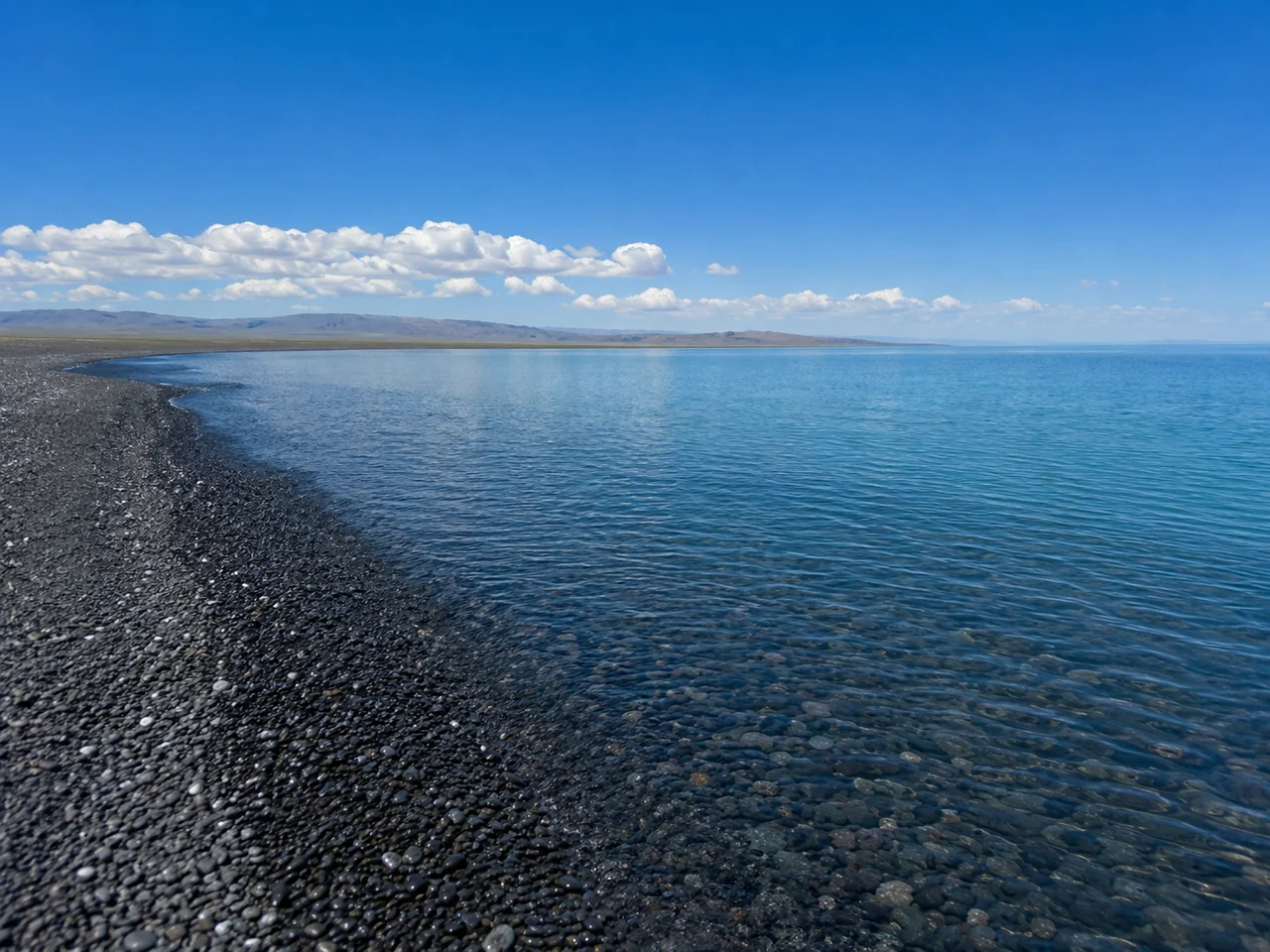
You can get to Alakol from Almaty by car (650 km, 7–9 hours on the A-3 highway), by taxi (50,000–70,000 KZT per car), or as part of a tour from toor.kz — from 35,000 KZT per person with transfer, accommodation, and breakfasts. The lake is famous for its salty healing water, black pebbles, and mud springs. The best season is July–August, when the water warms up to +28 °C.
Why Alakol: salty water, black pebbles, and healing properties
Alakol is not just a lake, but a natural resort with unique healing factors. Let's break down how the water, pebbles, and mud distinguish it from other lakes in Kazakhstan.
Salty healing water: composition and effect
The water in Alakol is salty — mineralization reaches 5–6 g/l, close to the levels of the Dead Sea, and contains bromine, iodine, and magnesium, which have a beneficial effect on skin and joints. In composition, it is chloride-sodium with a predominance of sulfates, providing a mild anti-inflammatory effect for dermatitis and acne. Swimming in such water accelerates the healing of small wounds and relieves joint swelling after overexertion — this is confirmed by years of observations from vacationers and doctors. The water temperature during peak season stays at +24–26 °C, allowing you to stay in it for up to 20–30 minutes without risk of hypothermia. For a noticeable effect on skin problems, it is enough to swim for 15–20 minutes a day for a week — the water gently dries out inflammation and relieves itching.
Black pebbles — Alakol's magnetic sand
The black pebbles on Alakol's beaches are magnetite sand, which contains iron oxides and has a weak magnetic field, confirmed by attraction to a magnet. This mineralization is found only on the southern and eastern shores of the lake, where waves bring heavy fractions from ancient volcanic rocks to the surface. When dry, the pebbles hardly heat up, but when wet under the sun, their temperature rises to +50–55 °C. Lying on such pebbles is beneficial — iron microparticles stimulate blood circulation upon contact with the skin, but in hot weather the sand heats up significantly, so a mat or towel will come in handy.
Mud springs: where they are and how they help
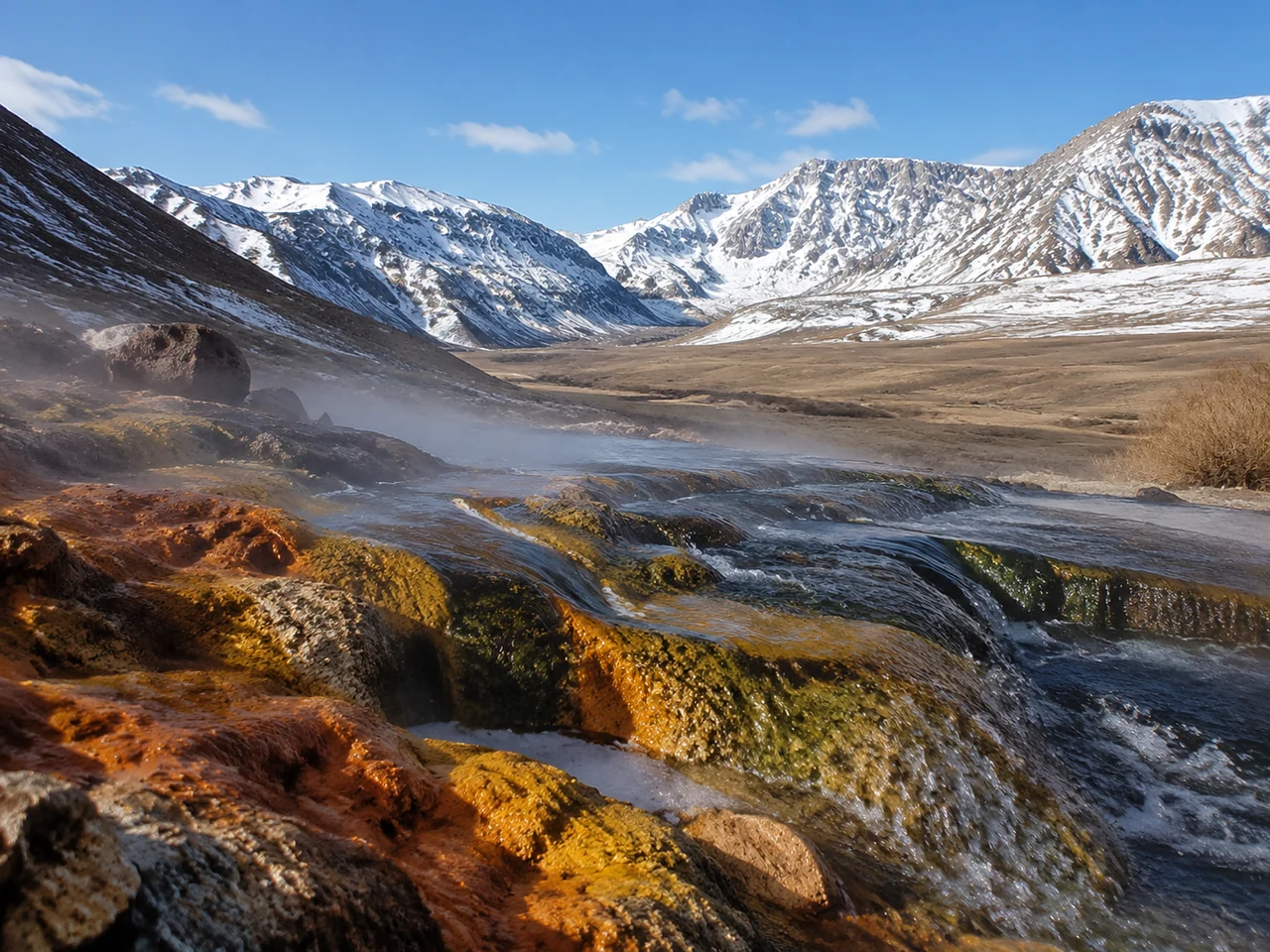
On the southern shore of Alakol, 2–3 km from the village of Koktuma, there are natural mud springs with mud temperatures up to +40 °C — they are considered among the best in Kazakhstan for treating joints and skin. The mud here is sulfide-silt, with a high content of hydrogen sulfide and microelements that penetrate the skin and relieve inflammation in cartilage tissue. Locals and tourists use it for sciatica, arthritis, and psoriasis — a course of 5–7 procedures provides lasting improvement for 3–6 months. You can reach the springs on foot from Koktuma in 30–40 minutes or by off-road vehicle along a dirt road. The best time for mud procedures is morning, while the mud hasn't cooled down and the sun isn't too active; after applying the mud, you need to wait 15–20 minutes, then rinse it off in the lake.
When to go to Alakol: climate and temperature by month
The swimming season at the lake lasts from June to September, but the weather and water temperature vary greatly from month to month. Let's break down when to go for warmth and when for peace and quiet.
Water and air temperature at Alakol by month
| Month | Water temperature, °C | Daytime air temperature, °C | Nighttime air temperature, °C | Swimming |
|---|---|---|---|---|
| June | +18…+22 | +25…+30 | +15…+18 | For the hardy |
| July | +24…+28 | +30…+35 | +18…+22 | Ideal |
| August | +24…+28 | +28…+33 | +16…+20 | Ideal |
| September | +18…+22 | +22…+26 | +10…+14 | Possible |
When is the best time to go to Alakol: choosing by purpose
The best time for a trip is from mid-July to the end of August, when the water consistently stays at +24…+28 °C and the daytime heat does not exceed +35 °C. During these months, the beaches on the coast near the villages of Akshi and Koktuma are crowded with tourists, accommodation bookings with private owners and resorts open 2–3 weeks in advance, and room prices peak — from 15,000 KZT per night in the economy segment. For those seeking solitude, June is less suitable: the water is still cold, and winds from the Dzungarian Gate pass raise waves up to a meter. If your goal is not swimming but mud therapy and walks, come in September: there are fewer tourists, accommodation prices are 20–30% lower, and the mud retains its healing properties up to +40 °C.
Weather at Alakol in April and October: is it worth going
In April at the lake, daytime temperatures are +15…+20 °C, nighttime +5…+10 °C — it's too cold to swim, but you can walk along the beach and breathe the salty air; in October, daytime temperatures are +10…+15 °C, nighttime 0…+5 °C, the season is already closed. In April, the snow on the peaks of the Dzungarian Alatau range hasn't melted yet, making walks along the coast cool due to mountain winds, and the water doesn't warm above +8…+10 °C. In October, frosts begin, and most resorts in Akshi and Kabanbay close for the winter — only 2–3 year-round guesthouses remain open. For a trip in April or October, be sure to bring a warm jacket and waterproof shoes — the wind from the lake intensifies the feeling of cold, and rain is not uncommon during these months.
How to get there from Almaty: car, taxi, tour
The distance from the southern capital to Lake Alakol is 650 km, the journey takes 7–9 hours. Let's consider three main ways to get there: by your own car, by taxi, and as part of a tour.
By car: route, time, gas stations
The driving route from Almaty to Alakol follows the A-3 highway through Usharal (70 km from the lake) — it's an asphalt road suitable for any car, with a travel time of 7–9 hours including stops. After leaving the city, the first significant settlement is the village of Koktuma right by the lake, but the main refueling point is Usharal, which has two Helios gas stations and one KazMunayGas with diesel and 95-octane gasoline; on the A-3 highway itself between the southern capital and Usharal, there are practically no quality gas stations — the only station at the 300th kilometer is often overcrowded on Friday evenings when Almaty residents head out en masse for the weekend. Fill up in both cities — there are few quality gas stations between them, and on the A-3 highway there's only one station at the 300th kilometer, where queues can reach 15–20 minutes during the season.
Taxi from Almaty: price and nuances
A taxi from the southern capital to Alakol costs 50,000–70,000 tenge per car one way — the price depends on the car class and season, and during the peak of July-August it can be 10,000–15,000 tenge higher. You can order a car through the Yandex Go or inDrive apps, but many drivers for long-distance trips prefer to negotiate directly by phone to avoid paying the aggregator's commission — the difference is 5,000–10,000 tenge; a standard sedan for 650 km without air conditioning in July heat (+35 °C during the day) turns into an ordeal, so when ordering, check for a working air conditioner and bring extra water — at least 2 liters per person. Arrange the return departure time with the driver in advance — cell reception at the lake is unstable, and finding a taxi on the spot during the peak season is difficult, especially after 6:00 PM.
Tour from toor.kz: transfer, accommodation, and breakfasts included
toor organizes a tour to Alakol from Almaty from 35,000 to 50,000 tenge per person — the price includes transfer by minibus with air conditioning, accommodation at a resort, and breakfasts. The route follows the same A-3 highway but with two planned stops — at the Aigerim cafe at the 200th kilometer (toilet, food) and in Usharal for refueling and a snack; the driver has experience on this route and knows how to avoid traffic jams at the exit during rush hour. Departure at 6:00–7:00 AM with two stops for cafes and toilets, arrival at the resort after lunch — this schedule allows you to avoid the heat on the road and check in before the evening rush.
Comparison of ways to get to Alakol
| Method | Price | Travel time | Comfort | Suitable for |
|---|---|---|---|---|
| Own car | Only fuel (~15,000 tenge) | 7–9 hours | High (own schedule) | Experienced drivers |
| Taxi | 50,000–70,000 tenge per car | 7–9 hours | Medium (depends on driver) | Groups of up to 4 people |
| Tour from toor | 35,000–50,000 tenge per person | 7–9 hours | High (guide, stops) | Families and beginners |
If you're going for the first time and have no experience with long trips in Kazakhstan, a tour is the most reliable option: you'll be met, checked in, and advised on what to do on the spot.
Where to stay at Alakol: accommodation and prices in tenge
At the lake, there are two main types of accommodation: guest houses and resorts. Prices vary significantly, and the choice depends on your comfort requirements.
Guest houses at Alakol: prices and conditions
A guest house costs from 5,000 tenge per night — this is a basic option with a shared kitchen, shower, and toilet, often without air conditioning, but within a 5–10 minute walk from the beach. In the village of Koktuma, most such houses offer rooms for 2–4 people, and the price sometimes includes use of a barbecue area and parking. Owners rent out rooms and entire houses — the price difference can reach 10,000 tenge per night for a separate building with its own veranda. In guest houses, check for hot water availability — in some, it's only available at certain hours, and after the beach you'll want to wash off the salt, so it's better to choose options with a water heater.
Resorts at Alakol: what's included in the price
A resort costs from 15,000 tenge per night — the price includes a room with air conditioning, three meals a day, sun loungers on the beach, and sometimes access to mud springs. Large resorts like Ainalayin and Daraboz offer cottages for 4–6 guests with their own kitchen and bathroom, as well as children's animation and evening programs. In some resorts, meals are organized buffet-style, in others — a set menu with a choice of 3–4 dishes for breakfast, lunch, and dinner. Resorts often have their own beach access with fewer people than public areas — this is worth the extra cost if you're going with children.
Why you should book accommodation in advance
In July-August, there are practically no vacancies at Alakol — you need to book accommodation 2–3 weeks in advance, otherwise you risk ending up in Usharal (70 km from the lake) or paying double. In the village of Koktuma, which is 1 km from the shore, all guest houses and resorts are fully booked during the peak season — owners stop answering calls by mid-June. Meanwhile, in May and September, prices drop by 30–40%, and spots are almost always available — these are the best months for a spontaneous trip without a prepayment. A common mistake is to arrive without a booking hoping to find an option on the spot: during the peak season, owners raise prices on the day of arrival to 25,000–30,000 tenge for a guest house.
What to see at Alakol: beaches, muds, surroundings
The lake is not just about the beach. There are several interesting places around it worth visiting to make your vacation diverse and memorable.
Beaches: where is the best swimming
The best beaches are on the southern shore near the village of Koktuma: there is a gentle entry into the water, black pebbles with magnetic properties and sand, and entry to the beach costs 500–1,000 KZT per person. Paid areas are equipped with changing rooms, portable toilets, and sun canopies — free wild beaches have no infrastructure, and access to the water is difficult due to the rocky bottom. The black pebbles on the southern shore are finer than on the northern shore, so it is more comfortable to enter the water even barefoot. On paid beaches, there are changing rooms, toilets, and sun awnings — free areas are wild, without infrastructure, and harder to reach.
Mud Springs: How to Get There and What to Do
The mud springs are located 2–3 km from the village of Koktuma — you can walk there in 30–40 minutes or take a taxi for 1,000–2,000 KZT, entry is free. The mud here is black, oily, with a hydrogen sulfide smell — locals apply it in a thick layer to joints and backs, leave it for 15–20 minutes until completely dry, then wash it off in the lake. On Saturday mornings, a queue of up to 20 people forms at the springs — locals come for treatments with their whole families. It is best to go to the springs in the morning before 10:00 — the mud is fresh, there are few people, and after the procedure you can immediately dip in the lake to wash off the residue.
Surroundings: Usharal, the Reserve, and Flamingos
70 km from the lake is the city of Usharal — there is a 24-hour pharmacy, a food market, and a hardware store where you can buy tents and gas canisters. Nearby is the Alakol Reserve — on its shallows, pink flamingos nest from the end of August, with numbers reaching up to 2,000 individuals in some seasons. The reserve is listed under the Ramsar Convention as a site for mass migration of waterfowl. Flamingos arrive at the lake in August-September — it is better to bring binoculars for observation, as the birds stay on the shallows 200–300 meters from the shore.
Holiday Prices: How Much a Trip to Alakol Costs
A trip to Alakol can cost from 15,000 to 100,000 KZT depending on the mode of transport, accommodation, and duration. Let's break down the budget for different scenarios.
Budget for a 3-Day Trip to the Lake: Three Scenarios
| Expense Item | Economy (own car + guesthouse) | Comfort (taxi + resort) | toor Tour (all-inclusive) |
|---|---|---|---|
| Transport (round trip) | ~15,000 KZT (gas) | 100,000–140,000 KZT | Included |
| Accommodation (2 nights) | 10,000–15,000 KZT | 30,000–50,000 KZT | Included |
| Meals (3 days) | 9,000–15,000 KZT | 15,000–25,000 KZT | Breakfasts included |
| Beach entry | 1,000–2,000 KZT | 1,000–2,000 KZT | Included |
| Total per person | ~35,000–47,000 KZT | ~146,000–217,000 KZT | 35,000–50,000 KZT |
How Much Money to Bring to Alakol
For a week-long holiday at the lake, bring from 70,000 to 150,000 KZT per person — this includes meals, beach entry, small expenses, and a reserve for unforeseen costs. Of this, 15,000–20,000 KZT will go to meals at the resort canteen (breakfast 1,500–2,000, lunch 2,000–3,000, dinner 2,000–3,000 KZT), 3,500–7,000 KZT for daily beach entry, and another 5,000–10,000 KZT for souvenirs, water, and ice cream from stalls by the lake. If you plan to take therapeutic mud treatments at the springs in Koktuma, add 2,000–3,000 KZT per session. There are no ATMs at the lake — withdraw cash in Almaty or Usharal, cards are only accepted at large resorts, and not everywhere.
What to Bring to Alakol: A Checklist
We have compiled a checklist of items that will definitely come in handy at the lake. The list is based on 9 years of travel experience — no extras, only what you really need.
Essential Set: Swimsuit, Sunscreen, Headwear
- Swimsuit/trunks: bring at least two sets — they dry longer in salt water, and changing wet clothes in the wind is unpleasant.
- Sunscreen SPF 50+: you can burn in 20–30 minutes even in cloudy weather because black pebbles double the ultraviolet radiation compared to a regular beach.
- Headwear: a wide-brimmed hat or a cap with a neck flap — ears and neck burn fastest when lying face up on the pebbles.
- Polarized sunglasses: reflection from the water surface and black sand creates glare that makes eyes hurt and water by evening.
- Windbreaker: in the evening, the temperature drops to +12…+15 °C even in July, and the wind from the lake is piercing — without protection, you'll freeze in 10 minutes by the fire.
- Apply sunscreen every 2 hours and after each swim: salt water washes off protection faster than fresh water, without reapplication you'll get a first-degree burn by noon.
Additional Items: Canopy, First Aid Kit, Slippers
- Canopy or sun umbrella: there is no natural shade on the beach — the only trees grow near the bases in Koktuma, on the wild shore you are under the open sky for 8–10 hours.
- First aid kit: be sure to include remedies for stomach upset (water and food on the road often trigger a reaction), antihistamines (allergies to new water are possible), and band-aids — it's easy to cut your foot on the pebbles.
- Mud slippers: choose models with closed toes and thick soles — the therapeutic mud at the spring is hot up to +40 °C, the bottom is muddy and slippery, making it easy to lose balance and cut yourself on shell rock.
- Thermos with tea and a 1.5 L water bottle: in the sun, the body loses up to 2–3 liters of fluid per day, the nearest store with water is only in Koktuma, a kilometer from the shore.
- Headlamp: at the bases, lights are turned off after 11:00 PM, on the wild beach darkness is complete — without a flashlight, getting to the toilet is problematic.
What Not to Bring to Alakol
Do not bring expensive electronics to the lake — laptops, expensive cameras, or wireless headphones. The salty air and fine sand penetrate connectors and speakers within 2–3 days, after which the devices start malfunctioning. There are no safes in guesthouses; valuables are kept in a nightstand — the risk of theft is low, but forgetfulness during vacation can be an issue. Do not bring a lot of perishable food: the base has a refrigerator, but in guesthouses it is shared among 4–6 rooms, and the store assortment in Koktuma is limited to basic items — cereals, pasta, canned meat, and water.
Safety and Route Difficulty
Alakol is a safe destination with low route difficulty, but there are nuances important to know before the trip, especially with children.
Water and Beach Safety
Swimming at Alakol is safe — the depth near the shore increases gradually, lifeguards are on duty at paid beaches in July-August, but there are none on wild beaches. The water warms up slowly; near the southern shore, the shallows stretch for 20–30 meters, which is ideal for children. Near the northern shore, closer to Cape Karashat, the bottom drops off sharply — 50 meters from the shore, the depth is already 3–4 meters, and the lake's maximum depth reaches 54 meters. Waves rise suddenly: with wind from the mountains, waves grow to a meter within 10–15 minutes, so using inflatable mattresses and boats without a life jacket is risky. Before swimming, assess the wind — if ripples rise from the northeast, it is better to stay in the shallows, especially in the afternoon.
Route Difficulty and Road Conditions
The road to Alakol from Almaty is 650 km of asphalt to Koktuma, with the last 1–2 km of dirt road to the base; the route is suitable for any car, including a sedan. The A-3 highway to Usharal is a two-lane asphalt road with potholes on some sections, especially after the turn to Taldykorgan. The only difficult section is the Kaskelen Pass (icy in winter, dry in summer), but in July-August it is passable without issues. At night, stray livestock is often encountered on the road — cows and horses come onto the asphalt without warning, so after sunset, it is better to reduce speed to 60–70 km/h, even on straight sections. There are enough gas stations along the route: the last decent one is in Usharal, with 120 km remaining to the lake; fill up there with a reserve.
Conclusion
We have gathered the main things you need to know before a trip to Alakol: when to go, how much to pay, and what to bring to avoid ruining your vacation.
Key Takeaways
- Best time: July-August, water +24…+26 °C, minimal precipitation — ideal for swimming and walks on the pebbles.
- How to get there: 650 km along the highway from Almaty, asphalt all the way — any car is suitable, no off-road conditions.
- Where to stay: From tents on the wild shore to guesthouses with three meals a day and a shower — book 2–3 weeks in advance.
- What to bring: Swimsuit, flip-flops, a warm sweater for the evening, a first-aid kit for sun and intestinal issues, cash (terminals are not available everywhere).
- Safety: Swimming is possible everywhere, lifeguards are on duty at paid beaches, the road is safe in summer — the main thing is not to leave documents in the car overnight.